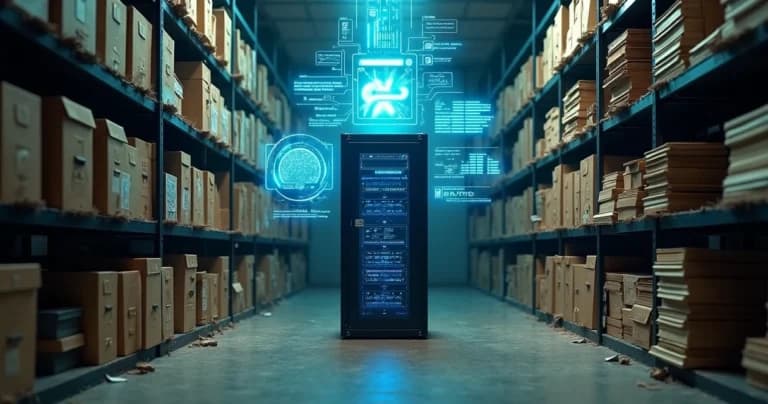
I've encountered scenarios marked by data waste. Companies with stacks of records, reports, and sensors, but little clarity on what to do with so much information. If you feel your historical data is stalled or not delivering real value, this problem has likely reached your business. As someone who closely follows the intelligent monitoring landscape, I want to help you identify these signs and know what to do to transform this.
Why discuss historical data usage now?
When I talk about monitoring, it's not enough to track live numbers. What differentiates modern operations is the ability to anticipate risks and decisions based on trends recorded over time.
DROME has been putting this into practice. Previously, systems only warned when limits were exceeded. Now, with initiatives like DROME Predict, it's possible to identify spikes, gradual deviations, and even predict violations. This is only possible because we treat history as a strategic asset, not just a dead archive.
Many organizations still haven't changed this perspective. The signs below, which I've observed across various sectors, clearly show whether you're still living in the past in 2026.
1. Alerts always arrive too late
This is one of the most universal symptoms.
If every time you receive an alarm it's because the incident has already occurred and there was no prior warning, your use of historical data is compromised.
Traditional systems only warn after limits are violated. I recall a healthcare client who came to me distressed: several losses due to late alerts. We discovered that his database hid recurring patterns that could predict these events, but there was no intelligence to anticipate them.
If the alert is just reaction, you manage crises—you don't prevent them.
DROME has already overcome this barrier. Our differentiator is continuous analysis of equipment historical behavior, from which predictive alerts emerge. It's something other market players attempt, but they deliver only pretty dashboards. The difference? We alert before damage occurs.
2. Reports never change how your team works
I've been asked: "But I generate weekly reports, isn't that enough?" My answer is always direct. Reports only serve if they provoke action.
If your reports are read, discarded, and forgotten—without real changes in processes, training, or investments—there is poor utilization. History needs to drive improvements, not just prove that someone did their job.
Good data usage involves more than collection. It needs to connect information to strategy and daily operations. That's why I always suggest aligning historical indicators with concrete action plans.
In the article how to ensure data integrity in monitoring in 2026, I delved deeper into the role of reliable data in decision-making. I recommend reading it.
3. There are no predictive indicators on your dashboard
If your routine only shows graphs of how the past was and absolutely nothing about what might happen in the near future, this is a classic symptom of poor usage.
Predictive indicators are based on learning from history. For example: temperature trends indicating imminent risk, predictions of seasonal failures, alerts for gradual drift.
When I analyzed comparisons between DROME and competitors, I noticed that many offer simple alerts (when the problem has already occurred) or generic reports. However, DROME's technology transforms historical data into intelligent and proactive alerts that anticipate unwanted movements. This reduces costs, increases safety, and removes the burden of manual monitoring from your team.
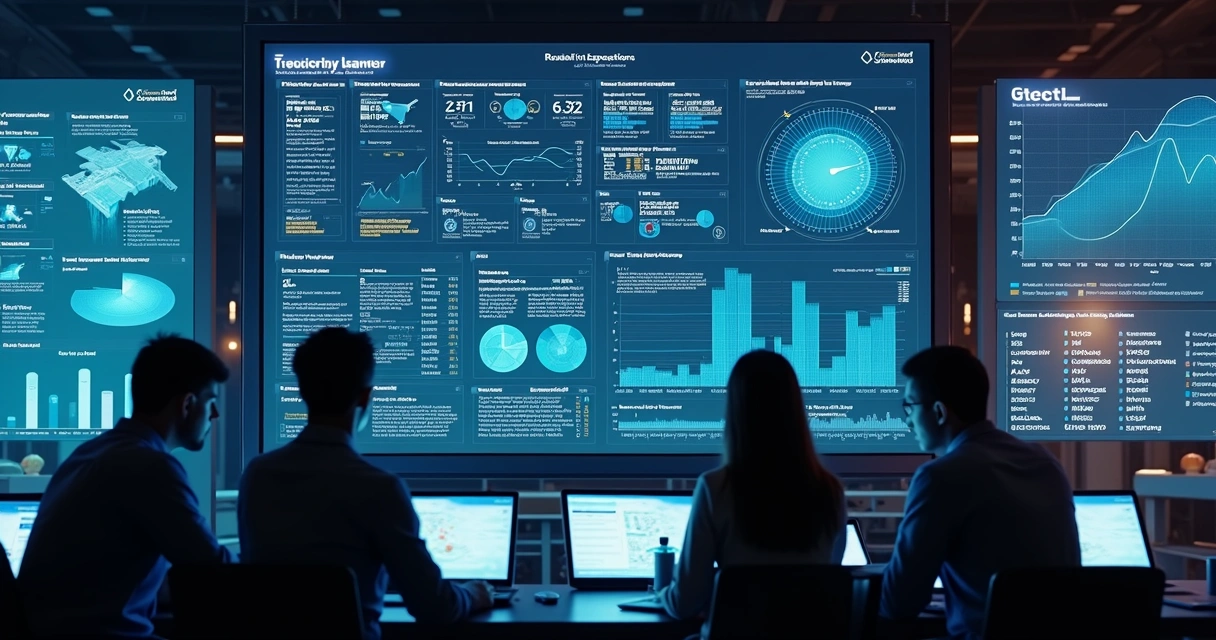
Learn more about how to transform data into deviation forecasts in the article how to predict temperature deviations with data analysis. It's a path that few truly master, and it makes all the difference in 2026.
4. Data is dispersed, without standardization or traceability
In my experience, another clear sign is having multiple databases, spreadsheets, and systems that don't communicate with each other. I've seen companies collecting data on paper, manually transferring it to spreadsheets, and only then entering it into systems. This generates failures, typos, delays, and lack of tracking.
This fragmentation prevents true historical consolidation. It worsens if there are no adequate metadata, versioning, and standardization of records—something fundamental especially for pharmaceutical, food, and industrial sector regulations.
DROME overcomes this limitation at its foundation: interconnected sensors, automated storage, and clear categorization rules. Other vendors attempt to integrate systems, but rarely achieve the traceability and trust we've built. A consistent historical database is what enables anomaly prediction with confidence.
To understand the dangers of these scenarios, I recommend reading how to avoid risks in pharmaceutical data management in the cloud. Prevent your data from being lost because each area manages a piece of information without seeing the whole picture.
5. Only specialists "understand" your company's data
This is a common problem I find in traditional or rapidly growing businesses. If only "senior" analysts or IT professionals can operate the dashboards, interpret history, and find patterns, there is an extremely high barrier to data value.
If understanding depends too much on one person, the knowledge isn't your business's—it's in that person's head.
Data democratization is a pillar I've advocated for years. The system needs to generate visualizations, dashboards, and forecasts accessible to the entire team, from managers to shop floor technicians. Intelligence needs to be shared. This is where DROME stands out against the competition: easy access, clear predictability, and alerts ready for those who really need to act.
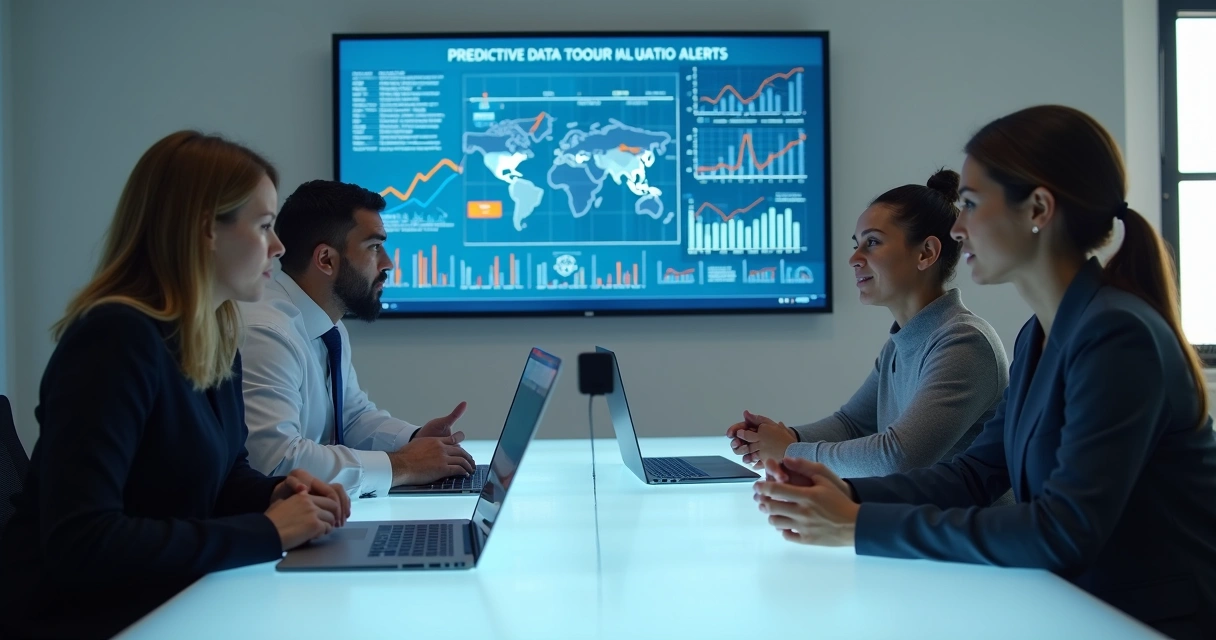
Other systems, even in large companies, still depend too much on specialized professionals. Experience shows that this limits quick responses in critical situations, as I show in the article on transforming data analysis with information technology.
Transforming the scenario: what to do now?
Identified one or more of these signs in your daily routine? That's the first step.
I've helped several companies turn this around. Some actions I recommend:
- Review the origin, quality, and standardization of your historical data
- Integrate systems to consolidate dispersed information
- Implement tools that convert history into intelligent predictions and alerts
- Train your team to interpret and act on predictive information
This process also requires attention to avoid common errors in sensor data transfer. I suggest checking the article on how to avoid sensor data transfer errors, which delves deeper into this critical point.
DROME's differentiator for the present and future
Throughout my journey, I've tested numerous solutions. Some promise "artificial intelligence" but deliver only basic automation. Others depend on external consulting and specialized teams to make sense of historical data. What we see in practice is that DROME was born ready for the 2026 scenario: integrated systems, continuous learning, and true predictive deliverables.
If you want to extract the maximum from your historical data, you need to take the next step: make information accessible, reliable, and truly predictive.
Discover DROME's solutions, learn how we enhance your monitoring, and transform your historical data into accurate decisions for 2026 and beyond.