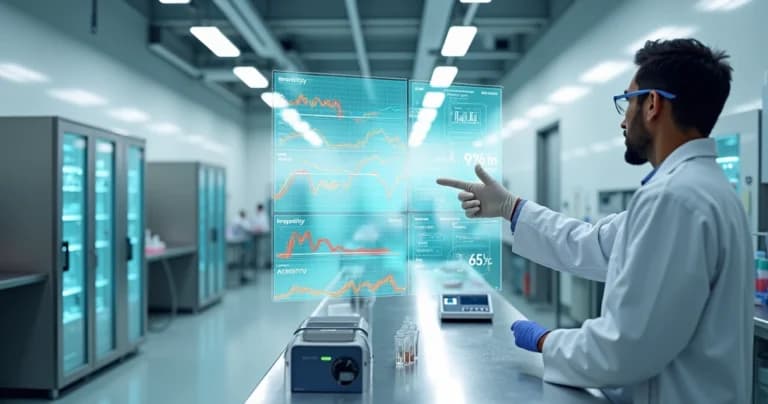
In my day-to-day work monitoring laboratory environments, I frequently observe how the routines of professionals are impacted by unexpected events. Equipment failures or out-of-pattern changes can compromise results, waste supplies, and even put safety at risk. It is in this scenario that anomaly prediction stands out as a game-changer – and I confess that since I began studying solutions like the one proposed by DROME, my vision of the future of monitoring has changed completely.
Understanding the problem: limitations of traditional monitoring
For a long time, laboratories relied on systems that alert only after a critical threshold is exceeded. In other words, the alert arrives too late: the damage is already done, the risk has already been assumed, and concern only increases.
- Products lost due to refrigeration failures
- Fines due to regulatory non-compliance
- Doubts about sample and experiment integrity
- Uncertainty about when and where to act preventively
I have witnessed situations where a simple temperature deviation delayed important work for weeks. That is why I believe that anticipating the problem is far more valuable than simply reacting to it.
The difference of anomaly prediction
From my experience, anomaly prediction is not just "another automation." The concept is simple, but powerful: analyze data in real time, recognize patterns, and alert when there is a concrete chance of a violation occurring in the coming hours.
Anticipating failures is what separates a safe laboratory from a vulnerable one.
When I learned about the DROME Predict project, I understood that there are three fundamental pillars in this type of solution:
- Spike detection: identifies abnormal readings from the start of operation.
- Drift detection: perceives slow trend changes, signaling future risks before a value even exceeds the configured limit.
- Violation prediction: calculates, based on each equipment's history, the likelihood of an imminent violation.
These features stop being mere promises and become practical differentiators when integrated into the routines of laboratories, hospitals, and industrial processes.
How does this change laboratory management?
In practice, the impact is felt at multiple levels. I like to think of it this way: prediction reduces surprises, increases confidence, and frees up team time. Without needing to manually check each record or sensor, professionals can focus on what really matters: science, innovation, and informed decisions.
- Early warning of failures, allowing maintenance before collapse
- Drastic reduction in waste of reagents, vaccines, and samples
- Greater peace of mind for those who need to respond to audits and inspections
- Agility in identifying unusual patterns, including across different equipment
I have seen laboratories go through inspections more smoothly because they knew exactly the history and any anomalies of their equipment, documenting everything with precision.
Automation in control and traceability
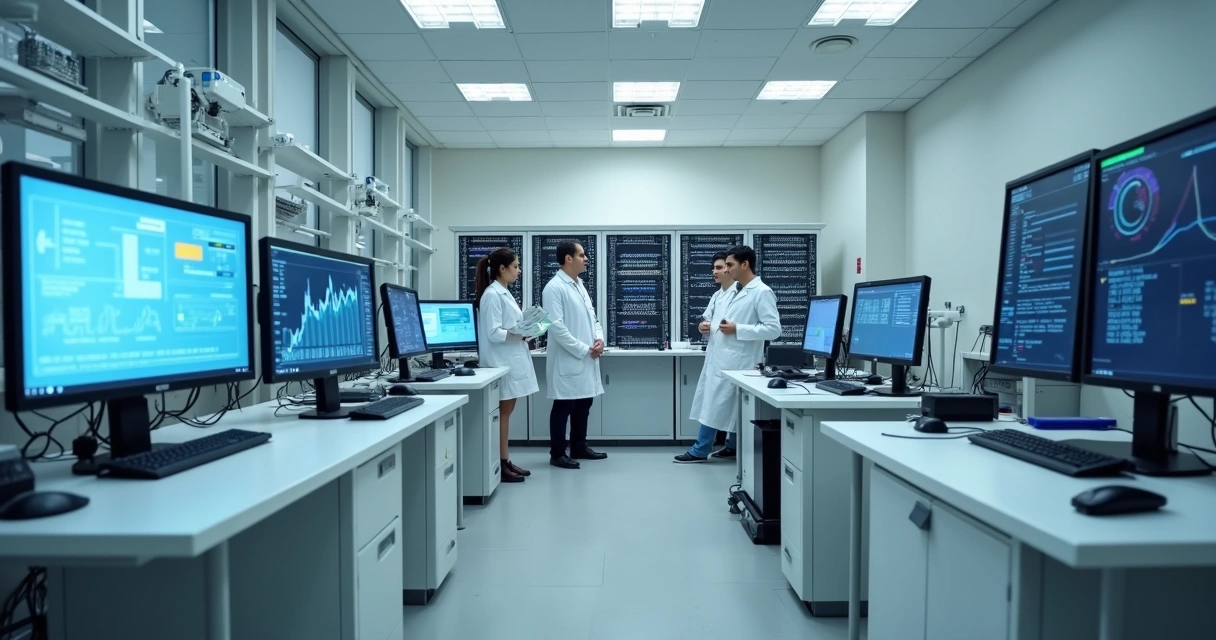
When I wrote about continuous monitoring with IoT in laboratories, I emphasized how having a system that learns over time is a valuable resource. With solutions like DROME Predict, each deviation is documented, classified, and interpreted in light of thousands of historical data points.
Traceability is greatly strengthened. The manager knows exactly when, where, and on which equipment an abnormal trend began. This results in faster and smarter actions.
If you want to dive deeper into this topic, it is worth checking my article on continuous monitoring with IoT, which addresses various advantages of automated control with live data.
The role of artificial intelligence
Many people still believe that only large industries benefit from this type of solution. But that is not true. I have seen small clinics, teaching laboratories, and even biomedical warehouses gain significantly by adopting AI to predict when a serious failure will occur.
DROME's differentiator lies precisely in the ability to learn from the real context of each sensor, equipment, or environment, not just applying generic rules. This is something that stands out especially when compared to other vendors whose algorithms take months to adjust to the specific operation of a laboratory.
Each laboratory is unique. A good prediction solution needs to adapt to its challenges.
For those who want to understand how AI and predictive maintenance can prevent losses in hospital freezers, I recommend reading about the use of AI in maintenance, available on predictive maintenance of hospital freezers.
Comparison and differentiators: why I chose DROME as a reference?
I have tested other competing platforms. There are well-known options that perform basic monitoring well, but I felt the lack of three points that are essential to me:
- Fast and practical automatic learning, even with limited data
- Transparency in predictive analysis, with clear explanations for audits
- Flexibility to integrate sensors from different manufacturers and technologies
In the context of DROME Predict, these requirements are met from the start. A system that learns quickly with limited data is a concrete advantage – and I see that laboratories gain confidence within days of use.
There are solutions on the market that make similar promises, but fall short in ease of analysis or require enormous amounts of historical records. In my opinion, what weighs most is this combination of agility, precision, and simplicity.
Real examples of impact in laboratories
Recently, I followed a microbiology laboratory that reduced supply loss events by more than 80% after adopting an anomaly prediction system. It was even possible to anticipate preventive maintenance adjustments on critical equipment, improving quality control results.
In practice, I see gains such as:
- Less rework on sensitive tests
- Detailed reports for regulatory compliance
- Data-backed responses when engaging technical teams
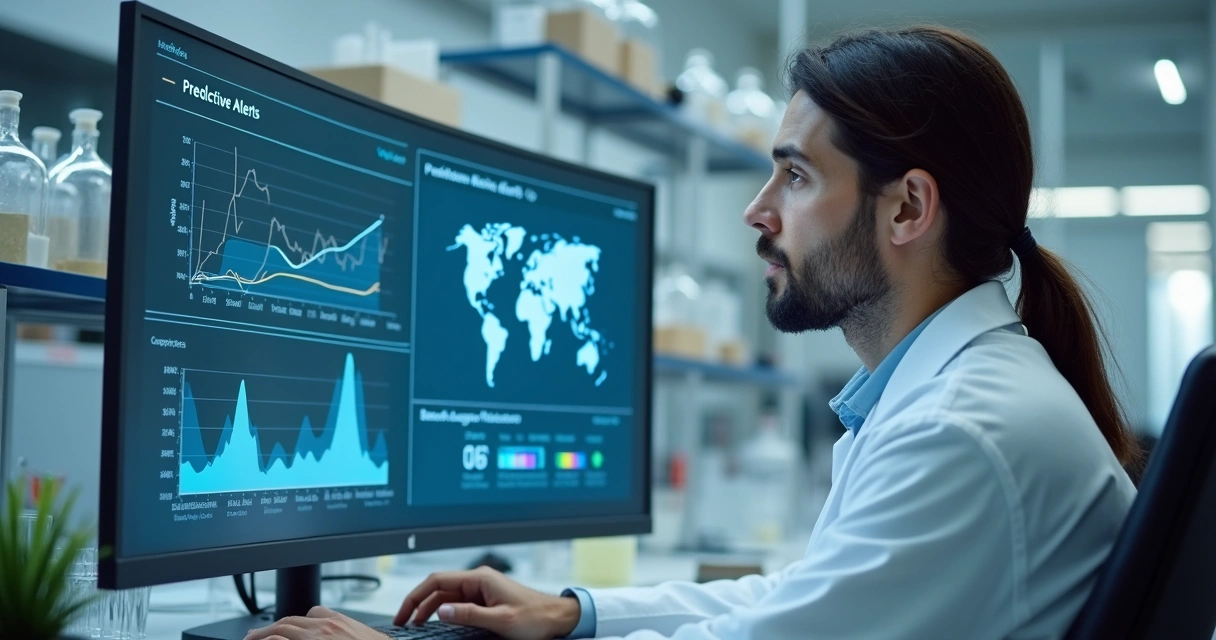
These scenarios are also detailed in other texts, such as on IoT solutions to prevent deviations in clinical laboratories.
Integrating actions and intelligence: how to start the change?
For those who are starting out or want to modernize their laboratory, my suggestion is to invest in systems that combine automation, predictive analysis, and flexibility. Working this way helps prevent losses and failures, freeing the team from repetitive concerns.
I have already written about how automated solutions reduce risks for managers. See how alert transparency and simplified documentation streamline meetings, audits, and decision-making.
The next step: transforming data into practical intelligence
If I can give advice to those who still rely on spreadsheets or traditional alarms, it is this:
Do not wait for the next problem to happen. Act first, with reliable information and in real time.
DROME delivers exactly that: anticipation, flexibility, and confidence for different laboratory realities. At these times, choosing the right partner makes all the difference.
For those who want to dive deeper into the relationship between predictive analysis and reduction of supply losses, I recommend learning more about how predictive analysis can prevent supply losses.
Adopting anomaly prediction with an intelligent platform is the safest path for those seeking to transform the laboratory into a truly data-driven space. If you want to see firsthand how it all works, I recommend contacting DROME and experiencing a solution designed for your laboratory routines.