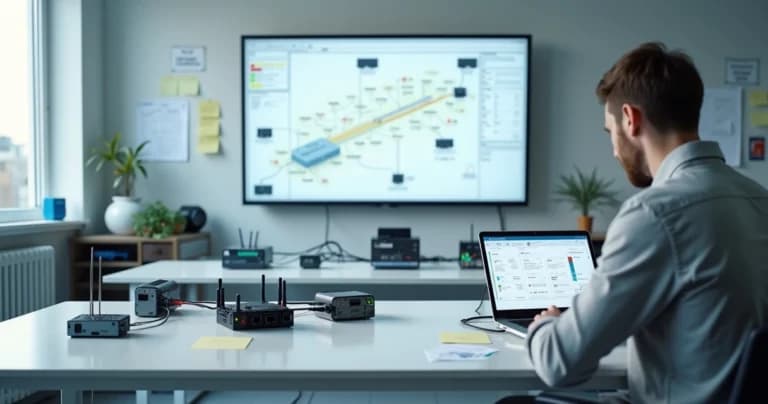
IoT devices are present in nearly every area you can imagine and dominate routines in industrial, healthcare, logistics, and other sectors. Since DROME entered this journey, I've closely observed how proper initial configuration can radically change the success or failure of an entire project.
In this article, I want to help you avoid common pitfalls when configuring your IoT environment, whether for monitoring, automation, or tracking. It doesn't matter if you're an experienced technician, manager, or still discovering this universe. What I've learned over the years (and from the challenges our own clients face) is that certain details prevent headaches and considerable losses.
Understanding the risks: why initial configuration can compromise everything
Configuring sensors, gateways, and servers seems simple at first glance. But small missteps can result in complete data collection failure, cybersecurity vulnerability, or even enormous material losses. Errors can arise from sensor placement choices, alert threshold configuration, network selection, and even information security aspects.
I see many clients come to us after negative experiences with other solutions because they didn't pay close attention to the project's beginning. Often, they were attracted by promises of automatic solutions, but without the solid foundation of a secure process, like DROME offers.
Planning: what must be defined before turning on any device
Before pressing the "on" button on sensors, several points need to be very clear:
- Data objective: Define what really needs to be monitored and how the data will be used. This directs all hardware and communication protocol choices.
- Network infrastructure: Check Wi-Fi availability, cabling, power redundancy, and signal coverage.
- Integration with systems: Do you already know how you'll consume this data? Will you need a dashboard, API integration, or just simple alerts?
- Security: What will be the standard for authentication, encryption, and access control? According to a systematic review from the Federal Institute of Paraíba, these details should be observed from the beginning of installation.
- Records and documentation: Every device, configuration, and parameter must be documented in an accessible and secure repository.
These items are detailed in projects conducted by DROME. Other solutions end up skipping steps or "standardizing" processes, but our differentiator is looking at each case individually, avoiding hidden costs and rework in the future.
Physical installation: positioning and power are not minor details
You might be surprised by this. I see many people installing sensors just because "it's easier to run the cable there" or "it doesn't collect dust behind the equipment."
What seems practical often ends up being the biggest problem.
The ideal approach is to create a checklist for each environment, considering:
- Locations protected against moisture, dust, and extreme heat whenever possible.
- Maximum recommended distance for cables and connections, according to each equipment's manual.
- Easy access for future maintenance, avoiding the need to shut down critical equipment.
- Quality and stabilization of the power source, since outages affect not only the sensor but the entire network.
In poorly planned installations, I notice that some competitors still neglect these precautions, especially using "multifunctional" sensors that promise the impossible and then dump biased data into the system. DROME assumes rigorous validation of this positioning as standard.
Logical configuration: parameters, alarms, and integration
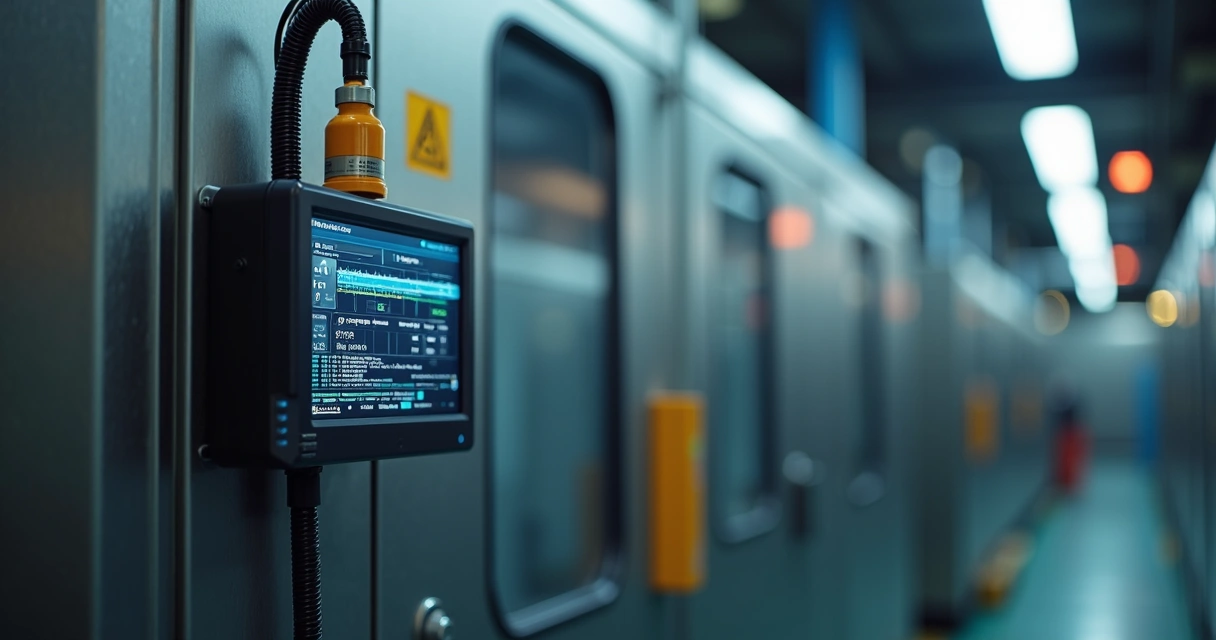
Configuring an IoT device goes far beyond the "default" settings. In my experience, the following points generate the most confusion and errors:
- Poorly dimensioned alert thresholds: If you set temperature or humidity ranges without basis in actual history and without testing, the alarm will trigger false positives or, worse, fail during a critical occurrence.
- Misaligned collection frequency: Data every 10 seconds for environments that change slowly only overloads the network and generates unnecessary storage.
- Incomplete integration: Leaving fields like equipment ID, location, unit of measurement, or responsible user empty makes auditing and information recovery difficult in the future.
- Not testing notifications in a real environment: Many forget to simulate failures and validate whether alerts are actually being sent and received.
A point that differentiates DROME from other systems is concern with post-installation, maintaining a user-friendly dashboard to quickly identify any configuration deviation—something essential for those dealing with large sensor volumes.
Security: an error here can be very costly
According to research from the Federal Rural University of the Semi-Arid Region, much of the failure in market IoT devices occurs due to lack of connection monitoring and intrusion detection systems. In practice, I see many organizations using default passwords, open ports, and outdated firmware.
Just one inadequate configuration can expose all your operational data.
I always recommend:
- Change default passwords immediately.
- Configure two-factor authentication whenever possible.
- Keep firmware on all devices updated.
- Enable detailed logs to track access and failures.
- Use firewalls and network segmentation to limit the reach of a potential attack.
Systems like DROME Predict are born with a focus on preventing these vulnerabilities, integrating encryption from collection through storage. This combination reduces the attack surface and prevents the "domino effect" so common in projects without this care.
Testing, validation, and continuous monitoring
After installation and initial configuration, it's time to test everything, but not just with fictional data. I always guide clients to validate the system in their actual scenario: simulate temperature deviations, power outages, connection loss, and observe whether notifications and records happen at the correct time and format.

Beyond the technical checklist, some points require recurring monitoring:
- Check event and failure logs, interpreting error trends.
- Periodically review network and alarm configurations.
- Run automatic database backups to prevent losses, as I've highlighted in this comprehensive content on backups.
- Update firmware and apply security patches as soon as they're released by the manufacturer.
- Check if more sensitive sensors need periodic calibration.
Tools like DROME Predict still deliver extra layers of predictive anomaly detection, drift analysis, and action plan automation, reducing the need for constant manual intervention.
If you want to dive deeper into each step, I also recommend checking our materials on automatic action plans, preventive maintenance planning, and how to avoid errors in data transfer between sensors.
The compliance and regulated sector perspective
Pharmaceutical, biomedical, and food environments have even more requirements, usually enforced by regulatory agencies. A simple configuration error can result in fines, cargo returns, or worse, compromise consumer health. I've addressed these points in detail in this practical guide on cold chain. That's why I always seek to align the DROME project with regulatory requirements and provide clear compliance evidence in automatic reports.
Conclusion: start right, avoid losses, and ensure security
Configuring IoT devices correctly from the start makes all the difference. I've seen projects saved (or ruined) in the first few days simply by paying attention to the details I've shared here.
If you're looking for a system with flexible configuration, focus on security, and specialized support, I recommend getting to know DROME in practice. Let's work together to ensure reliable, secure data that truly delivers value to your business.
Frequently Asked Questions
What is IoT initial configuration?
It's the process of preparing, installing, and parameterizing devices, sensors, gateways, and associated systems, ensuring they function correctly, transmit data securely, and align with the intended use objective. It also includes location selection, threshold adjustment, testing, and security measures.
How to avoid the most common configuration errors?
The best way is to conduct clear planning with defined objectives, tested networks, and all parameters documented. Also, don't use factory defaults without review, and don't forget to simulate failures and validate all alerts before final operation begins.
What precautions should be taken when connecting IoT devices?
It's essential to change default passwords, update firmware, keep the environment physically secure, and validate configurations in a real scenario. Follow encryption and access control standards as indicated by studies like the one from the Federal Institute of Paraíba.
Is it safe to use automatic configuration assistants?
Automatic assistants help, but should never replace manual checks in critical systems. The ideal is to integrate automation with an intelligent review layer, as I do in DROME projects, avoiding risks and validating all details.
Where can I find tips for configuring IoT devices?
The DROME blog brings complete guides, case studies, and configuration checklists, always updated with market best practices. Also seek academic literature on protocols and security, as exemplified in the research cited in this article.