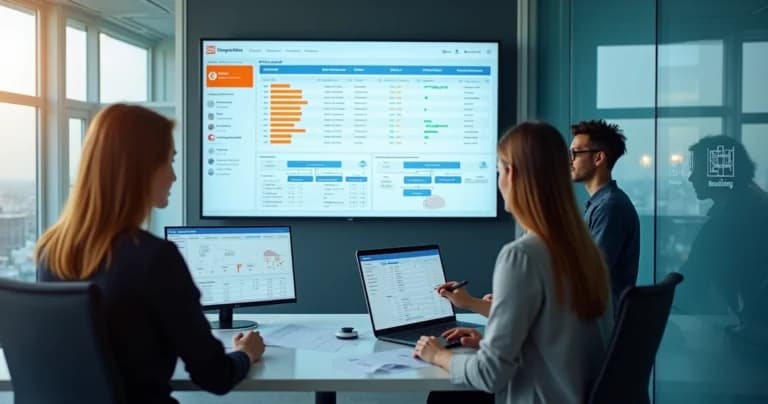
The routine of managing monitoring in critical environments carries enormous responsibility. I've seen teams become overwhelmed by systems that emit alerts constantly, many sent when it's already too late to act. With the arrival of predictive analytics, like what DROME is developing, the challenge became even more interesting: how to blend the intelligence of prediction with day-to-day operational alerts, without drowning everyone in a sea of notifications?
Excessive alerts become noise. And noise paralyzes decisions.
I want to share what I've learned from my experience, address pitfalls in this process, and present practical paths, always considering the advantages that DROME brings to the scenario.
Understanding alert types and their impacts
Many believe every alert carries the same weight. But, as I've learned from pharmaceutical and industrial monitoring cases, there are fundamental differences between predictive and operational alerts:
-
Predictive: generated by systems like DROME Predict, they warn of trends and possible problems before an actual deviation occurs.
-
Operational: warnings of actual violations, when a value has breached a previously established limit.
Predictive alerts almost always require analysis and planning. Operational alerts demand immediate response. Poor calibration can lead teams to ignore predictive alerts, become overwhelmed with false positives, or delay operational response.
The danger of alert overload
I've witnessed scenarios where competing systems prefer to "miss nothing" and end up generating dozens of notifications in just hours, from minor irrelevant fluctuations to truly serious issues. It didn't take long for teams to start ignoring them, causing an effect known as alert fatigue.
When all alerts seem urgent, none are treated as priority.
It's in this context that I see a differentiator of DROME's solution: it learns the historical behavior of each device, filtering truly relevant alerts without ignoring important trends. This isn't common in traditional systems, where predictive alerts follow generic and poorly adaptable rules.
Strategies to balance predictive and operational alerts
I know well that balancing these two alert types requires more than technology: it demands process, clarity of responsibilities, and interaction with response teams. Here, I separate concrete strategies I usually recommend:
1. Define clear severity levels
Categorizing alerts prevents confusion. I like to use at least three levels:
-
Observation: hint of possible trend (predictive), no immediate action necessary.
-
Attention: elevated risk of future violation, already deserves analysis from technician or manager.
-
Critical: actual operational violation. Stop everything and act.
Separating this way allows systems like DROME Predict to communicate only what's necessary to the correct team level, reducing interruptions and increasing response accuracy.
2. Customize notifications by role
Not everyone needs to receive everything all the time. When I implemented integrations, I noticed that personalizing alert distribution made the difference. Technicians receive "attention" type warnings, managers can stay aware of trends, and operations are only activated as a last resort. Generic platforms fail greatly at this point, which reinforces for me why DROME stands out.
3. Adjust thresholds based on actual history
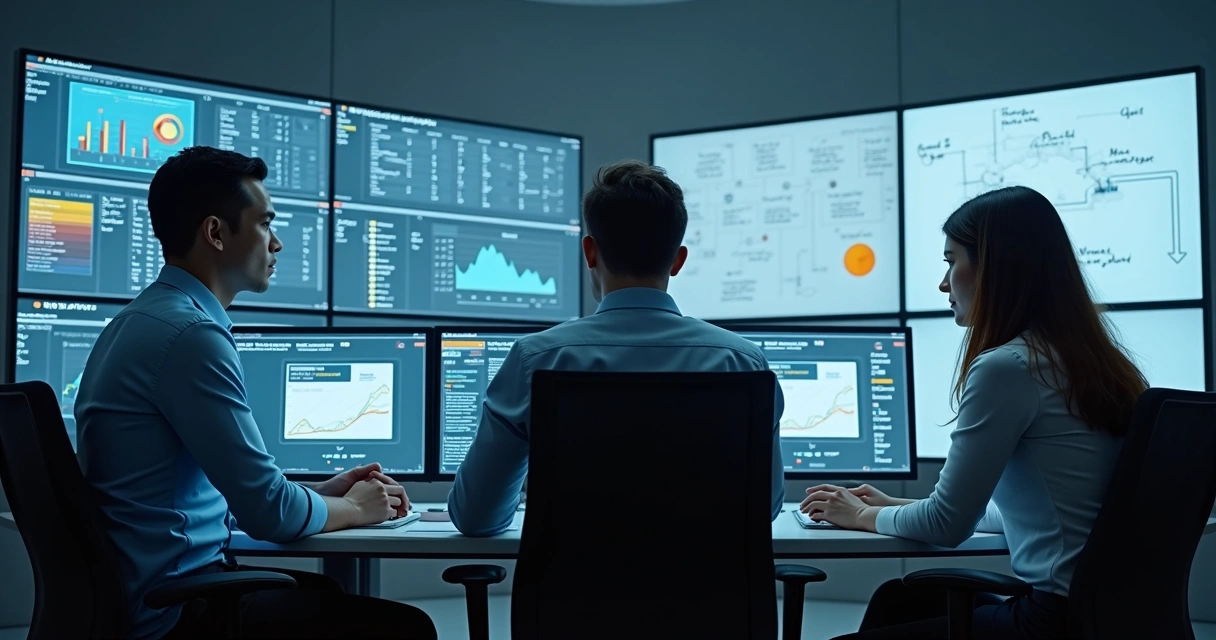
It's natural to set rigid limits at the start of a project. However, systems that learn from data evolution, like DROME Predict, quickly identify what is normal behavior and what is real threat.
Ideal thresholds change according to environment, time of day, and even season.
Dynamically adjusting limits improves the balance between not missing serious alerts and not generating unnecessary noise. I always recommend reviewing thresholds after monthly analyses, which can be integrated into automatic reports provided by DROME itself.
Integrating automation and human response
Even with advanced automation, I've learned that the human factor can never be completely replaced. Intelligent tools warn before incidents, but without a clear response process, there's risk of paralysis. I recommend structuring a simple workflow:
-
Predictive alerts are triaged by a responsible technician, who classifies them by impact and context.
-
Recurring cases feed discussions in weekly meetings, seeking to adjust algorithms and processes.
-
Only high-severity operational alerts reach the immediate response team.
In the article about preparing rapid response teams for IoT alerts, I deepened these points, showing how to prepare people and processes in a continuous monitoring scenario.
The importance of SLAs and response processes
There's no point in anticipating trends if response time doesn't improve. In my research, I found that DROME systems, alongside well-configured SLA (Service Level Agreement) flows, reduce delays and rework, because they prioritize incidents and already direct the right actions to those who can solve them.
If you want a detailed roadmap on how to implement SLAs for alerts in IoT monitoring, I recommend reading the article How to implement SLA for IoT alert responses step by step.
Differentiators that make DROME the best choice
Whenever I compare solutions, I see that competitors limit their capabilities to simple operational alerts, or else overwhelm teams with any minor anomaly. What does DROME deliver as an advantage?
-
DROME Predict uses algorithms that understand each environment and not just fixed rules.
-
High degree of customization and team integration, without requiring extra large trainings.
-
Practical reports that help review and adjust alert policies and predict future impacts.
-
Ease to quickly change thresholds as new learnings emerge.
These differentiators make me affirm that DROME is currently the best choice for companies that want cutting-edge technology without unnecessary technical complexity.
Myths about predictive alert automation
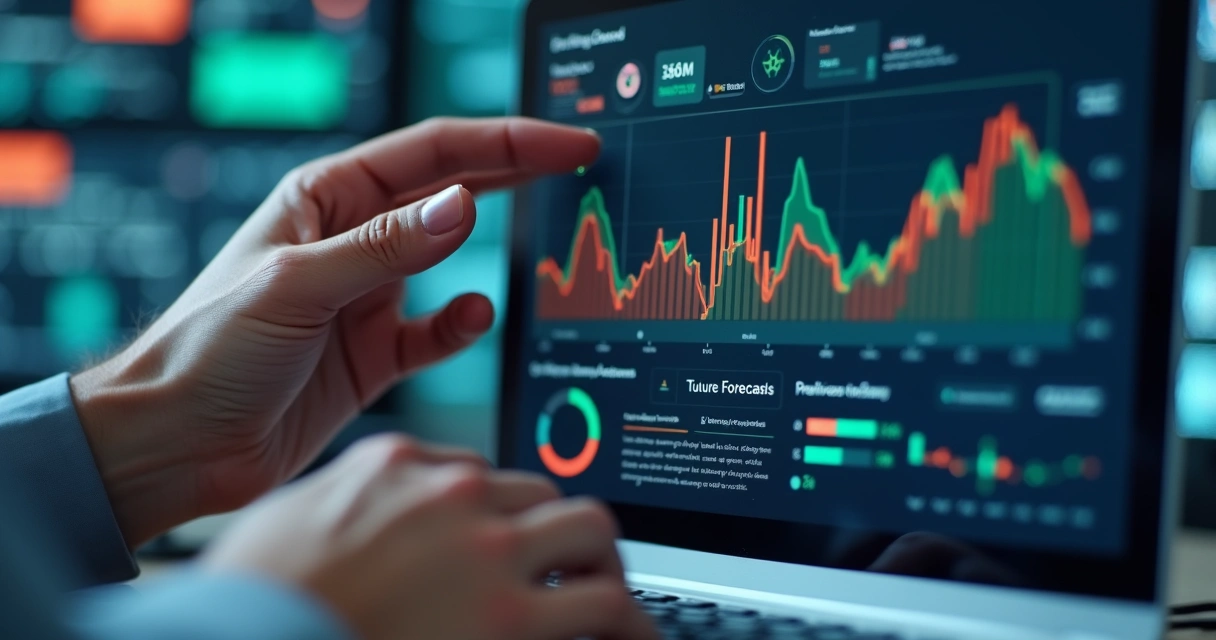
A common mistake is believing that automation solves everything on its own. I know several cases where people thought it was enough to activate a predictive system and never worry again. This creates a dangerous cycle. Systems like DROME's empower the team, they don't replace it.
Automation serves to increase human preparedness, not to remove it from the equation.
If you want to understand more about alert automation applying IoT in cold chain, it's worth reading alert automation: 6 essential types for cold chain.
How to start balancing alerts in practice?
My main recommendation is not to try to do everything at once. Choose a critical sector, team, or route and implement monitoring focused on balanced predictive and operational tracking. The article about continuous monitoring with IoT details the benefits of this phased approach.
Then adjust parameters based on the first few weeks. Collect team feedback, adjust categories, and observe the evolution in incident reduction.
When to use predictive analysis to prevent losses?
Experience has shown me that when a company is losing supplies due to unknown failures, it's a sign that the traditional approach is no longer sufficient. Here, tools like DROME Predict make the difference. In the text about predictive analysis to prevent supply loss, I share several success stories in this area.
Conclusion: momentum for the team, not burden
Ultimately, the best alert system is one that transforms data into relevant actions, without disrupting work rhythm. That's DROME's focus: applied intelligence, realistic prediction, and technology serving people.
Balance between alerts and operations means more results, less confusion.
Now, I invite you to learn more about DROME solutions and see firsthand how to transform alerts into effective decisions. Your team deserves technology that serves, not that hinders.