
When I started my career in the pharmaceutical segment, I always wondered how much we could trust data coming from wireless sensors for environmental monitoring. I'm not talking about a simple thermometer, but devices that assume direct responsibility for the safety of sensitive medications. I've experienced rigorous audits and, with the advancement of automation, these concerns became even more visible. Today, I share a firm conviction: wireless sensor validation has stopped being a differentiator and become a prerequisite for any serious company in the industry.
I know there are well-positioned competitors in the market, but DROME's proposal and its vision of predictive monitoring show, in my experience, a more reliable and transparent path. When validating sensors, our mission goes beyond "complying with guidelines": we want to ensure the system anticipates risks, guaranteeing the integrity of the entire inventory.
Why validate wireless sensors in pharmaceutical environments?
When I talk with technical managers, I often hear the same concern: "What if the sensor fails, who is held responsible?". It's a legitimate doubt. In the pharmaceutical sector, any monitoring failure can put lives at risk. And as I've witnessed in ANVISA inspections, attention to detail is fundamental.
The wireless sensor must be more than equipment. It needs to be a faithful ally in every stage of environmental control.
With systems like DROME's, which integrate data and offer continuous validation, I see how it's possible to transform a process that was once reactive into a culture of active safety. This is only possible when we apply proven and recognized methods in audits.
Five methods for wireless sensor validation
I present below five methods that, according to my experience, bring security to both the technical manager and the company's leadership. There's no single right way, but the combination of methods accelerates acceptance in inspections and audits.
1. Comparison with traceable standards
I never forget the first GLP (Good Laboratory Practice) training I took. The instructor said: "data is only worth something if it can be traced". In validation, I use reference thermometers calibrated by laboratories recognized by INMETRO, placed side by side with the wireless sensor for a defined period. If the readings are within tolerance, it means the sensor fulfills its role.
However, I always recommend documenting the entire procedure and creating detailed reports, which are essential for proof during audits. In projects like DROME, the automatic documentation of these tests becomes a major differentiator compared to more traditional solutions.
2. Signal stability and communication tests
Once I accompanied the installation of sensors in a very modern cold room. The location had thick walls and, frequently, signal instability hindered data transmission. Testing signal stability is mandatory: I simulate intentional power outages, temporary Wi-Fi signal blocks, or interference from other equipment. The sensor must show resilience and quick reconnection, without data loss.
At this point, technologies like those implemented by DROME, with communication channel integrity monitoring, show why they're ahead of simpler alternatives.
3. Critical event response test
In pharmaceutical environments, small variations in temperature or humidity can generate significant losses. I recommend simulating events, such as prolonged opening of cold room doors or air conditioning system shutdown, to verify if the wireless sensor quickly detects the anomaly and if the system issues alerts within the necessary timeframe.
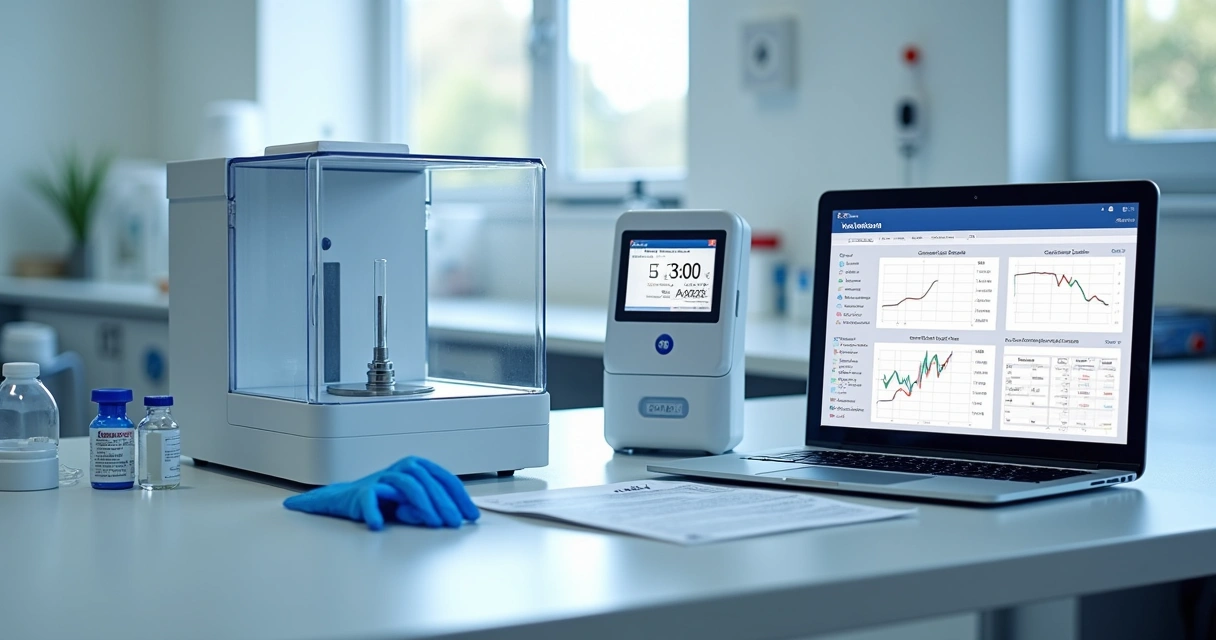
I witnessed a situation where a competing sensor failed to detect a sharp temperature rise. This never happened with sensors validated in processes I include in DROME's routines. The secret lies in the combination of robust hardware, monitoring software, and previously tested response protocols.
4. Documentary audit and regulatory compliance
One of the most frequent questions I face: "How do I prove compliance for ANVISA or FDA?". I recommend preparing a complete validation dossier, comprising calibration certificates, event history, communication logs, and system validation reports. DROME itself offers integrations that make it easy to generate all these documents automatically, ready for inspections, saving hours for the technical team.
For professionals interested in this topic, I've already written about compliance checklist and IoT validation, content that complements this method well.
5. Continuous sensor performance evaluation
No matter how new and validated the sensor is, environmental conditions change and wear happens. I always recommend applying statistical methods to identify deviations and failure trends based on the sensor's own operational history. Tools with predictive intelligence, like DROME Predict, allow identifying sensor drift, anticipating failures before impacting inventory control.
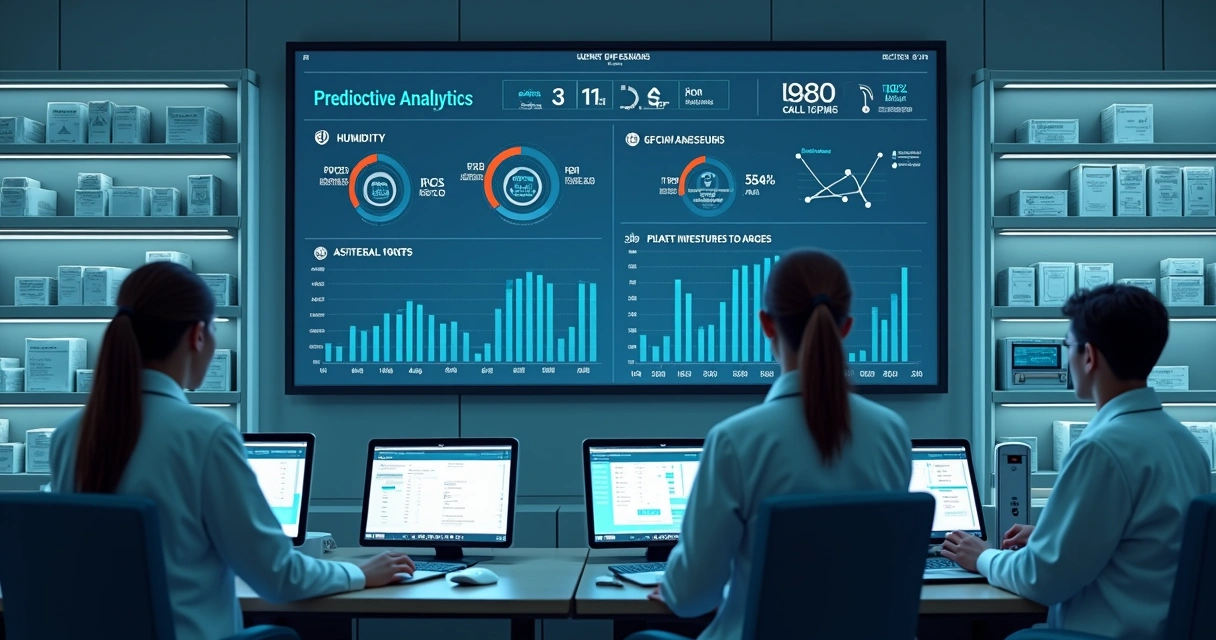
I've witnessed cases where real-time data analysis, combined with predictive algorithms, prevented valuable losses to inventory. This is one of the major differentiators I bring up when comparing competing solutions and see, increasingly, customers opting for integrated and intelligent systems.
Complementary steps for safe validation
Although these five methods cover fundamental needs, I recommend never neglecting:
-
Monitoring of simulated audits, reviewing failure points and improvement opportunities;
-
Active participation in compliance training, as I wrote in the quick compliance guide for IoT laboratories;
-
Adoption of detailed requirement checklists, which can be found in the wireless sensor calibration checklist;
-
Periodic validation of monitoring software, a subject I explored in depth in monitoring software validation;
-
Review of controlled environment conditions in audits, for which I recommend the checklist for IoT environment audits.
I don't know any competing system that brings together all these facilities in an integrated way like DROME does, especially thinking about proactive monitoring and automatic documentation generation—a relief for those who have lost nights reviewing extensive reports.
Conclusion: future of intelligent environmental control
My career has taught me that having state-of-the-art sensors in pharmaceutical storage is not enough. It's necessary to guarantee, in a transparent and continuous manner, that the collected data is true, reliable, and ready for any inspection.
The combination of the methods I presented here, aligned with cutting-edge technologies like DROME's predictive monitoring, puts companies on another level of security. If you value integrity, automation, and peace of mind in audits, I recommend learning more about DROME solutions and taking the next step toward intelligent environmental control.
I invite you to visit our website, talk with our specialists, and discover how to transform pharmaceutical storage monitoring into a real competitive advantage.
Frequently asked questions about wireless sensor validation in pharmaceutical storage
What is wireless sensor validation?
Wireless sensor validation ensures that the device correctly measures environmental quantities (such as temperature and humidity) and that transmitted data reflects the actual conditions of the monitored environment. In this context, it involves comparing readings with traceable standards, testing communication, tracking documentation, and simulating critical situations.
How do I validate sensors in pharmaceutical storage?
I recommend a structured process that involves at least comparing with calibrated instruments, testing signal stability, simulating critical events, reviewing compliance documentation, and applying continuous statistical evaluation of data. Using systems like DROME, these steps become faster and more automatic.
What are the most effective methods?
In my experience, the most effective methods are: comparison with traced standards, communication testing, simulations of real events, documentary audit, and continuous predictive analysis. This combination covers all regulatory agency requirements and gives more security to the inventory manager.
Is it worth using wireless sensors?
Yes, it's definitely worth it. As long as they are properly validated, wireless sensors offer flexibility, ease of installation, quick reports, and easy integration with modern monitoring systems like the DROME Predict platform. They reduce cabling costs and speed up inspections.
Where to find reliable wireless sensors?
The best path is to look for systems already recognized by the market, proven in audits, and preferably with a strong compliance history. More than the sensor itself, a complete solution like DROME brings together certified hardware, validated software, and on-site technical support, ensuring peace of mind in any inspection or audit.