Throughout my career, I've always recognized that many losses and serious problems could have been prevented if there were a reliable way to predict failures before they occur. I see, for example, that in areas such as the pharmaceutical, biomedical, and industrial sectors, even a simple out-of-range temperature reading is a sign of loss. Predicting failures, in this context, is not just a differentiator: it's a layer of protection for assets, lives, and reputations.
Anticipating failures transforms loss into prevention.
That's what I want to discuss in this article: how I perceive that intelligent use of historical data can change the game for any operation in 2026. To illustrate, I'll base myself on examples and methodologies adopted by DROME, a reference company in predictive solutions with which I've had contact on some projects.
Why is historical data so valuable?
For a long time, systems simply reacted. They received a sensor alert, activated the responsible party, and then we saw the team racing against time. But this traditional method is already outdated. Today, I understand that the secret lies in looking back and using historical data to predict what might go wrong down the road.
By analyzing thousands of documented events in systems like DROME's, I learned that each record not only shows the error but brings clues about what was changing before the failure. These are trends, hidden patterns, combinations of small variations that, to the eyes of those who merely "react," end up going unnoticed.
Historical data functions as a faithful "diary" of devices, equipment, and processes.
Once, reviewing temperature readings from a cold chamber, I noticed that before each violation there were always small increasing oscillations. When these changes were observed through a predictive lens, we avoided losses that would have been inevitable if we were relying only on the emergency alert.
Where does so much data come from? And how can we trust it?
With the popularization of connected sensors, immense volumes of information are being generated constantly.
- Temperature sensors
- Humidity and pressure readers
- Detection systems for gases such as CO₂
- Devices that measure voltage, flow, and other parameters
In the case of DROME, there are already hundreds of thousands of records, organized in databases that aggregate context: data origin, date, time, equipment type, among others. However, having data is not enough. In my experience, to trust it, some points are indispensable:
- Regular sensor calibration, from installation (there's an excellent checklist on calibration requirements in this article)
- Human validation in the first cycles, avoiding simple installation errors
- Cross-referencing parallel data, when possible
Only with confidence in the data source is it possible to advance to the following stages of prediction.
How do you predict failures by looking at the past?
The logic behind prediction uses three main pillars, which I observed being adopted in the development of the DROME Predict solution:
- Detection of anomalous spikes
- Identification of drifts and gradual deviations
- Prediction based on recurrence patterns
I'll detail each one, showing how I see their practical application in day-to-day operations.
Detection of anomalous spikes
This first step is immediate: compare the current data with the sensor's own historical record. If a value "jumps" from the recorded pattern, a predictive alert is triggered. This, in fact, can already be done on the first day of operation.
The secret is to notice the different before the different becomes a problem.
I worked in a hospital where, on a particular day, humidity in a biomedical refrigerator suddenly rose, without exceeding the limit. The system flagged that this behavior was unprecedented for that equipment. It was possible to act before any damage occurred.
Slow drift and cumulative deviations
Not every failure arrives suddenly. In most occurrences I've investigated, there is a slow process of change. Small variations accumulate over time. In about 30 readings, it's already possible to start seeing trends.
At this point, solutions like DROME Predict learn from the "personality" of each sensor and identify whether changes point to a future violation.
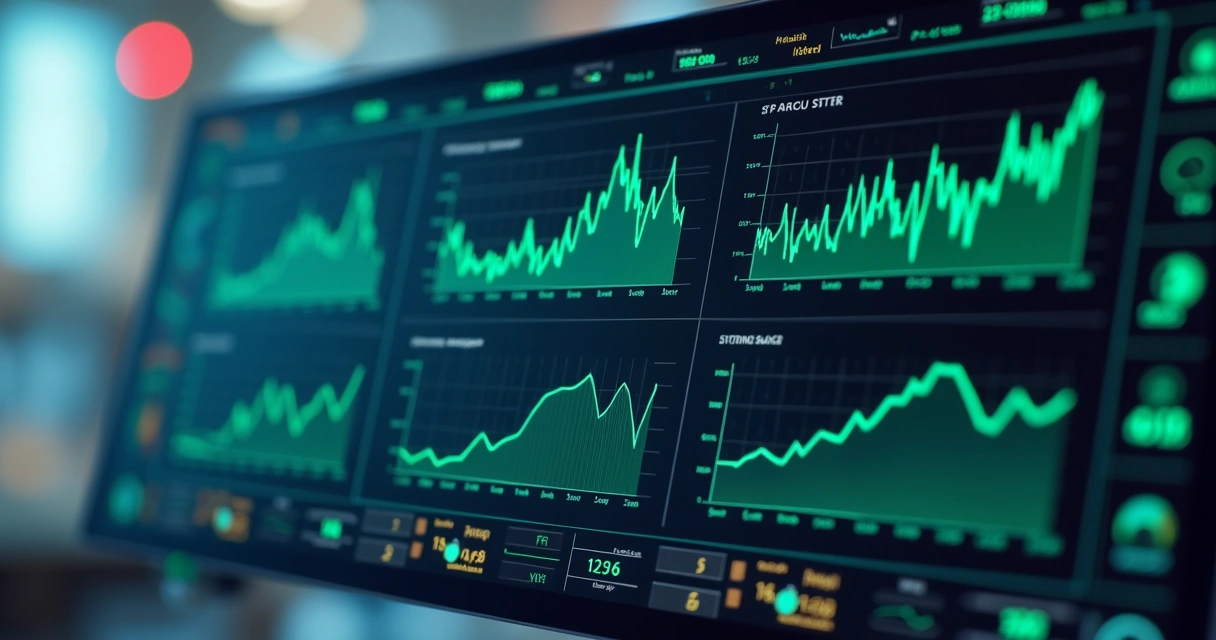
I've seen cases where a simple continuous pressure drop in an industrial system, combined with small temperature variations, were the prelude to serious operational disruption. Thanks to automatic comparison with previous readings, we avoided shutdowns and penalties.
Prediction of imminent violations
The third pillar is the true advancement beyond traditional alerting. Machine learning comes into play: the system begins to calculate the probability of a future event based on everything that has already happened with that equipment.
This stage transforms history into concrete prediction, indicating not only that risk exists, but when the violation should occur if nothing is done.
I find it fascinating to see that, even today, platforms like DROME can answer questions like: "What's the chance this cold chamber will violate temperature standards in the next 8 hours?" That changes any manager's life.
In comparison, I've seen competitor projects focused only on extreme spikes. They fail by ignoring slow trends or detailed personalization by sensor type. That's why I always recommend evaluating whether the chosen platform integrates these three layers, just as DROME does.
How does the practical prediction cycle work?
I'll share the flow I usually suggest:
- Continuous information collection by reliable sensors
- Detailed storage, organized by individual history
- Real-time statistical analysis, comparing each reading with the sensor's own pattern
- Issuance of predictive alerts at three levels: spikes, drifts, and future probability
- Adoption of proactive actions (as detailed in this article on automatic action plans)
The secret of this cycle is that the more data, the greater the predictive accuracy. And the faster you act after the alert, the lower the risk of losses.
The role of artificial intelligence in predictive analysis
In 2026, I see that machine learning will not be just a promise, but a market requirement. Companies that bet on adopting algorithms that learn from historical data are already ahead.
Systems like DROME Predict personalize the analysis of each sensor and can distinguish, for example, whether chamber A has a history of harmless oscillations, while chamber B tends to present real risks with each small deviation. This avoids false alarms, reduces rework, and increases confidence.
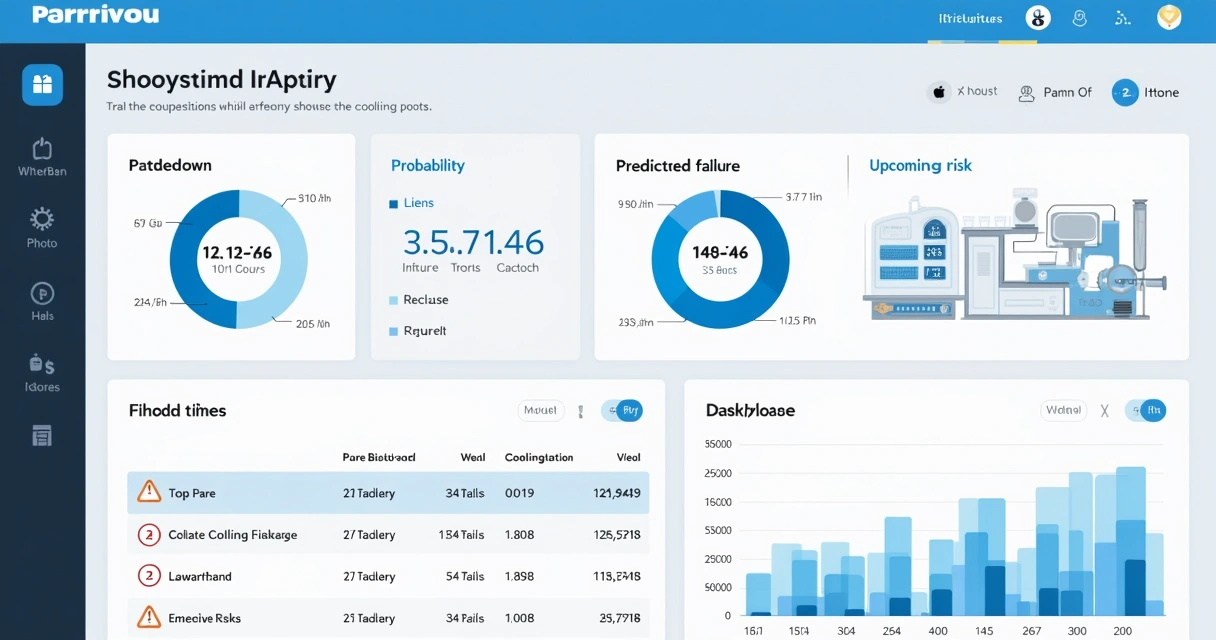
I've had access to reports where, using AI resources, it was possible to anticipate maintenance work orders, reallocate critical loads, and prevent waste. For those thinking about adopting solutions of this type, it's worth checking the details on how AI predicts failures in cold chambers.
Direct benefits of adopting history-based prediction
- Immediate reduction in waste
- Fewer regulatory penalties
- Protection of lives and critical assets
- Increased customer confidence in sensitive operations
- Reduction in rework from corrective maintenance
I also see that a good autonomous maintenance strategy drives these benefits even further. In fact, there's important content on how this occurs in laboratories that can be read on the page about autonomous maintenance for failure reduction.
Caution: where many fail when trying to predict failures
I've witnessed failed attempts by companies that adopt systems without local intelligence, or that ignore consistent historical accumulation. Some even analyze only raw data without considering correlations. Others bet on generic tools that don't personalize each sensor's context. The result is always the same: false alerts, team fatigue, and low confidence.
A personalized approach greatly increases accuracy rates and agility in action plans.
When choosing a technology, pay attention to whether the prediction cycle includes continuous learning, automatic adaptations, and easy integration into the decision-making flow.
How to take the next step in failure prediction?
For those studying how to expand failure prediction, I strongly recommend deepening knowledge on topics such as temperature deviation analysis (a great example can be found in data analysis to predict deviations). Staying updated on best practices makes all the difference.
In the end, if there's one thing I can state with certainty, it's that those who bet on robust methods and complete solutions like DROME's are, literally, building a safer, more predictable, and more sustainable future for their operation in 2026.
Now, how about experiencing the future in your operation?
If you want to understand, in practice, how historical data can transform your laboratory, industry, or cold chamber performance, I suggest learning more about DROME solutions. Get ahead, invest in prevention, and see how it's possible to leave behind the paradigm of "after it happens."