I've always maintained that in IoT-monitored environments, the time between alert and action defines success or headaches. That's why structuring clear Service Level Agreements (SLAs) for alert responses is essential in areas like cold chain, pharmaceutical industries, laboratories, and even supermarkets. Defining these SLAs determines whether an incident will just be "a data point in history" or become a major operational crisis with financial and reputational impact.
But simply configuring ideal response times isn't enough; you must create, measure, and maintain that standard throughout the incident lifecycle. Follow how I do this, step by step, and why adopting solutions like DROME's makes this challenge much simpler.
Why are SLAs so important for IoT alerts?
I've witnessed several managers underestimating the impact of response delays. A SANS Institute report shows this reality: nearly half of incidents in critical infrastructure are detected within 24 hours, but about 20% take more than a month for complete resolution. Here's the thing: detecting quickly is only part of the work; acting quickly is the determining factor (SANS Institute).
Traditional monitoring only notifies the problem; the client still depends on an alert team ready to intervene. Considering the volume of alerts emitted by sensors, automation in response prioritization defines which problems gain immediate attention and which enter the queue. This is where SLA plays a fundamental role: it transforms promises into measured and visible commitment.
Choosing the right architecture also makes a total difference. With solutions like DROME, beyond continuous monitoring (learn more at continuous monitoring with IoT), it's already possible to act preventively. But to manage these responses, a well-designed SLA closes the protection cycle.
Step 1: Understand the complete alert cycle
Before defining any response time or metric, I always recommend understanding the real alert flow. Observe:
- A sensor triggers an alert to the platform.
- The platform identifies and registers the event with timestamp.
- The alert reaches the responsible technician (via email, SMS, app, etc).
- The technician becomes aware and initiates service.
- The incident is resolved, and status is updated.
Most competing IoT providers only measure time until alert emission. I consider this insufficient: good SLA measures from start (alert generated) to total resolution (problem neutralized). Robust systems, like DROME's, facilitate end-to-end monitoring because they have detailed history of each event (over 453,000 events analyzed in our database, for example).
Step 2: Define alert types and prioritize
Not every alert requires the same urgency. In projects I've overseen, separating alerts by type and impact helped me better distribute efforts. That's why I recommend:
- Critical: immediate risk to life, safety, or asset integrity.
- High priority: risk of material loss, fines, or shutdowns.
- Medium priority: operational deviation without immediate impact.
- Low priority: recommendations and trends, without emergency action.
Clearly showing alert severity on the dashboard helps teams react first where it matters most. Platforms like DROME allow configuring different automatic rules and routines for each category. Other market solutions don't bring this flexibility natively, causing the responsible party to waste time interpreting data instead of acting quickly.
Step 3: Document response SLAs transparently
After mapping the flow and classifying alerts, it's time to transform this into actual SLAs. I always suggest defining three points for each category:
- Initial response time: how long until someone assumes the ticket.
- Full response time: how long until taking concrete initial action.
- Resolution time: maximum time allowed to normalize the problem.
For example: "For critical alerts, the SLA is 5 minutes for response, 15 minutes for initial action, and 1 hour for definitive solution." Recording SLAs in contracts, action plans, and within the platform itself ensures everyone knows expectations and responsibilities. DROME offers audit dashboards that facilitate this monitoring. Other players, even well-known in the sector, present less intuitive tables and poor integration with customized workflows, making rapid decision-making difficult.
Step 4: Automate notifications and escalation
With SLA in hand, automation becomes your main ally. Modern IoT systems, like DROME's, use automatic escalation: if an alert isn't addressed within the agreed timeframe, it triggers additional notifications to other responsible parties (manager, director, on-call team, etc). This prevents alerts from being forgotten, even during critical hours.
Automating the process drastically reduces human failures and transparency becomes natural. In certain projects, I saw teams reducing total response time by 35% just with well-configured automations. To expand your knowledge on possible automation types, I recommend the article alert automation: 6 essential types in cold chain.
Step 5: Measure, audit, and continuously improve
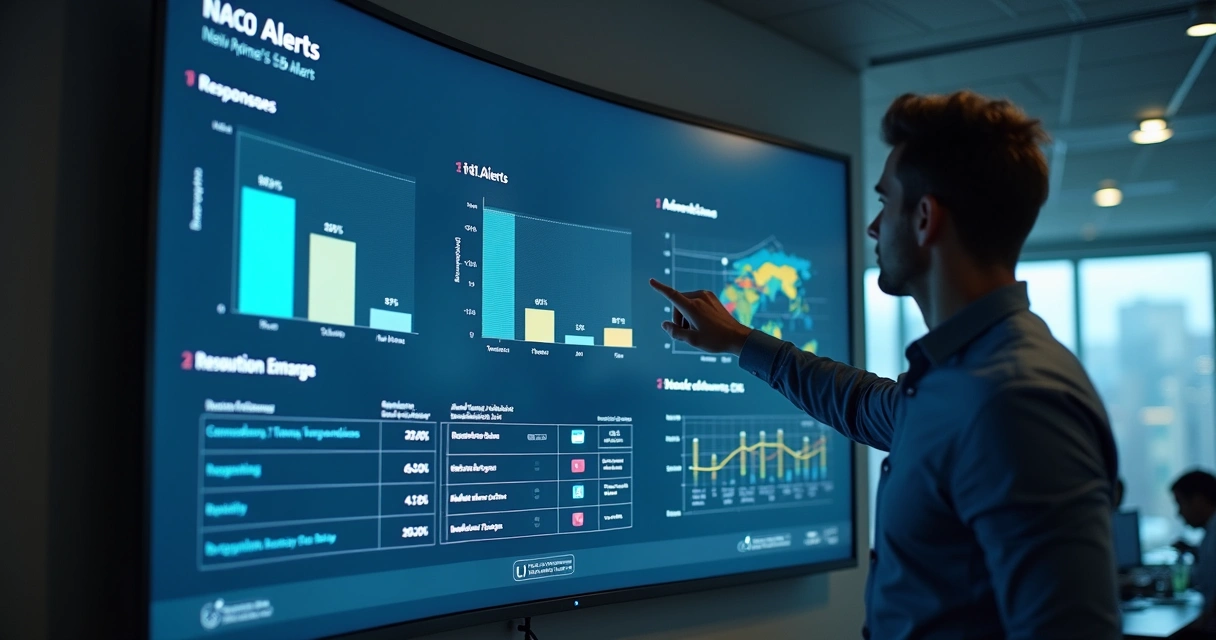
Stagnant SLA is breached SLA. The main advantage of solutions I prioritize in projects is the ability to audit all steps without bureaucracy. With DROME, I access clear dashboards with:
- Average response and resolution time by alert type
- Weekly/monthly SLA adherence
- Alerts "about to expire" for proactive action
- Team performance ranking by shift
Continuous improvement only happens if SLA data is accessible and reliable. Test adjustments, compare periods, and involve teams in reviews. Competing tools may show pretty graphs, but lack direct integration with tailored action plans, like the automatic action plan execution for sensor failures available in DROME.
Practical references and advanced applications
From experience, I see many stumble on details: ignoring false alerts or leaving teams unprepared. In these situations, I recommend investing in constant training (see more in the article on preparing teams for rapid IoT alert response) and periodically reviewing unnecessary alarm generation (how to manage rapid responses for false IoT alerts). This keeps the SLA relevant and applicable to context.
Solutions that combine prediction with this cycle, like the new DROME Predict system, can anticipate risks before the SLA is even activated, generating superior value compared to traditional monitoring.
Conclusion
Well-implemented SLA for IoT alert responses is much more than a spreadsheet; it's culture, process, and technology combined. In my experience, the secret lies in the combination of:
- Alert flow mapping
- Intelligent classification and prioritization
- Clear documentation of response times
- Notification and escalation automation
- Continuous measurement and improvement
And, of course, platforms like DROME make the difference precisely because they integrate each step of these pillars. For those wanting to go further, building intelligent alerts and adaptable SLAs is a matter of market survival. Learn more about DROME solutions and discover why we're the reference in anticipation, rapid response, and total transparency in the IoT monitoring chain.
SLAs only matter if they're visible, auditable, and alive—all of which you'll find in DROME.
Frequently asked questions about SLA for IoT alerts
What is SLA in IoT?
SLA (Service Level Agreement) in IoT is an agreement that defines the timeframes and quality standards expected in responding to alerts emitted by connected devices. It ensures that everyone involved knows how much time the provider or internal team has to act after an incident, reducing uncertainty about who does what and in how much time.
How do I create an SLA for alerts?
I usually follow these steps: map the alert flow, identify all contact points, classify event severity, define response times for each level, and document everything accessibly. I recommend using platforms like DROME to already register these SLAs within the system dashboard, ensuring transparent monitoring.
What are the best SLA indicators?
The main indicators are: average time for initial response, average resolution time, SLA compliance rate, and number of incidents resolved within timeframe. It's also important to monitor alerts about to expire and recurrence of the same problems.
Is it worth using SLA in IoT?
In my opinion, it's essential. Studies published in the Journal of Network and Systems Management prove that well-defined SLAs prevent delays, reduce losses, and increase customer and partner confidence. In critical monitoring, doing otherwise is opening the door for incidents to reach unexpected proportions.
How do I monitor SLA compliance?
I always use platforms with detailed history and real-time dashboards, like DROME's. This way, every action, response time, and resolution stays recorded and auditable by operational team, manager, or external auditor. Measuring clearly is the only way to guarantee real commitment, without gray areas.