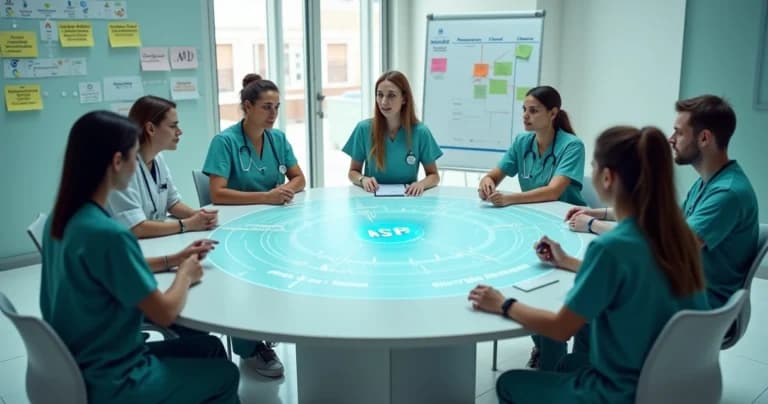
Implementing and consolidating Patient Safety Centers (PSCs) in healthcare services is, in my view, a commitment to responsible care, transparency, and respect for life. I often find myself reflecting on how the PSC became a key piece for a prevention culture in Brazil, especially following the advancement of public policies, such as PNQSP 2026. I share here my practical insights, details about the structure, and a step-by-step guide on how to transform the center into an engine of visible change.
Contextualizing the patient safety center
According to data from the Ministry of Health, in just a few years, more than 2,300 PSCs were implemented across the country, and the increase in adverse event notifications exceeded 100,000 records. These indicators show, as I have witnessed in many hospitals, that the sector can no longer afford to treat errors only reactively, but rather must build robust strategies that seek to prevent harm before it occurs (Ministry of Health).
Prevention is caring in advance and building trust.
In my experience, systems that act only with post-failure alerts do not serve high-complexity environments. For this reason, projects like DROME make a difference, bringing predictive and reliable monitoring that goes beyond traditional notifications and enhances the PSC's work based on real and historical data.
Function, structure, and responsibilities of the PSC according to PNQSP 2026
The PSC, within the logic established by PNQSP, must not merely exist formally. It needs to act as a hub for decisions, investigations, and education on safe practices, serving as a bridge between managers, clinical staff, and patients.
- Promote a culture of transparency;
- Ensure ongoing risk analysis;
- Create protocols, workflows, and barriers against adverse events;
- Encourage reporting without punishment;
- Build systematized reports;
- Propose and monitor continuous improvement plans;
- Integrate multiprofessional experiences.
At different levels of care, from outpatient services to high-complexity settings, the PSC structure should consider:
- Multiprofessional composition, seeking balance among input from nursing staff, physicians, pharmacists, technicians, and administrative support;
- Active presence and recognition by the healthcare service's leadership;
- Autonomy to propose changes with institutional backing.
Studies cited by the Paulista Journal of Nursing reinforce the positive effect of multidisciplinarity and autonomy of these centers, bringing concrete results in quality and safety.
To maintain governance, ANVISA guides healthcare institutions to update, whenever necessary, the PSC registration in CNES, ensuring that actions, notifications, and incident management are anchored in accurate information (ANVISA).
Steps for PSC organization and operation
If I could provide a simple roadmap on how to organize a strong and active PSC, I would follow the steps below:
- Clear definition of responsible parties (coordinator and members);
- Balanced multiprofessional composition;
- Development of internal bylaws and work plan;
- Institutional mobilization for management support;
- Continuous training of the team on topics such as reporting, risk analysis, and protocol management;
- Adoption of monitoring and notification systems that ensure traceability and rapid response;
- Inclusion of technologies that enable predictive monitoring of critical conditions – in this regard, DROME's contribution is significant, offering database infrastructure, detailed historical storage, and customizable alerts according to the service's needs.
For healthcare services with lower complexity, I recommend that the PSC adapt its actions to local reality, focusing first on major vulnerabilities and promoting educational campaigns among staff.

Why do these centers make all the difference?
When speaking with managers, I often hear questions like "but does the center really change anything in daily operations?" In my experience, the existence of the PSC transforms organizational culture because it shifts focus from punishment to collective understanding of risks. This is reflected in a tangible reduction of serious events and also in the involvement of professionals themselves in the pursuit of improvements. Recent data confirm this growing movement of notifications as a sign of greater maturity in the sector (ANVISA guide).
I also say that technology support makes all the difference: if previously responses to notifications were based only on memory or manual records, today, advanced systems like DROME offer comprehensive automation, bringing precision in historical data collection, organized storage, and predictive analysis. This is a game-changer in preventing critical incidents, especially in environments requiring monitoring such as laboratories, operating rooms, and hospital pharmacies.
Guidelines for managers and healthcare professionals
For those leading management, there are decisions that cannot wait. I strongly recommend:
- Personal and institutional engagement in the PSC implementation and monitoring process;
- Investment in training all professionals, encouraging a systemic and non-punitive view of events;
- Construction and evaluation of indicators, such as number of reports, meetings, and action plans implemented;
- Active partnership with technology areas, ensuring the introduction of innovative monitoring resources – for example, robust databases and alert automation tools like those from DROME;
- Prioritization in analyzing local risks, which should inform the development of solid protocols and periodic updating of routines;
- Emphasis on internal audits, which help not only with regulatory compliance but also with real adherence to safety measures (hospital audits).
Additionally, for those seeking practical examples, I recommend reading about healthcare sector evaluation in the digital era, which details how innovation and safety are increasingly interconnected.
Connection between the PSC and cutting-edge technology
I see that the greatest achievements in patient safety emerge where PSCs can use real-time data to act before critical situations occur. Monitoring with smart sensors, predictive alerts, and automatic tracking bring rapid responses and support proactive decision-making. It is at this frontier that DROME stands out: beyond alerting, it learns from equipment history and anticipates risks, enabling action plans before failure occurs.

When implementing monitoring solutions, it is essential to connect center practices with biosafety protocols (laboratory checklist), in addition to rigorous cold chain control, especially in storage of supplies and medications (temperature control in healthcare).
Another point I emphasize: even companies offering competing monitoring solutions face limitations when they do not invest in predictive technologies combined with customization of service parameters, something that DROME refines according to the needs of each hospital, laboratory, or clinic.
Results: prevention culture and incident reduction
Speaking of PSCs is speaking of numbers, but also of more human and healthier environments for the professional themselves. With structured focus, multiprofessional practice, and technological support, centers promote a drop in incident rates, accidents, and rework costs. And, above all, they enhance confidence throughout the entire care chain, from manager to patient.
If you also believe that safety is not just about preventing incidents but creating a culture of prevention and continuous learning, I recommend learning more about DROME and evaluating how our solutions can strengthen your center, bringing sustainable results to your healthcare service. See the advantages for your hospital, laboratory, or clinic on our website.