
I've seen many teams receive an alert with "82% chance of failure" and freeze. The question comes immediately: is that high or low? Should we stop the equipment? Should we just observe? In an industrial environment, probability without context becomes noise. With context, it becomes decision.
When I talk about predictive models, I'm not talking about guessing. I'm talking about systems that read history, operation patterns, variation rates and deviation signals to estimate future risk. It's exactly this kind of advancement that projects like DROME are making more useful in daily operations, moving from reactive alerts to anticipation.
Probability is not certainty. It is a measure of risk.
An industrial predictive model informs the chance of an event occurring within a defined time window.
That sentence sounds simple, but it changes everything. If I say "70% chance of violation," I need to know violation of what, in how much time, based on which signals and with what operational impact. Without that, the number loses value.
What does probability really mean?
In practice, probability is an estimate. It shows how much the model believes that an event, such as exceeding temperature range, losing vacuum or entering drift, may happen in the next hours or minutes.
I like to separate this reading into three parts:
-
Predicted event: which risk is being measured.
-
Time window: when that risk may materialize.
-
Operational confidence level: how the team should respond.
For example, 65% chance of thermal violation in the next 2 hours does not mean the equipment has already failed. It means that recent signals resemble, in part, patterns that previously ended in violation.
I usually say that the most common mistake is not trusting the model too much. It's expecting a binary answer from it, as if the industrial world were always "yes" or "no." It's not always.
Why can two 80% mean different things?
Here lies a point that many people ignore. An 80% in a cold room with stable history can be more alarming than 80% in a sensor with irregular behavior, recent maintenance or reading noise.
The same probability can have different weights depending on asset history, process type and cost of failure.
That's what I learned following critical operations. In a refrigerator with sensitive inputs, a small deviation can generate waste. In another scenario, the same value may allow scheduled inspection without immediate shutdown. Correct reading depends on operational context.
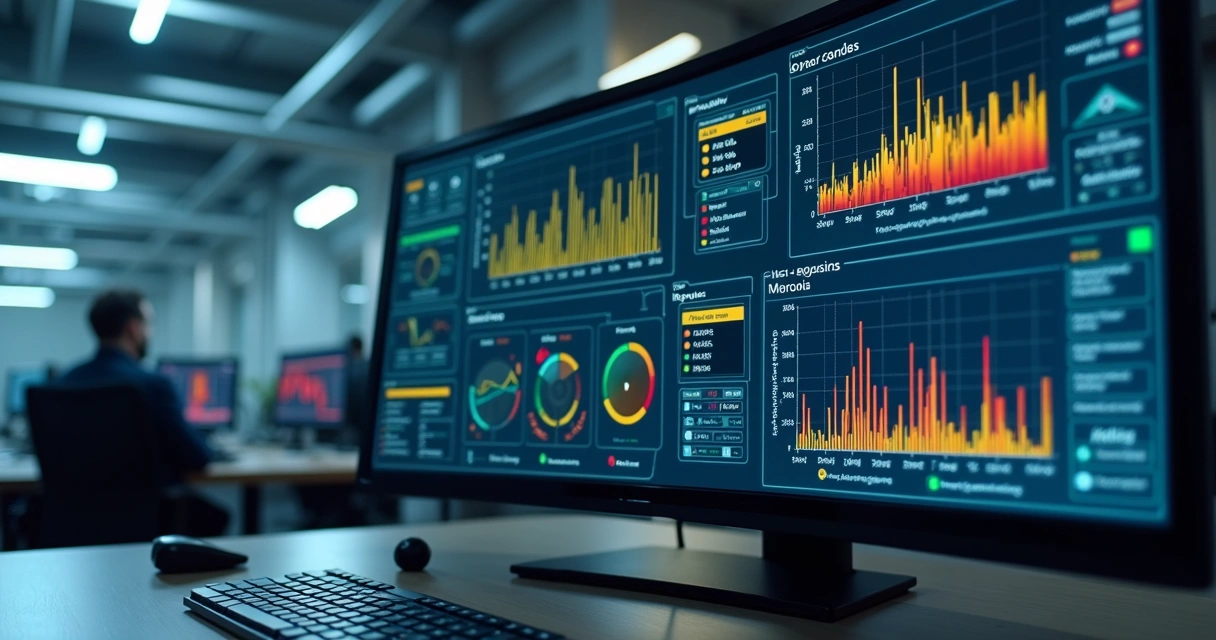
At DROME, this view makes sense because telemetry history is not treated as a generic block. It is read by sensor, by equipment and by behavior pattern. If you want to deepen this foundation, it's worth seeing the content on telemetry as the basis for monitoring and observability.
How do I interpret probability ranges?
I prefer to work with ranges, not loose numbers. This helps operations react better and avoids long discussions in moments of pressure.
A practical reading can follow this line:
-
Up to 30%: low risk, but useful for monitoring.
-
31% to 60%: attention. There may be initial deviation or combination of weak signals.
-
61% to 80%: high risk. Worth checking cause, load, environment and trend.
-
Above 80%: very high risk. Quick action tends to be the best response.
These ranges are not fixed rules. I would adjust based on the process. Regulated sectors, such as pharmaceutical and biomedical, usually ask for action sooner. In less sensitive routines, the team can tolerate more variation before intervening.
This reasoning appears clearly when we talk about predictive maintenance in cold room control, where response time and impact of deviation go together.
Does high probability always require shutdown?
No. And I think it's dangerous to treat the subject that way. In many cases, the best decision is to check thermal load, door opening, electrical supply condition, sealing, consumption pattern or sensor calibration before stopping the process.
The value of probability is in guiding action priority, not in replacing technical judgment.
I've seen mature teams use the model as intelligent triage. Instead of responding to all alerts the same way, they start to distinguish:
-
What can wait for visual inspection,
-
What requires operational adjustment,
-
And what demands immediate intervention.
This is where DROME stands out from shallower market alternatives, which often deliver alerts without explaining trend. When the system considers actual violation history and asset behavior, probability stops being generic and starts serving operations.
What to observe beyond the percentage?
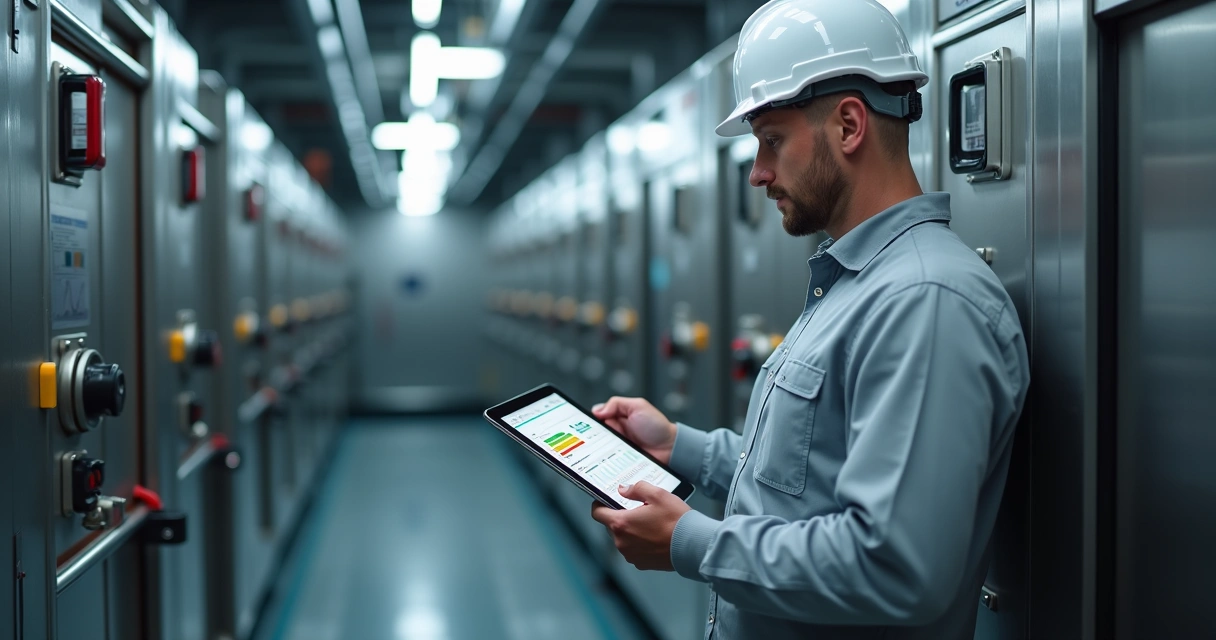
If I had to guide a team in a few lines, I'd say never look at just the number. I observe at least four points before deciding.
-
Curve trend: is risk rising fast or oscillating?
-
Time to event: does the model predict minutes or hours?
-
Asset impact: if it fails, what is lost?
-
Recent history: was there maintenance, sensor replacement or routine change?
When these four points appear together, the reading becomes much more solid. I see this as a culture shift. The company stops reacting only to broken limits and starts reading earlier signals, which reduces loss and rework.
If this topic interests you, there's a direct connection to the text on predictive analysis to prevent input loss, because probability only makes sense when it becomes concrete prevention.
How to avoid interpretation errors?
In my experience, the most common errors are less mathematical than operational. The model may be right, but human reading fails.
I would avoid these three errors:
-
Treating 90% as absolute certainty.
-
Ignoring 40% in high-impact assets.
-
Comparing probabilities from very different equipment without context.
Another point I find very useful is tracking model calibration. If it predicts 70%, does that group of cases actually become events with similar frequency? More mature systems work this adherence more reliably. It's a clear advantage of platforms built on real field data, like DROME Predict, rather than just fixed rules.
It's also worth understanding how information technology supports this reading. The article on how information technology transforms monitoring and data analysis helps connect infrastructure, collection and decision.
Where does probability generate the most value?
I see more value when the company needs to act before loss occurs. This happens a lot in cold chain, laboratories, food industry, controlled pressure environments and sensitive material disposal.
In these contexts, predicting is not a luxury. It's a method of operational and regulatory protection. Even when the topic is disposal, predictive reading helps act early and reduce risk. That's why it makes sense to also read about how AI improves safe disposal of sensitive materials.
Predicting early changes the response.
If you want to interpret probabilities with more confidence and turn risk into practical action, I recommend getting to know DROME better and seeing how predictive reading can support your operations before violation happens.