I've lost count of how many times I've seen an IoT project stumble on the same issues: sensors from different brands that don't "talk" to each other, platforms that won't accept real-time data, and integrations that drag on for months. If you work with telemetry, cold chain, laboratories, logistics tracking, or industrial environments, you know that interoperability is no longer a choice. It's what allows you to grow without hidden technical limitations blocking the way.
Many say it's just about choosing standard sensors, integrating common APIs, and everything resolves itself. That's not true.
Interoperability requires testing, criteria, and above all, planning. Every year the challenges change. What seemed fine in 2024 can now be a bottleneck in 2026.
With that in mind, I've compiled this checklist—based on practical experience with Drome Predict and the latest market insights (like those from NIST)—covering the essential points to ensure your IoT sensors truly work together. I'll show you what to look for, how to avoid pitfalls, and why, in my opinion, Drome already delivers more than any other domestic alternative.
Why is interoperability a real challenge in 2026?
In recent years, with the arrival of intelligent multichannel sensors, old standards have become insufficient. Today, interoperability is no longer "works with that brand," but rather:
Does it work, scale, is it secure, and auditable?
According to NIST, interoperability testing is mandatory for heterogeneous sensors to truly deliver intact, reliable data ready for decision-making in critical environments. I've seen laboratories spend months trying to integrate legacy sensors with new platforms, wasting time (and money) that could have been avoided with a robust checklist from the start.
Checklist: what can't be missing when evaluating IoT interoperability
Open communication protocols
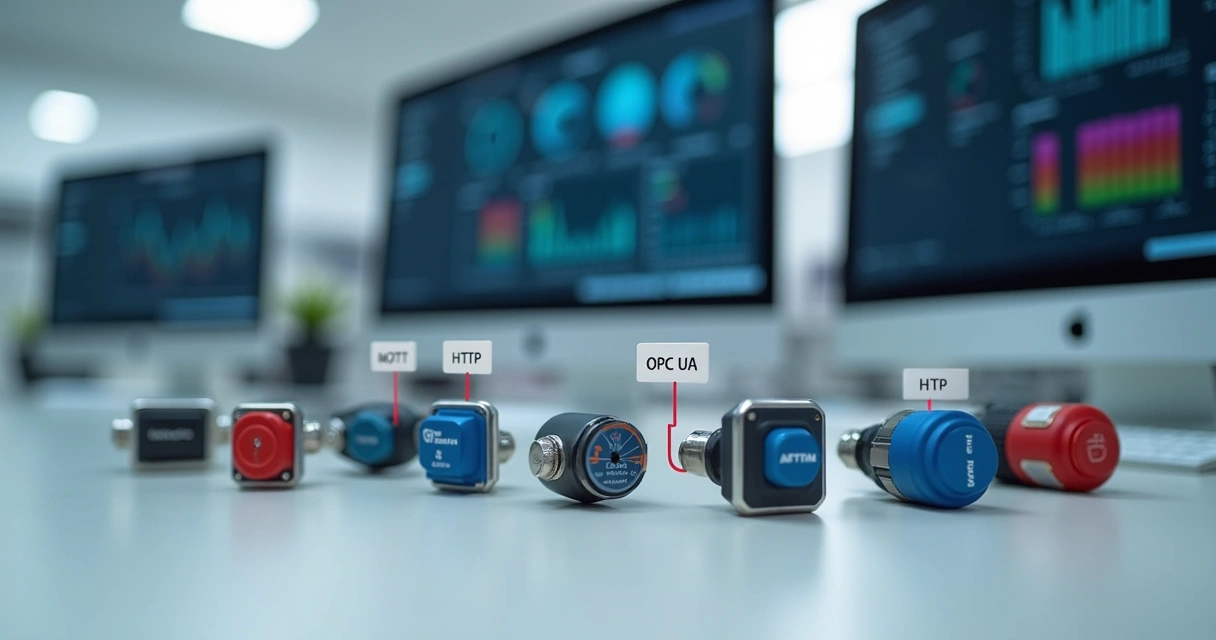
In the IoT universe, MQTT, CoAP, HTTP(S), and in industrial environments, OPC UA or Modbus TCP have become the standard. Pay special attention to proprietary variations in disguise or exclusive dependence on third-party gateways.
- Very important: sensors must clearly document support for open protocols.
- Verify that firmware allows protocol updates (avoid "locked" sensors).
Message standards and formats
I've seen projects get lost at the data parsing stage because they didn't have clarity on the formats accepted by each system. JSON, XML, and CBOR have become common, but there are nuances:
- Time data should come in UTC or allow time zone configuration.
- Units of measurement declared (e.g., °C, ppm, Pa)—no generic fields!
- Unique sensor identification in messages to avoid backend ambiguity.
Authentication and security mechanisms
Everything encrypted (TLS 1.2+), with authentication via digital certificates or robust tokens. Default passwords and unencrypted traffic are immediately blocked on platforms like Drome.
- Check if the sensor requires periodic credential changes or certificate updates.
- Interoperable IoT sensors must authenticate to prevent spoofing and ensure event traceability.
Direct platform integration capability
I compared major market players and most depend on multiple gateways and plugins. On Drome, any certified sensor sends to the cloud in seconds, including predictive monitoring as a differentiator. If you need complex plugins, be suspicious.
- Prioritize sensors with native RESTful APIs and clear public documentation.
- Leading platforms already offer SDKs and practical code examples—demand this.
Realistic interoperability testing
Concatenating spreadsheets is not testing interoperability! NIST emphasizes that testing must simulate real-world use: multiple sensors, varying latencies, network failures.
- Conduct live testing, collecting simultaneous data from different sensors, simulating packet loss and disconnections.
- Results should be validated in a closed loop, with end-to-end data verification, as we do in Drome Predict.
Detailed technical documentation and lifecycle support
At Drome, documentation starts at sensor certification. Look for information about firmware updates, protocol deprecation, and the sensor manufacturer's technical feature roadmap. Frequent standard changes derail scaling projects—I've seen this happen more than once.
Advanced monitoring and automation
Interoperable sensors must deliver data that activates alerts and automations natively, not just "dump data" to the cloud. Drome Predict stands out with predictive analytics and direct integration with alarm systems and workflows.
- Evaluate whether there's support for automatic events (for example, drift detection, as I mentioned in this Drome Predict article).
- Generic sensors rarely support these native integrations, so choose vendors with proven track records in this area.
Lessons learned integrating sensors from different manufacturers
In my integrations over recent years in hospitals, industries, and laboratories, some mistakes repeat:
- Ignoring message format nuances and losing events during reading.
- Not checking internal clock support, causing auditability failures in history.
- Depending on exclusive gateways, creating vendor lock-in.
Those who prioritize interoperability from the start reduce support hours, ease troubleshooting, and can migrate between systems if the vendor no longer meets needs. In my experience, Drome brings the greatest gains in agility and flexibility precisely because it doesn't require manual reconfiguration or translation spreadsheets.

Some international competitors even offer broad catalogs of integrated sensors, but they tend to limit access to customization or charge extra fees for historical data. With Drome Predict, each customer has autonomy, intact data, and Brazilian support without falling into commercial traps.
Quick checklist (summarized): don't give up on these points
- Confirm open protocols: MQTT, HTTP(S), OPC UA, etc.
- Verify message formats are readable: JSON, XML, CBOR—standard and detailed.
- Test as you go: don't trust "works on paper."
- Active verification of digital authentication and encryption.
- Well-supported and documented firmware updates.
- Verify it activates real-time automations.
- Look for compliance history and real integrations in Brazil (not just international case studies).
Each sector will have specific details, but there are references for sensitive niches, such as laboratories and hospital cold chain. I recommend consulting these detailed guides:
- IoT sensor compliance and validation
- Compliance in IoT laboratories
- Secure hospital cold chain
- Integration for refrigerated trucks
- How to avoid IoT sensor failures
Having this checklist live in your sensor acquisition workflow can prevent many hidden costs and integration headaches down the road.
Conclusion: interoperability is the foundation of sustainable growth
In the 2026 scenario, interoperability has stopped being a technical differentiator and become a prerequisite for anyone wanting to grow by digitizing processes with IoT. I've seen firsthand how the wrong technology choice can stall growth and limit innovation.
Drome already integrates, predicts, audits, and scales without vendor lock-in or hidden charges.
Want to see it in practice? Discover Drome Predict solutions and ensure your operation won't stop due to integration restrictions. Your secure digital future starts today—take the next step with someone who already understands the challenges of the Brazilian market and delivers real interoperability.
Frequently asked questions about IoT interoperability
What is interoperability in IoT sensors?
Interoperability in IoT sensors is the ability of different devices and platforms to communicate, exchanging data in a secure, reliable, and standardized manner. This allows you to build environments with sensors from diverse manufacturers working together, which expands technical possibilities without depending on closed solutions.
How do you ensure interoperability between IoT sensors?
The best way is to adopt sensors and platforms that follow open protocols (such as MQTT, HTTP, or OPC UA), standardized message formats (JSON, XML), robust authentication, and clear documentation. By testing use cases in your real environment and avoiding dependence on exclusive gateways, you reduce risks and gain flexibility to migrate between systems if needed.
Which standards facilitate interoperability in 2026?
In 2026, MQTT, OPC UA, CoAP, Modbus TCP, and RESTful APIs stand out. For data formats, JSON and CBOR are the most accepted. These standards have been validated by studies like those from NIST and are already widely adopted on platforms like Drome Predict.
What are the main challenges of IoT interoperability?
Among the biggest challenges are proprietary protocols, lack of documentation, firmware limitations, weak authentication, and absence of robust testing (simulating disconnections, failures, and critical events). Another issue is the rapid emergence of new sensor versions that drop support for standards required by legislation and regulations.
How do you choose compatible IoT sensors?
Look for devices with certification, history of public integrations, open protocols, updatable firmware, and local support. Evaluate whether the sensor has already been certified on reference Brazilian platforms, like Drome Predict. Avoid equipment dependent on exclusive gateways and always request real testing before deciding.