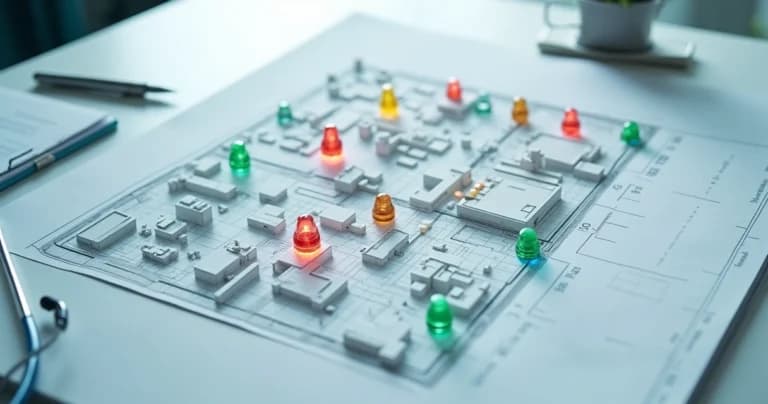
Managing multiple alarms in critical healthcare environments is one of the major challenges faced by technical teams and hospital managers. I have experienced situations where a sequence of simultaneous alerts transformed a stable shift into a genuine race against time. The excess of alarms, known as "alert storms," can compromise both safety and process efficiency, while also generating emotional strain on staff.
In the biomedical and pharmaceutical sector, for example, each cold chamber, incubator, or autoclave depends on constant monitoring. A single reading outside standard parameters can put valuable materials, blood, vaccines, samples, and sensitive medications at risk. Such losses are rarely only financial. In some cases, they can impact lives.
Why is alarm management so critical in healthcare?
In my experience, hospitals and laboratories deal with a daily avalanche of sensor data: temperature, humidity, pressure, CO₂, energy, and more. The problem is simple, yet serious: when the system notifies only after a parameter violation, often the damage has already occurred. It was in this context that I discovered DROME and its proposal to anticipate risks, bringing innovation to such a delicate scenario.
Over the years, I have observed that the excess of unclassified alarms generates what I call "alert fatigue." When everything seems urgent, nothing actually receives the necessary attention. Below, I cite the most common effects of this scenario, based on research and the routine of my clients:
-
Inattention to notifications after repeated "false" activations.
-
Difficulty prioritizing which equipment to address first.
-
Loss of productivity and increased human errors.
-
Delayed response to truly critical events.
The good news is that there are reliable alternatives, and, modestly, I consider DROME the most comprehensive solution on the market to resolve these bottlenecks.
Traditional Solutions: What Are Their Limits?
I have tested other approaches available on the market. Some promise automatic filtering, others offer integrated dashboard tools, but they hit two clear limitations: they cannot learn from equipment history and still rely only on fixed threshold triggers.
Some competing systems, even advanced ones, struggle to adapt parameters for each clinical situation or predict atypical behaviors. This ultimately limits prevention, making it practically impossible to anticipate a failure before it occurs.
This is where the DROME solution differentiates itself. With a predictive analytics module, it continuously learns from thousands of events and sensors. This enables it to forecast trends and anticipate real risks—a differentiator I have not seen delivered reliably by any other national system.
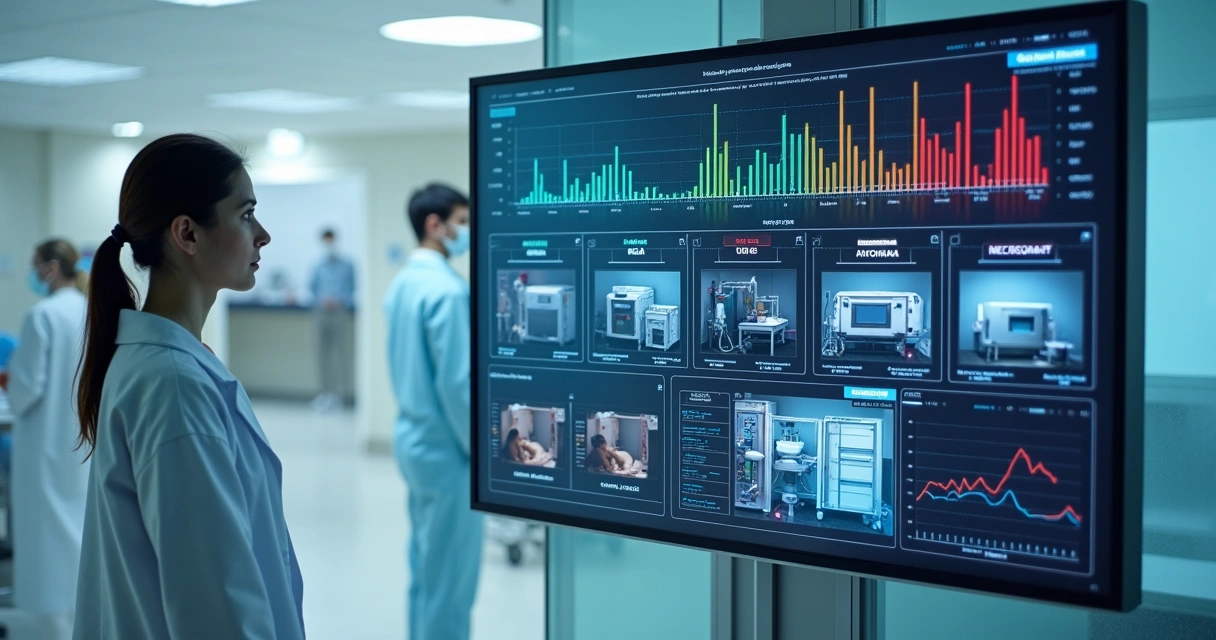
How to Organize Multiple Alarms Efficiently?
In my work, I began adopting some rules that transformed coexistence with alarms into a less chaotic routine. I present my methodology, supported by DROME's best practices:
1. Alarm Classification and Prioritization
Worse than not receiving an alarm is receiving many without knowing which to act on first. For this reason, I always insist on classifying by severity (critical, moderate, warning) and by potential impact. DROME automates this process based on the hospital's own historical patterns, not just generic rules.
2. Clear and Actionable Dashboards
I have seen teams lost in panels that confuse more than help. Visual clarity makes a difference: important alarms gain prominence, and the rest can be minimized. I recommend exploring the complete solution we present in the article on critical equipment monitoring, which details intelligent dashboard functions.
3. Integration and Redundancy
For healthcare environments, isolated sensors are only part of the answer. The ideal is to integrate different systems. The article on redundant alarm systems in cold chambers explains how to create a fail-safe network, something I always seek in high-sensitivity hospital projects.
4. Early Alert: Indispensable Innovation
When I began working with prediction, I realized how much forecasting a trend before violation saves resources and ensures safety. DROME Predict, for example, calculates the probability of a violation hours before it happens, using what I call drift detection and statistical anomalies.
To predict is to protect. Adjusting course before damage occurs is real gain.
How to Avoid "Alert Fatigue" and Interpretation Errors?
A major mistake is treating every event as urgent. I have seen colleagues waste precious time on minor fluctuations while the truly problematic equipment went unnoticed. This becomes clear with a balanced approach:
-
Define dynamic limits based on the actual routine of the location, not just factory data.
-
Customize the notification channel according to user profile (SMS, app, email, central panel, etc).
-
Apply filters to remove repetitive or transient alarms, focusing on truly relevant warnings.
The DROME system learns and adjusts to sensor and user behavior, a step ahead of what I find in competitors. This greatly contributes to professionals not ignoring truly relevant alarms, reducing the risk of accidents or losses.
How to Implement and Ensure Results?
Implementing a multiple alarm system requires planning. In my opinion, the most practical steps include:
-
Map the critical monitoring points of the hospital or laboratory.
-
Collect local benchmarks and historical data to adjust alarm limits.
-
Train technical and user teams on alert types and response workflows.
-
Periodically review system performance, adjusting rules according to the environment's context.
-
Use automated reports to maintain compliance and facilitate audits.
When adopting the DROME solution, post-implementation follow-up is facilitated, as the platform not only records all occurrences but also enables detailed and customizable audits. For specific sensor cases, such as humidity monitoring or telemetry, the DROME blog presents valuable tips, for example in air humidity monitoring in critical environments and how to resolve telemetry sensor failures in hospitals.
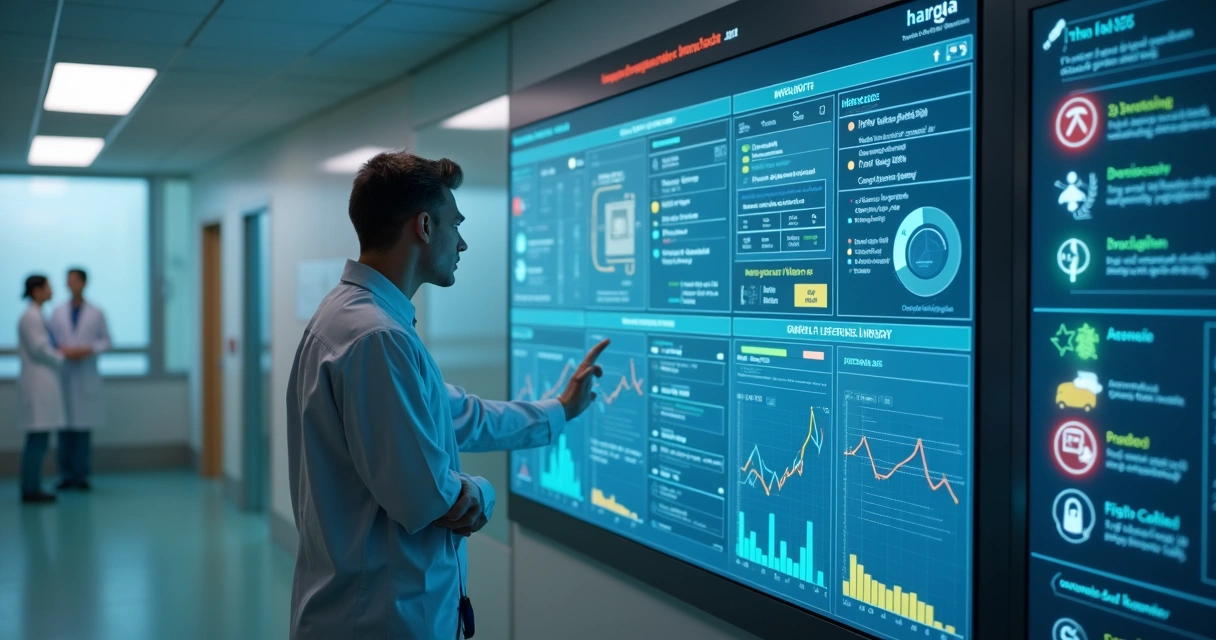
How to Interpret Reports and Continuously Improve?
I am convinced that it is impossible to improve what cannot be measured. Automated reports, such as those generated by DROME, offer insights into failure patterns, response times, and user behavior. This enables:
-
Adjust response workflows by identifying "action bottlenecks."
-
Monitor the evolution of equipment performance.
-
Aggregate evidence for audits and hospital accreditation processes.
I also recommend consulting articles on control panels, such as the one dedicated to monitoring systems and efficient dashboards, since an intuitive interface makes a difference in daily operations for both technicians and managers.
The Future of Alarm Management in Critical Healthcare Environments
I see the future of alarms moving toward self-adaptive and predictive systems. Simple triggering after violation is a thing of the past. Today, with features such as event prediction and drift detection offered by DROME, we can already anticipate failures, save resources, and improve the safety of patients and professionals.
Competitors may propose new features, but the solidity and historical database of DROME remain a differentiator that is difficult to match. Those seeking peace of mind and intelligence in alarm management will find in DROME a complete, adaptable solution validated by thousands of devices, events, and environments.
If you manage critical healthcare environments and seek to change your relationship with alarms, moving from reaction to prevention—I invite you to learn more about DROME solutions. Join the next generation in monitoring, safety assurance, and peace of mind. After all, caring for what is valuable deserves technology of equal caliber.