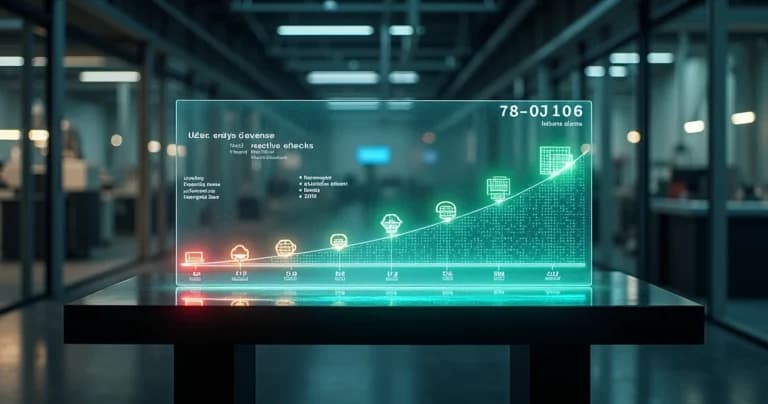
In my two decades working with data, technology, and critical operations, I've noticed a painful pattern: most companies still rely on reactive alarms to protect products, customers, and reputation. In other words, they only respond to problems after they happen. It's frustrating to see materials lost, equipment overloaded, and teams putting out fires when predictive technology could prevent all of this.
In recent years, I've closely followed the transformation generated by solutions like DROME, which are changing this scenario and making predictable situations that were once unpredictable. Today I want to share this path: how to migrate from reactive alarms to predictive alerts in 2026, with a practical focus and without unnecessary jargon.
Why change? The problem with reactive systems
Think of the classic alarm that only triggers when a cold chamber's temperature exceeds the limit. It does its job, but by then, the product is already at risk.
The damage has already occurred. Now it's a race to try to minimize losses.
In sectors like pharmaceutical, biomedical, food, hospital, and industrial, this delay is costly. Not just in discarded material, but in fines, rework, customer dissatisfaction, and regulatory risks.
Competing solutions even offer dashboards or detailed historical reports. However, most continue to show only the past, not what will happen next. The few systems that offer any prediction require large data volumes and can be slow to generate real value. It was dealing with these obstacles that I saw DROME stand out with a simple and powerful approach.
Understanding prediction: what are predictive alerts?
Predictive systems go beyond simple sensor readings at that moment. They analyze history, recognize patterns, and most importantly, "learn" from past events to anticipate problems.
From experience helping implement solutions in industry, hospitals, and supermarkets, I've found that the best results emerge when the system offers three main capabilities:
- Spike detection: quickly identify readings outside the statistical pattern, even before crossing the critical limit.
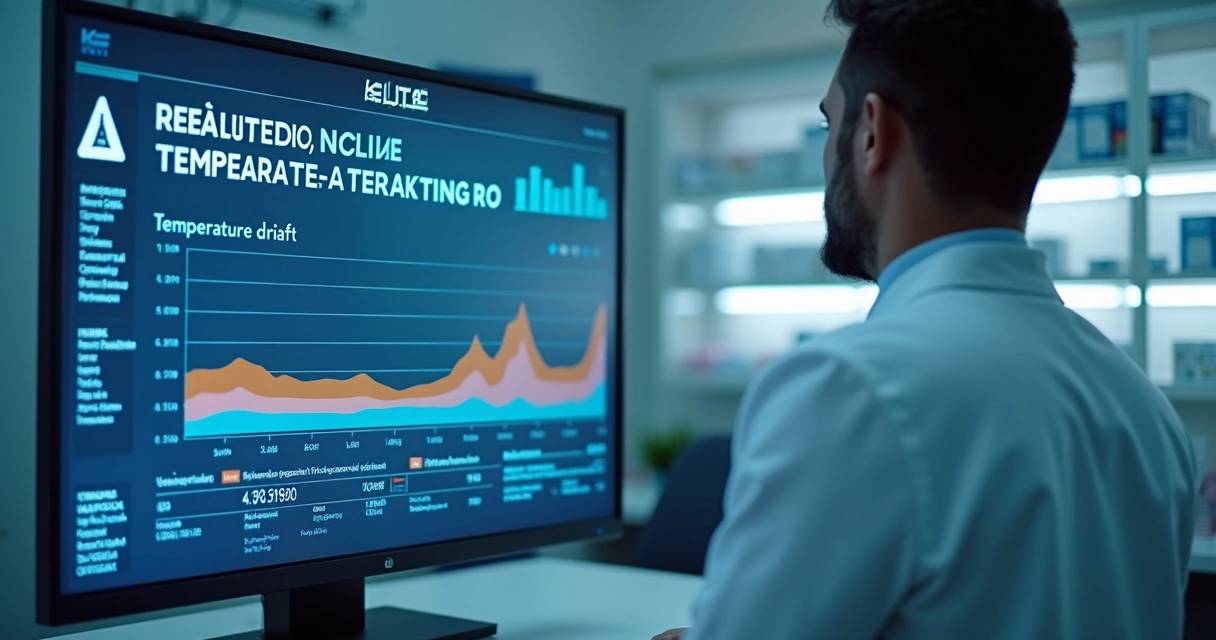
- Drift detection: notice subtle trends that lead, over hours or days, to parameter violation.
- Violation prediction: calculate the chance of an alarm occurring in the next minutes or hours, based on equipment behavior.
With DROME Predict, for example, I've seen companies gain precious hours of advance notice to act, reducing losses and rework impressively.
Step by step: migrating from reactive to predictive
Any paradigm shift raises doubts and concerns. Below I've outlined the process I usually recommend for those wanting to take this next step safely and practically:
1. Evaluate sensor structure and data
The first step is to verify if you already have sensors and sufficient historical data collection. From experience with DROME, I see that migration is faster when:
- Sensors already send telemetry digitally and automatically (IoT).
- Historical data is organized by sensor, equipment, and physical quantity.
- Alarm events are recorded with timestamp and description.
It's worth noting: you don't need years and years of data. In most cases, a history of about 30 readings per sensor is enough for algorithms like ours to detect relevant trends.
2. Choose the ideal predictive software
In the software field, platforms from major players, open source alternatives, and sector-specific solutions emerge. I've tested various proposals over time, and I'd venture to say that none has proven as adaptable to Brazilian daily operations as DROME's platform.
While competitors require lengthy integrations or only work well for global giants, DROME works side by side with those who really need quick results and agile support, whether in a laboratory, a regional supermarket, or a clinic network.
3. Train algorithms with your own history
Once the system is integrated, it can learn from occurrences in your environment. I always recommend training algorithms with your context, local operating rules, Brazilian seasonalities, and real usage profiles.
The fact that DROME already has over 450,000 labeled events in domestic environments accelerates this learning without depending solely on your own database volume, which I consider a major differentiator against international competitors.
4. Adjust alerts to your business profile
Not every violation needs to become an emergency. By adjusting predictive parameters, you can distinguish critical alerts (requiring immediate action) from preventive warnings, which can be handled at strategic times without unnecessary team stress.
- Define who receives each alert type: manager, maintenance, operations team.
- Choose how to be notified: push, email, SMS, WhatsApp, integrations with internal systems.
- Track the reduction in urgent calls and gains in predictability.
If you want to dive deeper into practical tuning tips, I recommend reading the article on predictive dashboards and maintenance adjustment on the DROME blog.
5. Monitor results and advance to the next level
After the first days of operation, gains already appear: fewer losses, fewer emergencies, more time to care about what really matters in the business.
Using DROME examples, I've seen biomedical segment clients reduce waste by almost 70% in the first season after implementing predictive alerts. Supermarkets avoided Health Surveillance fines. Industries began planning maintenance instead of just putting out fires.
To deepen solutions specific to segments like supermarkets and hospitals, I like to recommend two complementary resources:
- The practical guide to predictive alerts for supermarkets
- The article on AI predicting hospital freezer maintenance

What to do with the time gained?
With fewer crises and emergencies, I've noticed that teams can invest time in continuous improvement, training, innovation, and customer relationships. The sense of control replaces that constant anxiety of not knowing when the next failure will hit.
In fact, predictive analysis data to prevent supply loss show gains for the bottom line and internal climate.
Mistakes I've seen in migration (and how to avoid them)
Along this path with clients, and even other vendors, I've seen some typical stumbles. I list the main ones so you don't have to go through them:
- Focus too much on technology and forget the process: alerts without action are just more noise for the team.
- Underestimate the importance of well-structured data. Messy data confuses any algorithm.
- Want to "automate everything at once": prioritize critical assets first and advance gradually.
- Choose inflexible solutions that don't adapt to local reality and require unnecessary investment.
DROME's differentiator for 2026
Experience has shown me that migrating from reactive to predictive requires something beyond software. It needs attentive support team, constant model updates, and seamless integration with existing systems. DROME has done admirable work in this regard: close dialogue with customers guides system evolution and, in practice, places Brazil at the forefront of this new global standard.
It's well worth checking the blog article on predictive maintenance in cold chamber control to understand more deeply the practical advantages in real situations.
Conclusion: the next step is to anticipate
If there's something I've learned over these years, it's that whoever anticipates controls their own operational destiny. The future demands less reactivity and more predictability at every stage of business. In 2026, it no longer makes sense to depend on chance when technology already allows you to change the entire game.
If you want to know how DROME can help your company make this leap, from reaction to anticipation, I recommend starting a conversation with us. Your next alert might not be about what already happened, but about what can still be prevented.