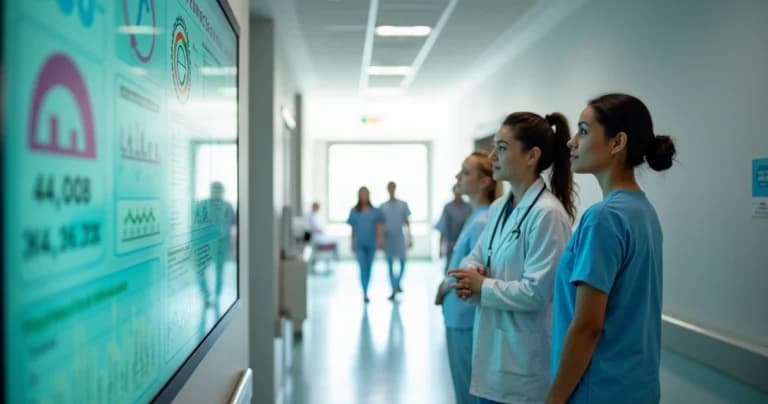
The National Policy for Patient Quality and Safety, established in 2026, represents an undeniable milestone for advancing Brazilian public health. In recent years, I have closely followed the impacts of regulations and experienced firsthand in hospitals and clinics how well-designed standards transform routines, professionals, and most importantly, protect lives. I want to share my perspective on this policy to show how it is changing our daily operations and highlight DROME's differentiators in this context of innovation and responsibility.
How the 2026 policy emerged and what it seeks to change
Before the creation of this National Policy, it was common to witness safety incidents and find no standardized direction to prevent or address them. In 2026, the Ministry of Health established clear guidelines to strengthen care quality and patient safety throughout the Unified Health System (SUS), focusing more resources on monitoring, prevention of avoidable risks, and fostering a safety culture among professionals.
The standard aims to reduce errors, adverse events, and complications that could be prevented through best practices and appropriate technologies. The explicit objective is to ensure that the patient is at the center of care, receiving dignified, ethical assistance supported by robust quality processes.
Principles guiding the policy
In the policy text, five central principles stand out. They may seem obvious at first glance, but they are the real foundation for practical change:
- Transparency and learning from errors: every incident must be reported and serve as a learning opportunity, not as grounds for immediate punishment.
- Citizen participation: users and families have been heard and play an active role in the quality assurance process.
- Teamwork and qualification: trained and integrated teams are better prepared to act quickly and prevent harm.
- Evidence-based management: important decisions are made only based on real and well-interpreted data.
- Use of technology: invest in innovation to expand surveillance and respond before risk becomes harm.
At this last point, I noticed how the presence of predictive monitoring systems gained momentum. Solutions like DROME's, with its ability to predict anomalies before they become real problems, fit perfectly with the mindset advocated in 2026: act proactively rather than reactively in protecting health.
Central guidelines for managers and healthcare professionals
Drawing from direct field experiences, many complained about the difficulty of adapting to standards that seemed distant from daily operations. The new policy text changed this scenario. It became clearer and more practical, especially for those making decisions or managing teams in hospitals and primary care units.
I highlight below the main guidelines that were established:
- Robust risk management: every service must map its risks and implement barriers to prevent incidents, from vaccine storage to hospital infection control.
- Systematic monitoring of indicators: results must be measured, compared, and used to correct course. Here, data analysis technologies and intelligent platforms are indispensable. The analytical dashboard launched by ANVISA in partnership with UFRN, for example, facilitates monitoring of the safety culture in the country (analytical dashboard for patient safety culture).
- Continuous training: investing in multiprofessional education and ongoing updates is both an obligation and constant necessity, as ANVISA itself advocates in its programs (National Program for Prevention and Control of Healthcare-Associated Infections).
- Planning for adverse events: it is never ignored that incidents may occur, but everyone must be prepared to act correctly when they do.
- Integration with councils and social control bodies: social participation was intensified, giving voice to the user, as demonstrated by increased involvement of the National Health Council (official presentation to social control).
In my routine, I have already followed managers who hesitated to apply digital controls for fear of costs or complexity. However, with the clear gains of current systems like DROME, it became much easier to justify these investments given the high demand for solid results and more intense oversight.
Why safety culture moved from paper in 2026?
I confess that for years I heard that quality and safety were just papers on the CCIH bulletin board. That changed. The new national evaluation model began to prioritize concrete results and documented compliance data, removing any room for improvisation. Just look at the example of Ceará hospitals, which achieved 100% compliance in safety practices and saw incident rates plummet (Ceará hospitals).
Safety is now part of daily operations, not just protocol discourse.
The difference, in my view, was the union of three factors:
- Presence of intelligent and auditable systems, which monitor and alert in advance (like what DROME offers)
- Greater participation of professionals in training and decision-making processes, generating natural engagement
- Public commitment from managers to correct errors and not just punish them
How DROME supports hospitals and services in implementing this policy
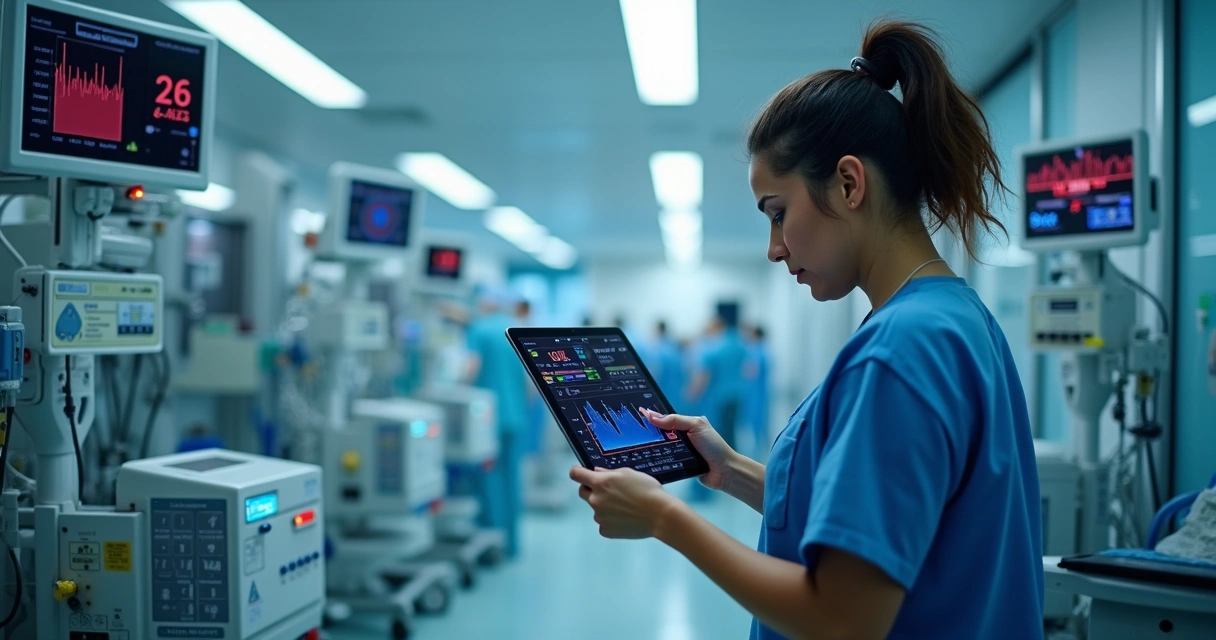
Reading the new requirements, I see that many managers are still seeking solutions that remove the burden of manual alerts and exclusively human controls. DROME's differentiator appears at exactly this point. Our system offers:
- Real-time telemetric monitoring of multiple parameters, fully integrated with the database
- Predictive alerts, not just reactive ones, which anticipate violations and prevent material losses, patient harm, and rework
- Complete tracking of event and alarm history for audits and automatic compliance
- Tools that deliver reports and analyses required in audits and accreditation processes
This goes far beyond what other systems do. Competitors typically focus only on alerting after the error occurs, missing the opportunity to solve the problem before it impacts patients. I myself have seen teams frustrated by receiving alerts too late or using systems that did not "learn" from history. Today, DROME overcomes these barriers with advanced analysis and predictive intelligence, connecting monitoring directly to what the policy demands in terms of real and measurable quality.
For those wanting to deepen their understanding of how to integrate new technologies into hospital daily operations, I recommend the updated guide on validation of computerized systems. This adds to other practical references, such as challenges and strategies for hospital audits and cold chain management in healthcare temperature monitoring.

Challenges in SUS practice and how to overcome them
I work with many managers who report specific difficulties, such as lack of time, tight budgets, and resistance to change. But the paths pointed out by the 2026 policy leave no doubt:
- Automating critical processes, whenever possible, is the only way to ensure constant monitoring and auditable reports
- Continuously train teams to prevent simple errors, especially in new or emergency situations
- Open space for direct communication between managers, teams, and patients, something already reinforced by the proactive support strategy for hospitals
- Ensure dialogue with oversight and control bodies, following examples of practices recognized by ANVISA
The need for tools like DROME grows, which generate real-time reports and confirm compliance with standards without requiring manual data entry. This enables audits, prevents fines, and most importantly, saves lives by simply allowing action before harm occurs.
Final reflection and invitation to innovation
When I look back and see the public health landscape before 2026, I perceive undeniable advances with the new focus on patient quality and safety. But no policy, by itself, is capable of changing reality alone. It is the decision of managers, the posture of teams, and the support of truly intelligent solutions, like DROME, that translate law into real and daily safe care.
If you want to know how to transform standards into practical results and ensure that your service is always ahead in patient safety, I recommend getting to know DROME and discovering how our technology can elevate your care standard.