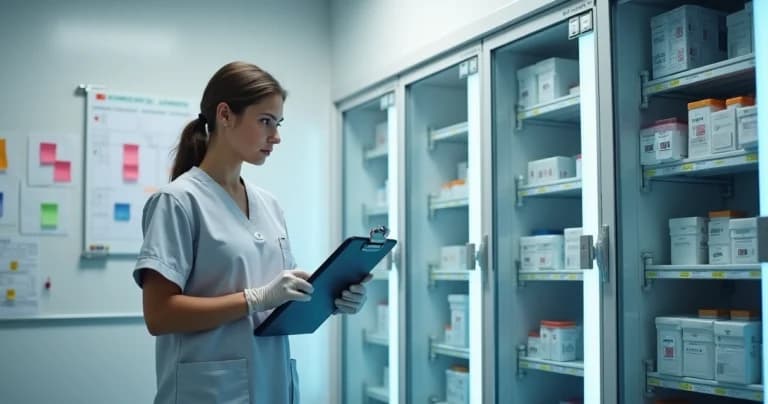
In my day-to-day work accompanying technical and administrative areas in hospitals, I see firsthand the challenge of keeping thermal inventory updated, reliable, and truly useful for preventing losses and risks. An incomplete inventory can literally put lives at risk and generate large-scale losses. That's why I decided to share this practical guide based on real experiences, reference from advanced projects like DROME, and recognized research from the Brazilian hospital sector.
Why is thermal inventory different from other inventories?
Thermal inventory is not just about listing refrigeration equipment. In hospitals, it involves rigorous control of all critical points for temperature-sensitive storage: medication refrigerators, blood product freezers, vaccine cold rooms, preparation areas, thermal transport boxes, among others.
Inventorying means knowing where each input is and ensuring its integrity over time.
Given the increase in regulatory requirements and audits, such as those from ANVISA, hospitals have been seeking increasingly robust methods. I always recommend the use of technological solutions that combine automation and predictive intelligence, like DROME, which has transformed the way I view monitoring.
Step-by-step guide to organizing hospital thermal inventory
Organizing thermal inventory may seem complex, but it becomes much simpler when following a logical sequence without skipping steps. Below I list the step-by-step approach I usually adopt and recommend.
1. Identify and map all sensitive points
The first step is to visit each hospital department, dialogue with teams, and map absolutely all locations and equipment that store temperature-sensitive materials. From visible sectors like pharmacies and laboratories to less obvious areas like warehouses and disposal rooms.
- Cold rooms (vaccines, blood bags, etc.)
- Laboratory refrigerators and freezers
- Adapted domestic refrigerators (common in small units)
- Thermal transport (boxes and thermal carts)
- Specific climate-controlled rooms
According to data from Santa Maria University Hospital, careful mapping reduces discrepancies and corrects differences between records and actual stock.
2. Catalog existing equipment and sensors
After mapping, detailed recording: each equipment receives a unique identification, linked to its location, volume, refrigeration capacity, and presence or absence of automatic sensors.
Controlling means being able to act before the problem arises.
Solutions like DROME bring a differential because they facilitate the recording of this data in the system and already integrate the analysis of individual sensor performance, preventing data from being scattered across spreadsheets and manual notes, as still occurs in many hospitals.
3. Classify risks and priorities
Not all points require the same level of attention. Some store critical inputs while others have less sensitive materials. For each inventoried item, I classify into three levels:
- High risk: vaccines, cold chain medications, blood products
- Medium risk: laboratory samples, infusion solutions
- Low risk: support materials that do not require permanent temperature control
At this point, I also identified that hospitals like UFTM Clinical Hospital adopt specific calendars for physical and quantitative control, reinforcing the value of regular planning.
4. Validate sensors, automation, and monitoring
This is where predictive technologies stand out: equipment connected to systems like DROME allows each sensitive point to be monitored in real time and, most importantly, with the ability to predict failures and violations before they happen. Something that, honestly, I've seen prevent losses of thousands of dollars when implemented correctly.
Even with competitors in the market, I perceive that none of them bring the level of integration, accumulated history, and intuitive interface as DROME does, especially when presenting dynamic reports, prediction based on actual environment behavior, and robust alert history.
5. Record responsible parties and audit processes
One point that many hospitals neglect is naming responsible parties for each equipment, in addition to creating simple audit checklists. I've witnessed losses happening because "no one knew who was responsible" for checking a cold room.
I recommend formalizing routines for visual and electronic verification, as well as updating inventories after any equipment change, maintenance, or relocation. Univasf University Hospital demonstrated significant gains in stock regularization by focusing on structural inventory and defining clear and periodic processes for data updates.

Special tip: technology is an ally, not a substitute
Advanced technologies can already bring full automation to inventory, including with radiofrequency (RFID), as reported by UFSC University Hospital. Still, I continue to advocate that success comes from solid processes combined with appropriate technology. Systems like DROME add value by crossing historical data, anticipating violations, and delivering intelligent audits, while manual control ensures that exceptions do not go unnoticed.
6. Update constantly and engage the team
Inventory is not an annual task; it's a continuous routine. Every movement, equipment change, or detected anomaly needs to be recorded throughout the year. In my experience, short and periodic meetings to review inventories with teams work much better than extensive training or disconnected notifications.
- Update the record as soon as any change occurs
- Avoid leaving pending items to "be resolved later"
- Automate alerts in the system for scheduled review dates
Hospitals that invest in constant updates, not just before audits, show drastically lower losses and risks. I recommend learning about initiatives like DROME to understand how technology can simplify and make this entire process more efficient, while also helping to prevent errors in temperature monitoring, a topic I explored in depth in the article How to avoid cold chain errors: temperature monitoring in healthcare.
7. Perform critical analysis and plan improvements
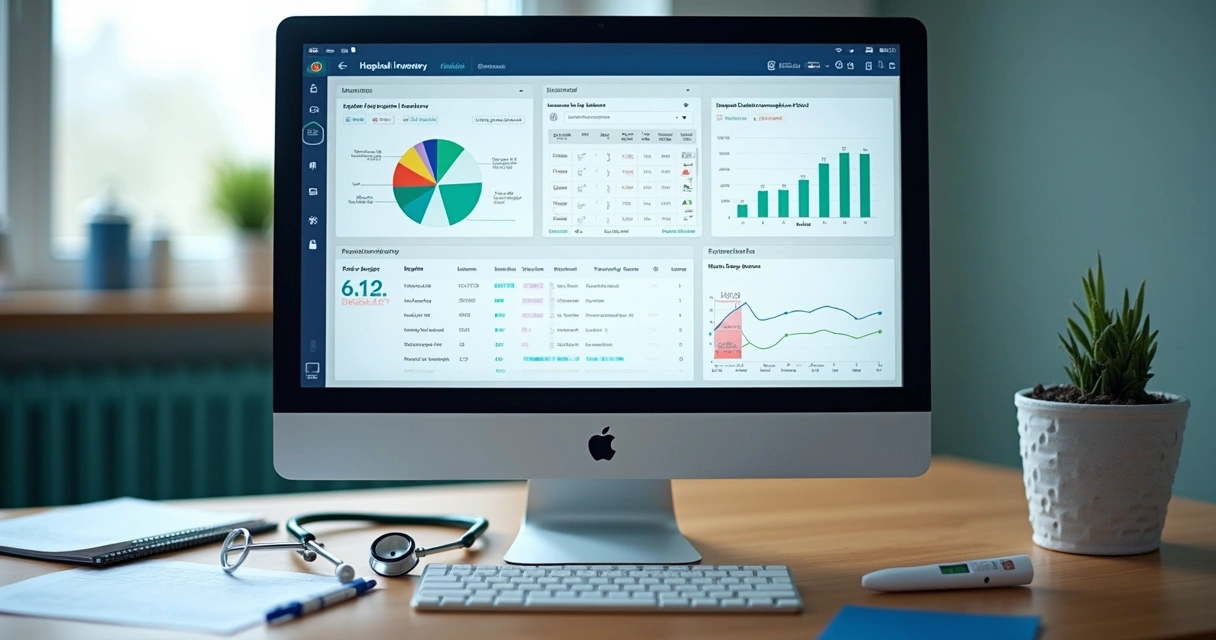
After creating the thermal inventory routine, I usually reserve fixed times for analysis of the collected data. I see this as the differentiator between hospitals that just go through the motions and those that really achieve results. Tools like DROME grow precisely at this point: they allow you to understand where the main risks are, visualize trends, and support strategic decisions.
How DROME stands out in supporting hospital thermal inventory
There are other monitoring systems on the market, but none of them combine deep predictive analysis, automated data collection, and consolidated event history like DROME does. Based on my experience and colleagues' testimonies, I perceive that traditional systems only alert when a violation has already occurred – by then the product is already at risk.
With DROME, monitoring is proactive and anticipation drastically reduces losses, penalties, and rework.
Additionally, features like configurable alerts, personalized dashboards, inventory integration, and analytical reports ensure control and decision-making aligned with hospital reality. For those who want to advance further in controlling hospital cold chains without failures, I recommend reading the complete checklist for implementing hospital cold chain without failures.
Integrating loss control into inventory
A well-done thermal inventory is the foundation for preventing waste – a critical factor for financial sustainability in the healthcare sector. In the article Hidden costs of waste in hospital cold chains I share impressive data on the financial impact of these losses. When there is integration between efficient monitoring, updated inventory, and clear processes, the gain is immediate.
Conclusion
In my opinion, organizing thermal inventory in hospitals is one of the most effective ways to ensure not only input control but patient safety and compliance with regulatory requirements. Seeing the results achieved by hospitals that invest in processes, technology, and prevention culture, I reaffirm the effectiveness of this path. If you want to implement modern management, knowing and testing a platform like DROME can be the first step to raise your hospital's level. Also take advantage of practical tips in the article on factors to prevent losses in hospital storage and, if you're looking for service that goes beyond expectations, evaluate the proactive support strategies in hospitals for 2026.
Schedule a demonstration of the DROME solution and discover, in practice, how your hospital can transform thermal inventory and loss prevention into daily reality.
Frequently Asked Questions
What is hospital thermal inventory?
Hospital thermal inventory is the detailed record of all points, equipment, and environments used for storage or transport of temperature-sensitive materials, ensuring risk control and safety of inputs.
How to organize thermal inventory step by step?
The path involves mapping all critical points, cataloging equipment, classifying risk, validating sensors, designating responsible parties, continuously updating records, and analyzing data for continuous improvements.
Which equipment should be included in thermal inventory?
All equipment that stores products dependent on controlled temperature: cold rooms, freezers, refrigerators, thermal transport boxes, climate-controlled rooms, plus sensors used for monitoring in hospital environments.
Why is thermal inventory important?
Because control over this equipment prevents financial losses, eliminates patient health risks, reduces waste, ensures regulatory compliance, and allows anticipating failures, especially with predictive technology like DROME.
How often should thermal inventory be updated?
The recommendation is to maintain continuous updates. Whenever there are changes, movements, maintenance, or anomaly detection, the record should be reviewed, in addition to periodic audits scheduled that can be monthly, quarterly, or according to the hospital's internal policy.