
I've seen many operations rely too heavily on simple alerts. The sensor measures, the system compares against a threshold, and when it exceeds the point, the warning arrives. It works. But it often arrives too late. In a cold room, for example, a few minutes of deviation can turn into product loss, rework, and regulatory headaches.
This is where peak detection gains value. It attempts to perceive abnormal behavior before the situation worsens. In practice, I see this feature as an additional layer of defense. It doesn't replace traditional monitoring, but significantly expands your ability to react.
Not every peak becomes a failure. But every peak deserves attention.
At DROME, this topic is part of a broader vision. The goal isn't just to record what happened, but to point out signals that emerge before violation. Peak detection is usually the first step, because it can operate early, even with limited history.
What is peak detection?
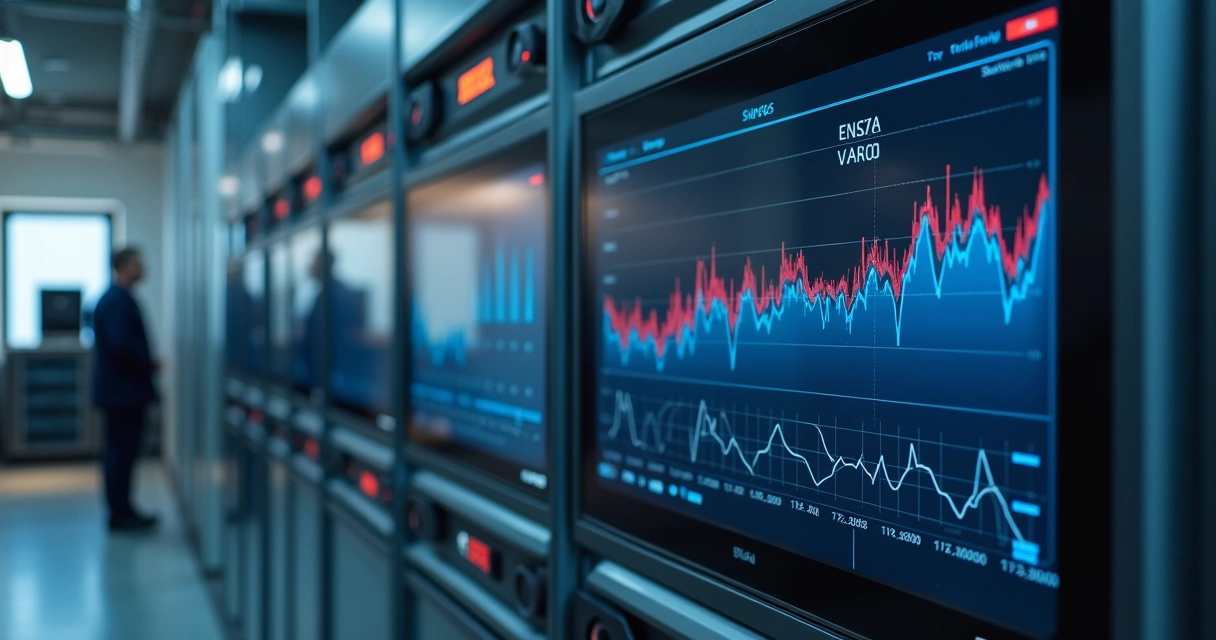
When I talk about peak detection, I'm referring to identifying readings that deviate from the expected pattern of a sensor. It could be a sudden temperature spike, a rapid pressure drop, an oscillation outside the curve in voltage, or an unusual CO₂ jump.
Peak detection is the ability to perceive anomalous readings in relation to the sensor's normal behavior.
This anomalous reading doesn't necessarily have to exceed the configured limit. This point changes everything. Instead of waiting for a formal violation, the system can signal that something is off.
I like to break this process down into three simple questions:
-
Is the current value far from the recent pattern?
-
Did the change happen too quickly to be considered normal?
-
Has this type of oscillation appeared before without causing problems, or does it typically precede failures?
When these questions are answered well, the alert gains more context and less noise.
What are the real advantages?
The biggest advantage, in my experience, is gaining time. Sometimes just a little. But in critical operations, a few minutes have high value.
The primary advantage of peak detection is anticipating risk perception before limit violation.
This brings practical effects across several fronts:
-
Reduced losses in sensitive environments, such as cold chain, laboratories, and pharmaceutical production.
-
Faster technical team response, before deviation becomes a critical event.
-
Better detection of intermittent failures, which go unnoticed in fixed rules.
-
More data to understand the problem's origin, not just its consequence.
I've tracked cases where a brief temperature spike didn't generate a violation but indicated a poorly closed door, equipment wear, or operational routine failure. Without that signal, the team would only notice later, during a larger event.
For those working with seasonality and demand peaks, this type of insight becomes even more useful. In such scenarios, it makes sense to dive deeper into the topic with content on IoT sensors in preventing seasonal demand peaks, because the out-of-pattern reading doesn't always stem from an isolated failure. Sometimes it accompanies process overload.
Where does this approach work best?
I consider peak detection very useful when the process has relatively stable behavior and any abrupt change carries risk. This applies to many sectors:
-
Cold rooms and refrigerators for sensitive inputs.
-
Environments with humidity and pressure control.
-
Industrial equipment with known cycles.
-
Electrical systems where voltage oscillates abnormally.
In these scenarios, out-of-curve readings typically carry high operational value. And when the company combines this with automated actions, the result is even better. I recommend the content on automated action plans for sensor failures, because detecting without responding quickly reduces part of the gain.
At DROME, I see a clear advantage: peak reading doesn't stand alone. It converses with history, equipment context, and event records. This prevents a shallow view of the problem.
What are the real limitations?
Here's the part many people avoid saying. Peak detection isn't a magic solution. If misconfigured, it can generate too many alerts or too little context.
The greatest limitation of peak detection is confusing legitimate oscillation with real anomaly.
I encounter this risk frequently when the sensor operates in naturally variable environments. An oven, a production line with abrupt cycles, or equipment that changes regime throughout the day can trigger many false positives if the model doesn't account for this dynamics.
There are also other practical limits:
-
Very brief peaks may be measurement noise, not real events.
-
Poorly calibrated sensors distort readings.
-
Without operational context, the system flags the symptom but doesn't help with the cause.
-
Some failures emerge as slow drift, not sudden spike.
This last point deserves attention. Not every problem appears as a sudden jump. Many start with small accumulated variations. That's why peak detection is strong, but not sufficient alone.
In cold chain, for example, I like to combine peak observation with broader preventive practices. The text on how to prevent IoT sensor failures in cold chain helps you see this picture more completely.
How to avoid false alerts?
I've learned that alert quality depends less on noise and more on criteria. A good system doesn't warn about everything. It warns about what deserves action.
To improve precision, I consider some points:
-
Separate noise from abnormal behavior based on sensor history.
-
Account for reading frequency and equipment type.
-
Cross-reference the peak with nearby events, such as communication failures or operational changes.
-
Adjust sensitivity by environment, not with a one-size-fits-all rule.
When this care doesn't exist, the team loses confidence in the system. And that's dangerous. An ignored alert today can become an incident tomorrow.
Transmission failures also factor in. Sometimes the apparent peak doesn't come from the monitored process but from a problem in the data path. That's why it makes sense to understand the signs of communication failure between sensors and gateway before concluding that every anomaly is physical.

Is peak detection enough on its own?
In my view, no. It's very good at identifying sudden events. But real operations mix abrupt spike, slow trend, intermittent failure, and communication error. A mature system needs to see this whole picture.
That's why I see DROME's proposal as stronger than solutions that only trigger alerts by fixed threshold or just show graphs. Some competitors still stop there. The problem is that delivers little for those who need to act early. At DROME, the advantage lies in combining real-time monitoring, event history, and layers of predictive reading.
When the team also knows how to interpret records, decision-making improves. For that, it's worth consulting the content on how to analyze critical event reports in cold chain, because isolated data says little. The pattern, yes, says a lot.
What I conclude about this technology
I see peak detection as a very useful tool, as long as it's treated realistically. It helps you gain time, reduce losses, and perceive deviations early. At the same time, it has clear limits and needs context to deliver real value.
Peak detection works best when it's part of a larger monitoring and prediction strategy.
If your operation depends on thermal stability, controlled pressure, stable humidity, or any sensitive variable, I suggest learning more about DROME. That way, you can move away from the model that only warns after the problem and advance to a reading that anticipates risk with more intelligence.