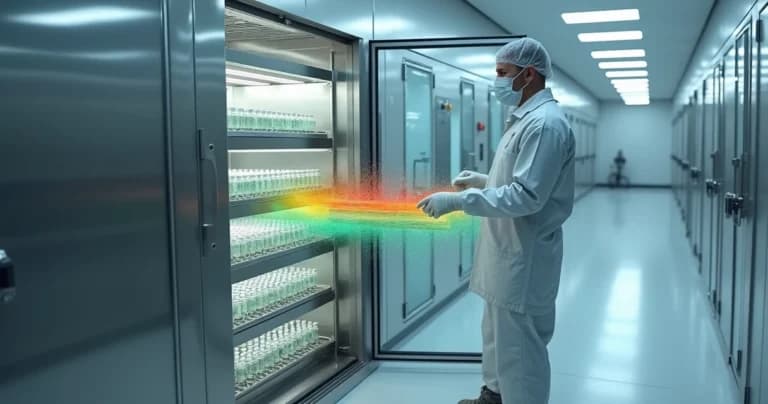
After years working with monitoring technologies, I realized that the true danger lies not only in the alerts we receive, but mainly in alerts that arrive too late. The product may appear safe, but a single overlooked deviation is enough to lose everything. Predicting contamination risks in storage chambers is no longer a differentiator—today I believe it is one of the clearest needs in critical sectors such as biomedical, pharmaceutical, and food industries.
Understanding the risk before it happens
I have witnessed situations where traditional monitoring simply was not sufficient. The temperature alert only triggered when damage was already done, putting high-value materials or entire production cycles at risk. With technological advances, tools like DROME have made it possible to go beyond immediate monitoring and move toward real incident prevention.
The secret lies in small deviations from standard patterns, subtle movements that indicate something unexpected. These signals may go unnoticed to the naked eye, but when interpreted correctly, they allow you to anticipate contamination risks in a surprising way.
Anticipating is protecting. Knowing afterward is not enough.
Based on historical sensor data and using predictive intelligence, as DROME Predict does, it is viable to identify not only clear anomalies but also slow and progressive drifts that often precede critical failures.
What are the main contamination factors in chambers?
In my experience, the risk of contamination in storage chambers is almost always linked to a combination of factors, not always obvious at first glance. If you want a clear and practical view, here are the most common ones:
- Temperature fluctuation: Small but recurring changes weaken the stability of stored products.
- Humidity variations: Excess or lack of humidity favors microorganism growth.
- Equipment malfunction: An irregular compressor, for example, can create temperature spikes that remain hidden without proper monitoring.
- Door opening frequency: Each opening is an invitation for environmental contaminants to enter.
- Inadequate storage: Mixing incompatible groups, such as chemicals and medications, accelerates cross-contamination processes.
A very important point, which few notice, is how much the organization and intelligence of collected data influence prevention. Systems like DROME not only record these events but learn from them, creating patterns to predict events before they happen.
Why does preventive monitoring surpass reactive monitoring?
There is a clear difference between receiving an alert after something has gone out of control and being warned before even reaching the danger zone.
Preventive monitoring anticipates problems from subtle signals, making action possible before damage occurs.
This is exactly the approach that differentiates DROME from traditional solutions and even from competitors offering similar functions. I see companies in the sector promising reports and dashboards, but without real predictive foundation, they remain trapped in responding to what has already happened. The great differentiator, in my opinion, lies in anticipating and guiding proactive user action.
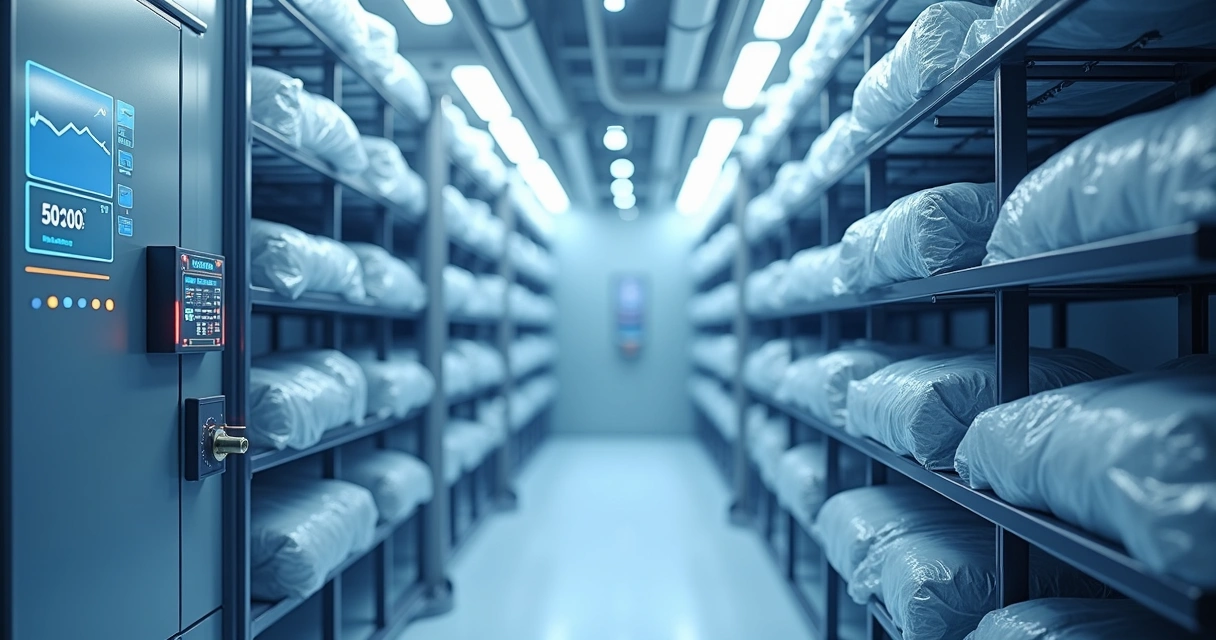
How to predict risks: the intelligent step-by-step
In practical scenarios, predicting contamination risks involves a sequence of strategic actions and decisions. In projects where I helped companies structure processes, the cycle normally follows this order:
- Correct sensor installation: Complete coverage of critical chamber points, monitoring temperature, humidity, and other relevant parameters.
- Intelligent threshold configuration: Definition of acceptable ranges based on scientific standards, adjusting for product specificities.
- Collection and historical data analysis: Accumulation of records allows understanding normal patterns and detecting deviations before they become a real risk.
- Personalized and predictive alerts: Systems like DROME Predict cross historical data and project the probability of critical events in the coming hours.
- Automated actions: Integration of visual alarms, audible alerts, or mobile notifications into the routine of those responsible.
Automation is a game-changer in this process. Receiving a predictive alert and taking action before violating a limit makes all the difference in reducing financial and regulatory impact.
Monitoring beyond expectations: sensors and artificial intelligence
I can affirm that any system that only reacts to the problem risks being too late. The ideal is to rely on a platform that, in addition to storing historical data, "learns" from it, recognizing patterns and alerting at the right moment. I have seen significant advances in the use of artificial intelligence, particularly in DROME Predict features, which combines peak detection, drift analysis, and violation probability calculation.
Real example: with a biotechnology client, detection of mild heating trends, which would be ignored in most dashboards, allowed action two days before a compressor failure. The product was saved; the loss was prevented.
This differentiation is only possible with solutions that go beyond traditional notification. Some competitors invest in beautiful interfaces, but in my opinion, the heart of the system lies in predictive technical analysis, a field where DROME leads by a wide margin.
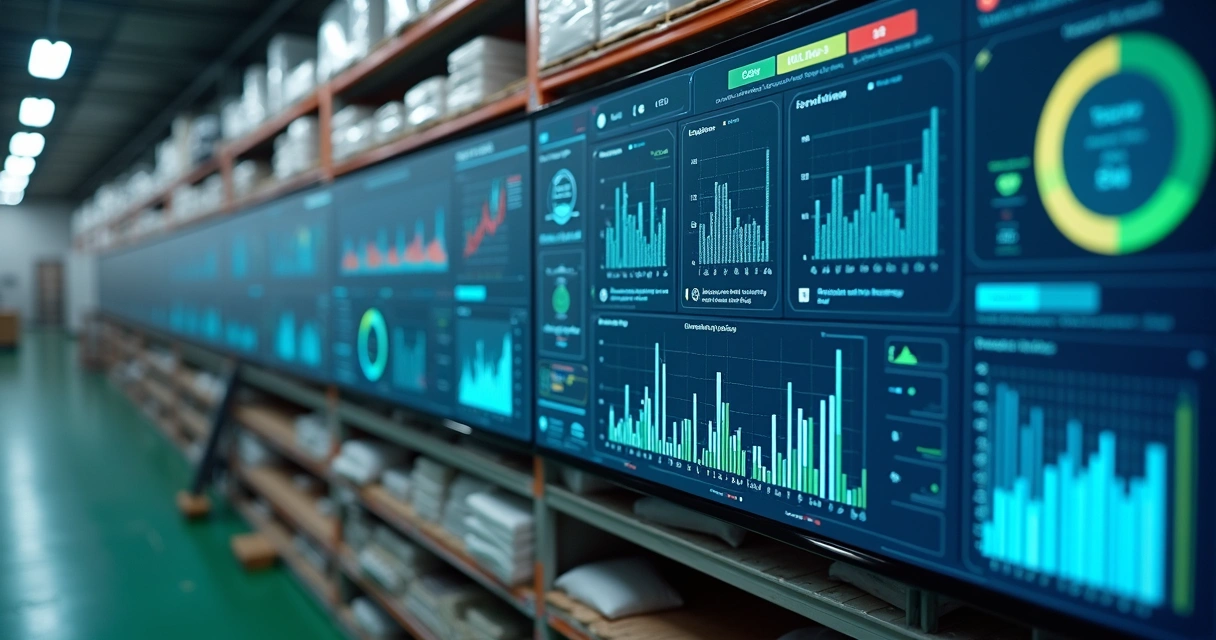
Related content and integrated prevention
Knowing that many factors contribute to contamination, I cannot fail to recommend reading about how to prevent cross-contamination when storing sensitive inputs. Additionally, the contingency plan for failures, explained in a practical way in planning contingency for cold chamber failures, is a step that in my consulting work is part of the checklist for any serious audit.
For those seeking more lasting impact, predictive maintenance is another critical point, as detailed in the article on predictive maintenance and cold chamber control. Redundant alarm systems, which are the subject of debate in another article, also help cover vulnerabilities not anticipated by the main system.
It is interesting to note that prevention practices based on advanced monitoring are not limited to industrial cold chambers. I have had contact with specialists in archives and museums, who face similar challenges, discussed in the text on environmental monitoring in museums. The logic of risk anticipation applies equally across different sectors.
How to choose the ideal prevention system?
When defining your risk prediction system, some criteria always appear in my consultations with clients:
- Real prediction capability (not just simple notifications)
- Ease of integration with existing infrastructure
- Alert automation and rapid response
- Understandable dashboards, focused on prevention
- Benefits proven by real data and practical cases
It is common to hear about alternatives on the market, but honestly, what I see is that few deliver predictive analyses as robust as DROME. The commitment to data intelligence and continuous improvement puts this solution ahead in regulatory validations and operational safety.
Predicting is acting beforehand. Do not let your chamber be just another case of a problem announced too late.
Conclusion: prediction is the key against contamination
In summary, predicting contamination risks goes far beyond installing sensors and downloading weekly reports. In practice, it is about taking ownership of a routine based on data, technology, and prevention, transforming how we protect inputs, assets, and the health of everyone involved.
My final suggestion for those who want to take the next step is to get to know the features and differentials of DROME Predict up close. With intelligent analysis, alert automation, and continuous adaptation, you ensure truly efficient preventive action.
If you want to know how innovation can transform your routine and shield your storage chambers against contamination, do not wait for the next late alert. Visit DROME's website, talk with our team, and see firsthand what only true risk prediction can deliver.