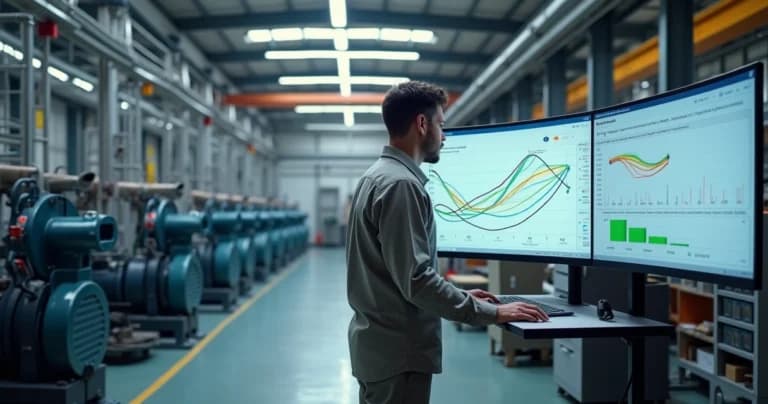
I have witnessed countless cases where a simple equipment failure left an entire operation vulnerable. I saw a hospital freezer lose blood samples, a restaurant cold room waste inventory, an industrial compressor stop mid-delivery. In those moments, the feeling of helplessness is the same: the warning came too late. With technological advancement, I finally see a real solution gaining traction. I want to show, in this article, how predictive dashboards change maintenance, and why projects like Drome Predict are redesigning this scenario.
The big leap: from reaction to anticipation
For many years, the standard was to react quickly to the panel alarm: remove product, isolate machine, rush to mitigate damage. But I was alarmed to notice the frequency of losses even with real-time monitoring. The learning came precisely when I discovered serious predictive analysis initiatives, like Drome. It's not enough to know that it exceeded the limit. The fundamental leap is finding trend signals before the traditional alert.
Predictive dashboards play a central role in this process. They gather sensor data, analyze patterns, and point out risks in a visual and simplified way. What changed with predictive intelligence in Drome, and few market solutions have convinced me as much, is the quality of the forecast. It's not post-problem alarm, it's alert before the risk even exists.
Alerting before damage is better than repairing afterward.
How a predictive dashboard works in maintenance
In my experience, operating a cutting-edge predictive dashboard offers three major advantages for adjusting maintenance:
- Deliver forecasts based on subtle trends, not just failures that have already occurred
- Prioritize truly critical equipment, organizing interventions based on real risk
- Reduce costs by avoiding unnecessary or reactive maintenance
With Drome Predict, the difference appears in the first few weeks: by analyzing each sensor's history, the system identifies individual patterns, points out behavior deviations, and allows you to configure personalized alerts. Instead of relying solely on intuition, I adjust the team's schedule based on concrete data. I create preventive action plans that are truly efficient.
What information should a predictive dashboard display?
In day-to-day operations, I notice that many confuse predictive dashboards with traditional panels. But there are striking differences for those working in the technical field:
- Future risk: Fundamental data, showing probability graphs of failure in the coming hours or days.
- Parameter trend:
- Curves that display drift signals, showing when equipment begins to lose performance gradually.
- Predictive alerts:
- Notifications not just for current events, but indicating abnormal conditions that anticipate real problems.
- Comparative history:
- Easy visualization to compare current performance versus historically expected performance.
- Criticality ranking:
- List of equipment by order of risk, facilitating maintenance scheduling.
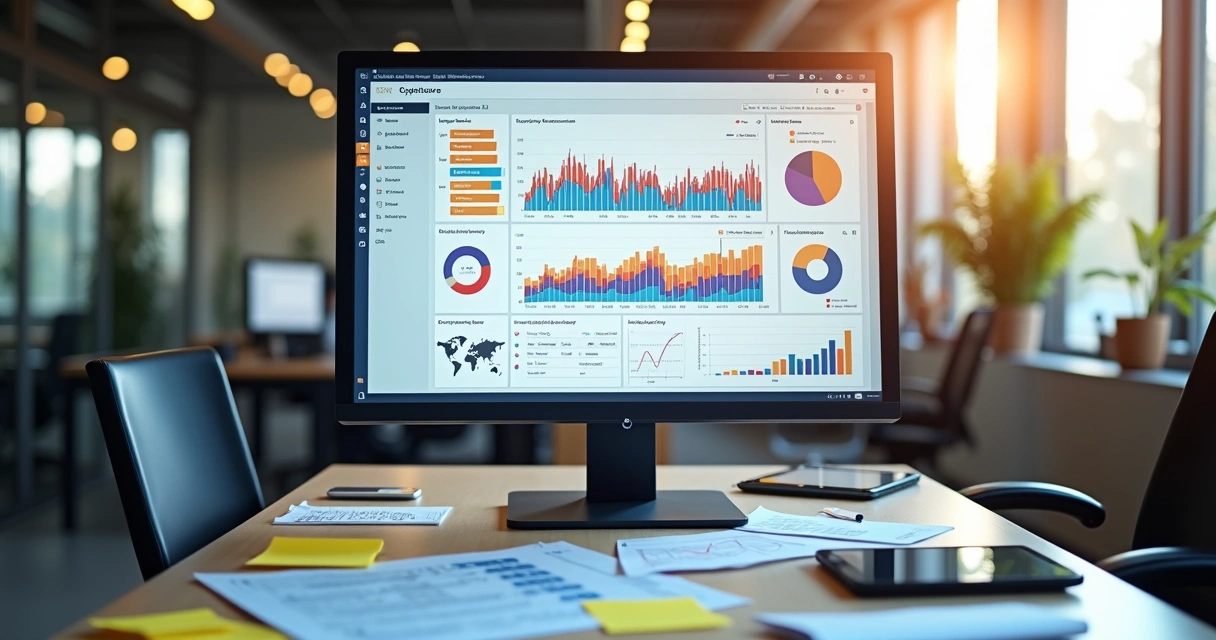
These visualizations are displayed in a clear, graphic, and intuitive manner. In the case of the Drome platform, these elements come ready to use from the start, eliminating lengthy training or complicated customizations, which saves time and reduces interpretation errors.
How to adjust maintenance with predictive dashboards
After adopting predictive dashboards in my routine, I noticed some radical changes in how I plan maintenance. I share the main actions I take based on this data:
- I prioritize maintenance based on real risk: I no longer follow only periodicity or "urgent shouting." The data points to where the risk of failure is concrete and imminent.
- I adjust resources according to actual need: I don't limit team and parts equally for all machines. We concentrate efforts where the dashboard indicates probability of problems.
- I reduce unnecessary inspections: If graphs show stability, I don't waste time reviewing a machine unnecessarily.
- Anticipation to prevent downtime: The system shows not just equipment at immediate risk, but also trends that could become failures "in two days." This way, I accelerate maintenance before damage occurs.
I was able to confirm this impact by reading the study I explain in this detailed analysis of how AI predicts maintenance in hospital freezers. It's clear that organizing data from thousands of sensors without losing individual focus is only possible with truly intelligent dashboards.
How to choose the best market solution?
In this universe there are several options, but I issue a warning: beautiful but generic dashboards deceive. I've tested competitors that promise prediction but deliver alerts based only on simple thresholds. What really matters, and what convinced me about Drome Predict, is:
- Individualized learning for each equipment, not global averages
- Predictive alert automation from day one
- Ease of integration with existing systems
- Clear interface that allows operation even by those not specialized in data
I know well-known companies in Brazil that offer predictive panels, but few combine complete automation, rich history of labeled data (as Drome already does), and technical support prepared to adapt dashboards to client reality. These differentials are decisive for real adjustments in your routine.
Common mistakes when using dashboards and how to avoid them
Here I share learnings and stumbles I've seen (or made) in using predictive dashboards:
- Thinking the dashboard replaces human analysis:
- Dashboards enhance decisions, but depend on team action.
- Ignoring "weak" signals:
- Small spikes or minor drifts already indicate future risk. Don't underestimate.
- Not measuring the results of actions:
- You need to review history and check if anticipation really reduced failures and expenses.
- Excessive customization without necessity:
- Well-designed dashboards, like Drome's, already come ready for the main cases. Don't reinvent the wheel.
The point is to use information to act quickly, simply, and with precision. I also recommend reading about predictive maintenance in cold room control for those working in that segment.
Concrete results: cases and learnings
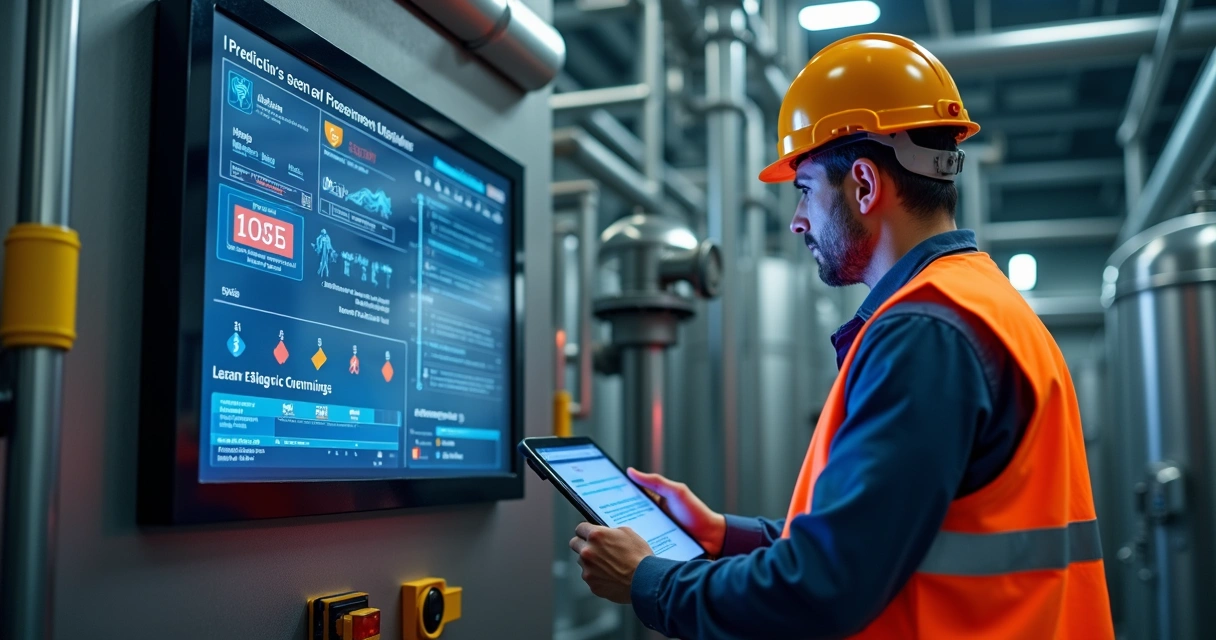
By applying predictive dashboards, I have already witnessed some gains in maintenance indicators in companies I've worked with:
- 30% reduction in catastrophic failures in less than six months
- Decrease in emergency maintenance parts inventory
- Savings on external technician calls during critical hours
- Increased interval between corrective maintenance
These numbers only appear because the data presented in dashboards changes the manager's posture: instead of chasing damage, they finally anticipate it.
For those who want to understand deeply how predictive analysis can prevent losses and waste, I recommend special reading in this article about how predictive analysis prevents supply loss.
The future belongs to data-driven decisions
My experience shows that predictive dashboards are no longer a distant promise. They are tangible reality in sectors that cannot fail, such as biomedical, pharmaceutical, and food industries. Major changes come from small daily decisions, adjusted with quality information.
I like to remind that the secret is not just technology. It's choosing the right partner, with robust data foundation, reliable predictive model, and dashboards designed for action. Drome Predict leads this movement, whether by volume of events analyzed or quality of follow-up.
To learn how other sectors benefit from these resources, I suggest discovering how preventive maintenance innovated with IoT and also how information technology changes the monitoring game.
Future maintenance is guided by those who make choices with data, not guesses.
If you want to move beyond late alerts and wish to anticipate, act, and transform your sector's results, talk to me or discover Drome Predict. We're ready to help your company take the next step.
Frequently Asked Questions
What is a predictive dashboard?
A predictive dashboard is an interface that gathers and presents historical and real-time equipment data, applying mathematical or artificial intelligence models to forecast trends and indicate future risks. It doesn't just show what has already happened, but signals where failure might occur before it happens, making maintenance faster and more precise.
How does predictive maintenance work?
Predictive maintenance uses sensors connected to digital systems that analyze equipment performance and detect behavior deviations. If it detects a failure trend, it issues an alert for the team to act before the problem occurs. It works best when based on intelligent dashboards, like those from Drome Predict, which interpret thousands of data points quickly.
What are the benefits of using dashboards?
Among the main benefits are preventing unexpected downtime, directing resources assertively, reducing costs, and extending asset lifespan. Predictive dashboards also allow decision-making to be more transparent and reliable.
How to implement a predictive dashboard in your company?
The first step is to map which equipment needs monitoring. Then, choose a solution like Drome Predict, which already has simplified integration and offers technical support. You need to install sensors, connect the data to the platform, and train the team to interpret the panels and act according to the predictive alerts presented.
Is it expensive to adopt predictive dashboards?
The investment depends on company size and equipment complexity. However, solutions like Drome Predict already make the cost accessible, as they prevent significant losses and reduce emergency expenses. In a short time, I observe that the return is several times greater than the initial investment.