
Regulatory fines are the nightmare of any manager responsible for critical processes in industries, hospitals, and food or pharmaceutical sector companies. Throughout my years working with environmental monitoring, I've seen how the simple difference of a few minutes to detect deviations can bring serious consequences, such as loss of merchandise, operational interruption, and heavy citations from regulatory agencies.
But there is a path to transform this scenario of uncertainty into real control: predictive forecasting. With it, we stop chasing losses and start acting before the problem even takes hold. Recently, I closely followed the evolution of Drome Predict, a solution that shows how anticipating environmental parameter violations changes the compliance game, and of course, reduces the risk of fines.
Why is traditional monitoring no longer sufficient?
For a long time, relying solely on conventional alerts seemed sufficient. Temperature, humidity, pressure, or CO₂ was monitored and, at the slightest deviation, the system would alert: something went out of standard. It's better than nothing, but, as I often say, alerting after the door has been broken never recovers what was lost.
I've witnessed teams that acted quickly upon receiving the alert, but unfortunately, the product had already been at risk. This is because traditional systems act reactively. In environments under ANVISA supervision or environmental agencies, as I show in discussions about ANVISA compliance, this delay is costly, literally.
An alert after the fact protects no one from fines.
It was precisely by analyzing these cases that the Drome team realized how urgent it was to advance toward predictive forecasting, the kind based on data intelligence that anticipates trends, not just responds to emergencies.
What is predictive forecasting in practice?
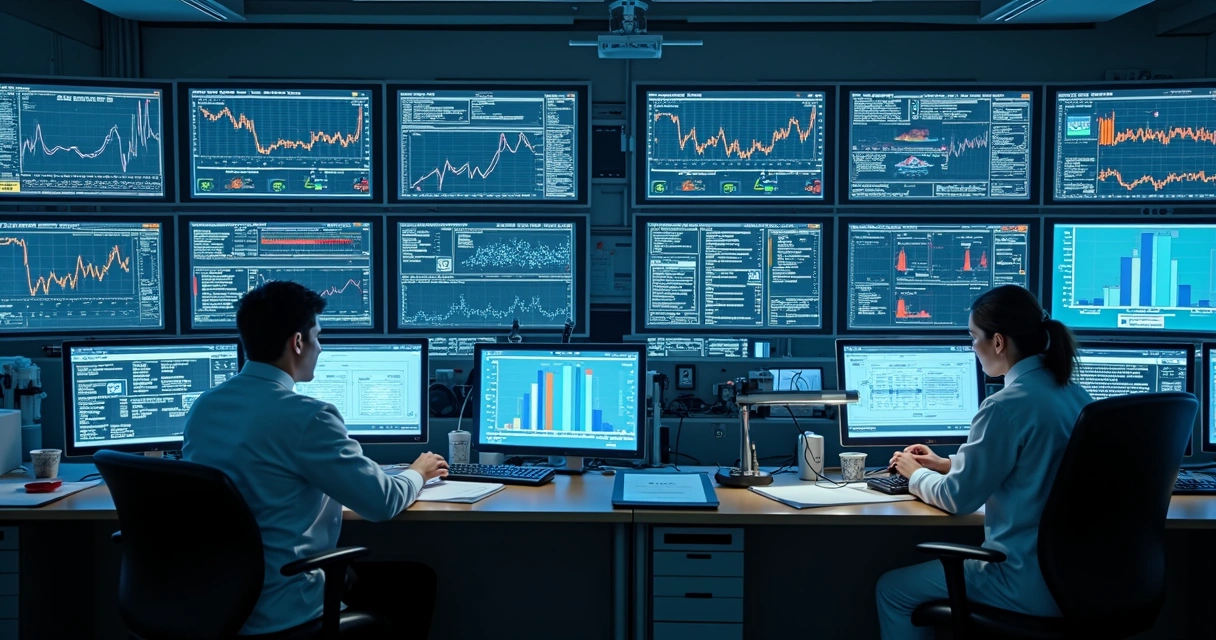
At first, I confess the technical names seemed a bit distant from practical routine. But when I saw the real application, it became clear: predictive forecasting analyzes the detailed history of equipment and detects patterns before violations occur. Instead of waiting for the alarm to sound, it identifies slow deviations (called drift), unusual spikes, and even estimates the chance of a non-conformance occurring in the next few hours.
- Spike detection: identifies values far outside the normal range, even if they haven't yet crossed the legal limit.
- Drift detection: perceives slow trends of change, like that freezer warming up 0.2 °C each day.
- Violation prediction: calculates in real time the probability that a parameter will deviate from the rule later today.
The secret lies in the combination of statistical intelligence and machine learning, fed by thousands of historical events already documented. Systems like Drome Predict learn how each sensor and equipment typically behaves, detect true anomalies (not just noise), and change the routine of control teams.
Does anticipating failures reduce citations and ensure compliance?
As anyone who has participated in ANVISA audits knows, it's not enough to quickly correct a failure; you must demonstrate preventive control and traceability. A recurring or inadequately reported non-conformance can result in warnings or even heavy fines.
The value of a predictive system, in my view, lies in the fact that it allows teams to:
- Receive advance warnings of critical situations about to happen, with time to adjust equipment or transfer products;
- Generate automatic control reports, making audit documentation a simple and secure process;
- Identify and prove that operations adopt procedures aligned with the latest regulatory requirements;
- Improve compliance history, preventing recurrence and reducing the chances of surprise inspections resulting in citations.
I've seen reports from companies that relied only on conventional market solutions and still continued accumulating notifications and occurrences. Many competitors offer alarms or consultation portals, but few invested in advanced, transparent, and personalized prediction like Drome did.
The real risks of relying only on conventional alerts
I decided to highlight some examples of what I've witnessed. In a pharmaceutical industry, a temperature sensor failed for 30 minutes during the night. The traditional system sent the alert. However, only when arriving at the company in the morning could the team act. All batches in the room were retained for investigation and, a few days later, came the citation and the fine.
Another case: a diagnostic laboratory had the alarm triggered, but investigations showed, after manual historical analysis, that the problem had been developing for several days in a slow temperature rise. If a predictive system had been applied, the preventive adjustment would have prevented the episode and all the headache with the regulatory agency.
Predicting is safer than just reacting.
Not surprisingly, companies seeking innovation began requiring their suppliers to offer differentials, like the features Drome Predict brings. And the difference in results, especially in preventing citations, is clear.
How does digital traceability work in predictive systems?
In the modern scenario, it's unthinkable to have to study spreadsheets or paper notes to answer an auditor. Systems like Drome's already keep the history of each reading, event, and adjustment, with complete logs and reports extracted in just a few clicks.
In the article about the seven steps of digital traceability I detail how:
- Immediate access to history speeds up audits and inspections by regulatory agencies.
- Secure storage mitigates doubts about data manipulation or loss.
- The ability to reconstruct past events brings legal and operational security.
In my experience, clients feel much more confident when, facing any situation, they can demonstrate capacity for preventive action, not just reaction.
How to adopt predictive forecasting in your process?
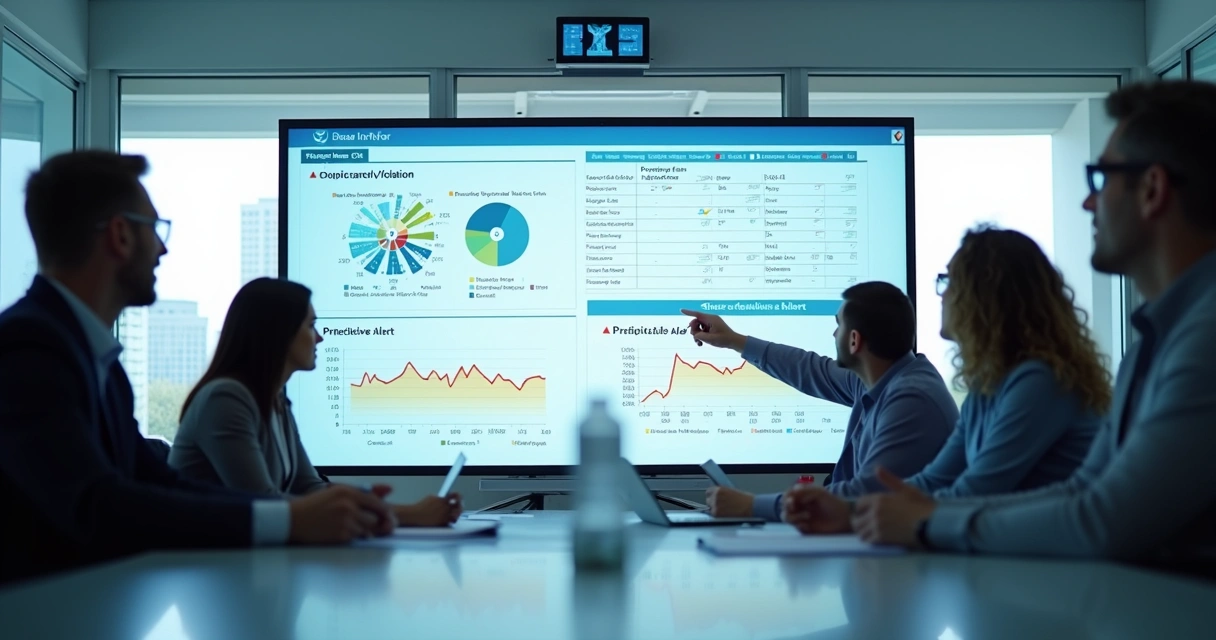
I constantly receive questions from managers and technicians who want to adopt prediction but don't know where to start. The first step is to map which environments, sensors, and parameters are monitored. Then, study the existing history, looking for signs of repeated patterns or trends.
Solutions like Drome Predict allow integration of already-collected data, without needing to replace compatible sensors, adding predictive layers that go beyond conventional alerts.
- Personalized configuration is essential: each environment has different criticalities and regulatory requirements.
- Training the team to interpret predictive alerts makes all the difference, as the warning arrives early and requires action planning.
- Asking the supplier for demonstration reports during audits shows organization and transparency.
Practical benefits beyond preventing fines
I always like to emphasize: predictive forecasting not only prevents citations but also helps preserve inputs, avoid losses, and ensure quality for the end consumer. In a recent analysis on input loss, it became clear how small undetected deviations generate silent losses.
Additionally, confidence in traceable processes reduces tensions during inspections and opens opportunities for stricter certifications or commercial agreements with demanding clients.
Anticipating failures is delivering peace of mind for the entire chain.
Why does Drome Predict stand out?
I've seen platforms on the market that promise similar features, but few present labeled historical data, customization experience by equipment type, and close technical support, as Drome offers. The care in evolving based on real analyses, collecting nearly half a million events, provides a solid foundation for its predictions.
I also highlight the transparency and adaptability: whether for hospital, pharmaceutical, food, or industrial environments, the solution was designed thinking about Brazilian reality and local regulatory demands. That's why I believe Drome Predict is truly ahead of others regarding preventing regulatory fines and operational safety.
If you're tired of putting out fires and want to take care of your business health, regulatory compliance, and your teams' peace of mind, I recommend learning more about how predictive forecasting can change your routine. Talk to our specialists and discover in practice how to transform data into real protection against fines and losses.