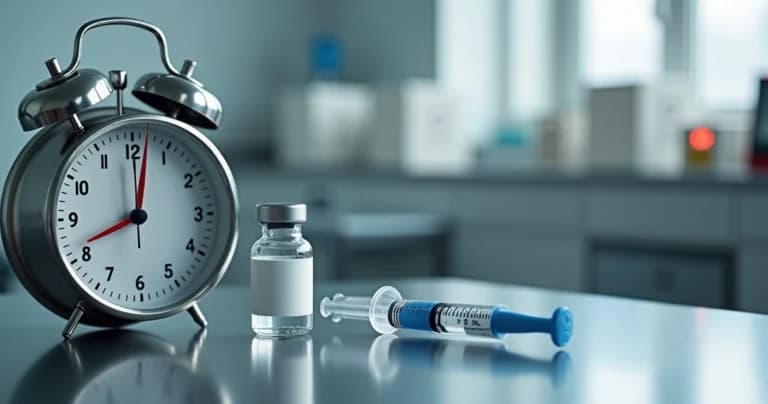
I have witnessed firsthand how delays in vaccine monitoring can bring consequences far beyond financial loss. Over the years, I have come to understand that when it comes to immunization, there is no room for negligence. A delay of just minutes in an alert can render an entire batch unusable. And unfortunately, this is a more common reality than it seems, both in developed countries and those still facing major logistical challenges. In this article, I share a reflection based on studies, reference data, and my experience on the concrete risks associated with delays in vaccine monitoring.
Why is immediate monitoring so decisive?
In my daily conversations with health managers, it becomes clear: the concept of 'urgency' takes on special meaning when it comes to vaccines. A simple power failure or unintended shutdown can ruin extremely valuable stocks. The problem begins precisely where many believe they are safe—relying solely on sensors that trigger alarms only when damage has already occurred.
Recently, a World Health Organization report showed that vaccines are frequently exposed to inadequate temperatures, especially below freezing, putting entire immunization campaigns at risk. This is not an issue confined to small clinics. Data from international literature confirm: 33% of vaccines in high-income countries and 37.1% in low-income countries have already been stored incorrectly.
These numbers illustrate a dangerous scenario: every minute counts. If the monitoring process does not anticipate trends, there will hardly be time to act.
The difference between total loss and preservation lies in response time.
Exploring the practical risks of delays
I must emphasize: failing to act proactively in monitoring opens the door to various risks that often only manifest when it is already too late.
- Risk of vaccine waste: A single temperature breach can require entire batches to be discarded with no chance of reuse;
- Risk to public health: Vaccines administered outside parameters may be ineffective or even dangerous, compromising campaigns and putting the population at risk;
- Financial loss: Beyond the waste of the immunizing agent, there are additional costs to investigate, replace, and correct failures, not to mention potential regulatory fines;
- Reputational damage: Recurring failures undermine confidence in clinics, hospitals, public networks, and laboratories.
I have seen emblematic cases where delays in temperature monitoring caused the destruction of strategic vaccines, forcing health departments to completely reschedule entire campaigns.
How delays happen even in modern systems
Many believe that investing in technology automatically eliminates risks, but after evaluating processes in the field, I have found that errors still occur due to:
- Reactive monitoring: systems configured only to alert after violation;
- Inadequate sensor configuration;
- Human errors, such as forgetting manual checks or updating alert limits;
- Lack of well-analyzed history for each sensor and equipment type;
- Slow IT responses to correct power failures or sensor disconnections.
In fact, delving deeper into the discussion, the list of common errors in vaccine monitoring shows how fragilities can arise in stages that, at first glance, appear controlled.
Legal and regulatory consequences
It is essential to remember that citations for vaccine monitoring failures are severe, and legislation in many countries requires complete temperature history records. I have known managers who discovered, in a simple audit request, the importance of extra care: missing a single report or monitoring evidence and the damage is immediate.
Fines, facility embargoes, and even disqualification from immunizing agent distribution are possible consequences. And this context reinforces even more the need for robust solutions, such as the DROME system, developed precisely to transform telemetry into real protection of immunobiological assets.
Anticipating risks with predictive monitoring
In my experience, technologies change the game when they anticipate trends, not just when they respond to alarms. DROME Predict, for example, ensures that the manager does not learn of the deviation only after damage occurs, because it identifies spikes, drift, and probability of violation before the limit is actually exceeded.
- Analyzes historical patterns of each sensor and equipment;
- Triggers early alerts based on trends;
- Drastically reduces the time between detection and intervention.
This makes all the difference in practice. I have noticed that while some market alternatives deliver only alarms "after the accident," those using DROME can count on a safety net based on real data from their own environment and equipment.
Not surprisingly, I have seen managers recognize that this predictive approach helped prevent losses during power failures or more discrete variations in the electrical grid, a topic detailed in the article on how to prevent thermal damage to vaccines from power failure.
What makes the difference between losing or not losing large stocks?
From what I have observed, the answer lies in the combination of continuous monitoring, intelligent data analysis, and rapid response. Solutions like DROME, capable of recording complete history, predicting drift, and identifying risk in advance, represent a leap in quality. Even when compared to well-known market systems, I can confidently say that our set of algorithms and user-friendly interface offers more agility to the professional responsible for decision-making.
Those who anticipate, save.
Furthermore, studies on reducing losses from human failures prove that when technology works in favor of people, not just signaling errors but pointing them out before they happen, the result is a much more protected cold chain.
How to improve monitoring: lessons and pathways
My suggestion to those living the immunization routine: invest in systems that learn from your environment's history, not just conventional alarms. The practical guide to monitoring sensitive chains brings valuable tips on configuration, threshold adjustments, backup policies, and team training.
Other points I always consider to avoid the risks of delays:
- Regularly test alarms and sensors;
- Document the entire immunizing agent cycle: transport, storage, and administration;
- Automate repetitive tasks as much as possible, reducing the margin for human error;
- Prefer solutions with predictive alarms that can warn before problems occur.
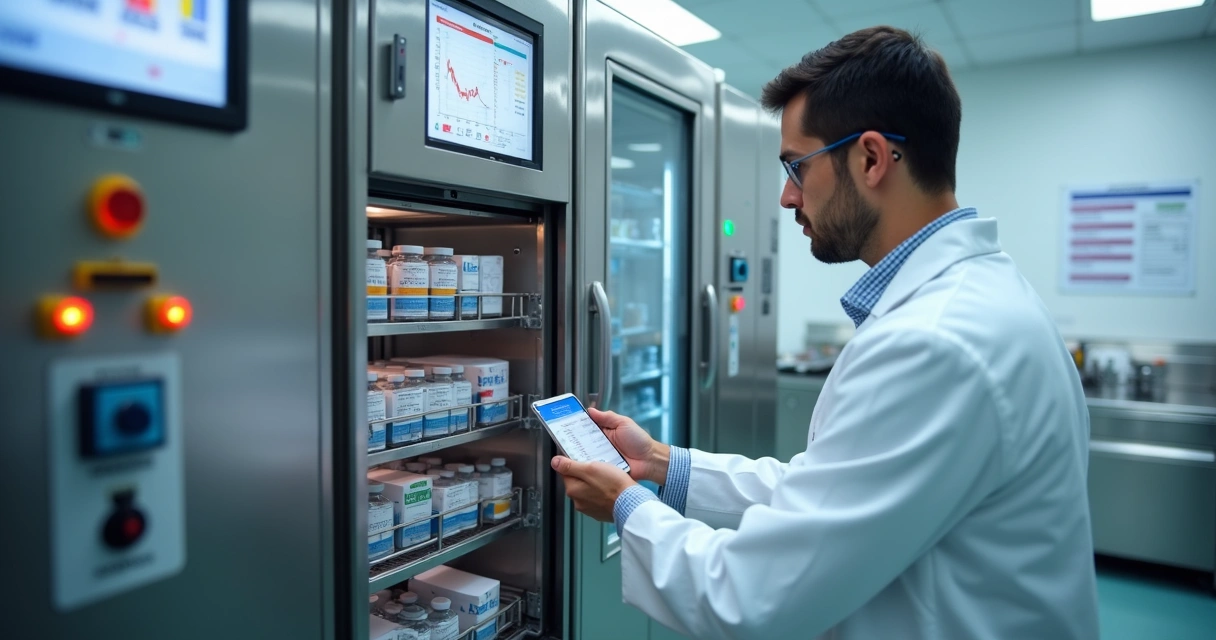
I further emphasize that, even compared to well-known market systems, DROME tools stand out precisely for their cutting-edge automation, predictive intelligence, and ease of risk visualization. This makes a difference in the daily work of those who cannot afford to make mistakes.
Conclusion
When I think about vaccine monitoring, I see that every second is decisive. The delay, often invisible, can cost much—in resources, trust, and most importantly, in public health. Having a solution capable of anticipating risks transforms all management and brings peace of mind to the professional. I invite you who live the responsibility of the immunizing agent to thoroughly explore what systems like DROME have done for those seeking real security throughout the cold chain.
Frequently Asked Questions
What is vaccine monitoring?
Vaccine monitoring is the continuous tracking of temperature and storage conditions during all stages, from transport to vaccine administration. The main objective is to ensure that vaccines maintain their efficacy and safety, preventing losses and health risks.
What risks does delay in monitoring bring?
Delays can result in the loss of entire batches, administration of ineffective vaccines, risks to population integrity, and legal and financial impacts for institutions. These problems are aggravated when there are no intelligent systems to anticipate deviations before limit violations.
How can delays in vaccine monitoring be prevented?
It is possible to prevent delays by adopting predictive systems, such as DROME Predict, which analyze trends and trigger early alerts. Team training, sensor maintenance, and regular review of storage policies are also essential.
Why is vaccine monitoring important?
Monitoring vaccines ensures that the immunizing agent truly protects the population, prevents resource waste, and meets legal and sanitary requirements.
Who is responsible for vaccine monitoring?
Responsibility may vary by location, but generally falls to the management team of the health facility, cold chain operators, and professionals directly involved in storage and transport. Each of these actors needs reliable tools and clear processes to ensure vaccine integrity.