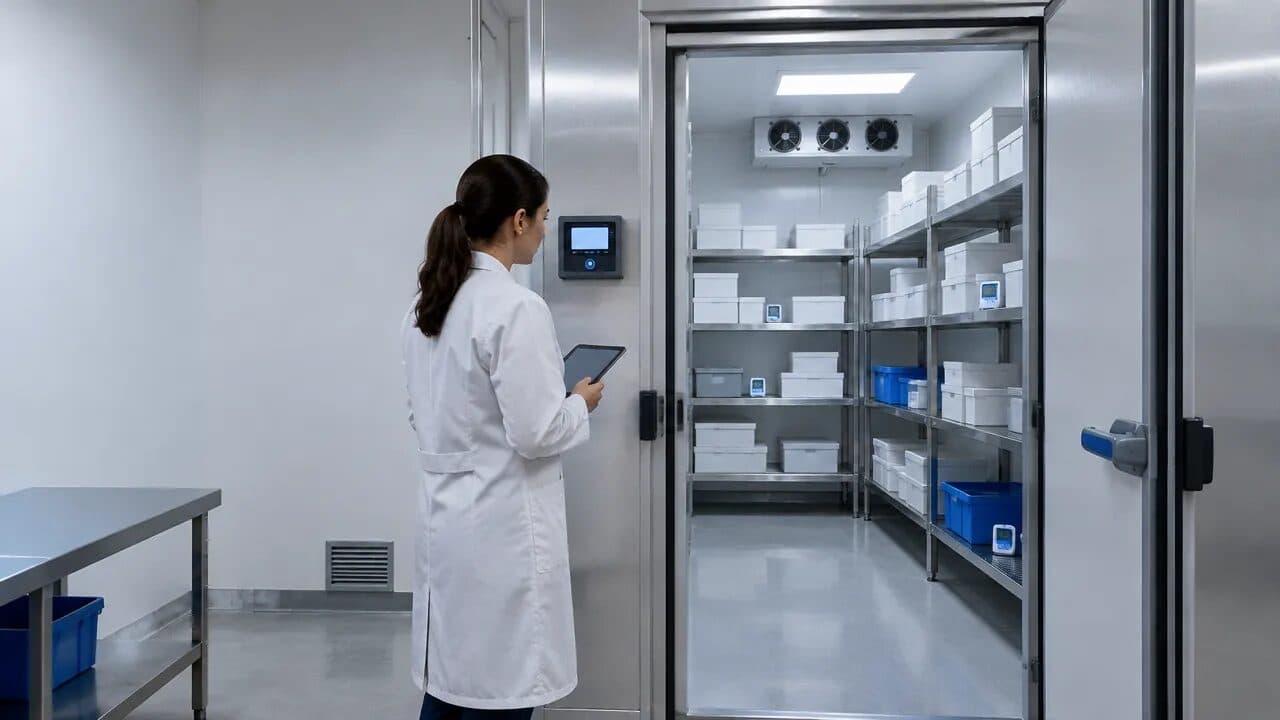
A cold chamber may continue displaying the programmed temperature while a renovation, component replacement, or new box arrangement alters temperature in part of the volume. The qualification report describes specific installation and operation conditions, not a permanent guarantee. For clinical engineering, quality, and pharmacy, the correct decision is to evaluate the impact of the change and document whether, and how much, requalification is needed.
What the team needs to clarify before repeating a test
- The report represents the conditions evaluated on the study date, including installation, load, and mode of operation.
- A change does not automatically invalidate the document, but may render part of its evidence insufficient.
- IQ, OQ, and PQ answer distinct questions; the protocol defines which stages need to be repeated.
- The validation plan should establish periodicity, acceptance criteria, and triggers for review.
The report proves a defined condition, not performance forever
Thermal qualification records whether the equipment met defined criteria under identified conditions. These include the chamber location and configuration, control adjustments, load, and test period. If any of these conditions change, the team must verify whether previous results remain representative.
This does not mean canceling the report as soon as someone moves a shelf or opens a work order. Quality should record the change, assess the risk to products, and review available evidence. The outcome may be to maintain the qualified state with documented justification, perform focused tests, or repeat broader stages.
IQ, OQ, and PQ verify different parts of the system
Installation qualification, or IQ, verifies whether the equipment was installed per defined requirements. The team reviews identification, location, utilities, assembly, manufacturer documentation, and conditions that may affect operation, such as clearances for ventilation.
Operational qualification, or OQ, tests functions and controls under specified conditions. It may include alarm verification, adjustments, cycles, and response to challenges defined in the protocol. Performance qualification, or PQ, evaluates thermal behavior under representative use conditions, with defined load and routines.
An intervention may affect one stage without requiring full repetition of the others. Replacing a controller, for example, calls for review of functions and alarms; if it also alters cycles or air distribution, the assessment may include new performance mapping.
Four events call for documented impact assessment
The events below are triggers for analysis, not automatic orders to repeat the entire study. Quality should link the change to the affected thermal mechanism and record the decision and its justification.
| Event | Potential Impact | Evidence to Review | Quality Action |
|---|---|---|---|
| Renovation or layout change | Walls, doors, shelves, or obstacles may alter air flow and create regions with reduced circulation. | Floor plans and photos before and after, evaporator and air return positions, temperature history and deviations. | Assess whether critical points and useful volume changed; define focused test or new mapping. |
| Relevant replacement or maintenance of refrigeration | Compressor, evaporator, controller, or fans may modify cycles, cooling capacity, and recovery after opening. | Work order, replaced parts, control parameters, functional tests, and alarms. | Verify the extent of intervention and test affected functions; expand to performance if thermal effect is plausible. |
| Alteration of load volume or arrangement | Greater thermal mass may prolong recovery; boxes or shelves may block circulation and shift gradients. | Approved configuration, usual and maximum occupancy, clearances, and records during representative conditions. | Confirm whether new load remains within qualified scenario and requires testing with revised configuration. |
| Expiration of validation plan timeline | History may not represent current state after aging, deviations, or accumulated changes. | Current plan, trends, maintenance, calibrations, excursions, and change assessments. | Execute approved periodic review and justify scope based on risk and evidence. |
Mapping, calibration, and monitoring answer distinct questions
Thermal mapping shows how temperature varies between regions and over time under defined test conditions. Calibration verifies the relationship between an instrument's reading and a traceable reference. It gives confidence in that instrument's measurement, but does not prove chamber uniformity.
Continuous monitoring tracks routine between studies. It can reveal excursions, defrost cycles, or slow recovery trends and provide evidence for impact analysis. Still, a series of readings from few points does not replace a planned spatial distribution study.
Separate regulatory obligation from technical recommendation
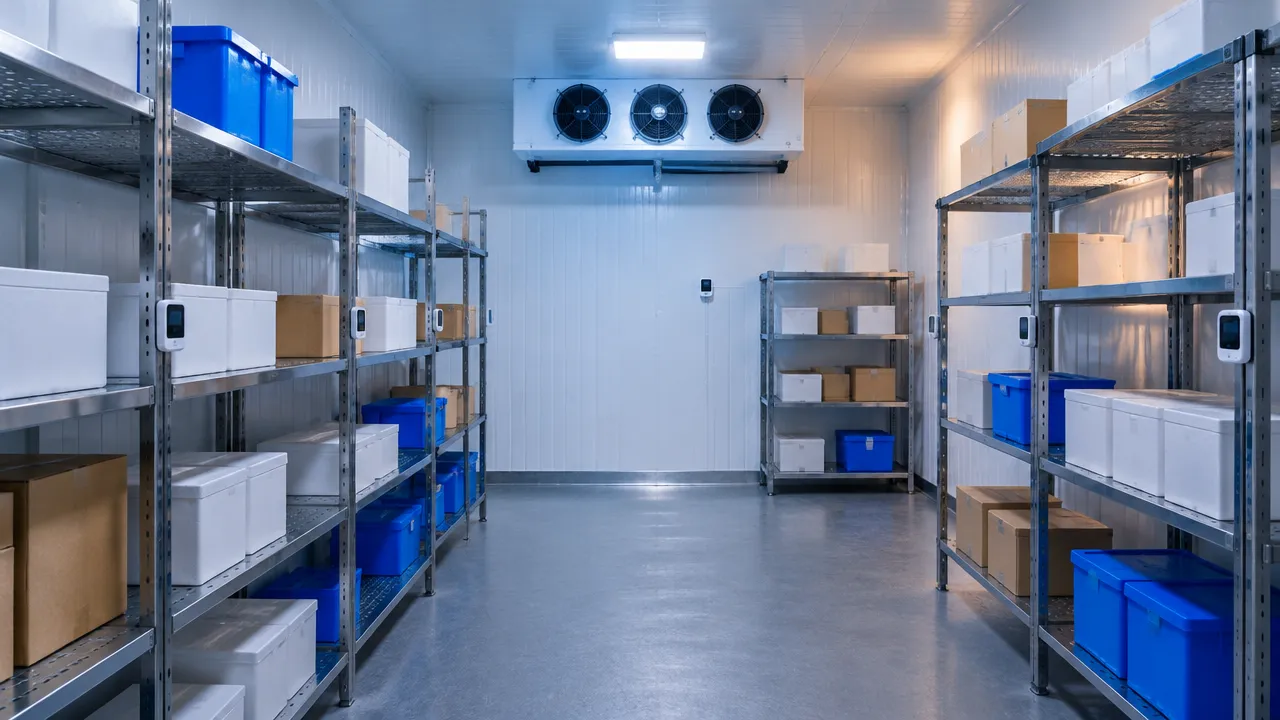
RDC 430/2020 governs good practices for distribution, storage, and transport of medicines within activities covered by the regulation. The RDC 430/2020 published in the Official Gazette should not be treated as a general qualification rule for every chamber installed in a hospital or laboratory. Classification depends on the activity and regulatory requirements applicable to the establishment.
The amendment to RDC 430 by RDC 653/2022 integrates the regulatory reading of the regulation. The four events in the table are technical triggers for impact and risk assessment. Periodicity and protocol must be documented in the quality system, without assuming a universal timeline that fits any equipment.
A checklist reduces incomplete decisions
Before releasing the chamber after change or requalification, verify that the record allows reconstruction of what was tested and why the equipment returned to use.
- Protocol approved before testing, with scope, conditions, and responsibilities defined.
- Acceptance criteria linked to intended use and applicable requirements.
- Instruments identified and with current traceable calibration for use.
- Load conditions described, including representative configuration and foreseeable highest-risk scenario.
- Critical points justified by design, air flow, history, or use; not copied from a generic diagram.
- Deviations investigated, impact assessed, and corrective actions documented.
- Quality approval recorded before return to use.
Qualification, monitoring, and prediction play complementary roles
Qualification verifies a defined use condition. Monitoring tracks behavior during daily operation. Failure prediction seeks signs of degradation before the equipment loses function. Mixing these roles creates a false sense of coverage: continuous data does not, by itself, transform a chamber into qualified equipment.
In the DROME architecture, the STE Satellite Sensor measures temperature and the CTD Concentrator handles data communication. DROME Predict analyzes operational patterns to support failure anticipation. These resources can complement the monitoring routine but do not replace mapping, calibration, qualification protocol, or formal quality decision.
When a change alters air, load, or refrigeration cycle, record what changed and perform impact assessment before deciding the scope of the new test.
Frequently asked questions
How often should thermal qualification of a cold chamber be redone?
There is no single timeline that applies to every cold chamber. Periodicity should be defined in the validation plan, considering use, deviation history, product risk, and applicable requirements. A relevant change may justify assessment before the scheduled date, even if the equipment still operates within range.
Which changes may require thermal requalification?
Renovations that alter space or air flow, relevant interventions in the refrigeration system, and changes in load quantity or arrangement may affect previous results. Expiration of the timeline in the plan also calls for review. Record each event and assess its impact before defining the scope of the new test.
What is the difference between thermal mapping and calibration?
Mapping records how temperature distributes throughout the chamber volume over the test period. Calibration compares an instrument against a traceable reference and documents its error. A calibrated sensor does not, by itself, prove that all chamber regions maintain acceptable conditions.
Does RDC 430 apply to every cold chamber in a hospital?
RDC 430/2020 addresses good practices for distribution, storage, and transport of medicines in activities within its scope. It should not be automatically applied as a general rule to any hospital or laboratory chamber. Verify the regulated activity, pertinent regulatory requirements, and procedures approved by the establishment.
Does continuous monitoring replace thermal qualification?
No. Continuous monitoring records conditions during routine and helps detect excursions or trends. Qualification assesses the equipment under conditions and scenarios defined by protocol. A useful continuous history can support risk analysis but does not replace the documented qualification study.
Read next

7 Essential Vaccine Storage Practices at Fleury
Learn procedures for IoT sensor monitoring, preventive maintenance, and strict cold chain control at Fleury Vaccines.

7 Common Vaccine Monitoring Errors and How to Fix Them
Discover frequent vaccine monitoring errors and learn how to avoid failures to ensure safety and efficacy.

Cold Chain: Ensuring Blood Component Quality
Understand temperature control, blood component types, and technologies to prevent losses and ensure transfusion safety.