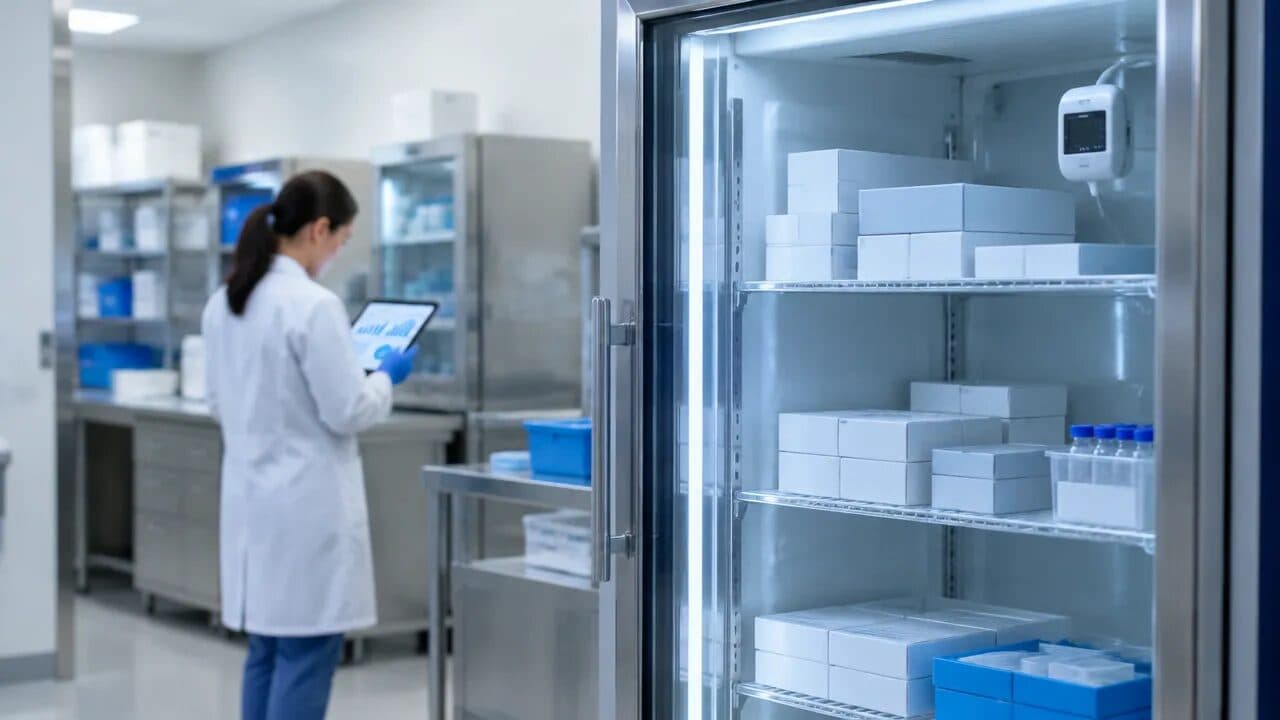
To demonstrate to the sponsor how the unit preserves investigational drugs, each reading must be linked to the equipment, the defined range for the material, and the team's response. A continuous record helps reconstruct history; predictive analysis can provide an alert about equipment deterioration before an excursion occurs. No technology replaces protocol, material assessment, or unit procedures.
What Makes Storage Control Demonstrable
- The history identifies equipment, period, sensor, and conditions defined for the material.
- Calibration and applicable qualification show how the measurement was controlled.
- Alarms, responsible parties, and actions allow reconstruction of the response to each deviation.
- Predictive analysis looks for failure signals before the range is exceeded.
Control Begins with the Right Range for Each Material
There is no single range that serves all investigational drugs. The team must consult the protocol, material storage instructions, and approved procedures to define limits, recording frequency, excursion handling, and responsibilities.
This criterion also applies to humidity. Record it when the protocol or material characteristics make this condition relevant. Note the approved range and its justification in study documents, rather than relying on a default setting without clear connection to the stored material.
The history must identify the refrigerator or ultra-low freezer, sensor position, period covered, and unit of measurement. The team must also link the materials and lots stored to the equipment during that interval. This way, in the event of an issue, you can determine what needs to be evaluated.
Three Levels of Monitoring Answer Different Questions
Point measurement, limit-based alarm, and predictive analysis produce distinct evidence. A manual reading shows the condition at the moment of check; it does not necessarily show what occurred between shifts.
| Approach | What It Shows | Practical Limitation |
|---|---|---|
| Point measurement | A single reading at a specific time | May leave intervals without recorded evidence |
| Continuous monitoring with limit-based alarm | Reading history and alert when configured limit is reached | Generally, the alert depends on the reading reaching the limit |
| Predictive analysis | Changes that may precede a failure | Indicates a risk, does not confirm the material was affected |
The limit-based alarm remains necessary to identify an excursion. Predictive analysis answers another question: is the asset's behavior changing in a way that warrants intervention before temperature leaves the range?
A Refrigerator Can Lose Performance Before Crossing the Limit
Consider a hypothetical example. Over several days, the refrigerator maintains temperature within range, but its operating cycles lengthen and compressor current changes. An alarm based solely on the thermal limit may not trigger while the reading remains acceptable.
With data from the same equipment, the team can identify this change, verify the asset, and schedule an inspection. If temperature leaves the range, segregate the material and initiate evaluation per protocol. Maintenance records the diagnosis and intervention; the responsible team documents the decision on affected lots.
In each case, the workflow must make clear who receives the alert, who verifies the equipment, who evaluates the material, and where the decision is recorded. Shift handover must not leave these responsibilities implicit.
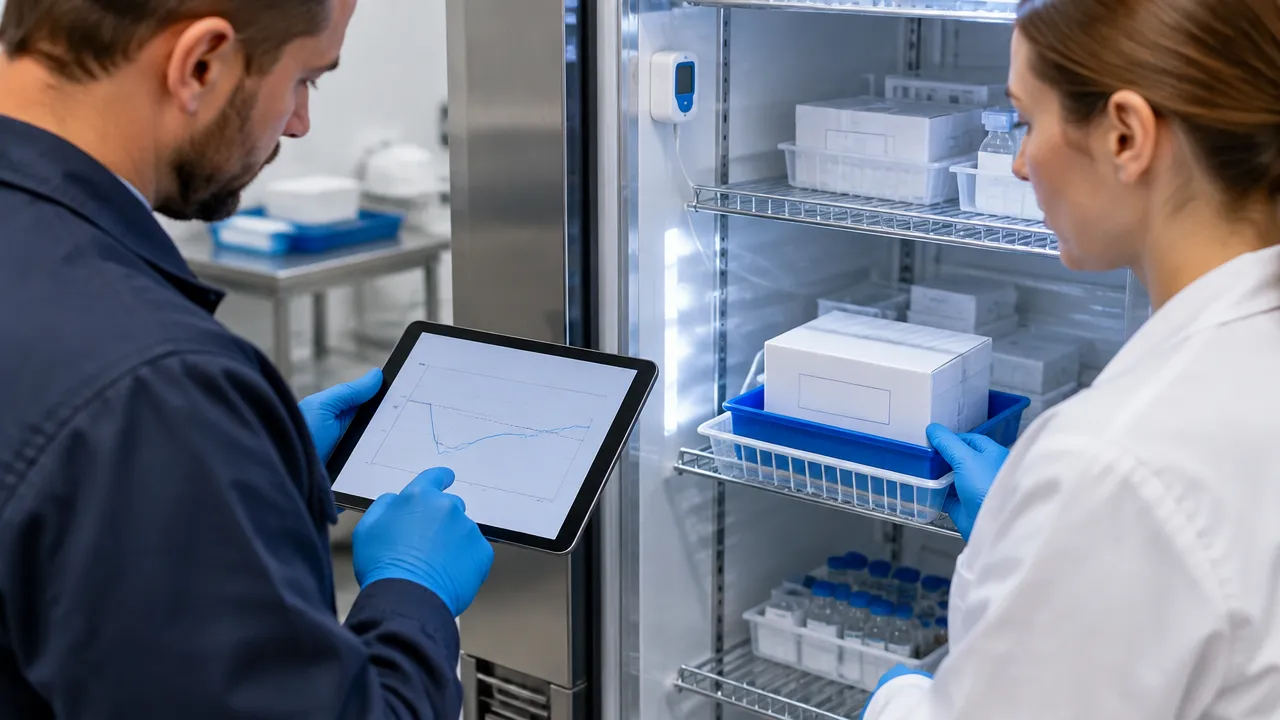
An Excursion Requires Segregation and Documented Evaluation
When temperature exceeds the defined range, returning to the interval does not automatically release materials. The team must identify and segregate them, maintaining quarantine status until completing the evaluation specified in the protocol.
The event record must include the equipment, known or estimated period, available readings, potentially affected lots, alarms received, and people contacted. Add the assessment by the responsible team, communication with the sponsor when required, and the documented decision on each material.
This set allows the sponsor or auditor to follow the sequence between detection, assessment, intervention, and decision. A spreadsheet filled in after the fact may help document actions, but cannot recover readings that were never recorded.
Evidence Depends on Traceable Records and Clear Responsibilities
For each equipment, maintain the temperature history linked to the asset identifier, traceable instrument calibration, and applicable qualification records. Also organize limit configuration, alarm tests, list of responsible parties by shift, and procedures for escalation and contingency.
Electronic records require evaluation per intended use and rules applicable to the study. FDA guidance on electronic systems and records in studies addresses reliability and documentation. 21 CFR Part 11 should not be treated as an automatic requirement for any system; its applicability should be evaluated and validation and local controls documented.
A platform can provide readings, alarms, and audit trails. The unit remains responsible for validating the system for its intended use, defining procedures, controlling access, and demonstrating that the team knows how to respond to events.
Sensor Satellite Measures, CTD Collects, and the Team Responds
At DROME, the Sensor Satélite STE measures temperature. The STH adds humidity when this variable is relevant. For ultra-low temperatures, the SUL uses a PT100 probe; the SDT measures current and door opening, signals that can help interpret equipment operation.
The Concentradora CTD forwards data and maintains a local buffer of up to 20 days. This storage helps recover readings after connectivity is restored, but does not mean remote alerts will remain available during a cloud communication interruption. The unit must plan how the team will be alerted and who will verify the equipment in this scenario.
DROME Predict crosses more than 15 parameters from the same asset and uses patterns from labeled real failures to indicate possible causes and corrective actions. DROME reports an anticipation capacity of 30 to 60 minutes in certain occurrences. This interval is not a guarantee for every failure; the response depends on the equipment, available signals, and operational context.
Use a Joint Review to Assess Operational Readiness
Quality, pharmacy, and maintenance can jointly review whether the unit can reconstruct an event and act without ambiguity. It is worth checking the following points before starting or expanding a study:
- Do the ranges and procedures match the protocol and storage requirements for each material?
- Does the history identify equipment, sensor, period, and stored lots?
- Are calibration and applicable qualification documented and available?
- Have alarms been tested and responsible parties by shift defined?
- Is there a workflow for segregation, assessment, communication, and excursion recording?
- Does the plan address what to do when connectivity interrupts remote alerts?
- Have validation and applicability of 21 CFR Part 11 been evaluated per system use?
When these answers are documented, the unit can explain storage control with evidence linked to the material and operational response, not just an isolated reading.
Frequently Asked Questions
What must be recorded to demonstrate storage control?
To demonstrate control, organize the temperature history linked to the equipment, sensor position, and range defined in the protocol; traceable calibration; applicable qualification; alarms; responsible parties and response times; and actions taken. The set must allow reconstruction of the event without relying on team memory.
What should be done when temperature leaves the defined range?
In the event of an excursion, segregate the material and identify affected lots. Record the period, observed temperature, equipment involved, and measures taken. The responsible team must assess the event per protocol and applicable storage requirements, consulting the sponsor when specified.
Does return to the temperature range automatically release the material?
No. Return to the range indicates only that the current condition has returned to the defined interval. It does not prove the material maintained its quality during the period outside the range. Keep the material segregated until documented assessment by the responsible team, per protocol and applicable criteria.
What is the difference between limit-based alarm and predictive analysis?
The limit-based alarm alerts when a reading reaches a configured value. Predictive analysis looks for changes in equipment behavior before this threshold is crossed, by crossing related data such as temperature, current, and door opening. Thus, it can indicate a possible failure and guide preventive verification, without replacing technical assessment.
Does 21 CFR Part 11 apply to every monitoring system?
Application depends on the system's use and electronic records involved in the study. The unit must evaluate the regulatory scope, validate the system per its intended use, and maintain local procedures. A platform can support integrity and traceability, but does not replace this assessment or the team's responsibility.
Read next

Clean Room Trends: Advanced Pressure & Air Quality Control
Explore emerging trends in advanced pressure control and air quality management for clean rooms, essential for hospital and industrial criti…

Dissolved CO2 Monitoring in Cell Cultures
The importance of precise dissolved CO2 monitoring in cell cultures to optimize biotechnology processes.
Automated Temperature in Clinical Research: Implementation Guide
Learn how to automate temperature records in clinical studies, distinguish predictive alerts from threshold alarms, and structure sensors, n…