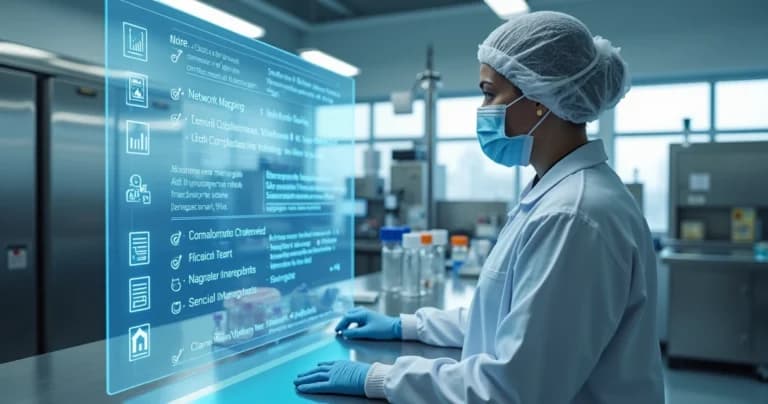
I've tracked laboratory operations for years, and one scene always repeats itself. Teams invest in expensive equipment, follow rigid processes, train personnel, yet still rely on manual checks to verify temperature, humidity, pressure, and other variables. It works until it doesn't. A small deviation goes unnoticed. Then comes investigation, loss, and strain.
By 2026, integrating IoT in pharmaceutical laboratories is no longer just a technical choice. It became part of operational governance. I say this because I've seen how real-time data changes risk response. With platforms like DROME, the laboratory moves from reactive mode to continuous visibility, reliable history, and a foundation to act before problems escalate.
Seeing early changes everything.
IoT in pharmaceutical laboratories is the connection of sensors, software, and alerts to monitor environments, equipment, and processes with traceability.
To help with this decision, I've compiled a straightforward, practical checklist aligned with what makes sense for 2026.
Start with the risk you want to avoid
Before discussing sensors, networks, or dashboards, I always recommend a simple question: where is your greatest operational risk today? In many laboratories, the answer emerges within minutes.
Typically, the most sensitive points are found in:
- Cold rooms and ingredient refrigerators
- Clean rooms and controlled areas
- Sample storage and temperature-sensitive products
- Equipment with a history of fluctuation
- Processes still dependent on manual recording
When I see projects fail, they almost always started with technology rather than risk. The safest path is to map first the impact of each deviation. From there, IoT integration gains direction.
If you're structuring this initiative, it's worth comparing this assessment with a quick compliance checklist for laboratories with IoT in 2026, because compliance and risk must move together.
Verify that infrastructure supports continuous monitoring
I've seen laboratories purchase good sensors and stumble on the basics. Poor network coverage, unstable power, and installation blind spots undermine project value.
Before implementation, I would validate these items:
- Signal quality in critical environments
- Power supply and contingency
- Compatibility with wired, Wi-Fi, or other architectures
- Data access security
- Ease of expansion to new areas
Without stable connectivity, data loses value and alerts may arrive too late.
With more generic vendors, I notice integration often stops at the display panel. At DROME, the focus goes beyond that, because the structure is designed to monitor multiple parameters and sustain complete history—something that makes a difference when the laboratory grows or undergoes audit.
Choose sensors with validation and traceability
This point requires care. Overly cheap sensors often prove expensive when the laboratory must prove measurement reliability. In a pharmaceutical environment, it's not enough to measure. You must demonstrate that the reading makes sense, that the device is calibrated, and that traceability exists.
I like to review at least these criteria:
- Measurement range appropriate to the process
- Accuracy compatible with regulatory requirements
- Calibration with accessible documentation
- Maintenance and replacement records
- Integration with history and alarms
When the conversation turns to validation, I also recommend reading this checklist for compliance and validation of IoT sensors in 2026. It helps transform a technical purchase into a safe decision for quality and compliance.
Ensure useful alarms, not noise
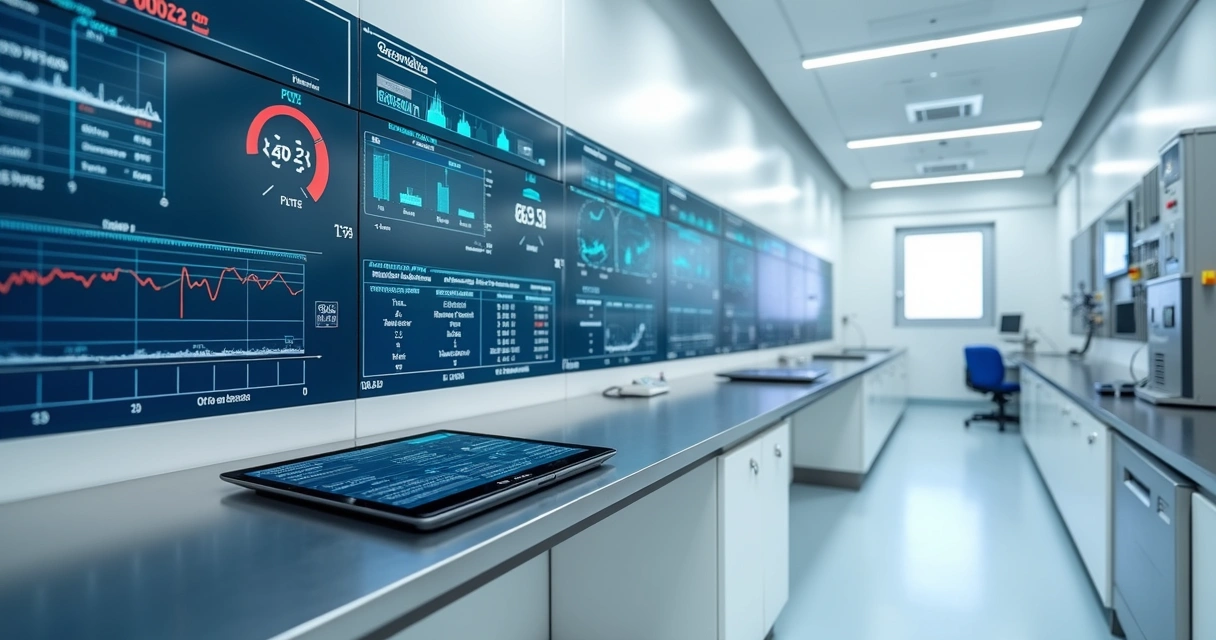
This is a point that catches my attention in almost every project. Many laboratories move from lack of alerts to alert overload. Teams begin ignoring notifications because nearly everything becomes an alarm.
I advocate for intelligent configuration with severity levels, escalation, and context. A good system shouldn't just warn that a limit was violated. It must show where it occurred, when, for how long, and who was notified.
At DROME, this logic gains strength because event history allows evolution from simple alerts to a predictive layer. This is valuable in pharmaceutical laboratories, where some deviations form gradually. First a discrete oscillation. Then a trend. Finally, non-conformance.
The right alert prevents strain.
If your operation undergoes frequent inspections, I suggest aligning alarm strategy with this audit checklist for IoT environments in 2026. I think it's a good way to reduce surprises.
Integrate IoT with systems the laboratory already uses
A common mistake is creating a data silo. Monitoring may work, but remains separate from quality, maintenance, inventory, or management routines. The team then must consult multiple screens to understand what happened. This delays response.
Integration with ERP, reports, and internal workflows transforms data into operational action.
I typically check whether the chosen solution communicates with:
- Quality management systems
- ERP and asset control
- Maintenance routines
- Incident and CAPA records
- Management dashboards for leadership
If this topic is on your radar, also see how integration between IoT monitoring and company ERP works. I notice this bridge reduces rework and improves event interpretation.
Prepare your team to use the data
Technology without clear routine loses strength. I've seen laboratories install cutting-edge sensors yet keep teams without response standards. Who receives the alarm? How quickly must they act? Where is the action recorded? Who validates closure?
To prevent this, I recommend defining:
- Responsible parties by shift and area
- Expected response time
- Contingency procedure
- Corrective action record
- Periodic event review
This step seems simple. It's not. When routine is clear, monitoring becomes part of laboratory culture. And that makes real difference.

Think beyond basic monitoring
By 2026, I see a clear movement. Laboratories want more than knowing a violation occurred. They want to know a violation is approaching. This is where DROME's project stands out.
Based on sensor and alarm history, the predictive layer allows identification of out-of-pattern spikes, gradual drift, and violation likelihood in the coming hours. For me, this is where IoT stops being merely a record and begins supporting decision-making.
Some competitors offer beautiful dashboards but stop at reactive monitoring. The difference lies in the ability to learn from history and anticipate risk with operational context. In pharmaceutical laboratories, this isn't a detail. It's control gain.
If you want to better understand this scenario, I recommend reading about IoT solutions to prevent deviations in clinical laboratories, because prevention logic aligns closely with what the pharmaceutical sector seeks today.
Final checklist for 2026
When I need to summarize the decision, I return to a simple roadmap. Your laboratory is ready to integrate IoT if you can answer yes to these questions:
- Critical risks are mapped by area and process
- Infrastructure supports continuous data collection
- Sensors have validation, calibration, and traceability
- Alarms are configured with useful logic
- Data connects to operational systems
- The team knows how to respond to events
- There is a plan to evolve from reactive alerts to prevention
Integrating IoT in pharmaceutical laboratories in 2026 means combining compliance, traceability, and deviation anticipation.
I believe this is the best time to take this step methodically. If you want to structure a safer operation with real-time monitoring and predictive capability aligned with what DROME is building, it's worth learning more about our solutions and understanding how they can fit into your laboratory's routine.