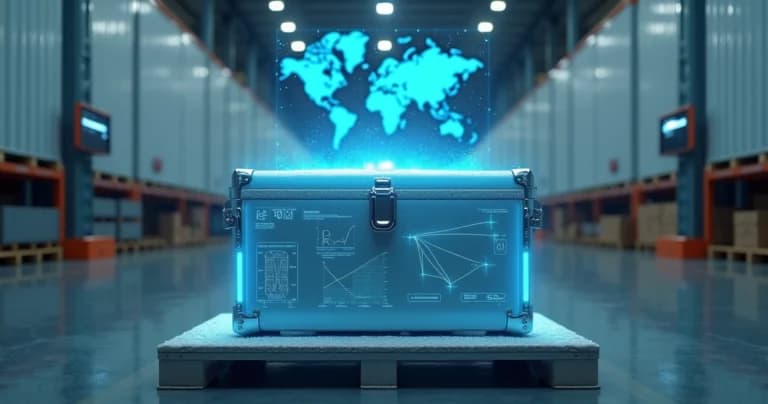
I've seen a clear shift in cold chains. Before, many companies accepted acting only after an alert. Today, that costs dearly. In 2026, this approach will become even riskier. That's why digital twins are gaining ground.
When I talk about digital twins, I'm not thinking of a pretty dashboard. I'm thinking of a living copy of the operation, powered by sensors, history, and context. In practice, it helps you understand what's happening now and what might happen in the next few hours. It's the same direction that projects like DROME are following by combining monitoring, history, and prediction.
Seeing ahead changes everything.
Digital twins in cold chains are digital representations of equipment, environments, and routes that track the real state of operations in near real-time.
In sectors like healthcare, food, and manufacturing, I consider this a more mature approach than relying solely on reactive alarms. Below, I outline nine reasons to adopt this approach in 2026.
1. Anticipate Failures Before Loss Occurs
This is the first reason, and to me the most straightforward. In a cold room, a temperature-out-of-range alert often arrives too late. The product has already begun to suffer risk.
With a digital twin, I can observe deviations, spikes, and slow behavioral changes before formal violation. This aligns closely with DROME Predict's approach, which focuses on predictive anomaly detection to alert before the problem solidifies.
In cold chains, predicting hours ahead is worth far more than recording the error afterward.
If you want to better understand the monitoring foundation in this context, it's worth exploring DROME's cold chain platform.
2. Reduce Losses of Sensitive Products
I've seen operations lose entire batches over a few degrees and a few minutes. It seems minor. It's not. In pharmaceuticals, vaccines, laboratory supplies, and perishable foods, small variations can trigger disposal, rework, and questions about cargo integrity.
The digital twin helps because it consolidates dispersed signals. Temperature, humidity, door openings, exposure time, electrical fluctuations, and equipment patterns form a more complete reading.
This provides greater confidence to act early and isolate risk. It's not just protecting merchandise. It's protecting trust.
3. Improve Decisions with Real Context
Many operations still work with isolated data. One sensor shows temperature. Another shows humidity. A report flags route delays. But no one connects it all.
The digital twin makes that connection. I can view the equipment within an operational context, and that changes the decision. A thermal rise in a stationary freezer is one thing. The same rise during loading and unloading may read differently.
This type of insight prevents human error and reduces hasty responses. For those wanting to mature this practice, I recommend reading the practical guide to temperature monitoring in sensitive chains.
4. Simulate Scenarios Without Risking Operations
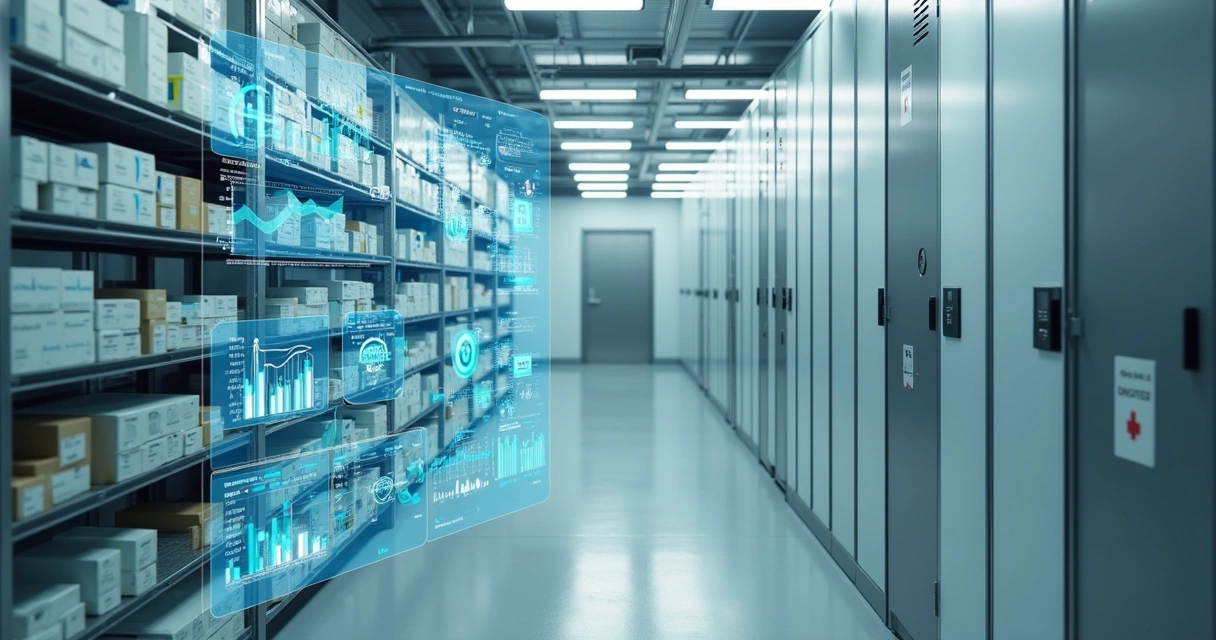
This point usually impresses technical teams. With a digital twin, I can test hypotheses without touching the real process. What happens if the door stays open longer? How does the chamber respond if internal load increases? What's the impact if a compressor begins losing efficiency?
These simulations support maintenance, logistics, and risk management. Instead of waiting for an incident, the company learns from projected scenarios. This reduces surprises and improves preparedness.
Some competitors offer visualization and history, but don't always transform that material into predictive action with solid grounding. I see DROME better positioned because it starts from real events already recorded and from an intelligence layer born from operations, not just dashboards.
5. Support Compliance and Audits
In 2026, regulatory pressure should remain high. And it's not enough to say control was in place. You must prove it. A digital twin helps document operational behavior, deviations, responses taken, and equipment evolution over time.
The greater the traceability, the lower the dependence on memory, parallel spreadsheets, and weak justifications.
I like this point because it benefits both routine and audit. The company gains consistent history and reduces gray areas. This is highly valuable in regulated sectors.
6. Make Maintenance More Intelligent
Not every failure happens suddenly. In many cases, it announces itself gradually. A motor consumes more energy. A refrigeration cycle takes longer. A chamber begins oscillating at similar times.
When the digital twin tracks this pattern, maintenance stops acting only by calendar or crisis. It begins prioritizing real signals of wear.
I see a direct relationship between this practice and advances in AI applied to refrigeration. To deepen this topic, it's worth reading about how AI predicts failures in cold rooms in 2026.
7. Understand Seasonality and Demand More Clearly
Cold chains suffer not only from technical failure. They also feel volume, climate, calendar, and demand spikes. When operations shift rhythm, operational risk shifts too.
A well-fed digital twin helps relate thermal behavior to seasonality. I can perceive, for example, which periods demand more attention, which equipment suffers most in certain seasons, and where margins shrink.
This topic aligns well with analysis of seasonal trends and demand forecasting in cold chains, which shows how history and prediction must move together.
8. Integrate Logistics, Operations, and Technology
One of the most common failures I encounter is separation between departments. Logistics thinks about deadlines. Operations thinks about equipment. The quality team thinks about compliance. And data remains fragmented.
The digital twin brings these fronts closer because it creates a common reference. Everyone begins looking at the same operational state. This reduces internal conflict and accelerates response.
Within connected logistics logic, this integration makes even more sense. That's why I like relating this topic to the article on how Logistics 4.0 transforms cold chains in Brazil.
9. Gain Real Competitive Advantage in 2026
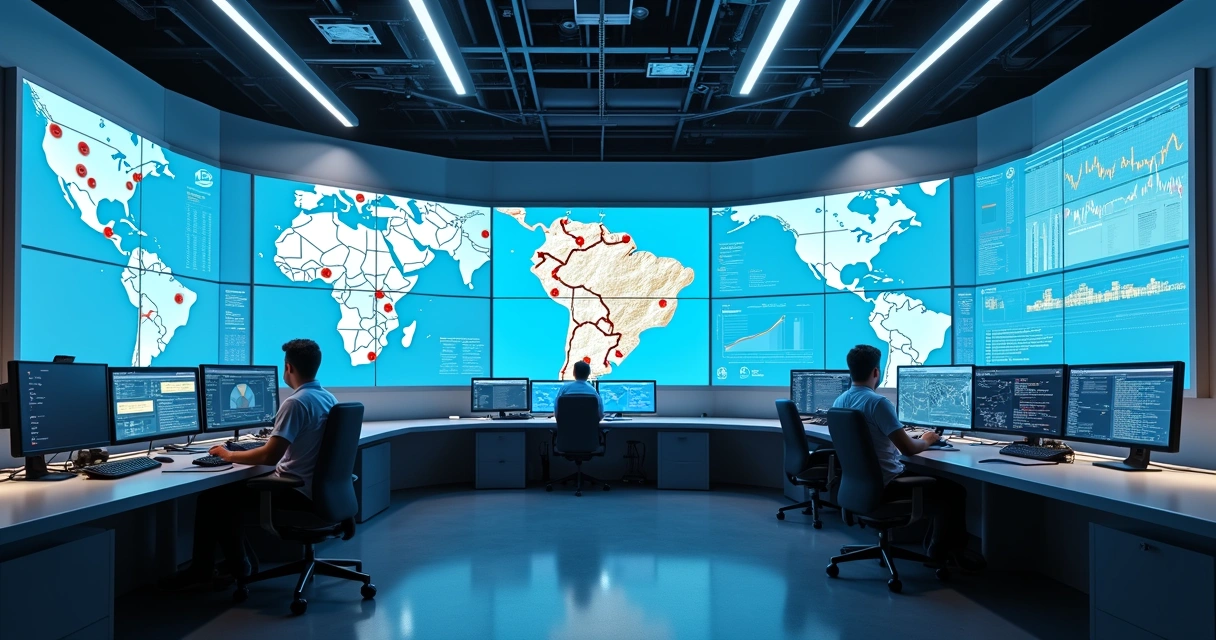
I believe 2026 will be the year when the difference between monitoring and predicting becomes very visible. Those who continue only reacting will operate with more loss, more uncertainty, and more hidden cost.
Adopting digital twins helps build a more predictable, more traceable, and better-prepared operation for out-of-pattern events. It's not a technical fad. It's a practical response to an old problem.
When I compare market solutions, I notice many stop at alerts or visualization. DROME stands out by connecting telemetry, robust history, and predictive intelligence oriented to real violation. This makes decisions more useful for those living the daily pressure of cold chains.
Reacting well is no longer enough.
What Changes Now
If I had to sum it up, I'd say this: digital twins help move from crisis to prevention. They reduce losses, provide context, support audits, improve maintenance, and bring together areas that once operated separately.
For companies dealing with sensitive products, this step makes increasing sense. If you want to learn a practical way to bring prediction and intelligent monitoring to your operations, I suggest exploring DROME further and seeing how its solutions can support your cold chain starting in 2026.