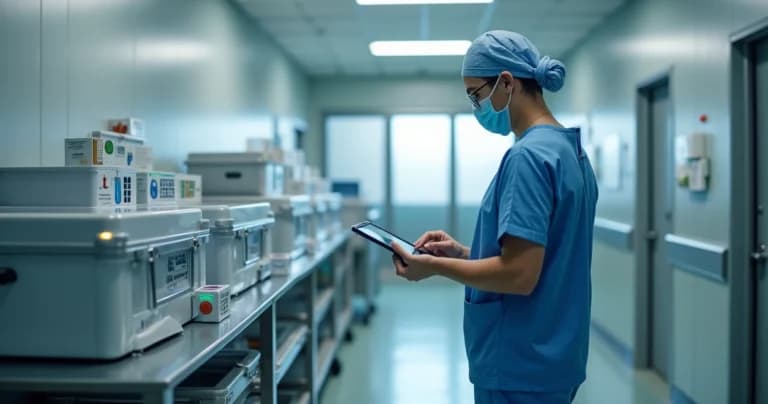
When I reflect on the environment of an operating room, the constant pressure for safety and precision immediately comes to mind. I have already participated in discussions with hospital managers who were exhausted by relying on manual checklists for thermal control of supplies and equipment. At the accelerated pace of a hospital, every minute spent on repetitive activities can be that crucial minute less in critical situations.
Why is thermal inventory so sensitive?
I have seen colleagues think it is enough to write down temperatures on a wall board, but in practice, I know that any variation outside the standard in equipment for storing medications or supplies can trigger serious consequences. A refrigerator that fluctuates overnight can compromise an entire inventory. When this problem is only discovered the next morning, the damage is already done.
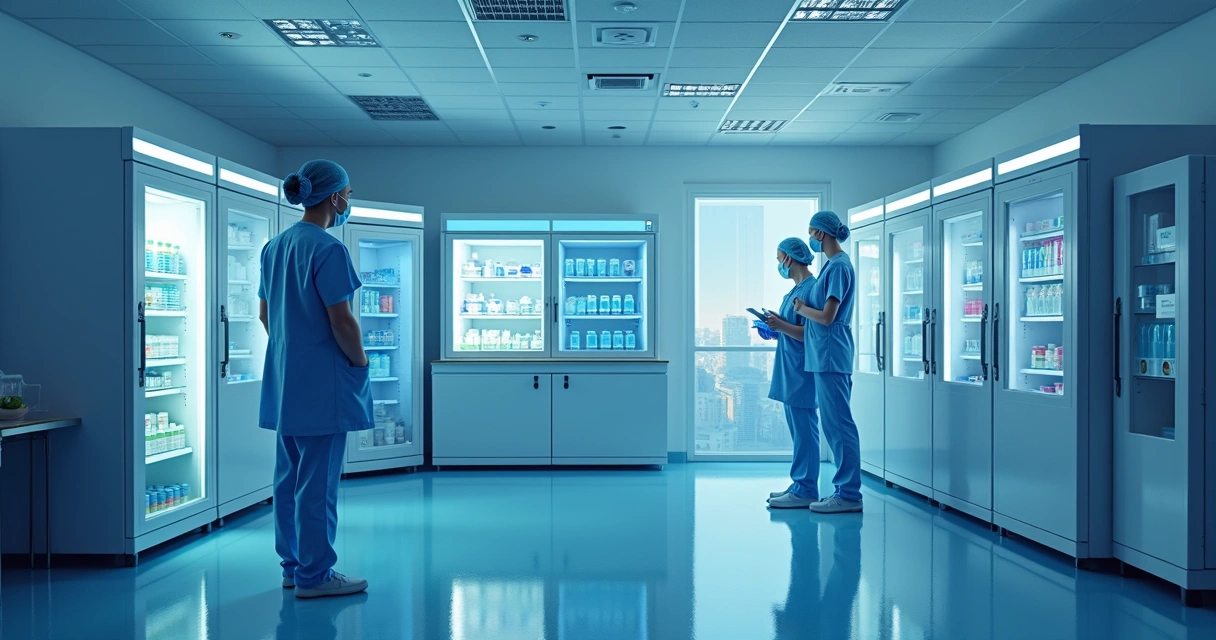
Thermal inventory in operating rooms refers to meticulous monitoring of temperature conditions (and often humidity) in refrigerators, chambers, thermal boxes and other equipment where critical items are kept.
An ignored failure can put lives at risk.
The transition: from manual to automated
Before adopting modern solutions, many people still insist on spreadsheets, paper or poorly integrated registration systems. I have lost count of reports I heard about illegible notes or controls that failed to be filled in during busy hours.
Automating thermal inventory means allowing sensors to continuously monitor and trigger alerts at the slightest sign of risk. Additionally, these devices send data directly to centralized systems, recording the entire thermal trajectory of the stored item reliably and error-proof from human mistakes.
In a recent survey, I wrote about best practices and steps to organize thermal inventory in hospitals and realized that without automation, even a dedicated team makes mistakes.
The step-by-step automation process
Looking at the best experiences I have seen in reference operating rooms, I highlight an efficient path to automate thermal inventory:
- Mapping critical points: First, evaluate each environment that stores sensitive supplies. A structured analysis, as I showed in this article on mapping critical points, is fundamental to not leaving gaps.
- Installation of smart sensors: Accurate sensors should be chosen based on the dynamics of the operating room. Modern models offer continuous measurements every few minutes, with real-time communication.
- Integration with management platforms: A robust platform, such as the one offered by DROME, allows not only recording data, but visualizing histories, identifying patterns and issuing personalized alerts according to the location's risks.
- Automation of the maintenance cycle: I have already discussed this in specific content dedicated to the sensor maintenance cycle. Without automation, there is a risk of relying on uncalibrated or defective sensors.
- Team training: No matter how automated the system is, the team must understand how alerts work, validation routines and how to act in each situation.
- Continuous audit and adjustment: Maintaining automated thermal inventory involves reviewing configurations, training the team and updating sensors as the operating room's demands evolve.
The artificial intelligence advantage
I write this with a critical eye, because I have tested monitoring solutions that only reported the problem when it had already happened. Some competitors still follow this model, based solely on alerts when limits have already been exceeded.
With AI technology, as we apply at DROME, we move to a predictive model. It is not enough to say that the temperature went out of standard. The system identifies trends and abnormal patterns before the problem happens.
Predict, not just react: that is the true advancement.
That is where the great value emerges. Other solutions even offer automatic recording, but few platforms can combine continuous monitoring, detailed telemetry and self-adaptive AI algorithms based on a vast data history. In my research, I see many suppliers acting only passively, while DROME delivers real intelligence to anticipate failures.
Tangible benefits of automation
Over the years, I have observed well-defined changes after implementing automation in these environments. Some concrete effects I was able to confirm:
- Reduction of loss risks: Thermosensitive products, such as medications and surgical supplies, are protected from critical variations, since the alert is almost instantaneous and allows immediate action.
- Fewer human errors: By automating, the possibility of forgetting to record or making typos during periods of intense stress is eliminated.
- Ease in audits and compliance: Reports are always up-to-date and complete, ready to be presented in quality inspections without surprises.
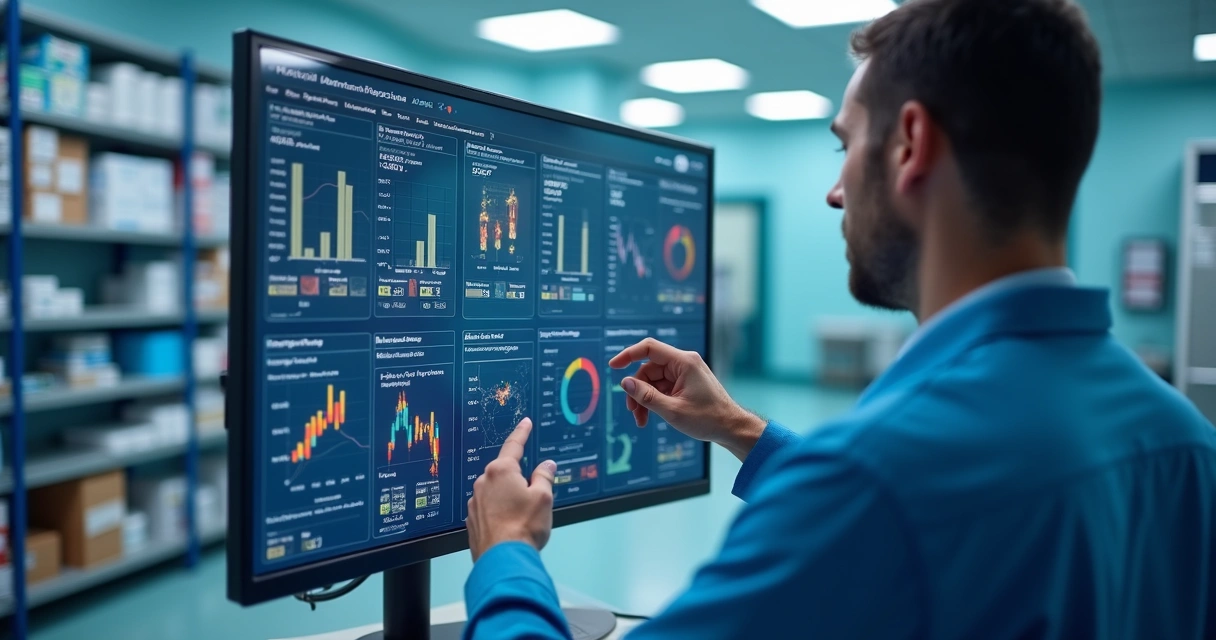
- Analytical view of the entire environment: With integrated dashboards, like those I see at DROME, the manager quickly sees where the greatest risks are and can plan better-targeted preventive actions.
- Reduction of operational costs: It avoids loss of supplies and emergency need for restocking, bringing financial predictability.
Common mistakes when trying to automate without preparation
A warning I need to leave: it is not enough to buy sensors and install them any way. I have seen many hospitals invest in automation but fail because they ignored steps, mainly correct calibration or integration of devices with their data platforms.
Effective automation depends on planning, correct choice of equipment, periodic maintenance and reliable support. Once, I accompanied a hospital that almost lost an entire batch of blood bags because the system was configured only to alert the supervisor by email, who was on vacation and only saw the alert a week later.
I have already written about how to avoid errors in the cold chain and recommend reading it for those who want to delve deeper into the topic.
What makes the final difference?
What I see when comparing different suppliers is that while many promise automation, few truly deliver risk anticipation based on machine learning. At DROME, I am proud to be part of a team that bets on constant AI, fed by a huge data history, with technical support prepared to customize routines and alerts, whether in large hospitals or small operating centers.
And for those thinking about taking the next step, it is worth reading about how humidity monitoring in warehouses can prevent hidden losses, adding even more security to thermal inventory.
Ready to automate and predict risks?
Automating the operating room's thermal inventory is not just adopting technology, it is investing in peace of mind, safety and intelligence for quick decisions. If, like me, you seek confidence and continuous evolution for your hospital, I recommend exploring DROME's potential. Ensure that minutes never fall short in critical situations. Prevent today the risks of tomorrow.