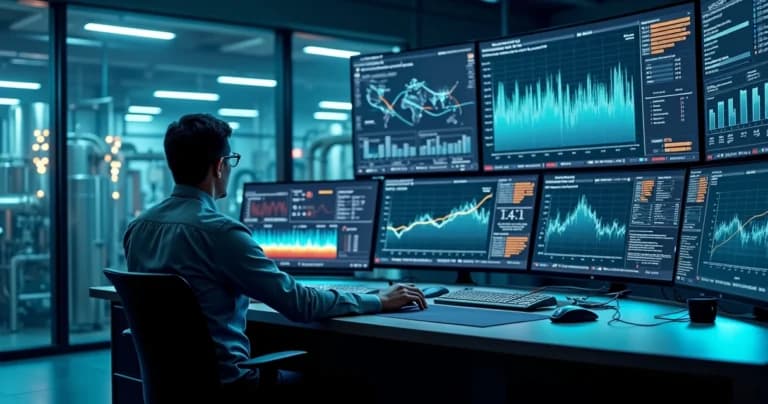
For years now, I've watched companies and environmental control professionals wanting to move beyond "firefighting mode" to finally anticipate risks and stop losing products, time, and money to sensor failures. In sensitive environments—healthcare, cold chain, pharmaceutical labs, or food production—knowing about problems before they happen makes all the difference. That's exactly where solutions like DROME Predict come in, changing the game.
Why does predicting sensor failures matter so much?
Early in my career, it was normal for me to receive emergency calls after an alarm went off indicating out-of-spec temperature. By the time the alert arrives, damage is often already done. And honestly, nobody likes feeling they're always one step behind. Lost shipments, fines, disposal of expensive materials—I know clients who've been through it.
Predicting sensor failures enables action before problems become real losses. This approach brings predictability, reduces costs, and most importantly, prevents harm to health and company reputation.
What is machine learning in sensor prediction?
Machine learning, to me, has always been a way to bring true intelligence to monitoring. Basically, the concept is teaching the system to observe patterns in sensor data and identify risk situations before they spiral out of control.
There are different levels of application. In DROME Predict, for example, I see the integration of three valuable resources:
- Spike detection: identifies readings very different from normal quickly.
- Drift detection: catches slow changes, like sensors gradually drifting until they lose calibration.
- Violation prediction: anticipates whether a violation of the expected range may occur in the next moments.
These resources make predictive intelligence truly applicable to daily operations.
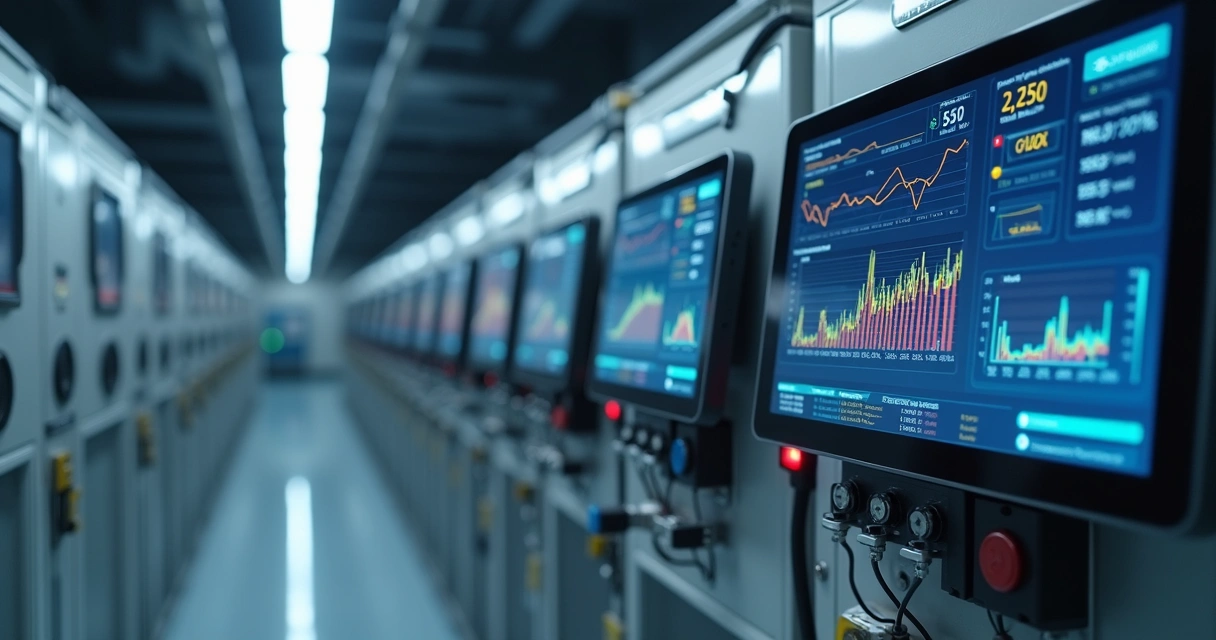
How does sensor failure prediction using machine learning work in practice?
In my day-to-day work, I see that theory only gains value when it becomes concrete practice for the client. That's why I always start by explaining the basic path to making failure prediction a reality:
1. Data collection and organization
Everything is built on good history. Every sensor reading must be recorded with timestamp, value, and associated information. At DROME, for example, we already have over 450,000 labeled failure events in our databases, giving us plenty of material to train consistent models.
2. Data preprocessing
This is a step that, I'll admit, requires attention. The secret here is filtering noise, handling missing data, and when necessary, performing normalization. Clean, simple data generates reliable models—I learned this after many frustrating tests due to poor records.
3. Model selection and training
Many models are possible, but in my experience, the most used for sensor failures are:
- Time series models (like ARIMA or Prophet) to forecast trends.
- Neural networks, when I have large data volumes and nonlinear patterns.
- Decision tree algorithms to identify combinations of risk variables.
The secret isn't complexity, but rather fitting each choice to the sensor type, equipment sensitivity, and available data volume.
4. Predictive detection and alert generation
After training the model, it begins analyzing each new reading in real time. If it finds patterns typical of failure, the prediction is generated. This notification can arrive minutes, hours, or even days before the problem happens. I've seen cases where the advance alert prevented catastrophic losses.
The power of machine learning is transforming every alarm into a real chance to prevent losses.
5. Monitoring and retraining
No model is "ready forever." With operations running and new data emerging, it's my responsibility to adjust and retrain algorithms. This way they evolve with the environment they're in. I've learned that continuous learning is a major differentiator of DROME Predict against less flexible competitors.
How to interpret results: intelligent action on failure predictions
Receiving predictions is just the beginning. Real value lies in what we do with that information. When I see a failure prediction alert coming in, I typically guide this sequence:
- Check the sensor data and type of risk flagged.
- Alert the responsible team for physical equipment inspection.
- Record the action taken, creating useful history for future predictions.
- Review automated action plans, which I cover in detail in my article on automated action plans for sensor failures.
I've experienced many cases where this cycle of anticipation and response became a competitive advantage in the sector, especially in hospital networks and food chains.
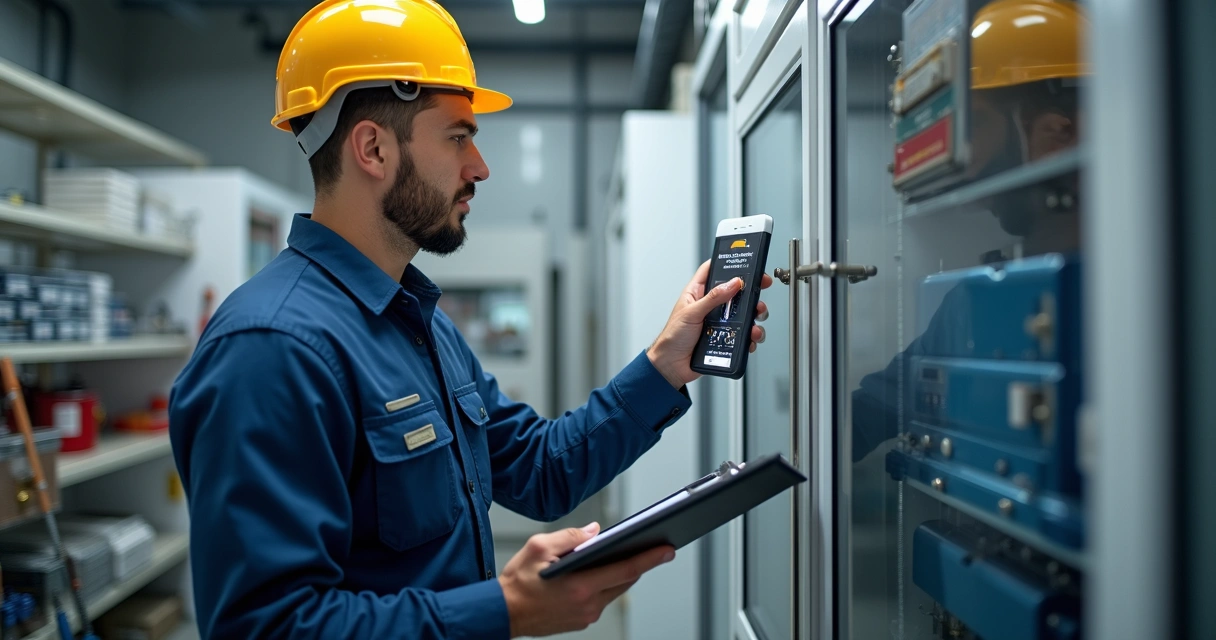
How DROME Predict transforms daily routines in practice
I've known various companies that used competing monitoring platforms and, honestly, hit the same problem: too many alerts, little predictability, limited automation. The major differentiator is combining predictive detection and automation in a single truly flexible and customizable service. DROME Predict leverages the enormous volume of historical events already collected to continuously refine model accuracy—something few can do with such data richness.
Another fundamental point I've noticed is easy integration with automated response routines. It's not enough to know a failure will happen. The system must already trigger routines, send the right alerts to the correct team, and record each step for future audits.
For those wanting to ensure cold chain and critical environment safety, it makes sense to combine prediction and automation in a single platform, avoiding the need for multiple vendors and fragile integrations.
Challenges and best practices when implementing machine learning in sensors
The path to implementing machine learning requires dedication. I can cite some key points I've learned from mistakes and successes:
- Be careful not to start predicting failures without adequate historical data volume.
- Pay attention to sensor maintenance. Technical failures often generate many "false positives" without regular calibration.
- Avoid complex models unnecessarily. The simpler the explanation, the more technical teams trust the alerts.
- Integrate predictions with clear response routines—without quick action, machine learning's value is lost.
- Document each step, as transparency builds confidence in audits and facilitates future system improvements.
For those wanting to dive deeper into the benefits and predictive maintenance processes in cold rooms or examples of how AI is already predicting maintenance in hospital equipment, I recommend my other recent content on the topic.
Practical results: direct examples in daily work
I remember a hospital client facing monthly losses from sudden freezer sensor failures. After adopting a predictive solution, failures began being flagged about two hours before violation, ensuring time to adjust and reducing losses by up to 80%. Situations like this reinforce that failure prediction isn't abstract promise, but tangible, immediate benefit.
In pharmaceutical and food sectors, I've observed machine learning projects directly helping avoid regulatory penalties and increase partner confidence in process quality and safety.
In my article on AI predicting maintenance in hospital freezers, I show results like this in more detail, plus how predictive data use can evolve routines in critical sectors.
How to take the next step in failure prediction?
If you've already noticed that traditional monitoring isn't enough to prevent loss, the path begins by better understanding how machine learning can be adapted to your operation's sensors. Systems like DROME Predict were born from this kind of practical demand—combining large historical data volume, self-adjusting algorithms, and automated action plans.
Want to reduce losses, gain peace of mind, and make decisions based on reliable information? The future of intelligent monitoring has already begun.
Go deeper into using predictive analytics to prevent material losses and discover how to add more safety to your company's daily operations.
Learn more about DROME Predict and see firsthand how anticipating risks became the new standard for efficiency and safety in sensor monitoring. Talk to me or schedule a presentation. Your routine (and your sleep) may thank you.