
I've seen many companies treat regulatory fines as bad luck. An inspector arrives, finds a failure, applies the penalty, and everyone says it was an isolated case. In practice, it rarely is. Most of the time, the fine comes after signs that were already appearing days or weeks before.
Predictive maintenance helps avoid fines because it identifies deviations before they become formal non-conformities.
This changes the game in sectors dealing with temperature, pressure, humidity, gases, energy, and supply preservation. I'm talking about laboratories, hospitals, industries, cold rooms, pharmacies, and logistics operations. In these environments, waiting for failure to happen is costly. And it costs twice, because beyond operational loss, there can be regulatory sanctions.
This is where I see value in solutions like DROME. Real-time monitoring already reduces risk, but the predictive layer goes further. It doesn't wait for violation. It tries to anticipate the problem.
Why do regulatory fines happen?
Many fines don't arise from fraud or extreme negligence. They appear from routine failures. A sensor goes out of range. Equipment begins to lose stability. A record becomes incomplete. An alarm is noticed too late.
When this happens in regulated environments, the impact can come from several fronts:
-
Temperature range breach in sensitive products
-
Lack of evidence of continuous control
-
Absence of traceability for audit
-
Delay in response to critical events
-
Recurrence of known failures
I think the most sensitive point is this: the regulator doesn't just look at the final event. They look at whether the company had the means to prevent, record, and act. When there's no such set of controls, the fine stops being an accident and becomes seen as a control failure.
The problem rarely starts on inspection day.
What does predictive maintenance do in practice?
Unlike corrective maintenance, which reacts to failure, and preventive, which follows a calendar, predictive maintenance observes the real behavior of the asset. I like this approach because it tracks small, almost silent signals that a fixed routine might miss.
In practice, predictive maintenance is using equipment data to predict when risk is increasing.
This data can come from temperature, humidity, pressure, vibration, voltage sensors, and other variables. With sufficient history, it's possible to notice patterns of spikes, slow drift, and chance of future violation. This is exactly the logic that projects like DROME Predict bring to critical operations.
Instead of acting only when the limit is breached, the team begins to act when the system detects that the breach is approaching. I consider this point very valuable for compliance because it reduces exposure before it becomes an auditable occurrence.
For those wanting to deepen the topic in cold environments, it's worth knowing this content on predictive maintenance in cold room control.
How does this reduce the risk of enforcement action?
When a company monitors predictively, it gains time. And time, in regulated operation, means margin to correct without interrupting process, without losing batch, and without accumulating bad evidence.
I usually summarize the effect on four fronts.
-
The failure is perceived before the violation. This prevents the deviation from reaching the point of violating a regulatory limit.
-
Response becomes faster. The team receives signal earlier and can adjust equipment, thermal load, sealing, or process.
-
Records become more solid. Each reading, alert, and corrective action forms a useful history for audit.
-
There is less recurrence. When the failure pattern is identified, the problem stops repeating silently.
In sectors under frequent inspection, this makes real difference. It's not enough to say there was care. You must prove it. And good proof comes from reliable data, with traceability and context.
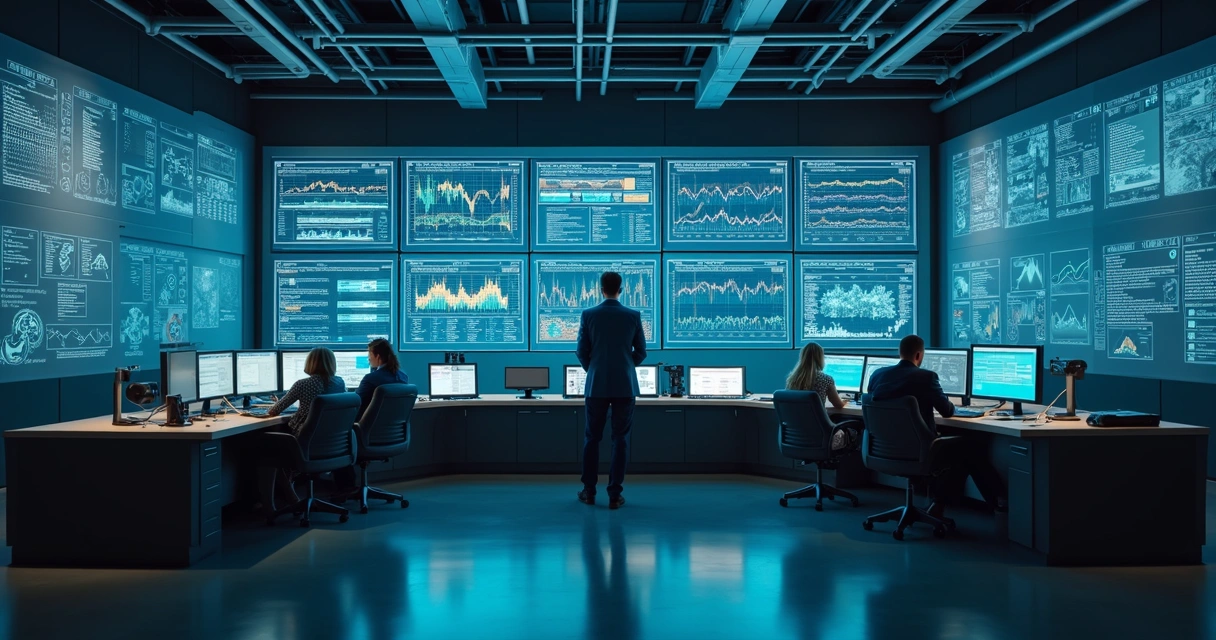
The role of traceability and documentary evidence
I've followed cases where the company even acted correctly but couldn't demonstrate it clearly. Without organized records, the defense weakens. That's why predictive maintenance shouldn't be seen only as early warning. It also supports documentation.
Without traceability, even good operation can look like failure before an audit.
When the system records reading, event, deviation, and response, the conversation with quality, audit, and regulatory body changes level. Instead of vague justifications, there's a timeline. This is worth a lot for operations linked to health and cold chain.
If your focus is documentary compliance, I recommend this material on digital traceability to ensure compliance. And, for contexts linked to health surveillance, this content on ANVISA compliance helps connect regulatory requirement and operational routine.
Preventive and predictive work together
I don't see predictive maintenance as a total substitute for preventive. I see it as a smarter layer. Preventive still has value in inspections, calibrations, and mandatory routines. The problem appears when the company relies only on calendar and ignores the real behavior of the asset.
A more mature plan usually combines:
-
Scheduled preventive routines
-
Continuous monitoring of critical parameters
-
Automatic alerts for deviation
-
Predictive reading to anticipate violation
-
Record of corrective action and result
I see this model frequently in operations that manage to reduce risk without creating overly heavy processes. If you're structuring this now, there's a good starting point in this content on preventive maintenance planning with IoT.
Where many solutions fall short
Some vendors deliver only the alert after violation. Others show beautiful graphs but without real anticipation capability. I think that's the limit of more superficial approaches. They inform what already happened, when the loss and regulatory risk have already grown.
DROME differentiates because it starts from a real foundation of telemetry and violation events already recorded in operation. This allows training models to detect anomalies, drifts, and probability of future violation. It's not just visualizing data. It's transforming history into practical action.
When it comes to avoiding loss and enforcement action, this difference matters. Also, to better understand this relationship between prediction and waste reduction, I suggest reading this content on predictive analytics to avoid supply loss.
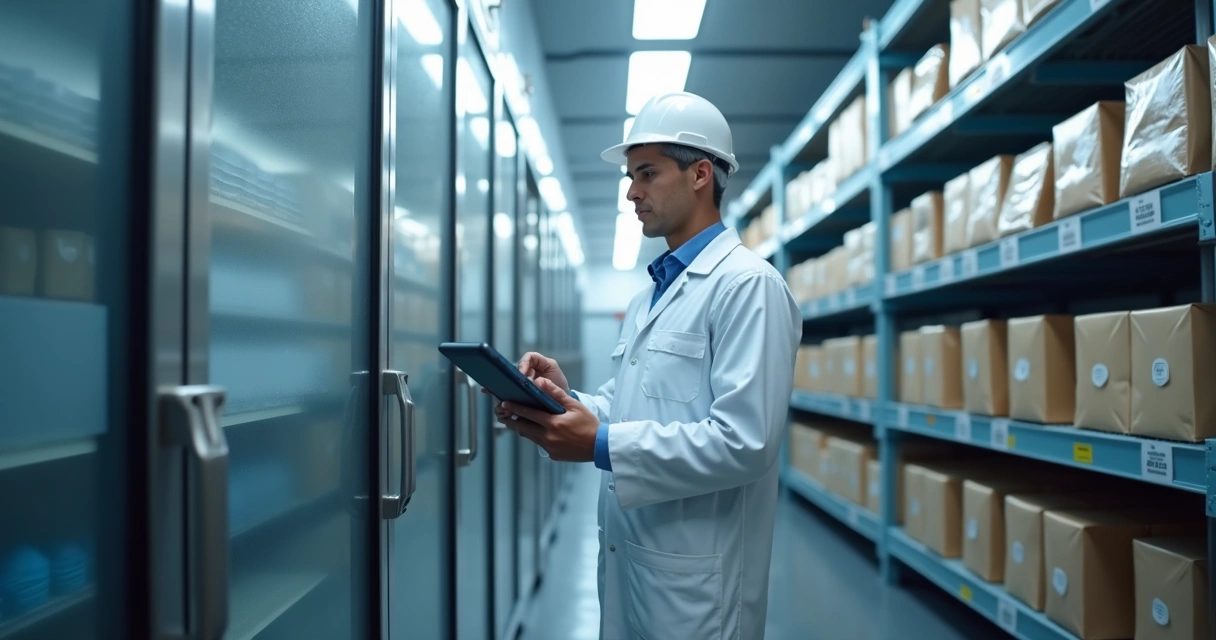
Sectors that feel this effect most
Although almost every technical operation can benefit from this model, I notice greater impact in environments where a few minutes out of range already generate serious problems. Among them, I usually highlight:
-
Health and laboratories, because of samples, vaccines, and medications
-
Pharmaceutical industry, due to strict process and storage control
-
Food and beverage, where inadequate preservation can generate disposal and sanction
-
Refrigerated logistics, which depends on continuous proof throughout transport and storage
-
Industrial environments with sensitive pressure, vacuum, gases, or energy
In these scenarios, the fine is usually just the visible part. There's also loss of credibility, rework, downtime, and contractual risk. I honestly think it's cheaper to act before.
Conclusion
When I think about compliance, I don't think only about passing audit. I think about avoiding the failure that forces the company to explain itself later. Predictive maintenance does this by transforming dispersed signals into early warning, reliable record, and faster decision.
If your operation depends on continuous control and needs to reduce the risk of regulatory fines, I recommend learning more about DROME and seeing how monitoring with predictive intelligence can help anticipate deviations before they become loss, disposal, and non-conformity.