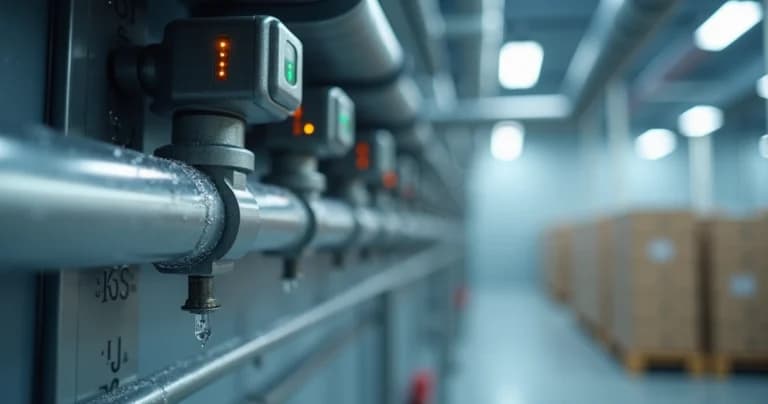
Predicting Condensation Risks in Cold Storage Environments
When I think about the risks associated with condensation in cold storage environments, I recall situations I've witnessed in hospitals and food industries. Small details, like water droplets in critical areas, can turn into financial losses and even impact the health of those who depend on these spaces. I see that the secret lies in understanding the factors that lead to condensation and how intelligent systems, like those we develop at DROME, radically change the scenario.
What is condensation and why is it such a concern?
I've witnessed many professionals underestimating the effect of condensation in refrigerated chambers and cold storage environments. When air moisture comes into contact with cooler surfaces, it transforms into water. This accumulated water not only promotes mold and deterioration, but can directly impact the quality of stored products.
Condensation in cold storage environments occurs when temperature and humidity control fails for any reason. From frequently opened doors to sensor monitoring failures: one oversight is all it takes. The impact?
- Risk of microbiological contamination.
- Financial loss from damaged medications, food, or supplies.
- Compromise of electronic equipment and critical systems.
Primary risk factors: what causes condensation?
In my analysis, I rarely see a single cause acting alone. Condensation in cold chambers or refrigerators typically results from a combination of several factors:
- Sudden temperature fluctuations in ambient conditions.
- Frequent door openings, allowing humid air entry.
- Lack of or failure in insulation system maintenance.
- Imperfections in sealing or infiltration in enclosures.
- Malfunction of temperature and humidity sensors.
- Overcrowding, which prevents air circulation.
To illustrate: at a hospital where I worked, a small undetected seal leak in a door was enough to create puddles and, within days, contaminate sensitive materials.
How predictive systems prevent condensation?
For many years I saw companies using only conventional alarms. They only notify the problem after damage occurs. I see this as a major mistake, because acting reactively is usually costly and often insufficient.
Systems like the DROME platform go further. Our solution integrates continuous monitoring, telemetry, and Artificial Intelligence, cross-referencing thousands of historical data points to identify patterns and predict failures before they become real risks. This makes an enormous difference:
- Reduces response time for technical teams.
- Enables predictive maintenance, acting before major problems occur.
- Increases confidence in alarm systems by reducing false positives and negatives.
Unlike companies that work only with traditional alarms or passive monitoring, my experience proves that the embedded intelligence in DROME delivers even more solid results, especially in critical environments.
Sensors, data, and the importance of automation
I understand that the heart of a good strategy against condensation lies in automation. Sensors connected 24 hours a day generate a robust data foundation. From this database, artificial intelligence can anticipate deviations, whether a subtle change in temperature patterns or atypical humidity behavior.
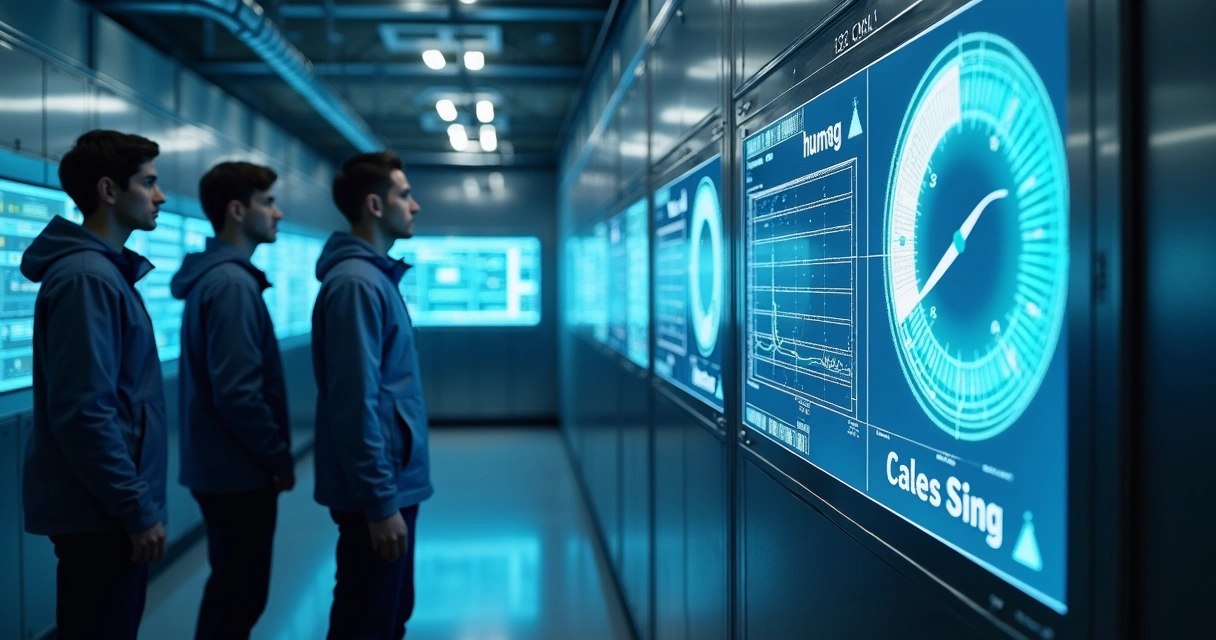
You know that problem that would only be noticed once it becomes a loss? AI sees it first, signaling the risk and enabling quick action.
It's not uncommon for competitors to limit themselves to sending reports at intervals, with little flexibility for adaptation or continuous learning. What I notice is that at DROME, our algorithms evolve every time new data arrives. The system understands, learns, alerts, and recommends.
Practical examples and real-world lessons
Once I followed a case at a pharmaceutical laboratory, where electrical fluctuation slightly altered refrigeration. The traditional sensor showed nothing, but DROME's AI detected an unusual pattern, alerting in advance. It was possible to act before condensation formed and entire batches were lost.
Predicting is not just identifying the risk, it's providing intelligent recommendations to the operational team.
How to create a truly effective strategy?
I share here the effective approach I've adopted and recommend:
- Complete audit of environments, including sensor testing and failure simulation.
- Installation of redundant sensors to monitor critical zones. Integrating equipment from different manufacturers for greater safety reduces the risk of simultaneous failures (learn more about redundancy).
- Constant data analysis, with platforms capable of automatically identifying anomalies.
- Team training for rapid response and data-driven decision making.
- Contingency plans prepared and updated periodically. I recently wrote about contingency plans for cold chamber failures.
The role of IoT sensors in monitoring evolution
Something I observe increasingly necessary is investment in the quality and maintenance of connected sensors. It's common for professionals to question the reliability of these sensors in harsh environments or full of interference. That's why discussing how to prevent IoT sensor failures has become a fundamental topic for me.
The DROME platform differentiates itself because it invests in both intelligent data analysis and hardware resilience.
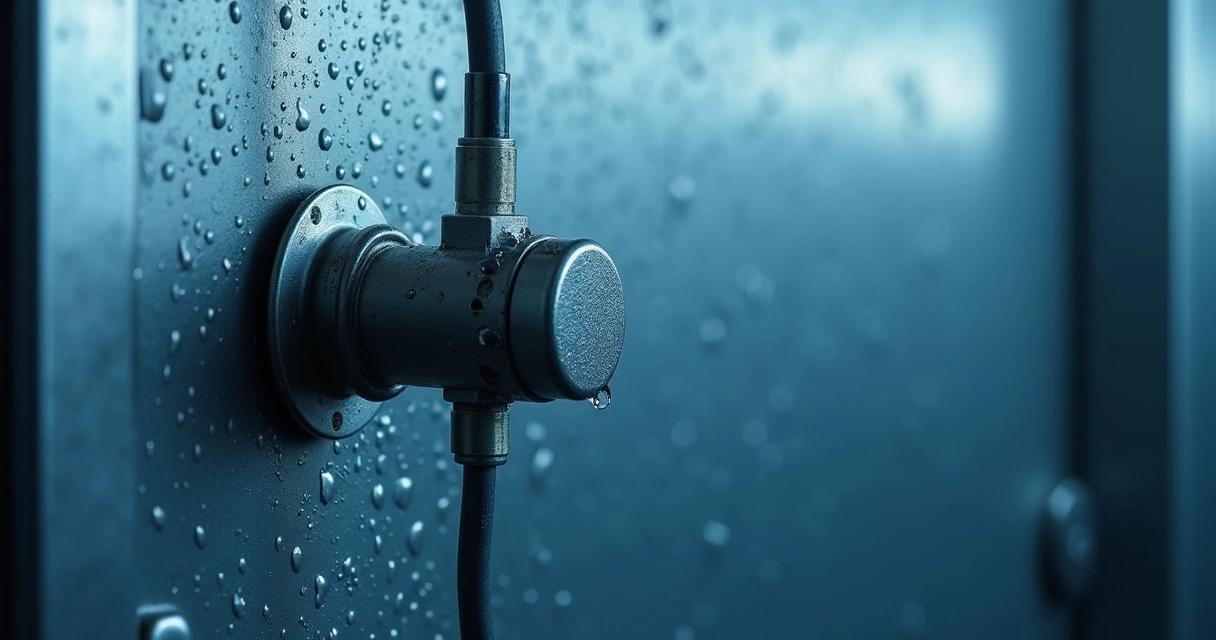
Integrating monitoring and contamination prevention
Predicting condensation risks is only part of the challenge. The risk of contamination by fungi, bacteria, and even viruses grows exponentially when the environment is not under intelligent surveillance. In recent experiences, I've guided clients who faced contamination without ever noticing the beginning of the problem, until they received alerts from the DROME platform.
To dive deeper into this topic, I recommend learning more about how to predict contamination risks in storage chambers.
Challenges in special environments and industrial kitchens
I've seen many challenging environments, like industrial kitchens, with intense traffic and frequently opened doors. In these scenarios, sensors, automation, and predictive analysis are indispensable. For those working with this, I recommend reading about environmental monitoring in industrial kitchens.
To predict is to act before loss happens.
Conclusion: Why trust DROME solutions?
I trust DROME because I know that technology and experience walk together here. I've closely witnessed how risk anticipation transforms the reality of hospitals, laboratories, and pharmaceutical industries. Other players may handle the basics well. However, DROME delivers an uncommon level of intelligence and anticipation.
If your goal is to transform the management of critical environments, keeping everything safe, controlled, and predictable, I invite you to learn more about DROME and how our innovative solutions can help your business overcome condensation risks once and for all.