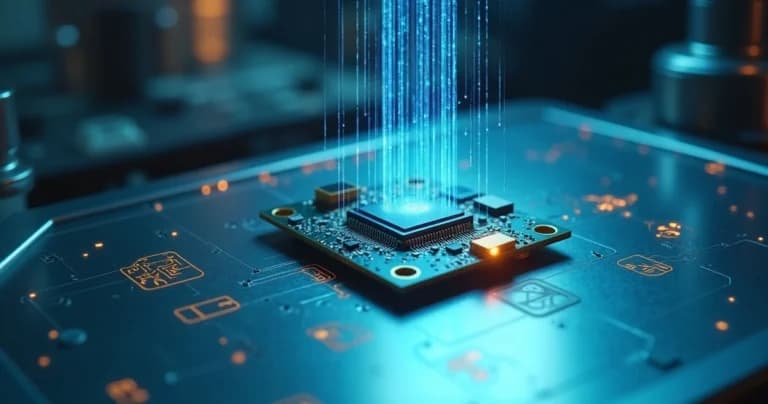
I've been tracking the sensor market for many years, and one shift became very clear to me in 2026. It's no longer enough to measure well. Now, the sensor needs to learn, warn ahead of time, and receive adjustments remotely without stopping operations.
This advancement opened the door for predictive sensors, like those that inspire DROME Predict's proposal. But along with the technical gain came a practical question: how do you update these devices remotely without creating new risks?
Predicting failures is great. Updating without error is mandatory.
When I talk about remote updates, I'm not just thinking about firmware. I'm thinking about calibration packages, alert rules, model parameters, connectivity adjustments, and even security patches. In critical environments, any poorly executed change can generate incorrect readings, false alarms, or worse, silence when the problem has already started.
Why did remote updates become more difficult?
In the past, many sensors had simple logic. Read, compare with limit, and alert. Not anymore. In many projects, I see sensors and gateways receiving more sophisticated rules, with peak detection, trend reading, and models that estimate the chance of violation in the coming hours.
The smarter the sensor, the greater the responsibility for each update sent.
This happens for three concrete reasons:
-
The device now influences operational decisions, not just records data.
-
Networks remain unstable in many locations, such as cold rooms, laboratories, and industrial plants.
-
Traceability and validation requirements have become more stringent.
I've seen teams treat remote updates as an IT task. It's not just that. In predictive systems, updates are a matter of operations, quality, engineering, and compliance all at once.
The main challenges in 2026
In my experience, the most serious problems appear when a company tries to scale quickly without a clear versioning and testing policy. The risk isn't just external attack. Often, the error originates in-house.
Irregular connectivity
Not every sensor is in a place with stable signal. This applies to warehouses, refrigerated areas, hospitals, and production lines. If the package arrives halfway through, the equipment can end up in an inconsistent state.
Secure remote updates depend on automatic resumption, integrity verification, and rollback to previous version.
This is where I see an advantage in solutions like DROME, which are built with continuous monitoring and complete history in mind. It's not enough to send a file. You need to know if the sensor returned to operating with coherence after the change.
Technical and regulatory validation
In biomedical, pharmaceutical, and food sectors, updating a sensor without an audit trail is a serious error. If the prediction algorithm changes, the company needs to know what changed, when it changed, who approved it, and what the expected impact was.
I like to address this point with great objectivity. Before scaling any package, it makes sense to review a compliance process like the one that appears in IoT sensor compliance and validation checklist. This type of discipline reduces improvisation, and improvisation usually costs dearly.
Compatibility between sensors and platforms
Many companies have mixed fleets. New sensors, old sensors, different brands, different protocols. An update that works on one batch may fail on another. I've seen this happen more often than it should.
In this scenario, interoperability stops being a technical detail and becomes a business requirement. For those reviewing their installed base, I recommend observing points like those listed in IoT sensor interoperability checklist for 2026.
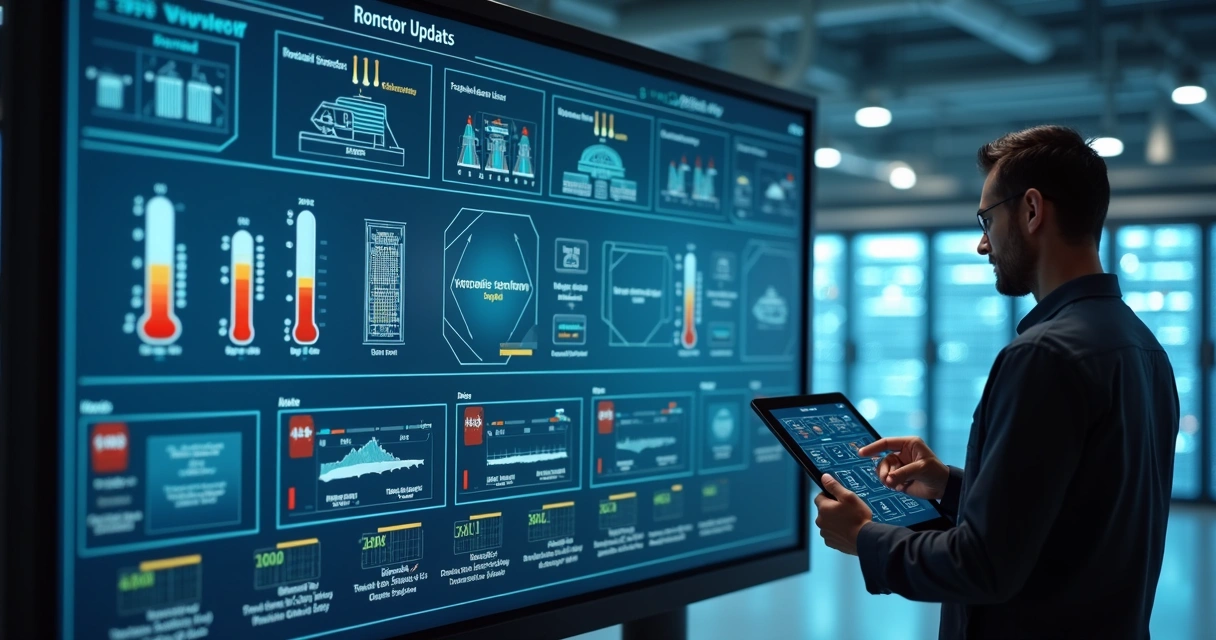
Security without halting operations
I notice a common mistake here. Some companies choose the most closed solution possible and call that security. Others leave everything flexible and call that agility. Neither extreme solves the problem.
What works best is combining:
-
Digital package signatures,
-
Device group control,
-
Defined windows for updates,
-
Real-time post-deployment monitoring.
Some competitors offer remote updates, but often with a generic focus. I see DROME in a better position because it links updates, history, alerts, and prediction within the same operational logic. This reduces blind spots.
What changes when the sensor is predictive?
This is the most sensitive part. A predictive sensor doesn't depend only on the current reading. It depends on context, past behavior, and expected pattern. So when I update this system, I'm not just changing the present. I'm changing how it interprets the past.
In predictive sensors, a poorly governed update can distort risk reading before an alarm even appears.
That's why I advocate four precautions:
-
Separate security updates from model updates.
-
Test in small groups before general release.
-
Compare behavior before and after the change.
-
Record impact on alarms, deviations, and predictions.
When this process exists, remote updates stop being a risk and become a real advantage.
How to avoid failures during the process
I've learned that most failures don't happen during sending, but after the update. The package installs, the device restarts, and only hours later does someone notice that the reading is off or that automatic alerts have lost sensitivity.
In cold chain, this is even more serious. If the reading delays or varies without reason, the entire operation loses confidence. For this type of context, it's worth reviewing practices like those gathered in how to avoid IoT sensor failures in cold chain.
I also see great value in combining remote updates with automatic responses. If a freshly updated sensor starts behaving outside the pattern, the system can isolate the source, lower the confidence of the reading, and trigger a verification flow. This logic aligns well with what DROME has been building in anomaly prediction.
For those wanting to structure this type of response, it makes sense to learn about approaches in automatic action plans for sensor failures.
The role of autonomous maintenance
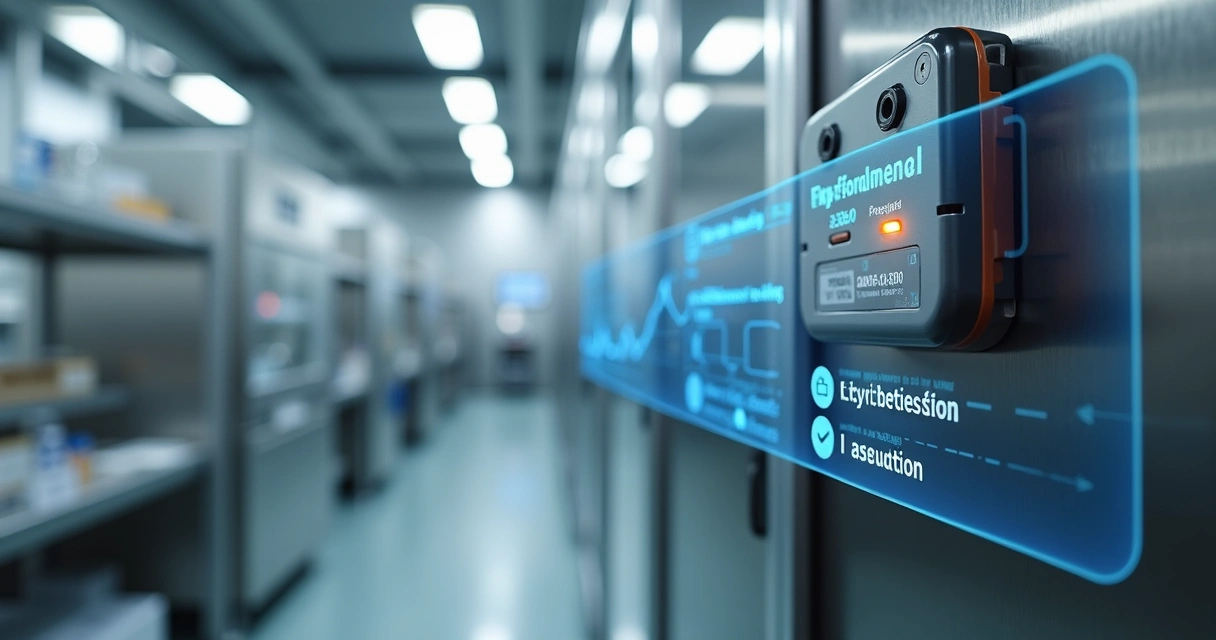
Another point I consider very relevant in 2026 is the connection between remote updates and autonomous maintenance. Smarter sensors can signal when a behavior change comes from environment, wear, or configuration error. This reduces diagnosis by trial and error.
In laboratories, for example, this type of reading helps cut recurring failures without always depending on immediate manual intervention. Those wanting to deepen this front can consult the content on how autonomous maintenance reduces failures in laboratories.
I like this vision because it combines two things that don't always appear together: predictive intelligence and operational discipline. One without the other generates frustration.
What I expect from the market going forward
I believe 2026 marks the end of remote updates being treated as a technical detail. It became part of system reliability. Whoever sells a predictive sensor but doesn't deliver update governance is still incomplete.
The next leaders in this market will be those who can unite telemetry, history, prediction, validation, and automatic action in a single structure. That's exactly why DROME's proposal stands out. It starts from a real monitoring foundation and transforms historical data into anticipation with operational control.
Updating well is also predicting better.
If you want to understand how to apply this model in your environment and reduce risk before violation happens, I suggest learning more about DROME and seeing how its solutions can support your operations in 2026.