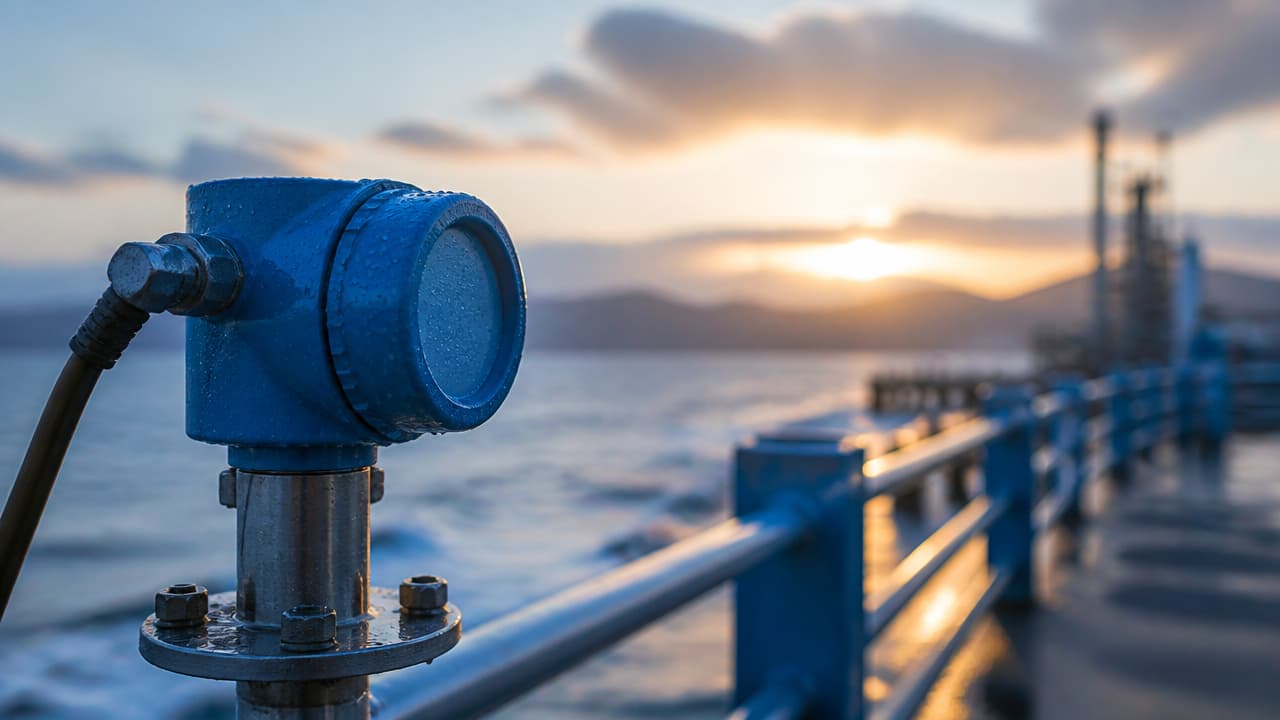
Preventing corrosion in sensors exposed to humidity and salinity requires a combination of correct material selection, properly sealed installation, and disciplined maintenance. This care is critical for hospitals, laboratories, pharmaceutical industries, and logistics operations that depend on stable readings to protect critical processes and assets. In practice, the goal is not just to avoid visible rust, but to interrupt the degradation mechanism before it affects calibration, communication, and availability.
In critical environments, corrosion often appears first as operational noise. Intermittent readings, repeated alarms, and minor deviations often emerge before complete failure. This is why physical prevention and intelligent monitoring must go hand in hand.
Key points to reduce corrosion-related failures
- Choose sensors, connectors, and enclosures compatible with salt spray, condensation, and frequent cleaning.
- Treat sealing, cable glands, and junction points as part of the system, not as secondary accessories.
- Avoid installing the sensor in zones with water accumulation, permanent splashing, or stagnant humid air.
- Create a brief routine of visual and functional inspection before oxidation becomes structural damage.
- Use operational data to identify drift, intermittency, and anomalous behavior before shutdown.
Corrosion begins before metal rusts
The most common mistake is acting only when visible rust appears. In humid and saline areas, the degradation process can compromise electrical contacts, seals, terminals, and sealing surfaces long before any dramatic external sign.
This happens because salt, water, and thermal variation form an aggressive cycle. Moisture condenses, salt residue retains water longer, and small sealing failures create ideal microenvironments for chemical attack. The result is gradual loss of reliability, especially in sensors exposed to washing, proximity to the sea, cold chambers, and areas with irregular ventilation.
Therefore, preventing corrosion does not just mean changing the sensor material. It means reducing entry points, exposure time, and contaminant accumulation.
Which material choices really make a difference?
The best protection starts with specification. In a saline environment, the sensor assembly, cable, connector, support, and enclosure must be thought of as a unit. A robust sensor installed with an inadequate connector will still have a shortened lifespan.
In technical selection, it is worth observing four fronts:
- Enclosure: prefer materials with known resistance to corrosion and the cleaning agent used in operation.
- Connectors: choose models with good sealing and lower chance of infiltration from assembly and disassembly cycles.
- Cables: verify outer jacket, chemical resistance, and flexibility under condensation conditions.
- Fastening: screws, clamps, and supports need the same resistance standard as the sensor.
It also helps to standardize components. Mixing incompatible materials at the same installation point increases the chance of premature wear and complicates preventive maintenance.
How to install without creating infiltration points?
Poor installation nullifies good specification. The sensor must be protected from water pockets, recurring jets, and natural drainage routes. When possible, the mounting position must favor drainage and visual inspection.
Some simple precautions prevent most problems:
- install the cable with a drip loop so water does not run to the connector;
- avoid exposed splices in areas with salt spray or washing;
- use properly sized cable glands, without slack and without excessive compression;
- inspect caps, o-rings, and seals after any maintenance intervention;
- maintain distance from surfaces that concentrate heat and accelerate condensation cycles.
In very aggressive areas, it is worth creating additional barriers, such as protective boxes and splash deflectors. The important thing is that extra protection does not trap moisture inside.
Regular cleaning and inspection are worth more than frequent replacement
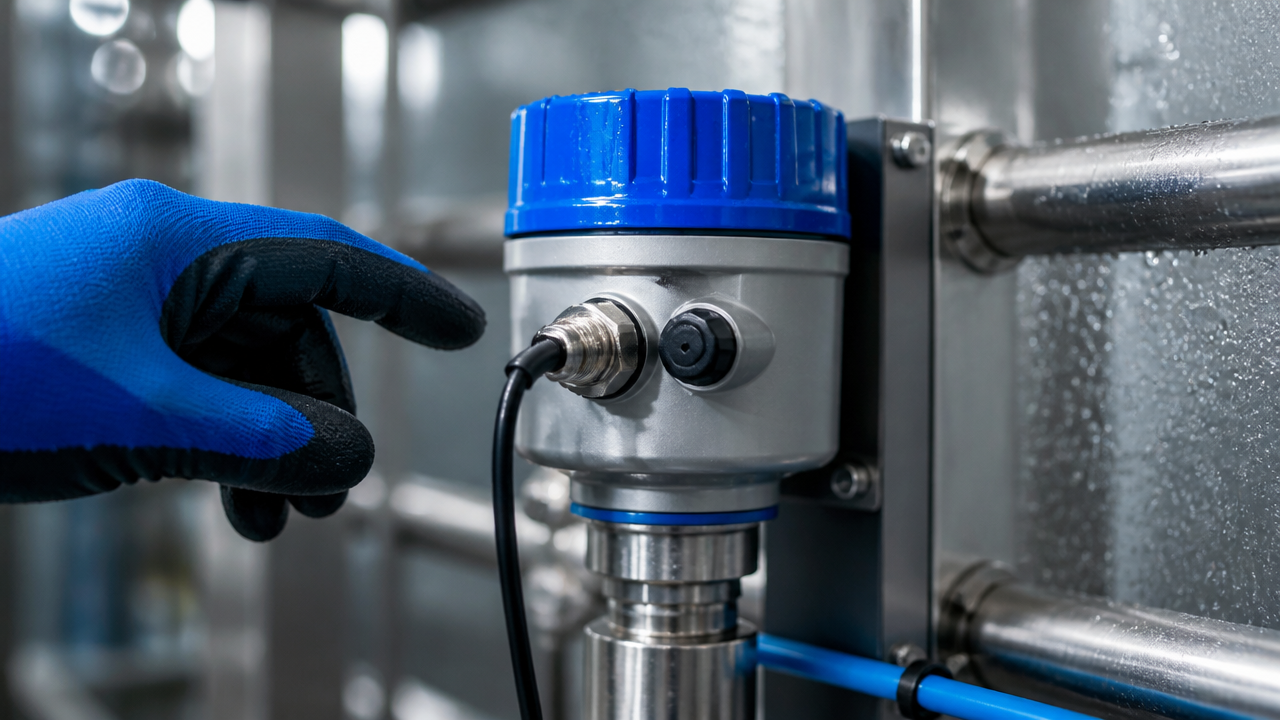
In humid and saline locations, cleaning and inspecting regularly is often more efficient than replacing sensors only after failure. The ideal routine is short, standardized, and objective, to fit into operations without relying on individual memory.
A functional checklist can include:
| Verification | What to observe | Recommended action |
|---|---|---|
| External surface | Crystals, stains, oxidation spots | Compatible cleaning and photographic record |
| Connectors | Slack, moisture, darkening | Retightening, seal replacement, or substitution |
| Sensor reading | Oscillation, drift, intermittency | Functional test and comparison with standard |
| Cables and fastening | Cracks, drying, mechanical tension | Repositioning or assembly replacement |
Cleaning must remove salt and residue without attacking polymers, seals, or coatings. The procedure must be defined according to the material and the area's cleaning process. When the team improvises product and frequency, the chance of accelerating wear increases.
What signs indicate the sensor is beginning to fail?
The first indicators almost always appear in behavior, not visual appearance. If the reading has started to oscillate, the sensor lost stability after washing, or intermittent alarms appeared, corrosion should already be affecting contact, sealing, or associated electronics.
The most useful signals for screening are:
- gradual deviation of reading from the point's history;
- repeated communication loss events;
- growing need for recalibration;
- failures that appear after condensation or cleaning and then disappear;
- presence of oxidation on screws, terminals, and junction areas.
When these symptoms are treated early, the team avoids shutdowns, material waste, and emergency replacement. Waiting for complete failure almost always costs more.
Predictive monitoring reduces operational surprises
In critical operations, it is not enough to protect the sensor physically. You must detect pattern changes before degradation becomes an incident. This is where continuous monitoring gains strategic value.
DROME works precisely at this layer: in addition to monitoring environmental and operational variables, the platform uses AI to recognize anomalies that precede failures. In practice, this helps differentiate an isolated alarm from behavior suggesting progressive loss of sensor reliability.
This model is especially useful when there are many distributed devices, different risk zones, and lean maintenance teams. Instead of acting only on critical events, operations can prioritize inspections where risk is growing.
How to build a simple prevention plan
The best plan is one the team can actually execute. For humid and saline areas, start with a lean protocol and repeat with discipline.
- Map points with the most condensation, splashing, washing, and salt exposure.
- Classify sensors by operational criticality and failure impact.
- Review material, sealing, connectors, and fastening method of critical points.
- Standardize cleaning, visual inspection, and functional testing at defined intervals.
- Monitor alarm trends, drift, and intermittency to anticipate replacements.
This step-by-step creates predictability. Over time, the organization stops treating corrosion as a one-off event and begins managing risk continuously.
Frequently asked questions
Why do sensors oxidize quickly in humid and saline areas?
Not always. In many cases, lifespan drops due to a combination of condensation, salt spray, inadequate sealing, exposed connectors, and incorrect cleaning. The sensor may be good, but fail early if the installation assembly is not compatible with the environment.
What signs indicate the start of sensor corrosion?
The most common signs are oxidation spots on screws and connectors, unstable reading, calibration drift, intermittent alarms, failures after washing, and drying or darkening of seals. When these symptoms appear together, degradation is usually already underway.
Does periodic cleaning really help prevent corrosion?
Yes, provided the procedure is compatible with the sensor and connector material. Cleaning should remove salt, hygroscopic dust, and residue without attacking seals or protective layers. The most common mistake is using aggressive products that solve dirt and accelerate corrosion.
What material is best for sensors in saline environments?
Adequate stainless steel, technical polymers, anticorrosive coatings, cables with resistant jackets, and connectors with high sealing grade tend to perform better. More important than the isolated material is compatibility between sensor, cable gland, enclosure, support, and installation method.
Can continuous monitoring anticipate corrosion failures?
Because corrosion rarely occurs instantaneously. Before total failure, equipment usually shows small anomalies, such as reading oscillation, increased events, communication loss, or out-of-pattern behavior. With continuous monitoring, these signals can become alerts before interruption.
Read next

SaaS Monitoring Contracts: What to Review
Understand which clauses to review in SaaS monitoring contracts in 2026, with focus on SLA, data, security, integrations, and continuity.

Local Backup in Remote Monitoring: Practical Guide
Learn how to structure local backup in remote monitoring to maintain history, alarms, and traceability even during connection failures.

5 Challenges of Telemetry in Critical Environments
Understand the main challenges for implementing telemetry in critical environments and how to transform monitoring into risk prevention.