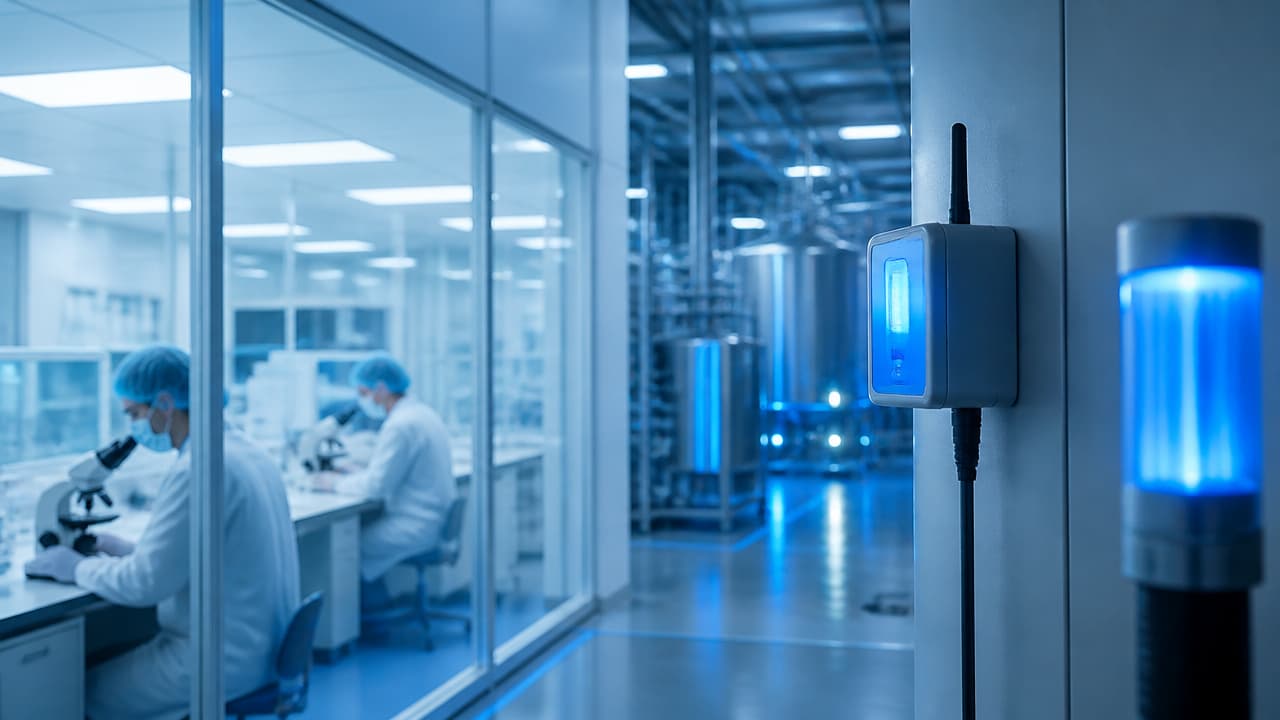
Implementing telemetry in critical environments is not, first and foremost, a technology project. It is a project of operational continuity, safety, and rapid response. For hospitals, laboratories, pharmaceutical companies, and sensitive operations, the greatest challenge is not installing sensors, but creating a reliable system capable of guiding decisions before a failure becomes a loss, downtime, or patient safety risk.
In practice, obstacles concentrate on five fronts: integration, data quality, alarm management, information security, and team adoption. When these layers are addressed from the start, telemetry ceases to be merely monitoring and begins to support more predictive operations, as proposed by the DROME platform.
Key points to get right from the start
- Sensor without context does not solve the problem: useful data depends on correct installation, calibration, and well-defined operational rules.
- Legacy systems weigh heavily: many critical environments coexist with old equipment, different protocols, and little standardization.
- Excessive alarms worsen response: without prioritization, teams become accustomed to noise and react more slowly.
- Telemetry requires governance: security, traceability, and responsibilities must be clear.
- Real value appears in routine operations: the project only matures when data guides maintenance, auditing, and risk prevention.
1. Integrate equipment and infrastructure without creating data silos
The first major challenge is connecting what already exists. In critical environments, operations typically mix refrigerators, cold rooms, incubators, biomedical equipment, uninterruptible power supplies, generators, and climate control systems from different manufacturers and ages.
If each asset speaks a different language, telemetry becomes a difficult-to-maintain mosaic. The result is an operation with multiple dashboards, limited consolidated visibility, and excessive dependence on manual interventions.
Why does integration often stall projects?
Because the difficulty rarely lies solely in the sensor. It appears in network infrastructure, electrical availability, positioning of collection points, and protocol compatibility. In many cases, the environment collects data but cannot organize it into a single operational view.
This is where it makes sense to think about implementation by criticality. Starting with the highest-impact assets helps validate architecture, connectivity, and response flow before scaling. For DROME, this step is decisive, because the predictive capacity of AI depends on a consistent and comparable historical database.
2. Ensure data quality from sensor to dashboard
Poor telemetry generates false confidence. A beautiful dashboard does not compensate for a poorly positioned sensor, expired calibration, intermittent readings, or misconfigured rules.
In critical environments, small distortions can produce wrong decisions. An oscillation ignored in a medication refrigerator, for example, may seem like a one-time event when it actually reveals gradual performance loss.
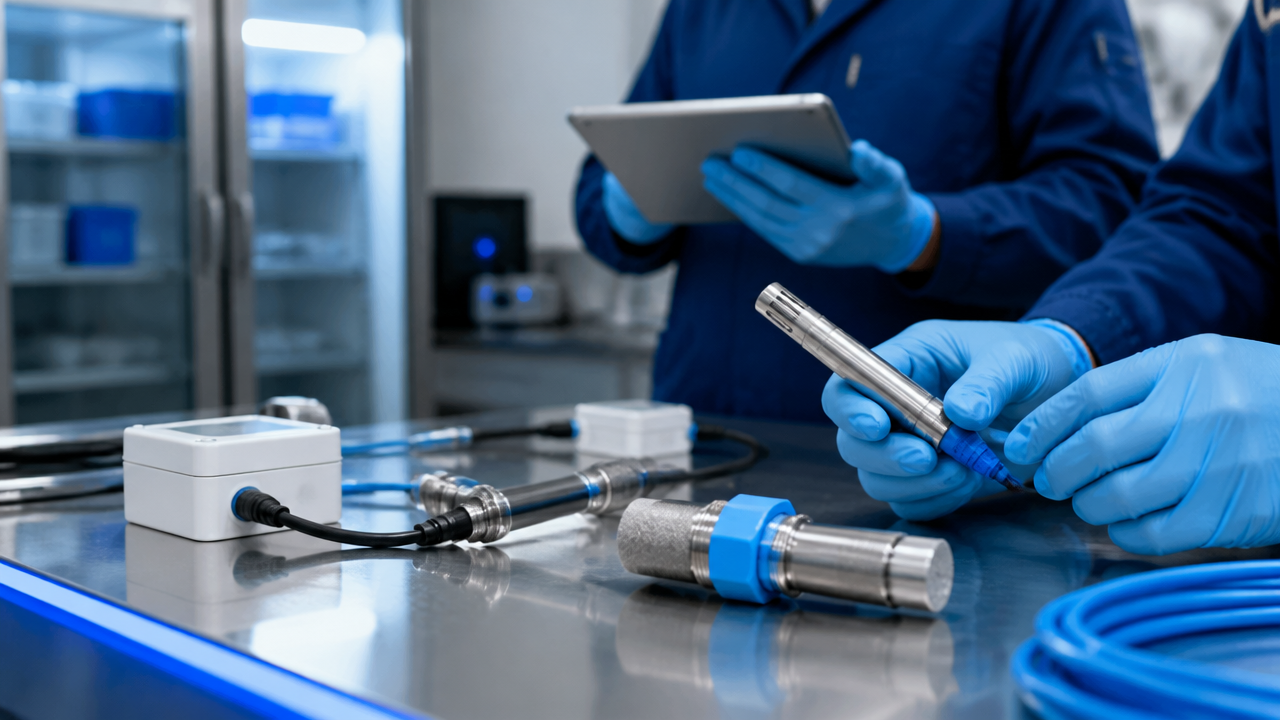
What needs to be validated before trusting the data?
- Correct sensor positioning at the point of greatest operational relevance.
- Documented calibration and routine periodic verification schedule.
- Transmission stability, without frequent gaps in historical records.
- Standardization of nomenclature, units, and alert thresholds.
- Context logging, such as door openings, maintenance, and equipment changes.
Without this foundation, analysis loses value. With it, data ceases to be merely a record and begins to show behavior. This is the terrain where machine learning models can identify patterns, anomalies, and early signs of failure.
3. Control alarms without overwhelming the team
A system with too many alarms is often as problematic as a system with no alerts. When everything becomes urgent, nothing seems truly critical.
This phenomenon is common in accelerated implementations, where thresholds are set without considering routine, seasonality, tolerance time, and actual impact of deviation. The effect is predictable: excessive notifications, operational fatigue, and less efficient response.
How to separate useful alerts from noise?
The best approach is to prioritize events. Not every deviation needs to trigger the same channel, nor require the same response speed. Critical environments demand a simple matrix with severity, exposure time, affected asset, and responsible party defined.
| Situation | Operational Risk | Recommended Response |
|---|---|---|
| Brief oscillation within tolerance | Low | Record and monitor trend |
| Persistent deviation in critical asset | Medium | Alert local team and verify cause |
| Failure with impact on supplies, patient, or process | High | Escalate immediately and execute contingency |
When telemetry matures, alerts cease to be merely reactive. Solutions like DROME use operational history to indicate abnormal behaviors before threshold breach, which improves reaction time and reduces interruptions.
4. Protect data, access, and audit trails
Telemetry in critical environments is also a governance matter. It is not enough to collect data; you must know who accesses it, who alters parameters, how records are stored, and how the organization responds to incidents.
This is especially true for regulated operations, where history, traceability, and evidence of compliance are part of routine. A project without clear access and retention policies can compromise audits and weaken system trust.
What minimum controls cannot be overlooked?
- Access profiles by function and criticality.
- Record of changes to thresholds, sensors, and rules.
- Intact history with retention compatible with operations.
- Contingency plan for communication and power failures.
- Clear criteria for escalation and incident investigation.
In practice, information security and operations must move together. The more critical the environment, the less room for improvisation. Trust in data is born from both technology and disciplined management around it.
5. Enable teams to use telemetry as a decision-making tool
The most underestimated challenge is cultural. Many projects fail not due to lack of technology, but because routine continues to rely on spreadsheets, parallel checks, and decisions disconnected from the system.
If the team sees telemetry only as a monitoring obligation, gains remain limited. Real value appears when supervision, maintenance, quality, and operations use the same history to prioritize actions and learn from occurrences.
How to accelerate adoption without complicating operations?
The most effective path is to transform the system into practical support, not an extra layer of work. This includes simple dashboards, objective response protocols, and training focused on real scenarios, such as temperature deviation, power failure, and loss of connectivity.
It also helps to show quick wins. When the team perceives that telemetry reduces rework, organizes evidence, and anticipates failures, adoption grows. At this stage, the platform ceases to be a passive dashboard and begins to support a culture of prevention.
What changes when telemetry evolves into operational intelligence
The most important gain is not in seeing the present, but in reducing surprises. When historical data, operational context, and continuous analysis combine, the organization begins to identify deviations with greater advance notice and act with greater precision.
This is where DROME's proposal differentiates itself. Instead of merely notifying after the problem, the combination of continuous monitoring, telemetry, and AI creates conditions to predict risks and support faster, safer, and smarter decisions.
Implementing telemetry in critical environments remains a technical and operational challenge. But when the project is designed with integration, data quality, governance, and adoption from the start, it ceases to be an alert center and becomes a real layer of operational protection.
Frequently asked questions
What is telemetry?
Telemetry is the remote collection, transmission, and analysis of data from equipment, environments, or assets. In critical environments, it allows monitoring of variables such as temperature, humidity, power, and operational status in real time, reducing the time between deviation and team action.
What is telemetry in healthcare?
In healthcare, telemetry serves to monitor conditions that affect patient safety and supply integrity. This includes medication refrigerators, cold rooms, biomedical equipment, controlled rooms, and support infrastructure, with continuous records and alerts for rapid response.
What is the function of telemetry?
The primary function of telemetry is to transform dispersed readings into continuous operational visibility. When properly implemented, it records history, detects deviations, organizes alarms, and creates a foundation for faster decisions, simpler audits, and more predictable maintenance.
What are the benefits of telemetry?
The most relevant benefits are traceability, faster response, loss reduction, better alarm management, and greater standardization. When combined with artificial intelligence, telemetry also helps identify failure patterns before the problem interrupts operations.
What is the difference between telemetry and tracking?
Telemetry measures and transmits operational data from an asset or environment, such as temperature, vibration, and power. Tracking, on the other hand, typically indicates location and movement. In critical operations, the two can coexist, but they serve different roles in risk management.