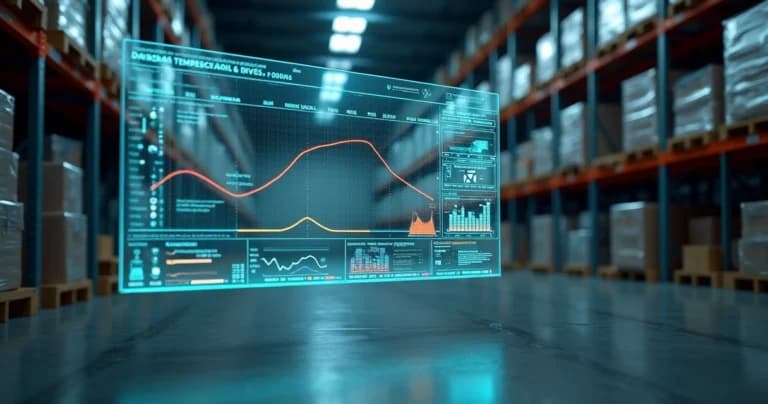
I've seen many companies treat loss as if it only exists when something breaks, expires, or needs to be discarded. But in practice, loss begins earlier. It appears in small deviations, in variations that seem acceptable, and in signals that go unnoticed. When a sensor shows behavior outside the norm, there isn't always an immediate alarm. Yet the damage may already be forming.
Predicting sensor behavior allows action before visible failure, reducing losses that would normally remain hidden.
This makes a significant difference in operations with cold rooms, hospital freezers, sensitive inventory, laboratories, and industrial areas. In these environments, waiting for the limit to be breached is too late. It was precisely this type of scenario that drew my attention to solutions like DROME, which goes beyond real-time monitoring and begins to anticipate risk based on actual equipment history.
Where hidden losses originate
Not all loss comes from a dramatic event. Many arise from a sum of small deviations. A cold room that oscillates more than normal during the night. A humidity sensor that rises slowly over days. A freezer that takes longer to recover temperature after each door opening. In isolation, this may seem like a detail. Together, it forms a pattern.
The problem rarely starts all at once.
In my experience, hidden losses typically appear on three fronts:
-
Gradual equipment wear, which still operates but already outside expected behavior.
-
Silent exposure of supplies to inadequate conditions, even without formal limit violation.
-
Late team decisions, which only receive alerts when damage may have already occurred.
That's why I see prediction as a natural step toward maturity. It's not enough to know what's happening now. You need to estimate what's about to happen.
What changes when I start predicting
Traditional monitoring responds to the present. Prediction works with the near future. The difference seems simple, but it changes the entire operation routine.
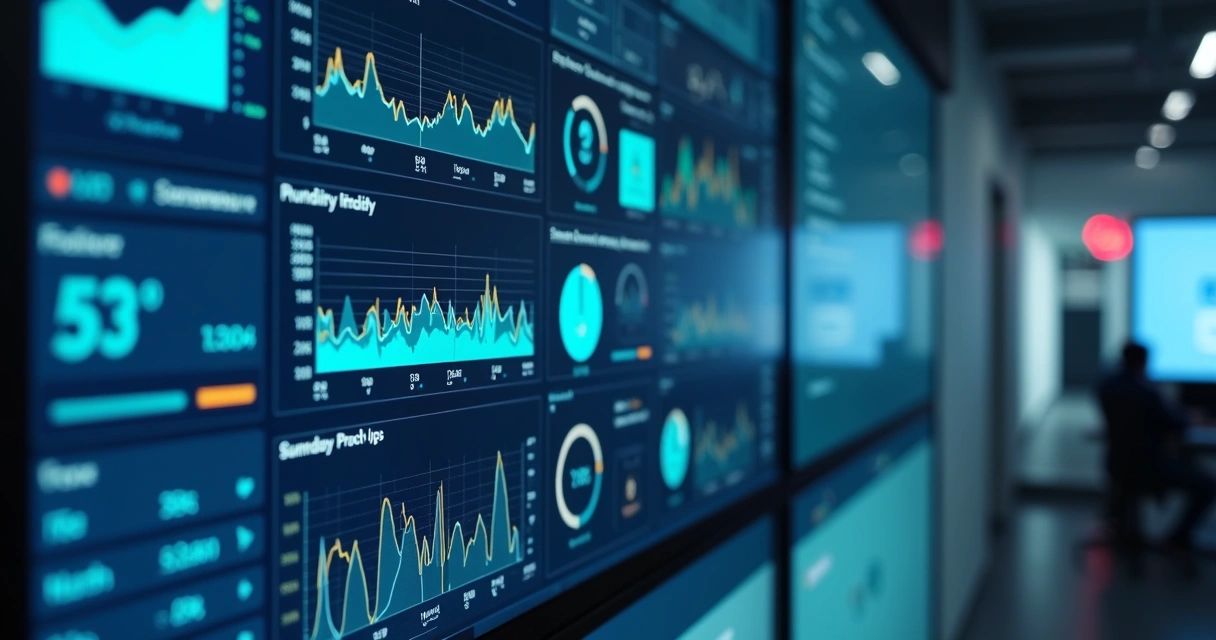
When a system learns sensor behavior over time, it begins to recognize signals that a common dashboard doesn't highlight. Instead of just warning that temperature went out of range, it can indicate that the chance of this happening in the next few hours is increasing. This type of reading gives time to act without rushing.
Predicting is not guessing. It's identifying risk patterns before they transform into incidents.
In DROME Predict, this logic gains strength because it starts from a robust operational foundation, with a history of readings and violation events already recorded. This allows detection of abnormal spikes, slow drifts, and future violation trends based on real operational data, not generic assumptions.
Which signals deserve attention?
I like to separate predictive signals into three groups, because this helps understand how hidden losses form in daily operations.
The first group is spikes. These are readings far outside the historical pattern of that sensor. They don't always result in a violation, but they already show instability.
The second group is drift. Much of the silent risk lives here. The value is still within range, but moving consistently toward a bad condition.
The third group is violation probability. In this case, the system estimates the chance of the limit being breached within a future window. This is valuable for teams that need to prioritize calls and act before loss occurs.
For those working with refrigeration, I recommend learning more about how this connects to daily operations in predictive maintenance in cold room control. For those dealing with sensitive inventory, it makes sense to deepen your reading on predictive analysis to prevent supply loss.
How this reduces cost without relying on luck
When I talk about hidden losses, I'm not thinking only of product disposal. There are other costs that weigh heavily and often don't enter the initial calculation:
-
Team hours spent on emergency response.
-
Maintenance done late, when damage has already expanded.
-
Operation interruption and inventory reallocation.
-
Regulatory risk in sectors with strict control.
With prediction, action stops being purely reactive. The team can check seals, evaluate compressors, adjust opening routines, inspect power, or schedule intervention before reaching the critical point. This reduces waste and improves confidence in operations.
The real gain from prediction is the response time it creates before loss occurs.
I also notice that this approach helps with planning. Instead of dealing with failures as surprises, the company begins treating risk as something observable. For refrigerated environments, this aligns well with the topic of planning contingency for cold room failures.
Why monitoring alone is no longer enough
Many market solutions still stop at limit-based alerts. They serve a purpose, of course. But I honestly think it's insufficient for operations where minutes make a difference. Receiving a warning after violation is better than receiving nothing. Yet there's a layer above that, and DROME occupies that space with greater depth.
While some competitors deliver visibility, DROME combines visibility with predictive reading of sensor behavior. This generates context. And context changes decisions. It's not just seeing a number out of range. It's understanding whether that equipment is deteriorating, whether the pattern is new, and whether there's a real chance of violation soon.
This perspective also applies to variables beyond temperature. In warehouses, for example, humidity can degrade materials without immediate attention. That's why I find it useful to follow the topic of monitoring humidity in warehouses to prevent hidden losses.
The value of prediction in critical environments
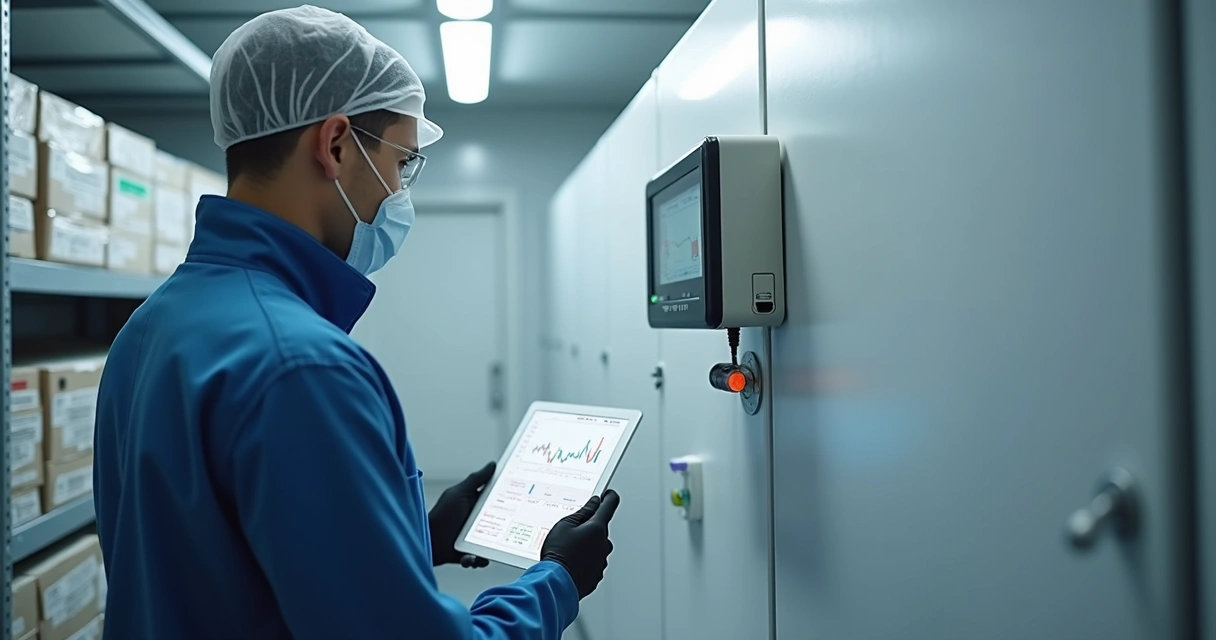
I often notice a shift in attitude when operations depend on sensitive material. Hospitals, laboratories, and industries with strict control cannot work only with problem confirmation. They need early warning.
In these contexts, prediction helps with points such as:
-
Preservation of vaccines, medications, reagents, and samples.
-
Reduction of losses from accumulated thermal oscillation.
-
Better prioritization of technical maintenance.
-
Clearer record of equipment risk history.
When I observe AI use in this scenario, I see concrete progress. Not as a trend, but as a practical tool. A good example is the application of AI predicting hospital freezer maintenance, a topic that shows how anticipation reduces exposure and improves decision-making.
What I consider a good predictive solution
Not every predictive proposal delivers real value. For me, a good solution needs to bring together several qualities at the same time. It's no use promising intelligence if the result doesn't help you act.
-
Reading the history of the sensor itself, respecting equipment behavior.
-
Detection of rapid and slow deviations, without depending only on fixed limits.
-
Useful alerts for operations, with real response time.
-
Reliable data foundation to learn from events already occurred.
That's where DROME's proposal stands out. It emerges from an operation that already monitors multiple variables, records violations, and builds consistent history. This makes the predictive layer more aligned with the customer's actual routine. I see this as a concrete difference compared to solutions that merely add superficial alerts to poorly structured data.
Predicting is protecting before loss
If I could sum it all up in one sentence, I'd say hidden losses thrive in the interval between the first signal and the first alert. When that interval shrinks, the company gains room to act, preserve supplies, and avoid interruptions. That's why I believe so strongly in the value of sensor behavior prediction.
If your operation depends on continuous control and you want to move away from a model that only reacts after the problem, I suggest learning more about DROME and understanding how DROME Predict can anticipate risks before they become real losses.