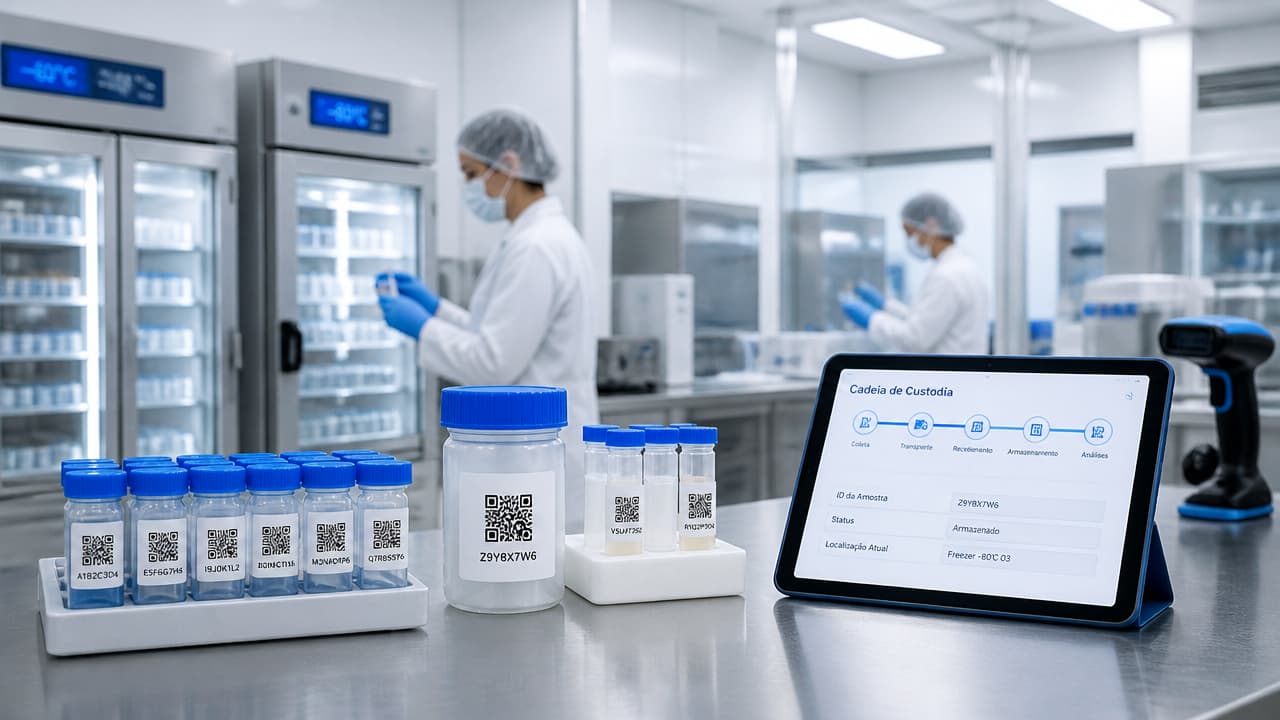
Improving digital traceability in laboratories means reducing blind spots, accelerating investigations, and protecting process quality. In practice, this depends less on buying more technology and more on connecting identification, operational context, and verification routines. For managers, quality analysts, and technical leads, the real gain is in knowing what happened, when, with which item, and under which conditions.
When this flow is well designed, operations no longer depend on parallel spreadsheets and team memory. This is where solutions like the DROME platform gain value, by combining continuous monitoring, operational history, and intelligence to anticipate deviations in critical environments.
What most improves daily control
- Unique identification prevents duplication, label swaps, and loss of context.
- Integration between systems and equipment eliminates rework and gaps in history.
- Complete audit trail accelerates inspections and non-conformance investigations.
- Context-aware alerts help you act before problems affect samples and supplies.
- Simple indicators show where traceability truly fails.
1. Standardize identification from the source
The first improvement is straightforward: every critical item must be born with unique identification. This applies to samples, reagents, lots, thermal boxes, equipment, and even intermediate process stages. If identification changes by department or depends on free manual entry, traceability is already weak.
The ideal approach is to adopt a single naming standard, label format, and reading method. QR codes and barcodes typically work well for most laboratories because they are accessible, fast, and easy to audit. The key is that the identifier carries a link to lot, date, operator, stage, and item condition without requiring subjective interpretation.
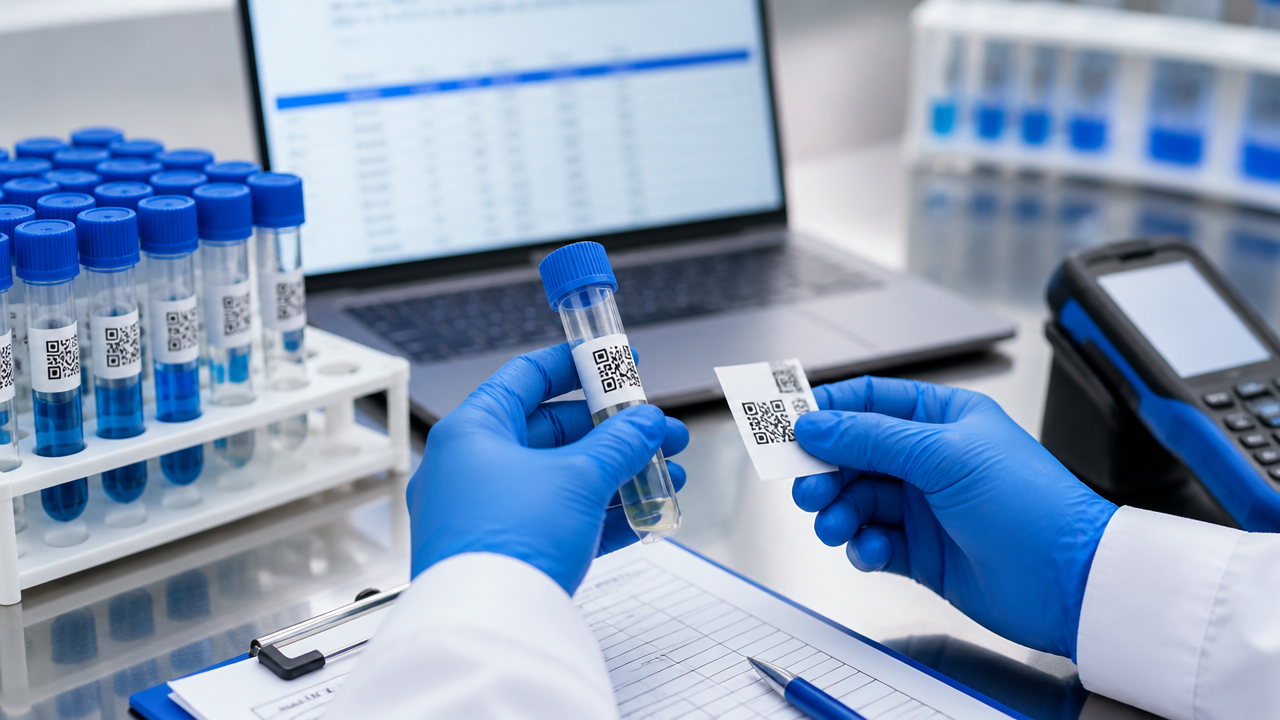
A good practical rule is this: if two different people cannot identify the same item the same way, the standard is not yet solid. Strong traceability begins when source data is clear, legible, and consistent across the entire operation.
2. Integrate samples, equipment, and systems in the same workflow
Digital traceability is not just knowing where a sample went. It is also understanding which equipment it was in, under what environmental conditions, and with what human interventions. When this information lives separately, investigating any deviation becomes slow and incomplete.
This is why the second step is to integrate LIMS, sensors, readers, freezers, incubators, and operational records into a coherent workflow. Even when full integration is not immediately possible, prioritize the points that generate the most risk: storage, internal transport, processing, and disposal.
This design reduces a common laboratory problem: the coexistence of "parallel truths." One system tracks movement, another records temperature, another logs maintenance, and no one sees the complete timeline. DROME's approach addresses this need well by transforming dispersed operational data into continuous risk reading, helping you act before a failure compromises material or results.
3. Record chain of custody and audit trail without relying on memory
If history depends on late notes, traceability has already lost quality. The third adjustment is to ensure that each relevant movement generates automatic or semi-automatic records: who received, who transferred, when it occurred, in which location, and for what reason.
Chain of custody is not extra bureaucracy. It is what allows you to safely reconstruct a critical event. In a laboratory, this makes a difference when there is lot discrepancy, temperature break, suspected cross-contamination, sample loss, or regulatory questioning.
A useful audit trail must be chronological, immutable, and easy to query. It is not enough to store events; you must make them readable. Whenever possible, link the record to a concrete action, such as equipment opening, transfer between departments, analysis release, or disposal. The fewer free fields and more standardized events, the better the history quality.
4. Use context-aware alerts, not just loose alarms
Too many alarms tire the team and hide what really matters. The fourth tip is to treat traceability as a response capability, not just data collection. A good alert should show the deviation, likely impact, and potentially affected items.
This is especially relevant in critical environments, such as cold rooms, medication refrigerators, incubators, and sensitive storage areas. Knowing there was a temperature fluctuation helps little if the system does not indicate for how long, which materials were present, or whether the deviation coincided with door opening, electrical failure, or unusual behavior.
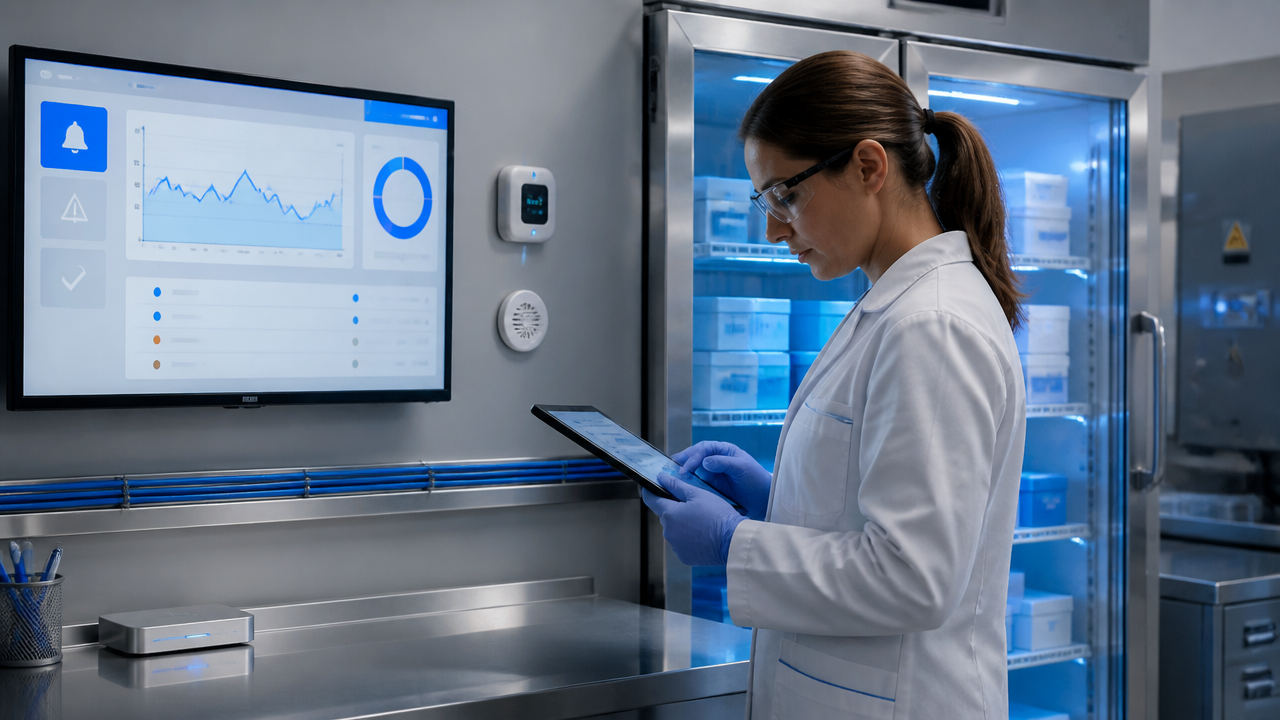
In this scenario, the combination of monitoring and AI makes a practical difference. By analyzing historical series, DROME can support the identification of patterns that precede failures, helping your team move beyond reactive mode. The value of traceability grows significantly when it not only explains the past but improves present decision-making.
5. Measure few indicators, but track the right ones
Traceability improves when it becomes a management routine. The fifth step is to define simple, comparable, and actionable indicators. There is no point in creating a beautiful dashboard if the team does not know what to do with it.
Start with metrics that answer three questions: where is there most information loss, how long does it take to investigate a deviation, and which stages concentrate the most manual corrections. These signals show whether the problem is in technology, process, or operational behavior.
| Indicator | What it reveals | Suggested action |
|---|---|---|
| Items without valid reading | Identification or label failure | Review standard and labeling material |
| Time to trace an event | Difficulty reconstructing history | Improve integration and query capability |
| Manual corrections per stage | Excessive human dependency | Automate critical records |
| Recurring deviations by equipment | Concentrated operational risk | Prioritize maintenance and monitoring |
| Lots impacted per occurrence | Scope of potential damage | Improve containment and segregation |
With this minimum well tracked, traceability stops being an abstract project and starts guiding concrete decisions.
What are the most useful forms of traceability for laboratories?
The most useful forms are those that combine identification, location, context, and evidence. This includes labeled codes, system records, automatic event reading, environmental monitoring, and audit trails. In laboratories with higher volume or more complex logistics, RFID can enter as a complement, not necessarily as a starting point.
In practice, the best architecture is usually hybrid. QR codes solve identification and verification. Connected sensors record environmental conditions. The central system relates samples, lots, people, and equipment. This set creates a reliable history without making routine heavier than necessary.
How to start without disrupting operations
The best start is to map a critical workflow and fix first what generates the most risk. Trying to digitize everything at once usually increases resistance and produces poor data. Choose a process with clear impact, such as sample receipt, refrigerated storage, or high-value reagent control.
Next, define the standard identifier, mandatory events, and alerts requiring immediate action. Only then expand to deeper integrations and predictive automations. This gradual path reduces friction and builds confidence in change.
For laboratories already operating with large volumes of environmental and operational data, the next level is using these histories for prediction. This is precisely where a platform like DROME can stop being just a monitoring system and become real support for failure prevention.
Frequently asked questions
How is digital traceability performed in laboratories?
Digital traceability in a laboratory is the ability to record, locate, and prove each stage of a sample, supply, or equipment cycle, from receipt to disposal. In practice, this combines unique identification, automatic event recording, movement history, and links between people, times, lots, and environmental conditions.
What are the main traceability tools?
The most common forms include barcodes, QR codes, RFID, LIMS records, connected sensors, and audit trails in monitoring systems. The best choice depends on the laboratory workflow, sample volume, automation level, and compliance requirements the operation must meet.
What is RFID tracking and when does it make sense?
RFID is a radiofrequency identification technology. In laboratories, it can speed up inventory, location, and item verification without direct visual reading. It makes more sense in operations with high volume, multiple checkpoints, or need for rapid batch reading. For many workflows, QR codes already work well.
What are the traceability requirements in a laboratory?
The most important requirements are unique identification, date and time recording, link to responsible party, movement history, version control, audit trail, and ability to quickly recover the complete path of a sample. It is also important to integrate this evidence into quality processes and deviation investigations.
How does traceability of medications and supplies work?
Traceability of medications and supplies covers lot, expiration, storage, movement, use, and disposal, with evidence of who performed each step and under what conditions. In critical environments, connecting this history to continuous monitoring helps detect deviations before they generate losses, rework, or care risk.
Read next
Reduce Laboratory Alarm Noise in Automated Systems
Learn how to reduce unnecessary alerts in automated laboratories through prioritization, calibration, predictive maintenance, and artificial…
How to Choose Pressure Sensors for Laboratories
See a practical checklist for selecting differential pressure sensors in laboratories, with focus on accuracy, installation, validation and …

Managing Alert Fatigue in Laboratory Automation
Learn how to filter and manage automated alerts to prevent overload and ensure rapid response in critical laboratories.