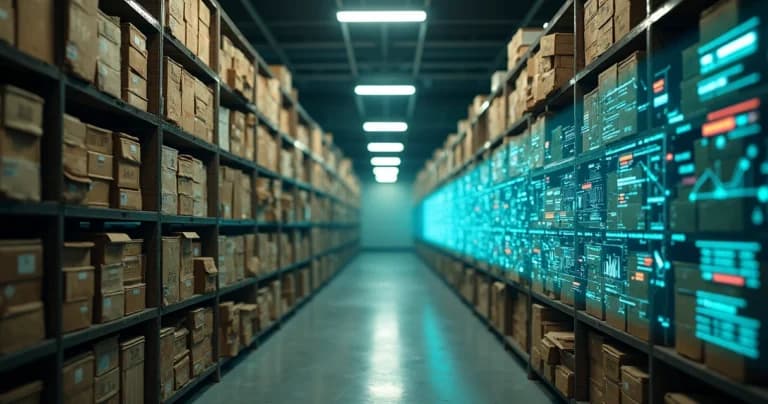
When I look at industrial AI projects, I almost always see the same question: can you train good models using old sensor data? My answer is simple. Yes, you can. And in many cases, that's the best starting point.
I've seen teams ignore years of history because they thought only new data mattered. This costs time, money, and learning. In operations with cold rooms, incubators, cleanrooms, autoclaves, and laboratory equipment, the historical record holds patterns that the human eye doesn't easily see.
The past teaches the alert of the future.
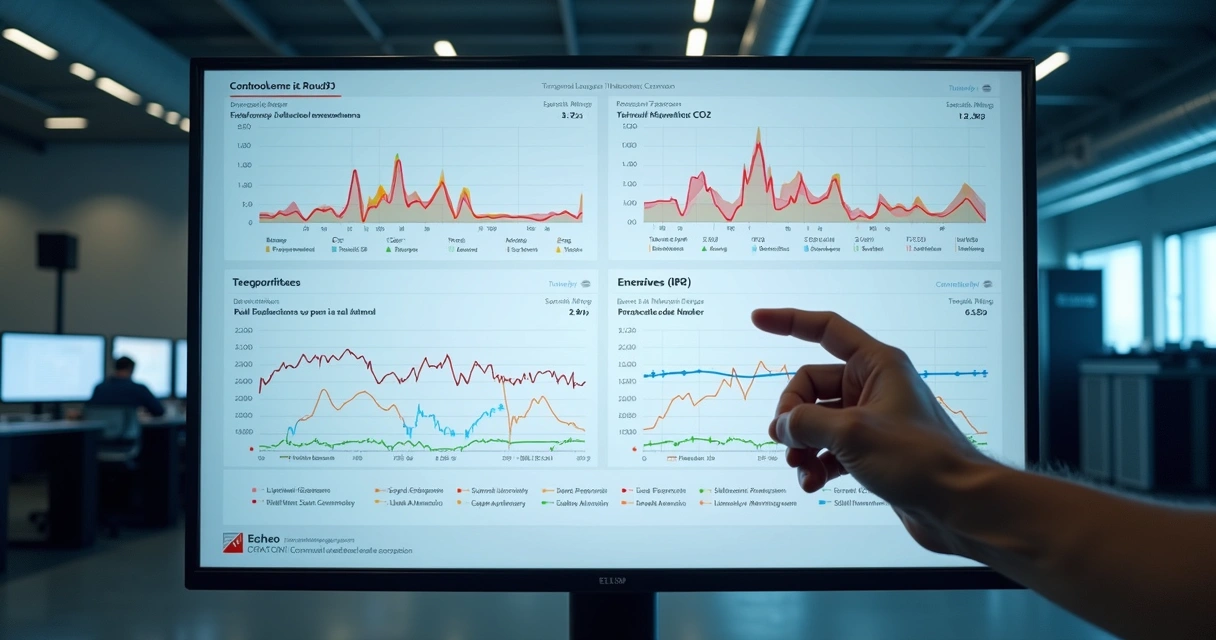
In the context of DROME, this makes even more sense. If a company already monitors temperature, humidity, pressure, CO₂, or other variables over months or years, it already has the foundation to move from reactive alerts to predictive insights. This is how many operations began to see real value in AI applied to sensors.
Why does old data still have value?
Old data shows routine, failure, seasonality, maintenance, shift changes, and environmental variations. When I train a model, I don't just want the outlier event. I want the path leading to it.
Predictive models learn better when they see the before, during, and after of a violation.
This is even more useful when there are alarm records, range changes, and complete history per sensor. DROME already works with this logic by structuring telemetry and violation events so that raw data gains operational context.
In practice, old data helps identify:
- Sudden reading spikes
- Slow drifts that go unnoticed
- Times with higher deviation risk
- More unstable equipment
- Sensors with behavior incompatible with normal operation
I like to remind people that AI doesn't start with the algorithm. It starts with well-kept history.
How to prepare the dataset before training?
This step usually defines the final result. I've found projects with great data volume but with transfer failures, time gaps, and irregular calibration. In these cases, the model learns noise instead of pattern.
Before training, I follow a clear sequence.
- Organize data by sensor, equipment, and period.
- Standardize timestamps, units, and variable names.
- Mark alarms, maintenance, and operational changes.
- Remove duplicates and handle missing readings.
- Separate normal behavior from risk events.
Training AI with disorganized data produces beautiful test predictions and poor real-world performance.
If there are doubts about collection integrity, I recommend reviewing common transmission issues in sensor data transfer errors. When measurement quality itself is the weak point, it's worth checking the content on sensor calibration in controlled environments.
These adjustments seem basic. But they're not minor. They're what prevents wrong decisions later.
Which data should I select?
Not all data needs to go into the first model. I prefer to start with a smaller, reliable set. Generally, I select sensors that have:
- Continuous history for several months
- Alarms recorded with date and time
- Low reading loss rate
- Clear relationship with operational risk
I also separate auxiliary variables. Temperature alone can say a lot. But in many cases, it makes more sense when compared with door opening, humidity, shift, thermal load, or behavior of neighboring equipment.
In a more mature operation, I usually build derived attributes, such as:
- Moving average over 15, 30, and 60 minutes
- Rate of rise or fall
- Distance to configured limit
- Frequency of microvariations
- Time since last alarm
It was in this type of work that solutions like DROME Predict began to pull ahead. While some competitors still focus only on alerts after failure, DROME advances in reading the pattern before deviation.
Which model makes the most sense?
I don't believe in one-size-fits-all answers. The model type depends on dataset maturity and the business question.
If I have little labeled data, I start with anomaly detection. If I have a good amount of marked events, I train classification to predict future violation. When the goal is to estimate trend, I use time series.
The best model isn't the most complex. It's the one that delivers useful warning before loss.
A practical approach can follow three fronts:
- Spike detection to catch abnormal readings early.
- Drift detection to notice slow behavior change.
- Violation prediction to estimate risk in the coming hours.
Those working with cold chain can better understand this evolution by reading the content on how AI predicts cold room failures. I like this topic because it shows a real point: predicting a few hours ahead can prevent waste, rework, and regulatory pain.
How to validate without fooling yourself?
This is a point many people handle poorly. I've seen models with high accuracy fail in the real world because they were tested incorrectly. With sensor data, time must be respected.
I separate training and test by period. I never mix future readings in training. I also evaluate more than simple accuracy. Depending on the case, it's better to catch 80% of deviations with some false positives than to miss a serious event.
In validation, I observe:
- How many violations the model anticipated
- How much advance notice it provided
- How many false alerts it generated per sensor
- Which equipment types it failed on
When I want to mature this reading, I usually review studies applied to data analysis to predict temperature deviations. This helps transform technical metrics into actual operational gains.
What to do after the first model?
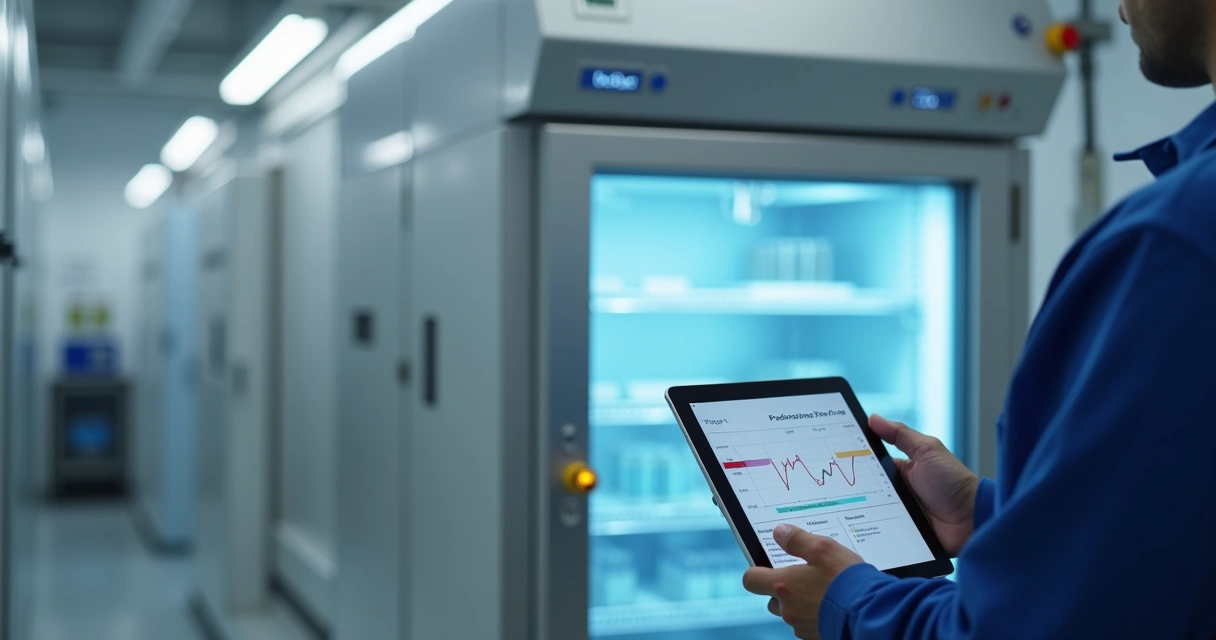
After the first success, I don't treat the project as finished. I treat it as a beginning. Good sensor models need to learn from new data, routine changes, and process adjustments.
That's why I recommend maintaining a simple cycle:
- Monitor predictions in production
- Compare predicted alert with actual event
- Correct labels and review problematic sensors
- Retrain at regular intervals
This process becomes much stronger when there's already a solid continuous monitoring structure with IoT. Without continuous collection, the model loses context. With proper collection, it improves over time.
I think the biggest mistake is waiting for perfection to start. Old data rarely comes flawless. Even so, it carries valuable signals. When treated methodically, it becomes the foundation for predicting deviations before the limit is breached.
Predicting early changes the decision.
If you already have sensor history and want to transform that asset into applied intelligence, it's worth learning more about DROME and understanding how our approach combines monitoring, operational context, and practical prediction to reduce risks before problems appear.