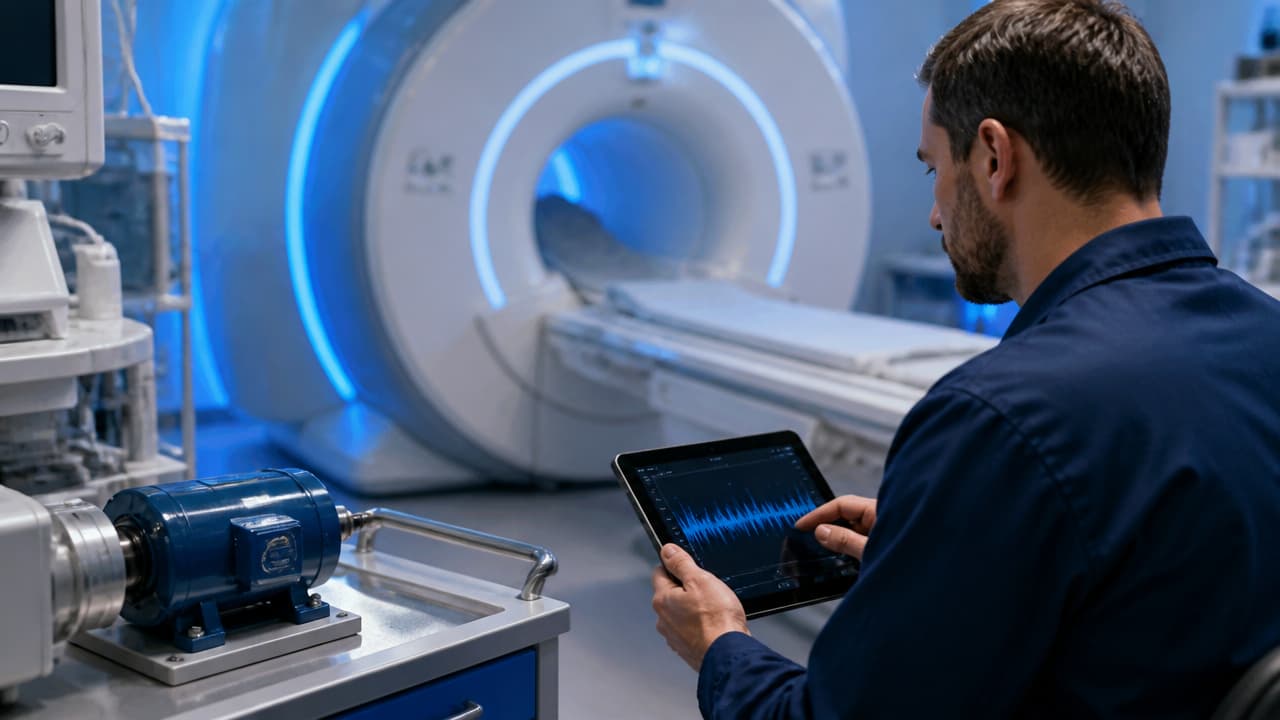
Vibration analysis helps prevent medical equipment failures by identifying mechanical changes before they result in downtime, performance loss, or clinical risk. This method is especially valuable for hospitals, laboratories, and clinical engineering teams that must keep critical assets available and stable. When combined with continuous monitoring and Artificial Intelligence, as in DROME's approach, vibration shifts from being merely a technical data point to guiding maintenance decisions with greater lead time.
In practice, this means detecting wear signals in motors, fans, compressors, pumps, and other moving assemblies without waiting for the defect to become visible. Rather than acting only after an alarm or breakdown, the team can intervene at the moment the pattern begins to deviate.
Key points to understand the value of this technique
- Mechanical failures typically signal before shutdown, and vibration is one of the most sensitive indicators.
- Historical data matters as much as isolated readings, because behavioral deviation reveals risk more clearly than a single number.
- Not every vibration increase indicates serious defect, so operational context and trend analysis are essential.
- Medical equipment with moving parts, such as cooling systems, pumps, and internal ventilation, tend to benefit most from this monitoring.
- AI and telemetry amplify the value of analysis, transforming technical measurements into prioritized alerts for operations.
Vibration analysis enables action before equipment becomes unavailable
The primary benefit of vibration analysis is straightforward: it anticipates failure. Mechanical components rarely stop functioning without warning. Before that occurs, they typically exhibit misalignment, looseness, imbalance, excessive friction, bearing wear, or changes in operating regime.
These events alter the equipment's vibrational signature. When the team monitors this signature over time, they can detect even small deviations, schedule inspections, and correct the root cause before the asset fails at a critical moment. In healthcare settings, this lead time reduces unexpected interruptions, technical rework, and risk of impact on exams, storage, or patient care.
What failures can vibration analysis reveal in advance?
The technique is most valuable when equipment has moving parts and repetitive behavior. In these cases, certain defects alter the frequency, intensity, or regularity of vibration in detectable ways.
| Type of indicator | What it may indicate | Possible operational effect |
|---|---|---|
| Gradual amplitude increase | Wear, looseness, or compromised fixation | Loss of stability and higher failure risk |
| Peak at specific frequency | Imbalance or misalignment | Mechanical overload and reduced service life |
| Intermittent vibration | Abnormal load variation or irregular contact | Difficult-to-reproduce failure and delayed diagnosis |
| Abrupt pattern change | Accelerated damage or out-of-routine event | Need for immediate intervention |
In medical equipment, this applies to cooling systems, units with internal ventilation, peristaltic pumps, compressors, and other subassemblies that depend on stable motion. The central point is not merely measuring whether vibration is high or low, but understanding whether current behavior is consistent with the healthy condition of that asset.
How is vibration analysis performed?
Vibration analysis works best when it follows a standardized method. First, identify which assets merit continuous or routine monitoring. Next, select consistent measurement points and establish a baseline that represents normal equipment behavior.
Sensors then capture signals that can be evaluated by trend or spectrum, depending on operational maturity. The goal is to compare present conditions with historical data, not to examine a single reading in isolation. When a recurring deviation appears, the team investigates the mechanical cause before the problem affects performance, temperature, noise, or availability.
What makes a reading truly useful
- Always collect data from the same points.
- Account for load, operating regime, and time of day.
- Distinguish real anomalies from normal process variation.
- Correlate vibration with other variables, such as temperature and consumption.
- Document interventions to verify whether the pattern improved after maintenance.
This is where data-driven platforms gain relevance. DROME, for example, leverages continuous monitoring and telemetry to transform operational signals into actionable alerts, helping teams prioritize what deserves immediate attention.
What equipment is used to perform vibration evaluation?
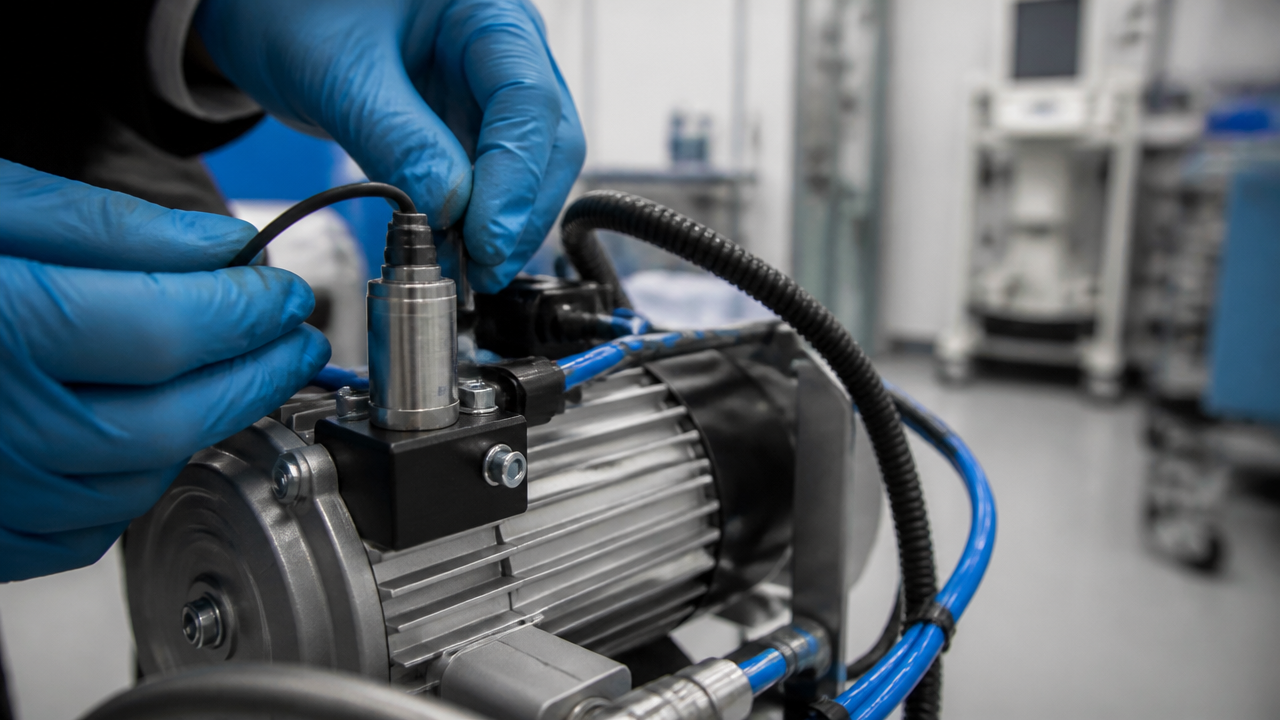
Instruments vary based on asset criticality and desired monitoring frequency. For spot inspections, portable collectors and screening pens can help. For true prevention in critical assets, fixed sensors and software integration typically deliver greater value.
In healthcare, the choice must balance technical sensitivity, ease of installation, and minimal impact on routine operations. In many cases, the best arrangement is not the most sophisticated instrument alone, but the combination of sensor, operational context, and ability to interpret trends.
What are the types of vibration sensors?
The most common are accelerometers, MEMS sensors, velocity sensors, and displacement sensors. The decision depends on frequency range, equipment size, and the type of anomaly to be detected. In compact assets, discrete and well-positioned sensors are often more suitable than large, difficult-to-maintain solutions.
Why does AI improve predictive maintenance in hospitals and laboratories?
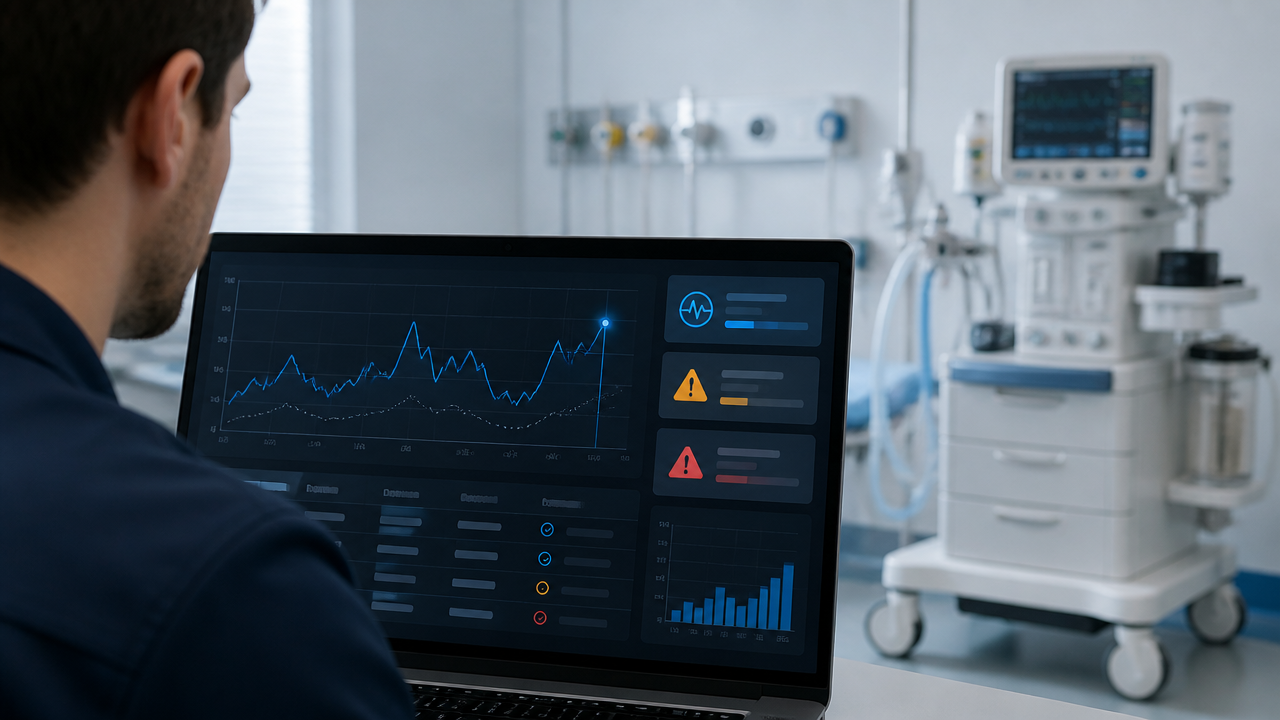
Artificial Intelligence enhances vibration analysis by finding patterns at scale and with greater consistency than manual evaluation alone. In operations with many assets, the challenge is not collecting data, but knowing which deviations have the highest probability of becoming a relevant failure.
With models trained on operational history, it is possible to correlate vibration with other variables, reduce false alarms, and highlight priorities. This is valuable in critical environments where technical teams face time constraints, multiple equipment, and low tolerance for unexpected downtime.
This is where DROME's value proposition makes sense: combining monitoring, telemetry, and AI so hospitals and laboratories stop merely reacting to alarms and begin anticipating risk. Instead of an extensive list of events, operations receive intelligence to decide what to check, when to intervene, and where potential impact is greatest.
How to get started without complicating clinical engineering routines
Implementation should start small and well-targeted. The best approach is to select assets whose failure has high impact, includes a mechanical component, and produces repetitive signals. This creates a pilot with clearer return and accelerates team learning.
Practical steps for implementation
- Map critical equipment with moving parts.
- Define which failure modes vibration can anticipate.
- Choose sensors and standardized measurement points.
- Establish baseline with normal operation.
- Set alert criteria, inspection thresholds, and work order triggers.
- Integrate vibration with temperature, energy, and maintenance history.
When this process is well designed, vibration analysis ceases to be an isolated maintenance practice and becomes a support for operational continuity, safety, and care quality. The most important gain is not just avoiding breakdown, but reducing surprises in environments where minutes matter.
Frequently asked questions
How is vibration analysis performed?
Vibration analysis measures how mechanical components behave during operation. Sensors capture amplitude, frequency, and pattern changes, while software compares these signals with the equipment's baseline. When a consistent deviation emerges, the team can investigate before failure affects clinical use.
What equipment is used to perform vibration evaluation?
The most commonly used are accelerometers, portable collectors, wireless sensors, and trend software. In healthcare settings, the choice depends on asset type, criticality, and measurement point access. Continuous or highly sensitive equipment typically benefits from fixed sensors and permanent monitoring.
How do you measure vibration?
Measurement begins with defining critical points, followed by standardized signal collection and comparison with operational history. The most important aspect is maintaining consistency in position, load, and reading frequency. Without this routine, it is difficult to distinguish normal variation from a true wear indicator.
What are the types of vibration sensors?
The most common sensors are piezoelectric accelerometers, MEMS sensors, velocity sensors, and displacement sensors. Each technology better serves a specific frequency range and application type. In medical equipment, selection must consider sensitivity, available space, and operational impact.
Does every medical equipment need vibration analysis?
Not necessarily. Vibration analysis delivers greater value when there is a rotating mechanical component, forced ventilation, compressor, pump, or motor. In purely electronic assets, other variables may be more useful. The ideal approach is to assess equipment criticality and choose the combination of signals that best anticipates risk.
Read next

Chillers & Fancoils: Hospital Climate Control & Automation
Discover the critical role of chillers and fancoils in hospital climate control and how DROME optimizes these essential systems.
Integrated Thermal Monitoring in Hospital Management
Learn how to connect thermal readings to hospital management, validate ERP integration, and define alerts, responsibilities, and audit evide…

LoRaWAN Sensors in Hospitals: How to Avoid Failures
Learn how to reduce LoRaWAN sensor failures in hospitals with proper coverage, preventive maintenance, useful alerts, and predictive analyti…