
In laboratories, configuring AI in an advanced way does not simply mean turning on smart alerts. It means defining rules, operational context, and priorities so the system can separate noise from real risk. For managers, quality analysts, and those responsible for critical infrastructure, the gain lies in anticipating deviations before they affect samples, supplies, or operational continuity.
The central point is straightforward: AI delivers more value when it understands environmental behavior, not just the static limit of each sensor. This is the scenario where platforms like DROME stand out, combining continuous monitoring, telemetry, and models capable of evolving with the laboratory's operational history.
Highlights that truly change laboratory control
- Context matters more than fixed limits: the system must interpret trend, recurrence, and criticality.
- Not every alarm deserves the same response: risk-based prioritization prevents operational fatigue.
- Integration is part of intelligence: isolated data generates little prediction and much late reaction.
- Useful models require governance: calibration, review, and traceability are essential.
- The best result comes from combining AI and technical routine: automation without clear process creates more noise than value.
Which configurations elevate AI in the laboratory
The seven configurations below work best when implemented in logical sequence. First, organize environmental reading. Then, increase predictive capacity. Finally, consolidate operational response.
| Configuration | Objective | Practical Effect |
|---|---|---|
| Dynamic baseline | Understand normal behavior | Fewer false positives |
| Criticality weights | Prioritize highest impact | Faster response |
| Variable correlation | Link dispersed signals | Early detection |
| Trend windows | Read progressive deviation | Failure anticipation |
| Operational feedback | Learn from real events | More accurate model |
| Decision traceability | Document why alert occurred | More trust and audit capability |
| Action-oriented dashboard | Transform analysis into routine | Consistent execution |
1. Create a dynamic baseline by equipment and environment
The first advanced configuration is abandoning the idea of a single behavior for the entire laboratory. A scientific freezer, an incubator, and a clean room operate at different rhythms. When AI learns the pattern of each asset, it begins detecting relevant deviations even before a formal limit violation.
This dynamic baseline considers time of day, frequency of use, seasonality, and equipment history. The result is control more sensitive to real risk and less dependent on generic alarms. For operations, this reduces unnecessary interruptions and improves platform confidence.
2. Assign criticality weights to events, assets, and areas
Not every deviation deserves the same treatment. AI must know that a brief fluctuation in an administrative area does not have the same impact as a variation in a reagent refrigerator or sensitive sample storage.
By configuring criticality weights, the laboratory receives alerts proportional to operational risk. This helps organize escalation, response, and incident logging. In practice, the team stops chasing everything at once and starts acting first where continuity and compliance are most exposed.
3. Correlate environmental sensors with operational events
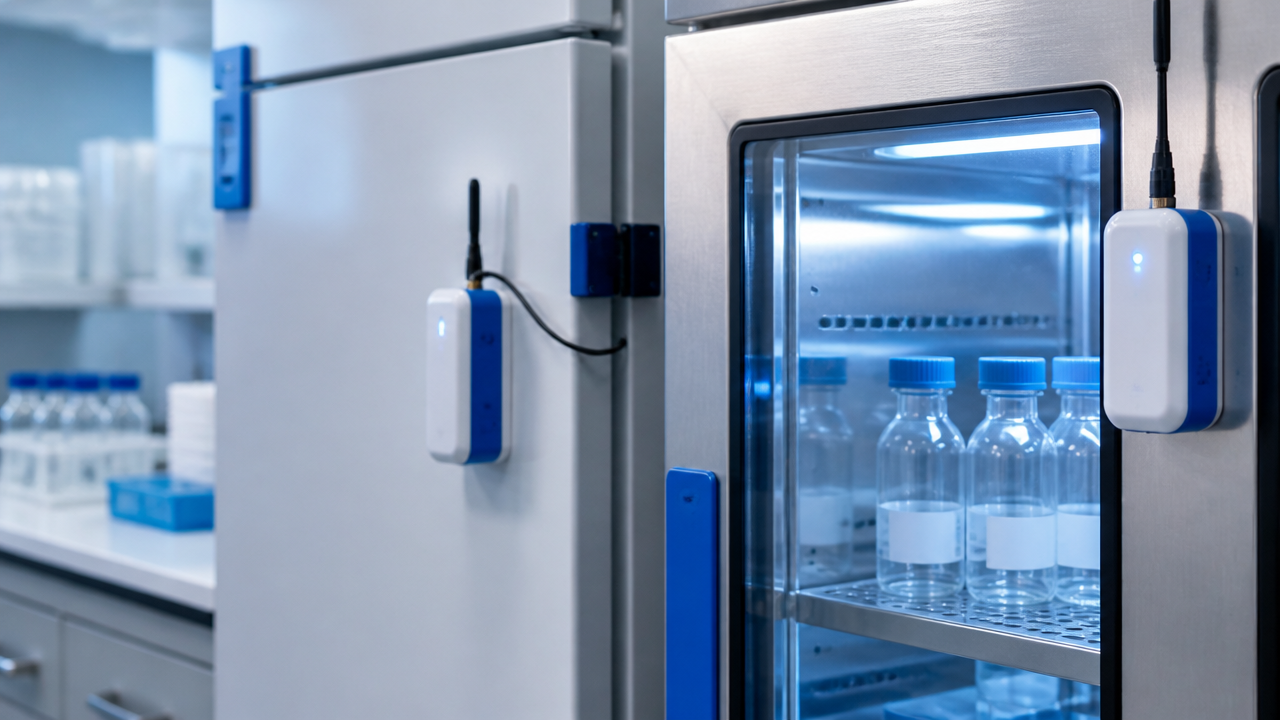
AI becomes truly useful when it crosses signals that were previously analyzed separately. Temperature, humidity, door opening, time out of range, and compressor behavior, for example, gain new meaning when they appear together.
This type of correlation allows identifying patterns that precede intermittent failures. A recurring increase in thermal recovery time after door opening may be more important than an isolated spike. In environments monitored by DROME, this integrated reading is what transforms telemetry into operational intelligence.
4. Configure trend windows, not just instantaneous deviations
Many laboratory problems do not start with a sudden break. They emerge as gradual performance loss, increased variability, or increasingly slow recovery after normal use events. Therefore, a mature AI configuration observes trend, persistence, and acceleration of deviation.
By working with time windows, the system stops reacting only to the instant and begins interpreting trajectory. This is valuable for identifying component wear, environmental pattern change, and onset of instability in critical equipment. The laboratory gains time to act before material loss or unexpected downtime.
5. Feed the model with feedback from real operations
AI without human feedback ages quickly. One of the most important configurations is allowing the team to classify events, confirm probable cause, and record whether there was real risk, false alarm, or successful intervention.
This cycle closes the system's learning. Over time, the model better recognizes which signal combinations require immediate action and which represent only acceptable operational variation. Beyond improving accuracy, this feedback creates valuable history for quality, maintenance, and audit.
6. Require traceability of the reason for each alert or recommendation
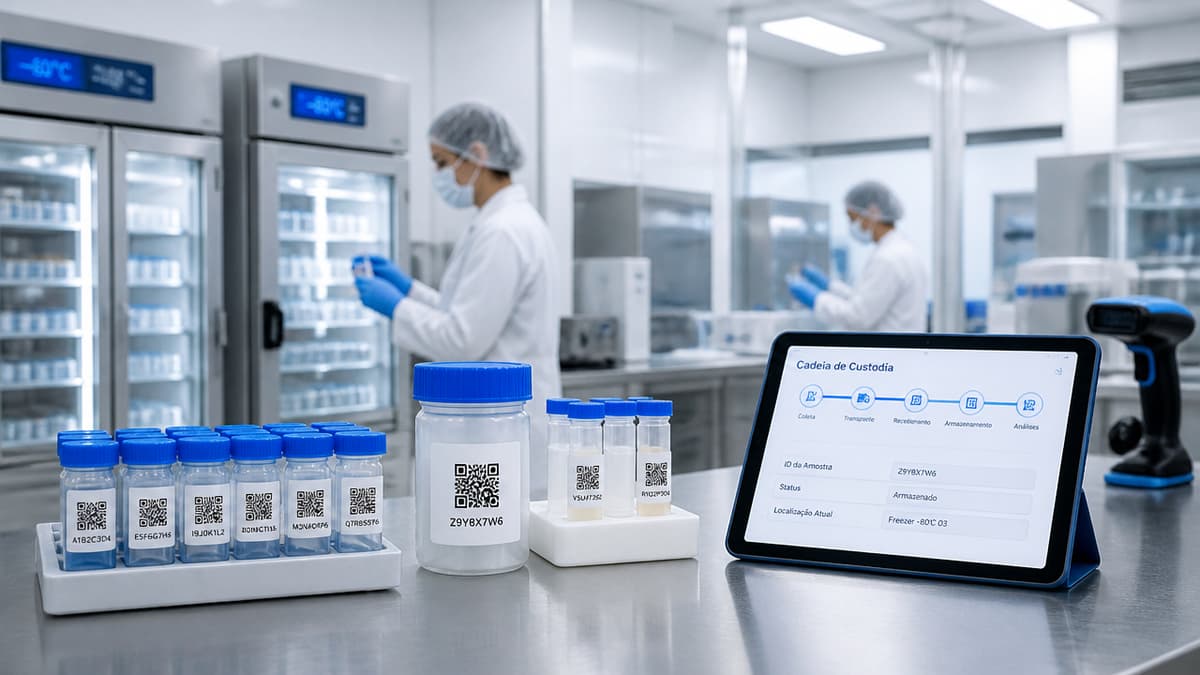
In critical environments, it is not enough for AI to say risk exists. It must indicate which variables weighted most in the decision, which asset was impacted, and why the recommendation was issued. Without this minimum explanation, team adherence drops and investigation slows.
Traceability also aids compliance. When there is clear record of the event, context, and response adopted, the laboratory can review processes more consistently. This transparency is especially useful in operations that depend on documentary evidence to demonstrate continuous control.
7. Build dashboards oriented by action, not by excess metrics
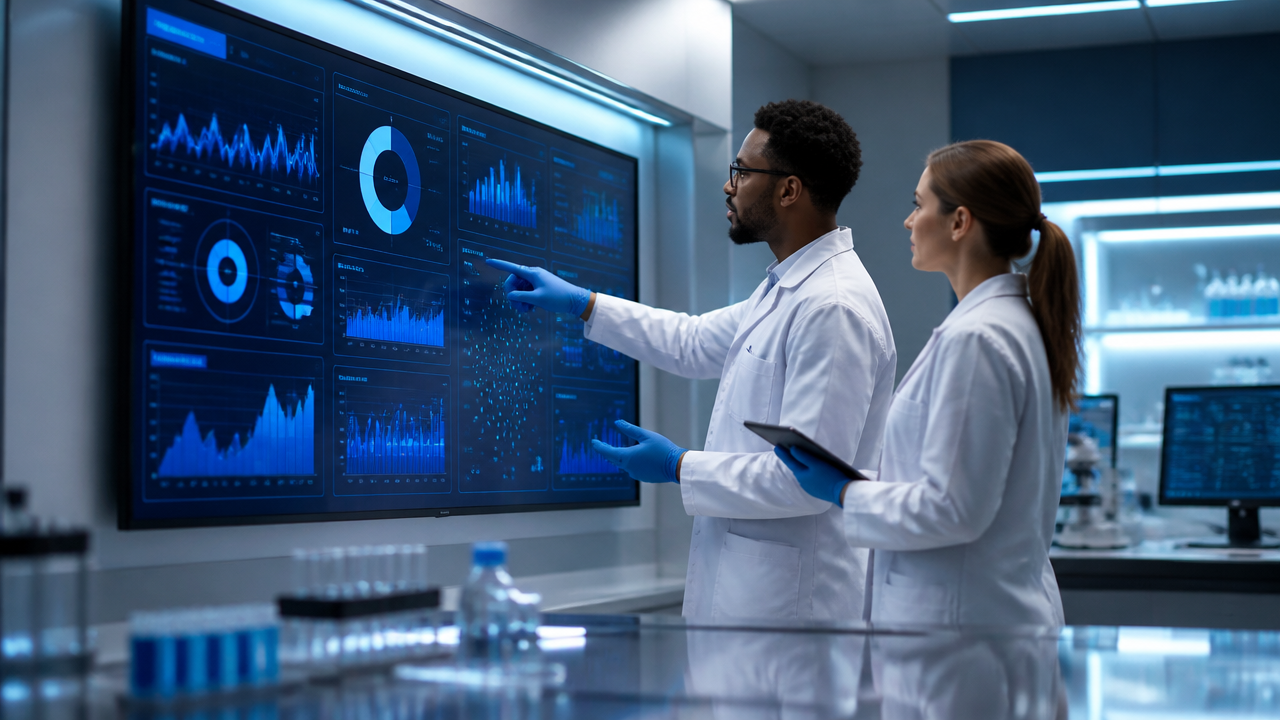
The ideal dashboard is not the one showing the most graphs. It is the one that helps decide what to do now, what to monitor today, and what needs structural review. Good AI configuration organizes information in levels: immediate risk, operational trend, and historical learning.
When the dashboard is designed for laboratory routine, each profile sees what really matters. Maintenance tracks degradation signals, quality reviews recurrences, and management observes systemic impact. This design makes intelligence usable in daily work, rather than leaving it trapped in point analyses.
How to apply these configurations without disrupting routine
The best implementation starts small and critical. Rather than trying to automate everything, it is worth prioritizing assets with greatest impact on thermal stability, supply preservation, analytical continuity, and recording requirements. This accelerates learning and avoids projects too large for current operational maturity.
- Map equipment and areas of greatest criticality.
- Review sensor quality and collection consistency.
- Define risk weights with quality, operations, and maintenance teams.
- Structure response flow for each alert type.
- Review model performance periodically.
With this approach, AI stops being an extra layer of complexity. It becomes concrete decision support, with more predictability and less improvisation. This is the space where DROME's proposition makes sense: moving from reactive monitoring to data-driven prevention.
What separates efficient laboratories from merely monitored ones
The difference is not in having more sensors or more alarms. It is in configuring intelligence to interpret context, learn from events, and guide response. Laboratories operating this way do not treat AI as technological showcase, but as decision infrastructure.
If the goal is to raise reliability, reduce failure exposure, and create more predictable routine, the seven configurations above form a practical and mature foundation. They connect monitoring, telemetry, and operational action, which is exactly where laboratory control begins to generate real value.
Frequently asked questions
How can AI be used in laboratory test analysis?
In laboratory routine, AI can cross equipment data, environmental sensors, alarm history, and operational events to identify risk patterns. In practice, this helps detect deviations before failure, prioritize occurrences, and guide faster decisions in critical processes.
Does AI replace the laboratory team?
No. AI supports control, event triage, and pattern interpretation, but does not replace technical validation, maintenance, calibration, and human oversight. In the laboratory, the best use is combining analytical automation with clear protocols, evidence recording, and review by responsible teams.
Which data is most useful for AI in laboratory control?
The most useful signals typically come from temperature, humidity, door opening, electrical consumption, vibration, time out of range, alarm frequency, and equipment historical behavior. Value lies less in isolated data quantity and more in correlation between operational variables and context.
How to implement AI in laboratory control without increasing complexity?
Start with assets and processes with greatest operational impact, such as freezers, scientific refrigerators, incubators, and controlled rooms. Then define reliable sensors, standardize limits, integrate data into a single layer, and train alerts by criticality. Only then is it worth advancing to more refined predictive models.
Can AI predict failures in laboratory equipment?
Yes, provided there is sufficient historical basis, consistent sensors, and model performance monitoring. AI does not predict everything, but can recognize signal combinations that precede recurring deviations. This is especially useful for predictive maintenance and intermittent environmental events.
Read next

Checklist to Prioritize Laboratory Alerts
Learn to organize multiple laboratory alerts with a practical checklist, priority criteria, and AI-powered monitoring support.
5 Tips to Strengthen Traceability in Laboratories
Learn five practical actions to improve digital traceability in laboratories, reduce deviations, and gain greater operational control.

Reduce Laboratory Alarm Noise in Automated Systems
Learn how to reduce unnecessary alerts in automated laboratories through prioritization, calibration, predictive maintenance, and artificial…