Throughout my years working with laboratories, industries, and critical areas, I've noticed a question that keeps coming back: "Why worry about calibrating sensors outside the traditional cycle, as most manufacturers recommend?"
There's always been a habit of following rigid calibration schedules, no more, no less, almost as if it were an inflexible regulatory requirement. But with all the advances in technology and digital monitoring, does it make sense to maintain this standard in 2026?
The traditional calibration cycle: limitations and risks
The traditional calibration cycle is based, essentially, on a fixed calendar, usually annual or semi-annual. It works well for those who need simplicity, but it doesn't provide the flexibility necessary for environments where conditions vary, and where the impact of an incorrect reading can generate immense losses.
I've witnessed cases where companies followed this calendar strictly and still suffered losses because the sensor "went out of range" just months after the last calibration. This happens because sensor degradation depends on usage, environment, temperature and humidity variations, and even electrical interference
The calendar doesn't know the real conditions of your sensor.
In biomedical, pharmaceutical, and food industries, a sensor failure can put an entire batch at risk before anyone notices. And when the traditional alert appears, it's already too late.
How technology changed the game
Today, modern systems like DROME's show practically in real-time every small sensor deviation. This opens the door to a much smarter approach: calibration based on real data, not just the calendar.
- 24/7 monitoring: continuous sensor tracking, not just point-in-time checks
- Automatic trend and micro-deviation records, allowing you to identify problems before they worsen
- Anomaly alerts instead of simple post-failure alerts
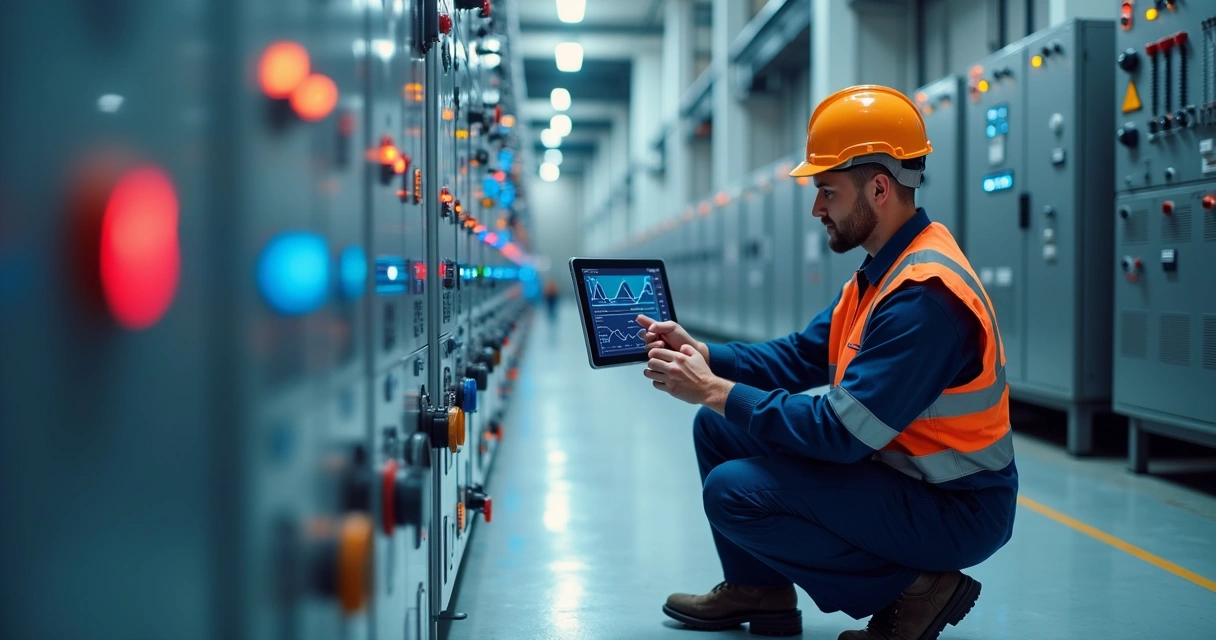
I emphasize this because I've seen that those who adopt digital monitoring quickly realize that sensor performance follows patterns—sometimes stable, other times with small variations that point to something larger.
Why recalibrating outside the cycle is smarter now?
When I use DROME Predict, for example, I can identify three situations where early recalibration is strategic:
- Slow drift identified: When a slow change trend appears in the sensor reading, even without yet violating critical limits, it's already a warning sign.
- Anomalous spikes: Atypical readings, even if they return to normal afterward, signal the need for investigation and possible recalibration.
- Out-of-standard operating conditions: Environments that vary greatly in temperature, humidity, or vibration may require early recalibration, as they accelerate sensor wear.
Calibrating at the right time reduces the risk of failures, losses, and negative audits. Maintaining calibration fidelity brings greater security for production, regulatory requirements, and especially for those who depend on sensor data.
The impact of standards and audits
If there's one thing I've learned, it's that no standard prohibits early calibration, while many point to the manager's responsibility to ensure reliable data always. I've seen audits questioning why calibration only follows a schedule, ignoring signs of deviation.
In fact, I recommend reading the article on seven calibration myths that harm audits, which shows how a passive stance can be dangerous. Being attentive to sensor behavior and acting proactively makes all the difference during inspections and certification renewals.
The role of historical data in calibration decisions
In the past, reconstructing a complete history of each sensor was nearly impossible. With modern platforms like DROME, every event, small variation, or violation is recorded with precision, making analysis much easier.
In my experience, visualizing trends from this history allows you to predict pattern breaks before they happen. DROME Predict's predictive detection feature, in this scenario, serves as a "radar": it captures sensor drift right at the beginning, showing comparative charts of expected versus actual behavior. This is a true silent revolution for the technical manager.
Those who have the data make the best decisions.
This means that by moving away from the traditional cycle, I'm armed with information to justify and document every out-of-schedule calibration. This is actually viewed favorably in audits, as it demonstrates process control.
Differences between our system and other solutions
I've tested some competing systems, and I can say: many still treat calibration as a bureaucratic obligation, without bringing analytical intelligence to the manager. Some even present basic charts, but don't integrate real predictive alerts based on machine learning about each asset in the installed base.
In DROME Predict, the differentiator is anticipating scenarios before the problem explodes. The system learns from the historical profile of each equipment, triggering personalized alerts for sensors that begin to deviate from the standard.
- Early drift and trend alerts
- Calibration recommendations based on real behavior, not just calendar
- Visual analyses that simplify quick decisions for technical teams
I can say from experience that data-driven decision-making with DROME goes beyond what any traditional cycle can deliver.
How to start changing the calibration paradigm?
If you work in an area where every data point matters, it's time to go beyond protocol and evaluate, with your technical team, how to incorporate data-driven practices into your calibration plan. I usually suggest some practical steps:
- Analyze the history of sensor deviations and incidents from the past years
- Set up personalized alerts for unexpected situations, not just classic limit violations
- Open discussion with the responsible team about the benefits of dynamic calibration
- Train operators to understand trend charts and interpret analytical alerts
For those who want to deepen these adjustments, I recommend the practical guide to calibration in controlled environments, which brings very useful tips for those migrating to digital monitoring systems.
Common questions about out-of-cycle calibration
Many ask me if calibrating outside the traditional cycle implies higher costs or more bureaucracy. My answer is simple: calibrating at the right time avoids even greater costs from losses, rework, and regulatory fines.
Another common doubt is about acceptance by standards. I always recommend having documented reasons for early calibration, with charts, alerts, and history—resources that DROME provides automatically, making any inspection much smoother.
For those still with doubts, I recommend the checklist of requirements for wireless sensor calibration, available in detailed article on the topic.
Integration with automatic action plans
One of the things I most admire in the DROME ecosystem is the ease of transforming an alert or critical trend into an automatic action plan. In fact, I've used this feature to define, together with maintenance, when to recalibrate sensors at the first sign of drift, not just when the schedule deadline arrives.
To better understand how to automate actions based on detected failures, I recommend reading about automatic action plans for sensors.
Special case: sensors in cold chain
Speaking of sensitive environments, the risks in the cold chain justify even more the anticipation of calibration. In my experience, a miscalibrated sensor in the food or vaccine sector means risks to health and business.
Those who want to see practical examples can check the content on how to prevent failures in IoT sensors in cold chain, where I detail strategies to protect your operation.
Putting it into practice in 2026
As I wrap up, I believe that calibrating sensors outside the traditional cycle in 2026 is more than a technical suggestion: it's a direct response to current demands for quality, safety, and transparency.
New tools, like the DROME solution and the Predict module, allow teams to implement a routine where calibration stops being just a number on the calendar and becomes an intelligent response to the real environment, in real time.
Out-of-cycle calibration is no longer a trend, it's a necessity for those who want to lead in controlled environments.
If you want to know how DROME technology can transform your calibration process, I recommend reaching out to us and seeing firsthand what it means to anticipate, predict, and protect your operation.