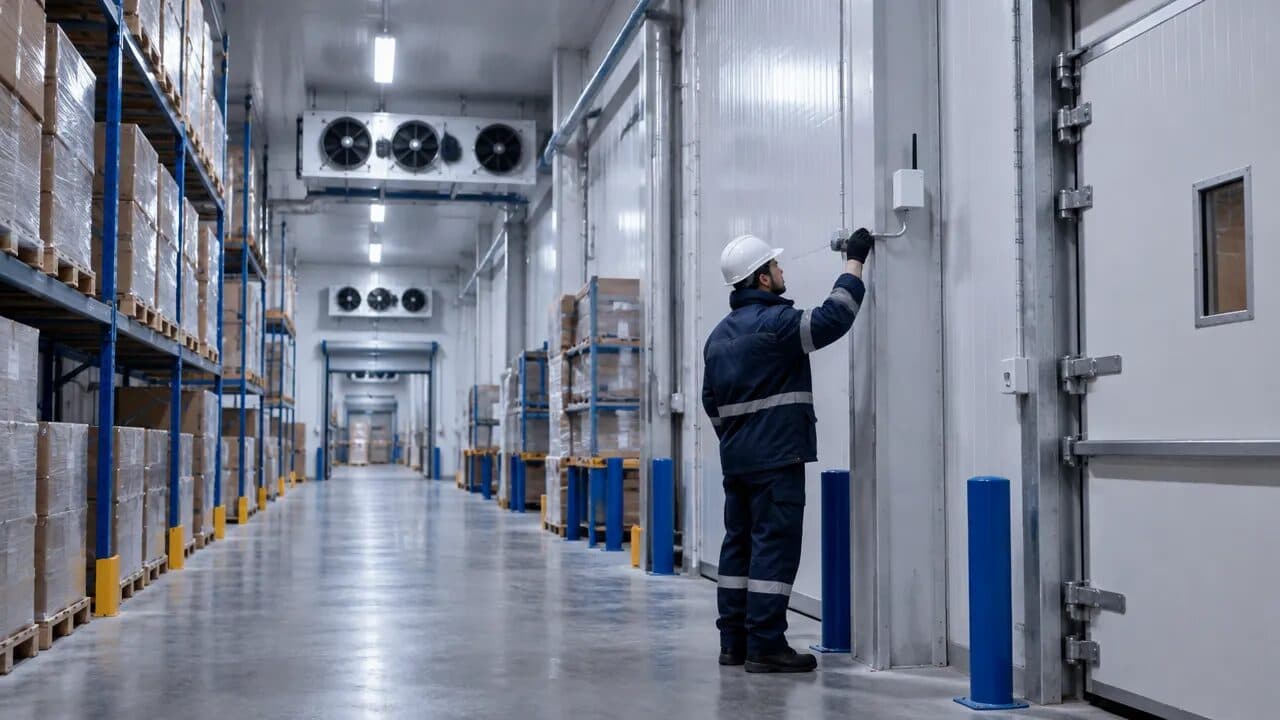
In a distribution center, a manual round may require long distances between cold chambers, reading displays, and filling out paper forms. Automatic monitoring shortens observation gaps, but frequent readings alone do not anticipate equipment failure. To do so, you must correlate thermal trends to equipment behavior.
What changes when rounds generate continuous data
- Automatic readings reduce gaps between checks, but do not replace physical inspections.
- Chamber average temperature can mask temperature spikes and differences between measurement points.
- Temperature, door opening, electrical current, cycles, and defrost must be analyzed together.
- Storing data during a connectivity loss does not guarantee that remote alerts will continue to arrive.
Manual rounds leave periods without observation
A paper record captures the condition found at the moment of inspection. If the team passes by a chamber every several hours, a change that begins shortly after inspection can remain invisible until the next check.
In distribution centers with large distances between areas, the round also consumes travel time. Manual recording makes it difficult to consistently compare each chamber's trend across shifts and days. Automatic readings improve temporal resolution and facilitate this comparison, but they first answer one question: what happened to the temperature?
High temperature detects the effect, not necessarily the cause
A gradual rise may indicate that the chamber is losing refrigeration capacity. Consider a hypothetical example: after a period of stable operation, temperature begins to rise even with the door closed. The limit alarm detects the thermal consequence; predictive analysis attempts to recognize earlier changes in refrigeration system operation.
This distinction matters for operational response. An alarm confirms that the monitored condition reached a configured threshold. Failure anticipation seeks a combination of signals that deviates from the equipment's normal pattern before the excursion occurs. No single sensor alone confirms that the compressor failed or identifies the cause.
Average temperature can hide a local peak inside the chamber
An average value summarizes readings but can erase brief highs and differences between points. The area near the door, a corner with restricted air circulation, and the area near the evaporator may show different behaviors. A single measurement point does not necessarily describe the entire thermal load.
Sensor placement must start with thermal mapping of the chamber and the measurement purpose. It is worth recording which points are monitored and comparing trends by chamber, rather than mixing readings from locations with different conditions. This practice helps the team distinguish a localized variation from a change affecting the equipment as a whole.
Temperature, door, current, and defrost tell different parts of the story
Analysis becomes more informative when it correlates variables from the same asset. Temperature history describes the thermal result, while door opening, electrical current, and operation cycles help contextualize how the system reached that result.
- Temperature: shows the trend and differences between mapped points.
- Door opening: helps distinguish air entry associated with operation from a rise without recorded opening.
- Electrical current: indicates changes in the equipment's electrical behavior, without diagnosing a failure on its own.
- Cycles and defrost: provide context to understand operation periods and expected thermal variations.
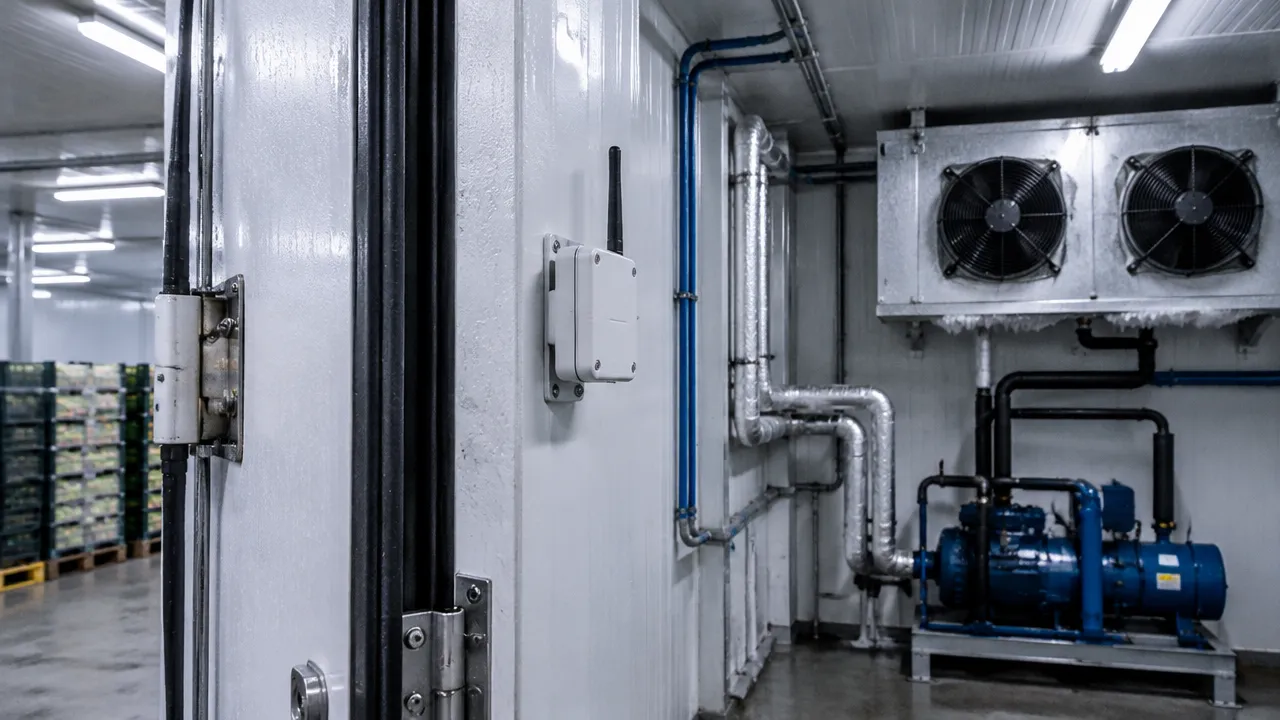
A current increase can have more than one explanation; an open door may explain a point thermal change, but not every persistent shift. The value lies in the combined pattern and comparison with that equipment's history.
How DROME architecture correlates readings and asset behavior
The STE Satellite Sensor measures temperature, while the SDT monitors electrical current and door opening. The CTD Concentrator receives readings and communicates with the cloud; its temporary storage keeps collected data available when connectivity is interrupted.
In the cloud, DROME Predict analyzes multiple parameters from the same asset. The platform provides a 30 to 60-minute anticipation window for patterns consistent with failures, but this interval does not apply to every occurrence. It depends on available signals and observed behavior; it is not a guarantee of advance notice for any defect.
Local storage and remote alert are distinct functions. The CTD can retain readings for up to 20 days, per specification, but remote notification delivery depends on an available communication route. Therefore, contingency testing must verify both data recovery and alert receipt during a connectivity loss.
The pilot must test coverage and response flow
A well-evaluated deployment verifies system behavior in the real environment, not just sensor reading on a bench. Metal structures, insulated walls, doors, and distance to the CTD Concentrator can affect radio communication; it is worth testing coverage at the points where sensors will be installed.
It is also advisable to define operational criteria before the pilot and record results:
- Collection interval appropriate to thermal inertia and team response time.
- Time between event identification and notification received by the responsible party.
- Responsible parties by shift, escalation when no confirmation occurs, and record of actions taken.
- Calibration with documented traceability and recoverable evidence for audit.
In food logistics, limits and procedures must match the product, process, and rules applicable to the operation. Pharmaceutical requirements should not be automatically transferred to food chambers. Thermal history remains useful, but its interpretation depends on the context of each installation.
Anticipation begins with failure modes in the operation
More readings show better when thermal condition changed. Prediction adds another layer: it seeks signals before the change and relates them to equipment operation. To evaluate this difference in practice, it is worth mapping assets, relevant failure modes, and the path between an alert and shift action.
DROME can help evaluate this design together with your team, considering assets, radio coverage, and expected responses for each failure mode.
Frequently asked questions
Does remote monitoring replace manual rounds in cold chambers?
No. Rounds remain useful for checking physical conditions, hygiene, organization, and visible signs of failure. Automatic reading reduces time between observations and helps locate deviations, but does not replace inspections that depend on a person's presence. The appropriate design combines both methods according to operation risks.
What should the temperature collection interval be?
There is no single interval that works for every chamber. Collection must consider the thermal inertia of the space, expected variation during operation, and time needed for a team to act. It is also worth evaluating whether the interval allows perceiving relevant trends without leaving gaps incompatible with product risk.
How do you differentiate a thermal excursion from a predicted failure?
An excursion shows that temperature exceeded a defined limit. A failure prediction seeks earlier signals in equipment behavior, such as changes in compressor current and operation cycles, related to thermal evolution. A single signal may justify verification, but does not alone confirm the cause or failure.
Do remote alerts continue during a connectivity loss?
The CTD Concentrator can temporarily store collected readings, but this does not guarantee that an alert arrives remotely during the interruption. For that, the communication route must remain available. Contingency testing should separately verify local data retention and notification delivery to the team.
Read next
Cold Chain in Customs Warehouses: Thermal Control
Learn where thermal gaps emerge in customs facilities, how to measure near cargo, respond to deviations, and maintain traceable evidence for…

Nine Reasons to Adopt Digital Twins in Cold Chains in 2026
Discover how digital twins anticipate failures, improve monitoring, and reduce losses in cold chains in 2026.

Building Teams for Effective Cold Chain Management
Learn how to assemble qualified teams, define roles, and implement controls to ensure cold chain integrity.