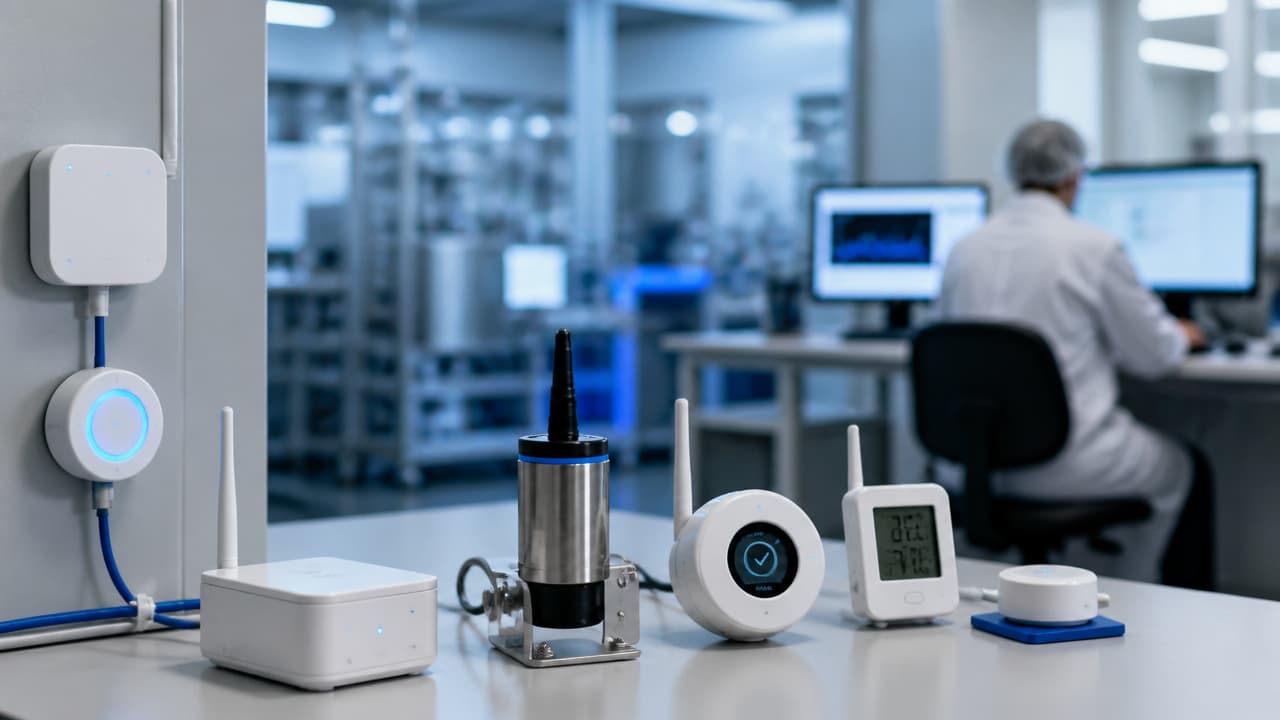
Managing connected sensors without overloading IT depends on a simple shift in logic: inventory cannot be treated as a list of equipment, but rather as a continuous operational process. This is especially true for hospitals, laboratories, pharmaceutical companies, and other critical operations, where each sensor influences compliance, availability, and risk response. When registration, context, and monitoring are integrated, the technical team stops firefighting and starts acting by priority.
In practice, the goal is to reduce manual work, eliminate loose registrations, and create useful visibility for decision-makers. This is where platforms like DROME gain relevance, by combining telemetry, continuous monitoring, and intelligence applied to asset behavior.
Highlights that truly relieve IT
- Good inventory is living inventory: it changes with installation, replacement, calibration, failure, and disposal.
- Standardization beats volume: incomplete registration multiplies tickets, verifications, and rework.
- Criticality matters more than quantity: not every sensor deserves the same level of attention.
- Automation reduces manual support: onboarding, status updates, and alerts should emerge from operational workflow.
- Integration creates context: a sensor without links to environment, asset, and responsible party becomes loose data.
- AI makes a difference when there is history: with a consolidated database, it is possible to predict deviation, failure, and intervention needs.
The most common mistake is treating sensors as spreadsheet items
If inventory lives in spreadsheets, IT inevitably becomes a registration, reconciliation, and correction hub. This model works in small operations, but loses value as the base grows, sensors change locations, and different teams depend on the same information. The result is simple: the technical team maintains records instead of sustaining operations.
The most efficient path is to register each sensor with operational context. This includes where it is, what it protects, what risk it monitors, who is responsible for it, and what condition requires action. Without this link, the company knows the sensor exists, but does not know the impact of a failure.
Standardizing registration is what prevents future overload
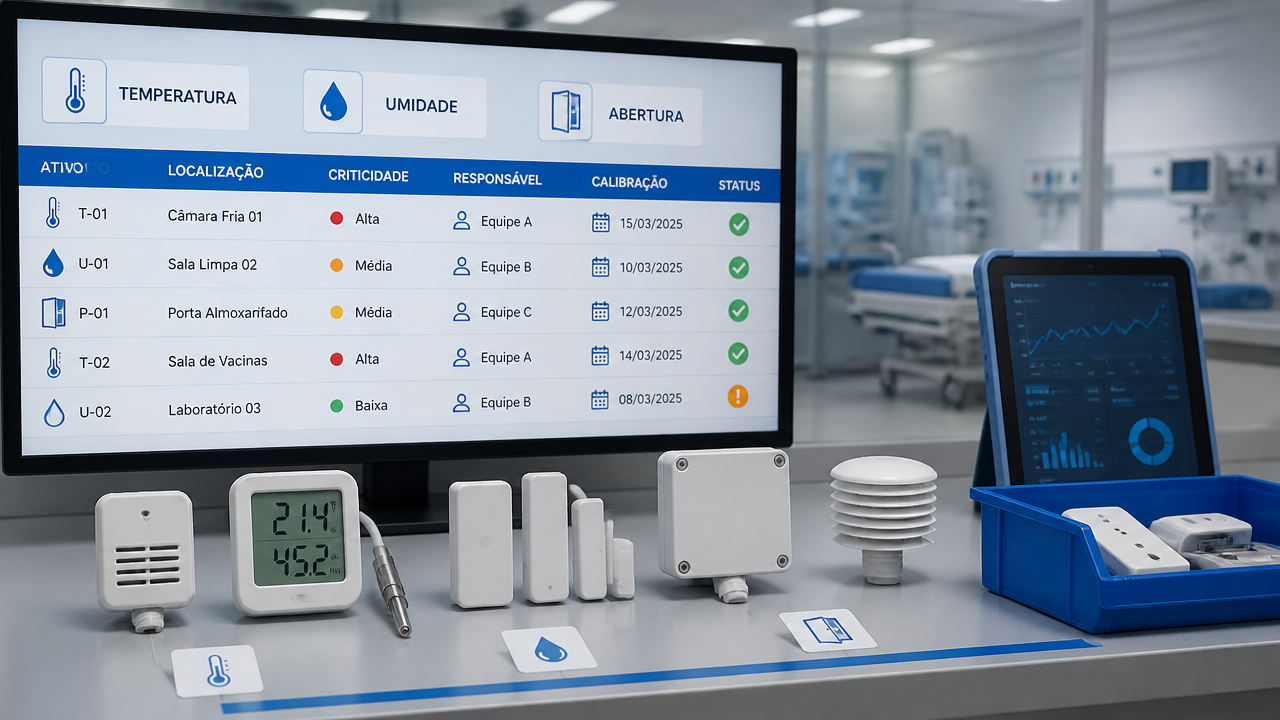
The best way to relieve IT is to prevent bad data entry. A minimum registration standard avoids repeated tickets, naming divergence, and loss of traceability. If each area names sensors differently, no dashboard delivers confidence.
A practical registration structure should quickly answer these questions:
- What is the sensor's unique identifier?
- In what environment and asset is it installed?
- What variable does it measure?
- What is the operational criticality of this point?
- Who is the local responsible party?
- When was calibration, replacement, or last verification performed?
- What is the current connectivity and battery status, if applicable?
When this model becomes standard from installation onward, IT stops correcting exceptions constantly. Operations gain consistency, and audits become faster.
How to organize inventory without centralizing everything in the IT team?
The answer is to distribute responsibility with clear governance. IT should not own every operational update, but rather the architecture, integration, and quality rules. Whoever installs, moves, replaces, or validates a sensor must participate in the data lifecycle.
It works better when each area assumes an objective role:
| Area | Main role |
|---|---|
| IT | Standardization, integrations, security, permissions, and database reliability |
| Operations | Use confirmation, local context, and monitored asset impact |
| Maintenance or engineering | Installation, replacement, calibration, and technical history |
| Quality or compliance | Evidence rules, traceability, and audit |
This structure avoids the classic bottleneck: every change falls on a single team, which receives simple but constant requests. Good governance does not add bureaucracy; it removes dependency.
Lifecycle automation is what transforms inventory into a system
If sensor inclusion and removal depend on manual ticket opening, inventory ages quickly. The ideal is for entry, movement, maintenance, and removal to generate automatic or semi-automatic updates. This reduces registration delays and provides predictability for operations.
In practice, automation can start with modest steps:
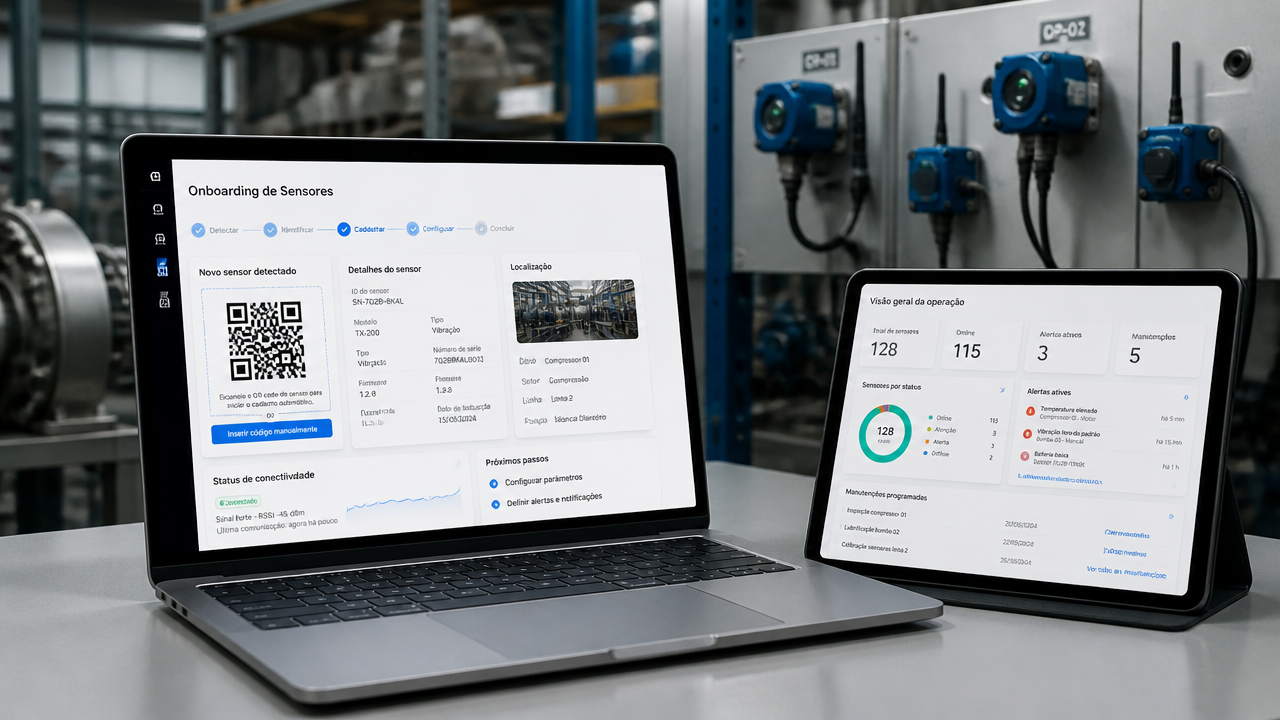
- use QR code or unique label at installation time;
- apply templates by sensor type and environment;
- synchronize connectivity status with the asset database;
- create alerts for calibration, battery, inactivity, or replacement;
- record every change with responsible party, date, and reason.
This type of workflow reduces the need for manual verification and improves data confidence. With DROME, for example, value grows when inventory communicates with continuous monitoring and the environment's operational history.
Which sensors deserve more attention first?
Not every sensor needs the same care, and this is a decisive point to avoid suffocating IT. Prioritization should follow process risk, not just the quantity installed. Sensors linked to cold chain, supply storage, biomedical equipment, and controlled rooms deserve stricter policy than peripheral points.
A simple way to prioritize is to cross three criteria:
- operational impact, what stops if the sensor fails;
- regulatory impact, what evidence must exist for audit;
- care or productive impact, what damage can occur if deviation goes unnoticed.
With this, inventory stops being a homogeneous list and starts guiding effort. The team concentrates energy where minutes truly make a difference.
What is the difference between sensor inventory and monitoring?
Inventory answers what exists, where it is, and in what formal condition the asset is. Monitoring answers what is happening now. When these two worlds stay separate, gaps emerge: a sensor appears active but is inactive; another is transmitting but without sufficient traceability.
The real gain appears when the layers unite. DROME works exactly at this point by transforming continuous data into decision context. Instead of just listing sensors and triggering alerts, operations start recognizing patterns, identifying anomalies, and acting before a problem compromises sensitive stock, equipment, or critical environments.
AI helps reduce operational load, not create more complexity
There is a common misconception that artificial intelligence adds a new layer of work. In mature operations, the opposite occurs. When consistent history exists, AI helps highlight relevant exceptions, predict failures, and suggest priority, sparing the team from reviewing everything manually.
This is especially useful when the sensor base grows. Instead of monitoring item by item, IT and operational areas receive context: which points show anomalous behavior, which assets require intervention, and where risk tends to emerge before the critical alarm. Inventory then stops being a passive archive and becomes part of the preventive response.
Frequently asked questions
What is an inventory management system?
An inventory management system is the layer that registers, organizes, and updates data for each asset throughout its lifecycle. In the case of connected sensors, it must bring together identification, location, firmware version, criticality, calibration, connectivity, and operational responsible party in a single reliable workflow.
What are the pillars of inventory management applied to connected sensors?
The pillars change according to operations, but a practical structure includes reliable registration, real-time visibility, change governance, and replacement or maintenance based on criticality. Without these four elements, the IT team becomes manual support for spreadsheets, tickets, and verifications that could be automated.
What are the most common types of sensors in a connected operation?
The most common types in critical environments include temperature, humidity, door/window, pressure, and presence sensors. The central point is not just listing the physical type, but relating each sensor to the risk it monitors, the asset it protects, and the response priority when failure or deviation occurs.
What is the difference between sensor inventory and monitoring?
The difference lies in each one's role. Inventory shows what exists, where it is, and in what condition it operates. Monitoring tracks behavior in real time. When the two systems work together, the company stops just locating sensors and starts anticipating failures, gaps, and operational risks.
How to standardize sensor registration without creating more work for IT?
Standardization depends less on technology and more on clear rules. Define a mandatory model for name, location, monitored asset, criticality, calibration frequency, owner, and connectivity status. Then automate the filling whenever possible, using QR code, templates, and integrations to reduce human error.
Read next

IoT Sensors to Anticipate Microbiological Risk
See how environmental IoT sensors help hospitals, laboratories, and industries anticipate microbiological risk and act before failure occurs…

Five Factors Affecting IoT Humidity Sensor Lifespan
Learn the key factors impacting IoT humidity sensor durability and how to ensure continuous accuracy.

Autonomous Sensor Maintenance: Key Questions Answered
Get answers on calibration, cleaning, lifespan, and replacement of autonomous sensors in advanced industrial monitoring.