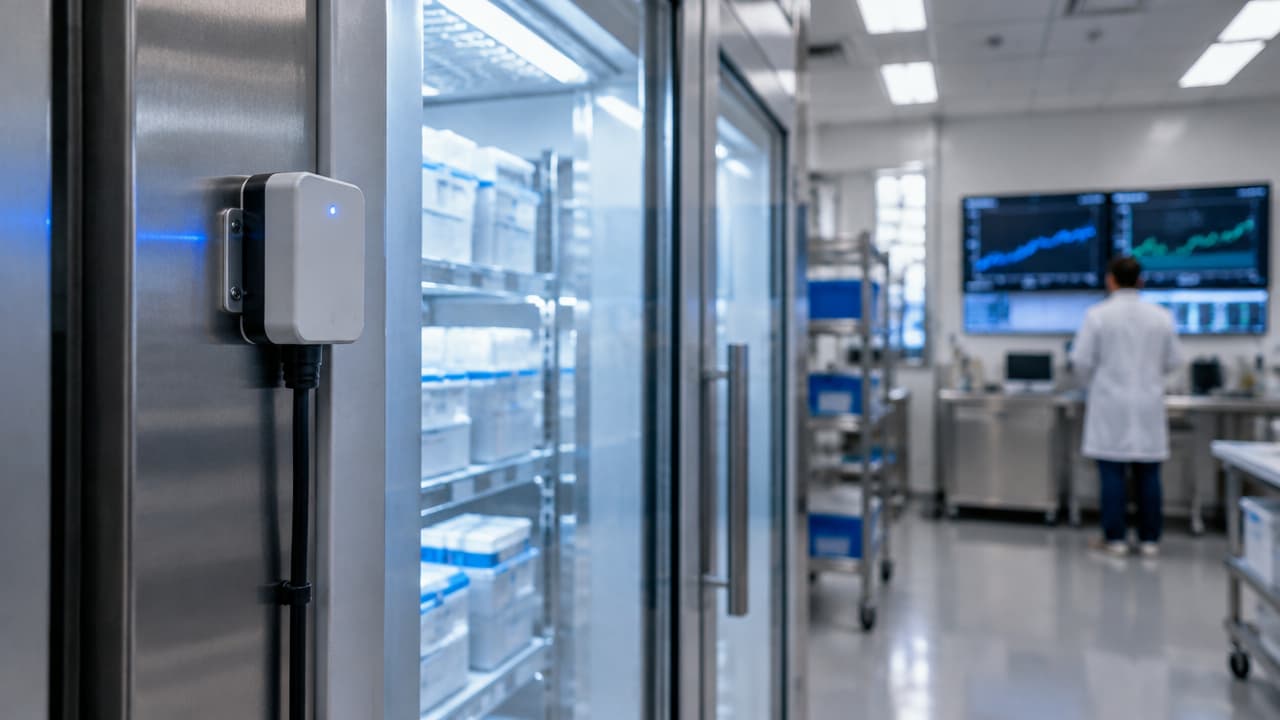
When a sensor registers a change, someone still needs to receive the data, understand what occurred, and decide whether to act. Telemetry connects these steps: it measures variables at a remote point, transmits the readings, and allows analysis without requiring a person beside the equipment. For engineering, maintenance, and quality, the value lies in transforming these measurements into a useful decision, with timestamp, context, and accountability.
What you need to know about telemetry
- A telemetry system combines measurement, transmission, storage, and data interpretation.
- Communication can use cable, Wi-Fi, cellular network, radio, or other technologies. The choice depends on location, available power, and data volume.
- A remote reading is not automatically a useful alert. You must define thresholds, data quality, and who responds to each event.
- Tracking reports location; telemetry can also measure temperature, pressure, consumption, vibration, and other asset conditions.
- In critical environments, calibration, communication failure logging, and audit trails are part of system design.
Telemetry is remote measurement with data transmission
Telemetry is the collection of measurements from equipment or a location and the transmission of that information for remote analysis. A sensor can record temperature in a cold chamber, pressure in a gas line, or electrical current in a motor. The team reviews the data from another location without needing to visit each instrument to read the display.
The term itself does not determine what will be measured or what happens with the reading. One system may only store values for later review. Another may compare current behavior against an operational range, alert a team, and maintain a history for investigation.
Therefore, telemetry is not synonymous with continuous monitoring, although many platforms do both. Telemetry is the path that carries measurement to a system; monitoring involves tracking that information and defining how to respond to it.
A telemetry system transforms physical signals into operational information
The most common path starts at the measurement point and ends at a screen or alert received by a person. Each step can introduce delay, error, or loss of context. To evaluate a system, it is worth understanding the complete path, not just the sensor datasheet.
- Measure: a sensor detects a quantity, such as temperature, pressure, humidity, or current.
- Transmit: a device sends the reading over a wired or wireless network, directly or through a gateway.
- Record: the platform associates value, timestamp, equipment, and source, and stores the history.
- Analyze: rules or models compare the reading against thresholds and expected patterns.
- Act: the team receives an alert, verifies the cause, and documents what was done.
A reading of 8 °C says little without knowing which equipment produced it, when the sensor recorded it, and what range that process requires. Context transforms an isolated number into operational evidence.
The sensor and gateway must match the process
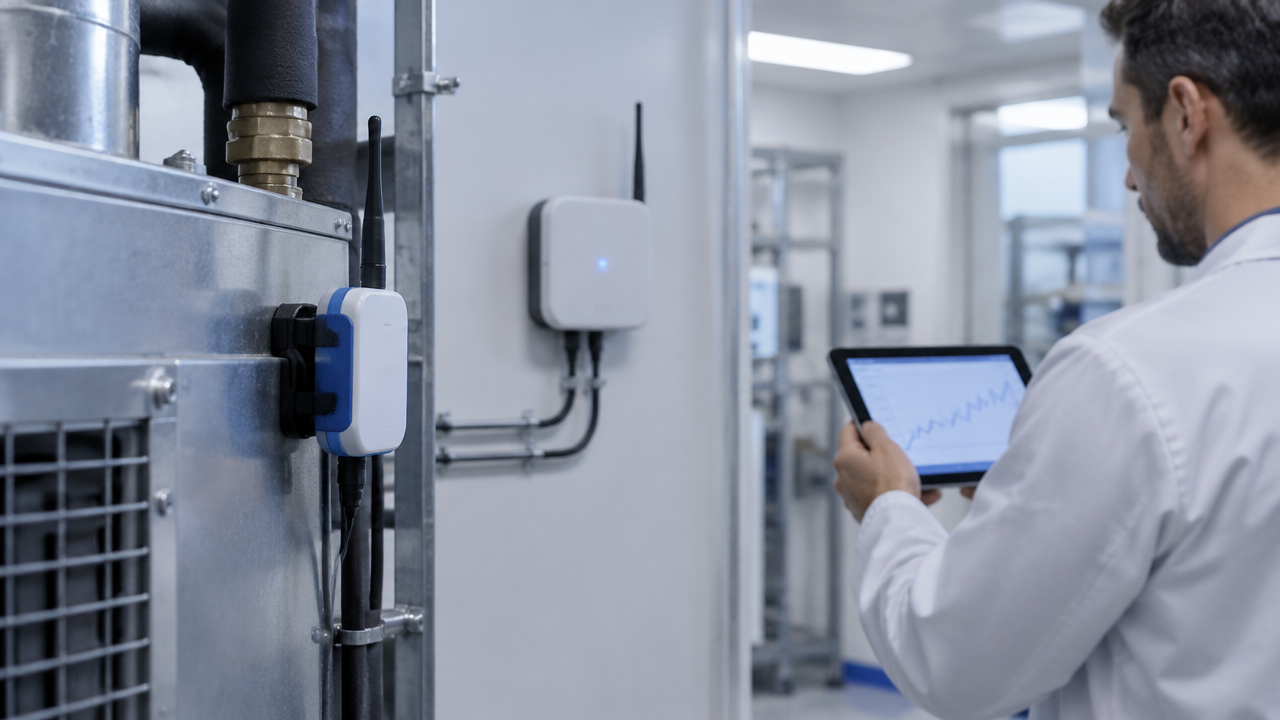
The sensor must measure the correct quantity, within the required range and accuracy. A temperature probe installed far from the critical point may record a condition different from the one that matters for the product. Installation type, air circulation, door position, and calibration procedure also affect the reading.
The gateway, when present, receives data from one or more sensors and forwards it to the platform. It can temporarily store readings when the external connection drops. This feature prevents a network interruption from erasing the history, but the team still needs to know that a communication failure occurred and for how long the equipment was without transmission.
When evaluating telemetry equipment, verify electrical compatibility, measurement range, installation method, battery life, physical protection, calibration, and how to validate the signal after installation. An installation may be simple and cable-free, but still requires a plan for battery replacement, inspection, and alarm testing.
The network should be chosen based on site conditions
No single communication technology works best for all locations. Distance, walls, power availability, coverage, message size, and connectivity cost change the choice. First define the operational need; then choose the network that can meet it.
| Technology | Where it may make sense | What to verify |
|---|---|---|
| Wi-Fi or Ethernet | Locations with available network and stable infrastructure | Coverage, security policies, and dependence on local network |
| Cellular network | Remote or distributed points without adequate local network | Signal at installation point, data plan, and contingency |
| Long-range radio | Sensors that need to send short messages to a gateway | Physical obstacles, interference, and actual range in building |
| Bluetooth Low Energy | Proximity, identification, and indoor asset location | Receiver density, obstacles, and required accuracy |
At DROME, the Satellite Sensor uses LoRa at 915 MHz and has a reported battery life of up to 12 months, with range up to 2 km under suitable conditions. The CTD Concentrator combines interfaces such as Wi-Fi, Ethernet, BLE, LoRa, cellular modem, and Modbus; its local buffer can store data for up to 20 days. Performance on-site depends on installation, obstacles, and network configuration.
Telemetry and tracking answer different questions
Tracking primarily answers where an asset is located. Telemetry answers how it is operating, with measurements such as temperature, speed, pressure, or consumption. A system can combine both functions, but GPS coordinates alone do not describe the mechanical or environmental condition of equipment.
In a fleet, for example, location can show a vehicle's route, while speed, braking, and engine temperature data help interpret its operation. Video telemetry combines recordings with vehicle data and corresponding timestamps, allowing review of an event alongside recorded conditions. Video adds visual context but does not replace sensors or prove, by itself, the cause of a failure.
The term also appears in medicine to describe remote monitoring of cardiac signals. This clinical use refers to patient data and should not be confused with telemetry of equipment, cold chambers, and hospital infrastructure.
Useful data depends on timestamp, calibration, and continuity
A series of readings may appear complete and still lead to a wrong decision. A clock out of sync scrambles the sequence of events; an uncalibrated probe may maintain a bias; a long interval between samples may hide a brief excursion. These issues affect both immediate response and later analysis.
For critical equipment, the team must define read frequency based on how quickly the condition can change and the time available to respond. It is also worth confirming whether the platform distinguishes absence of transmission from a normal reading. "No data" does not mean "within range".
In regulated environments, records with timestamp, equipment identification, change history, and traceable calibration help support an investigation or audit. System validation and access controls must reflect intended use and applicable requirements, such as 21 CFR Part 11 or ANVISA standards when applicable.
The same architecture serves sectors with different measurements
Industrial telemetry can track temperature, vibration, pressure, current, and operating hours of machines. When data is related to failure history and working conditions, maintenance can prioritize inspections by observable signals rather than relying solely on calendar or an already-occurred failure. In agriculture and automation, distributed sensors can record soil conditions, climate, or equipment operation across large areas.
In water and sanitation, a water meter with telemetry sends consumption readings without depending on on-site reading of each meter. The time sequence can help locate abnormal consumption changes; leak confirmation still requires investigation and context interpretation. In energy, electrical telemetry measures variables such as voltage, current, and power in panels, generators, or circuits, giving the team data to examine loads and events.
In information technology, the term describes collection of metrics, events, and logs from applications and infrastructure. The measured object changes, but the question remains similar: what occurred, in which system, at what time, and with what effect on operations?
In hospitals, telemetry also monitors infrastructure
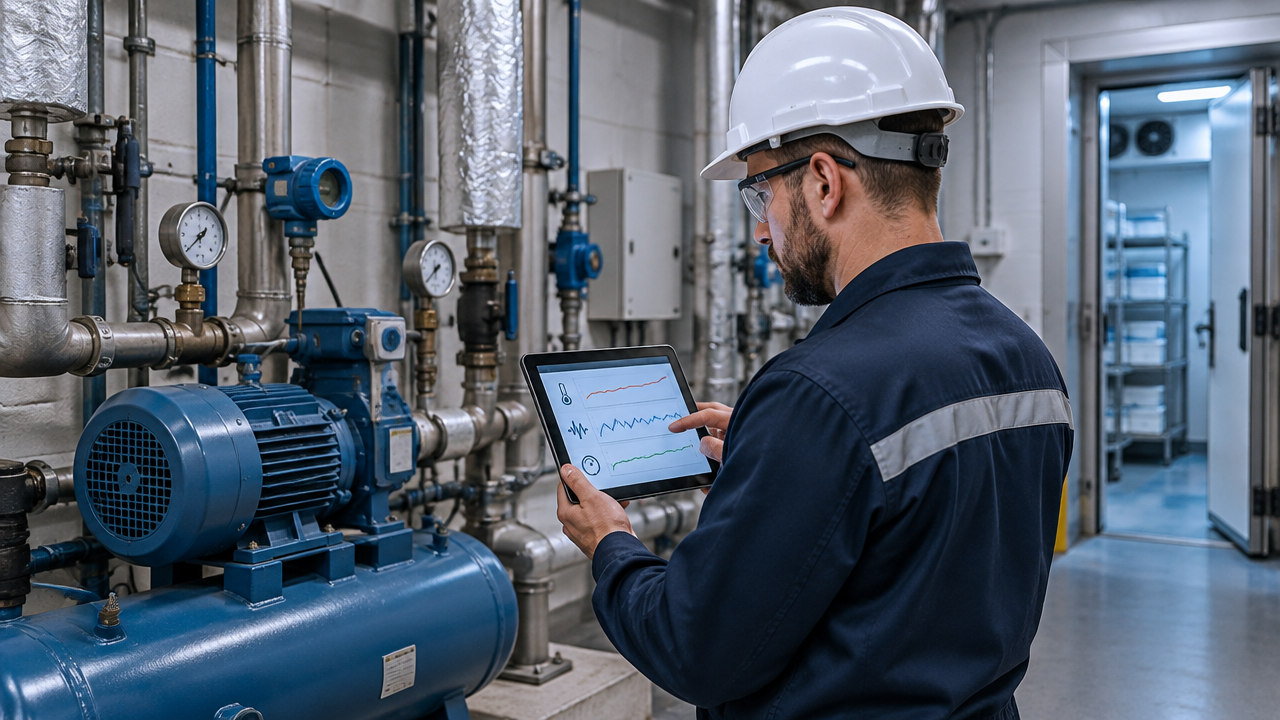
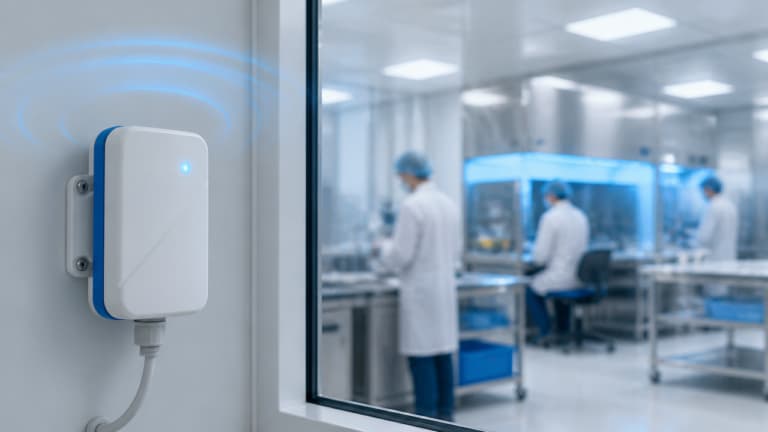
Hospital telemetry can track medication refrigerators, cold chambers, ultra-freezers, medical gases, differential pressure, and support equipment. The pharmacy, clinical engineering, or maintenance team receives evidence about asset conditions without depending on frequent rounds to read each display.
A reading outside range requires more than a notification. The on-call staff needs to know which equipment triggered the alert, which rule was violated, how long the condition has persisted, and which local procedure applies. If the connection drops, the system should preserve readings locally and indicate the interruption, so the team does not confuse lack of communication with normal operation.
At DROME, Satellite Sensor variants measure temperature, humidity, pressure, medical gases, flow, current, and door opening, depending on model and application. The CTD Concentrator forwards readings and maintains a local buffer. The platform can send alerts via WhatsApp, SMS, email, or voice, according to team escalation configuration.
Predictive analysis attempts to recognize changes before failure
A threshold alarm warns when a variable crosses a set value. Predictive analysis looks for signals before failure, comparing current behavior against historical patterns. It can gain time when the symptom appears in more than one quantity, such as rising temperature along with current change or compressor vibration.
This does not eliminate the need to validate the alert. The model depends on representative data, correctly installed sensors, and a clear way to investigate false positives and missed failures. The team must receive probable cause and recommended action as verifiable operational hypotheses, not as substitutes for technical diagnosis.
DROME Predict crosses more than 15 quantities from the same asset and was trained on 450,000 labeled real failures. Depending on configuration and equipment, it can issue alerts 30 to 60 minutes before failure, indicating probable cause and corrective action. This interval serves to organize a response; it is not a guarantee that every failure will have advance warning.
Choose the system based on what your team needs to decide
Before comparing sensors or dashboards, describe the decision each reading should support. For a cold chamber, it may be necessary to identify a trend toward range excursion before the product is affected. For a compressor, it may be more useful to recognize a behavior change that justifies inspection before shutdown.
- Define the quantity, range, and physical measurement point.
- Establish read frequency and maximum acceptable time to receive an alert.
- Decide how the system records interruptions, missing readings, and configuration changes.
- Associate each event type with a team, procedure, and response record.
- Test the complete flow, including network loss, escalation, and data recovery.
Well-specified telemetry reduces the distance between a change in equipment and a verifiable action. To start, select a critical asset, document the decision that needs to be made, and test the data path to the on-call team before expanding the installation.
Read next
Connected Sensor Inventory Without IT Overload
Learn how to organize connected sensors with standardization, automation, and criticality focus, reducing rework and pressure on IT teams.
IoT Sensors to Anticipate Microbiological Risk
See how environmental IoT sensors help hospitals, laboratories, and industries anticipate microbiological risk and act before failure occurs…

Five Factors Affecting IoT Humidity Sensor Lifespan
Learn the key factors impacting IoT humidity sensor durability and how to ensure continuous accuracy.