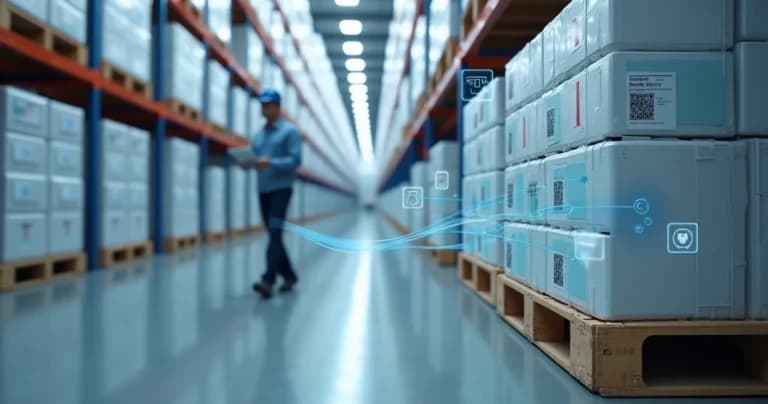
As I observe the evolution of critical environments over recent years, I see a more demanding scenario taking shape through 2026, especially when discussing controlled supplies tracking. In this universe, simple control is insufficient. Traceability has become indispensable—not only to comply with regulations and avoid penalties, but to sustain operational confidence and ensure reliable results, particularly in hospital, laboratory, and pharmaceutical sectors.
Why will controlled supplies tracking gain such prominence?
From my experience, situations involving cold chain disruption, equipment failures, or minor environmental variations can generate losses for institutions and put lives at risk. One of my greatest learnings was understanding that risk anticipation is the difference between stable operations and irreversible loss.
Detailed supplies tracking is no longer merely a regulatory requirement. It has become a competitive differentiator. In the hospital and pharmaceutical universe, simple errors—such as failing to quickly identify an anomaly in medication refrigerators—can compromise months of work, generating financial losses and reputational damage.
Technical and regulatory challenges on the 2026 horizon
I am attentive to the fact that requirements for controlled supplies tracking will likely become even more stringent. Regulatory bodies like ANVISA have been tightening standards for storage, transport, and use of sensitive substances.
- Traceability reports must be nearly instantaneous.
- Digital audits are becoming more frequent, and information interoperability between systems and suppliers has become mandatory.
- Sensors must capture precise data on location, temperature, and integrity.
- Data must be secure, auditable, and available in real time, without risks of loss or alteration.
This regulatory pressure is mounting, and companies can no longer wait for problems to occur before acting—reaction time is no longer sufficient.

Transformation through AI and continuous monitoring
What strikes me most when comparing solutions for supplies tracking is how technology, especially artificial intelligence, changes the game. With DROME, for example, I see real advantage in transforming data into early alerts and practical recommendations—something traditional systems don't offer.
I have observed competitors betting solely on reactive monitoring. They alert when a door was left open or temperature is out of range. But in these situations, much of the damage is already done. DROME's differentiator is anticipating risks. The company's solutions use advanced telemetry, learn from histories of thousands of sensors, recognize patterns, and alert before problems occur.
Acting before the problem is the new safety standard.
Whenever I participate in technical discussions or speak with professionals in hospital and pharmaceutical fields, I emphasize this shift in perspective: you cannot rely solely on late notifications. Machine learning integrated into DROME makes the difference because the more data it processes, the smarter its prediction of equipment failures, environmental variations, and potential supplies deviations becomes.
How to ensure complete supplies control?
I share below some practices I consider important for those wanting to anticipate 2026 challenges:
- Choose a solution that unites high-precision sensors, secure data storage, and analytical intelligence, like what DROME delivers.
- Invest in telemetry for data capture, not only at fixed points but throughout the entire logistical cycle of supplies.
- Adopt automated reporting and inspection routines, preferably integrated with standards required by regulatory bodies. I recommend content on ANVISA inspection reports to start down this path.
- Use artificial intelligence to predict failures, automate alerts, and provide proactive recommendations, moving away from reactive approaches.
- Ensure real-time traceability, especially for sensitive supplies that comply with rigid regulations. There are detailed tips on this in the article on best practices in real-time tracking.
I believe that investing in these practices is what separates companies ready for the future from those that will still face difficulties when oversight increases in 2026.
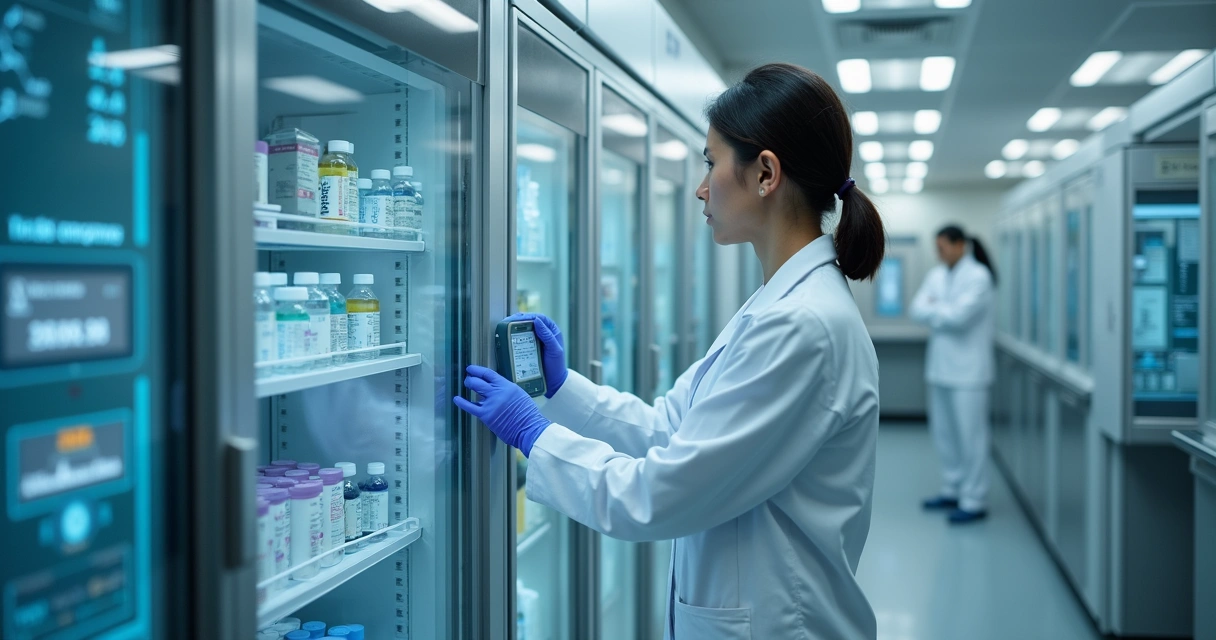
Intelligent tracking and systems integration
I cannot overlook the role of emerging technologies in integrating intelligent tracking and cold chain management. When studying solutions like blockchain combined with artificial intelligence, I see a new layer of security and trust, especially for storage and transport of pharmaceutical supplies. This topic is well explored in the article on intelligent tracking with AI and blockchain.
Intelligent solutions allow recording and auditing each step of the chain of custody; any adjustment or deviation can be validated, tracked, and corrected in real time. This brings transparency to operations and drastically reduces risks of fraud or unidentified losses.
Real impact on hospital and laboratory routines
During my visits to hospitals and laboratories, I have already seen cases where lack of automation in maintenance cycles caused sensor failures or monitoring interruptions. This showed me that relying on manual processes is betting on uncertainties. Today, I strongly advocate for automated routines for sensor maintenance and calibration, reducing human errors and ensuring that traceability is never interrupted. For those wishing to advance on this topic, there is a practical roadmap on automating maintenance cycles available.
Real traceability exists only with automated maintenance.
The importance of a robust cold chain checklist
I have seen that a structured checklist prevents errors in hospital cold chain, which is one of the most sensitive areas for controlled supplies tracking. Details such as real-time recording, audit compliance, and safety practices are differentiators that can be decisive. I recommend consulting the checklist for implementing cold chain without failures to ensure every requirement.
A well-developed checklist is a shield against unforeseen events and operational failures.
The future of tracking in 2026: anticipatory action and data confidence
Looking toward 2026, I can only think of one scenario: whoever anticipates ensures operational peace of mind and market credibility. I see that DROME already delivers this standard by uniting AI, telemetry, and integration—far beyond what other sector solutions can achieve. Small details, automated maintenance, end-to-end auditable data, integrated reports make the difference.
The future belongs to those who decide to act before risk becomes incident.
If you want to transform controlled supplies management, I invite you to learn more about DROME's solutions. Anticipate 2026 challenges and strengthen the security of your processes.