
Imagine a hypothetical scenario: a raw material passes identity and assay testing, but storage documentation shows a gap during part of a weekend. The gap does not prove the material deteriorated, but it leaves quality without sufficient evidence to reconstruct storage conditions. The decision to release the batch requires evaluating this point separately from analytical results.
For quality assurance, storage, and maintenance, the practical distinction is this: a conforming assay describes what was analyzed; thermal history documents the conditions to which the batch may have been exposed; and record integrity sustains confidence in that documentation.
Key points that define a defensible evaluation
- Missing records and thermal excursions are different occurrences requiring distinct investigations.
- A conforming analytical result does not reconstruct a period without storage data.
- The decision considers possible duration, applicable limits, and product stability data.
- Routine monitoring, failure anticipation, and document validation serve different functions.
How incomplete records affect batch decisions
A gap reduces the ability to demonstrate storage history, but it does not equal a measurement outside limits. An excursion, by contrast, indicates that a limit was exceeded during a known or estimated period. Confusing the two can lead to either unjustified rejection or release with insufficient evidence.
A conforming analytical result also has limits. It reports on attributes tested in the sample, but it does not replace evaluation of exposure over time or prove that the record remained intact. For a raw material or finished product, quality must establish which equipment and location were involved, when the batch was there, and what exposure interval is plausible.
There is no universal temperature or humidity range applicable to all medicines. Evaluation must use limits defined for the product and process, plus relevant stability data. If the gap duration is unknown, document that uncertainty rather than treating it as a confirmed excursion.
What evidence helps respond to an audit
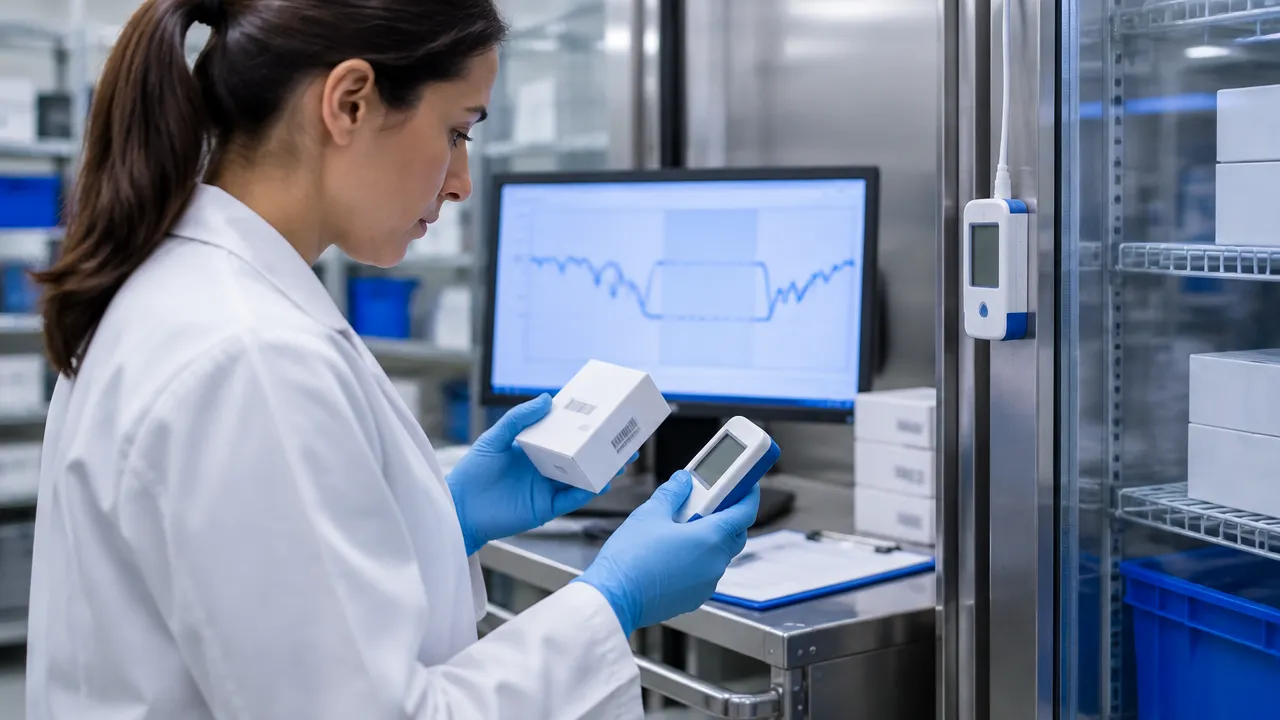
A defensible trail connects the data to location, equipment, and the batch's period of presence. For this reason, an isolated graph is insufficient: the team must verify how the measurement was obtained, preserved, and associated with the stored material.
Thermal mapping guides sensor placement by identifying variations within the chamber and zones that may not represent average conditions. Acquisition frequency should be defined according to risk, equipment behavior, and required response time. Traceable calibration and unambiguous identification of the measurement point help interpret values.
During audit, also check access controls, audit trails, data retention, and recovery. The team must be able to retrieve original records, link batches to location and exposure period, and verify alarms and interventions. Record whether there was sensor failure, power interruption, maintenance, or configuration change.
How to investigate a gap or excursion without presuming the outcome
The response begins with evidence preservation and interval delimitation. Quality must separate what was measured, what can be reconstructed from independent records, and what remains unknown.
- Preserve available original records and note the source of each datum used in the investigation.
- Check calibration, alarms, interventions, maintenance, and any collection or communication interruptions.
- Identify potentially affected batches, storage location, and possible exposure period.
- Evaluate duration, applicable limits, and stability data for the material or product.
- Document the impact assessment, uncertainties, and the final quality decision.
RDC 658/2022 addresses Good Manufacturing Practices for medicines; apply its requirements within the scope pertinent to your operation. Consult the official RDC 658 publication and verify the validity and scope of applicable documents before converting guidance into a process requirement. ANVISA Guide 33 should also be interpreted according to the topic and version that applies.
When provided for by the quality system, document IQ, OQ, and PQ according to approved protocols and validate computerized systems in accordance with their use and risk. 21 CFR Part 11 applies only when the regulatory context requires electronic records under FDA jurisdiction; it is not a Brazilian standard nor does it guarantee, by itself, audit approval.
The difference between reactive alerts and anticipating failure
A reactive alarm signals a detected condition, such as temperature outside the configured limit. Anticipation seeks changes in equipment behavior before it fails. This difference may provide time to inspect a compressor, but it does not transform a failure prediction into proof that the product remained within limits.
In the DROME architecture, the STE Satellite Sensor measures temperature and the STH measures temperature and humidity. Sensors connect to the CTD Concentrator, which has battery backup for up to 12 hours and local temporary storage for up to 20 days, per stated specification. The buffer can preserve data while communication is interrupted; it does not mean remote alerts will be available during the entire interruption. Recovery and continuity must be verified in the actual installation scenario, without assuming absolute absence of gaps.
DROME Predict cross-references more than 15 parameters from the same asset and can issue alerts 30 to 60 minutes before a failure, with indication of cause and corrective action. This refers to predicted equipment failure, not guaranteed prediction of an excursion or product integrity. For the alert to generate a useful response, define responsible parties, escalation, and procedures for each shift.
Monitoring and prediction complement quality decisions
A measurement architecture can help detect deviations and preserve data, while predictive analytics can anticipate asset failures. Neither replaces intact records, validated systems, or documented assessment of batch impact.
If your team is reviewing these controls, it is worth evaluating DROME's monitoring and predictive architecture alongside your process requirements and already-approved quality procedures.
Frequently asked questions
Does a thermal history gap automatically reject the batch?
No. A gap shows that evidence is missing to reconstruct storage conditions during that period, but it does not prove, by itself, that the product suffered deterioration. Quality must investigate the cause, estimate possible exposure, and evaluate stability data before documenting the batch decision.
Does a conforming analytical result compensate for missing thermal records?
No. A conforming assay describes characteristics verified in the sample at the time of testing. It does not, by itself, reconstruct temperature throughout storage. Quality must separately evaluate the analytical result, storage conditions, and record integrity used to support the release decision.
What evidence helps investigate a thermal excursion or gap?
Gather available original records, calibration certificates, alarm and intervention history, equipment identification, and exposed batches. Then estimate duration and applicable limits, consult stability data, and record the impact assessment and quality decision, including uncertainties that remain.
Does predictive monitoring guarantee product integrity?
No. Prediction can anticipate certain equipment failure patterns, but this does not equal predicting a thermal excursion or proving product integrity. Alerts must reach defined responsible parties and trigger response procedures. Intact records and validated processes remain necessary.
Read next
Thermal Qualification: Definition and Study Planning
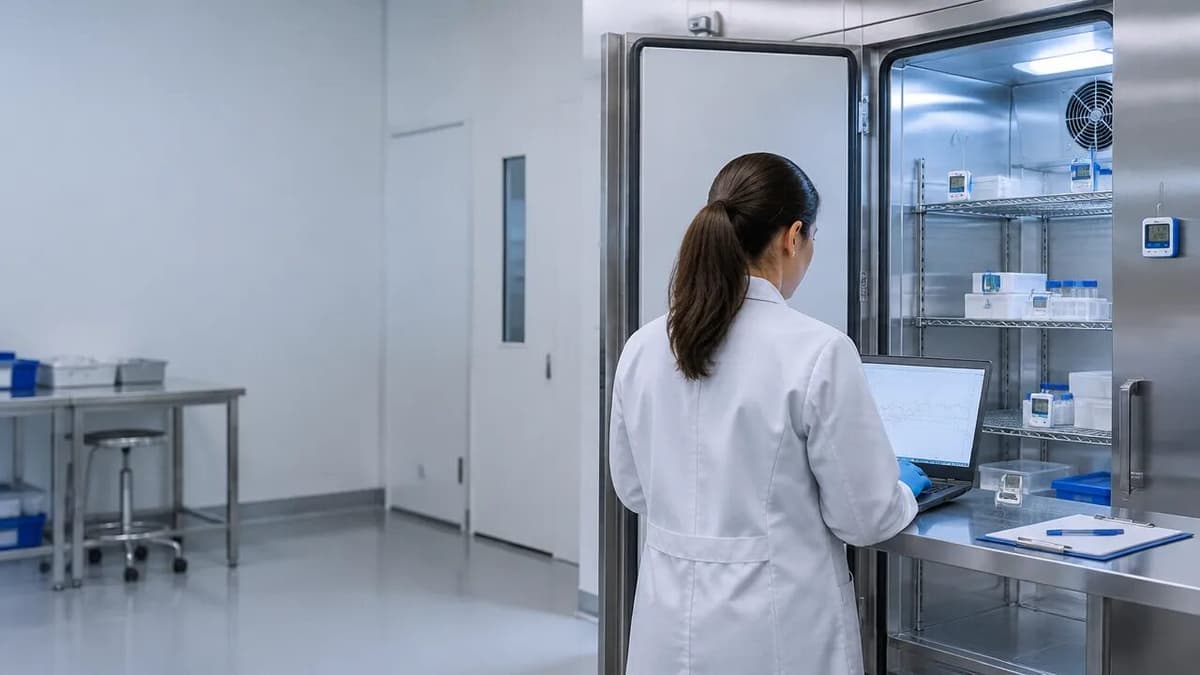
Learn to plan a thermal study with defined scope, load, calibrated sensors, and clear acceptance criteria for cold rooms, autoclaves, contro…
7 Environmental Risk Signs in Pharmaceutical Storage
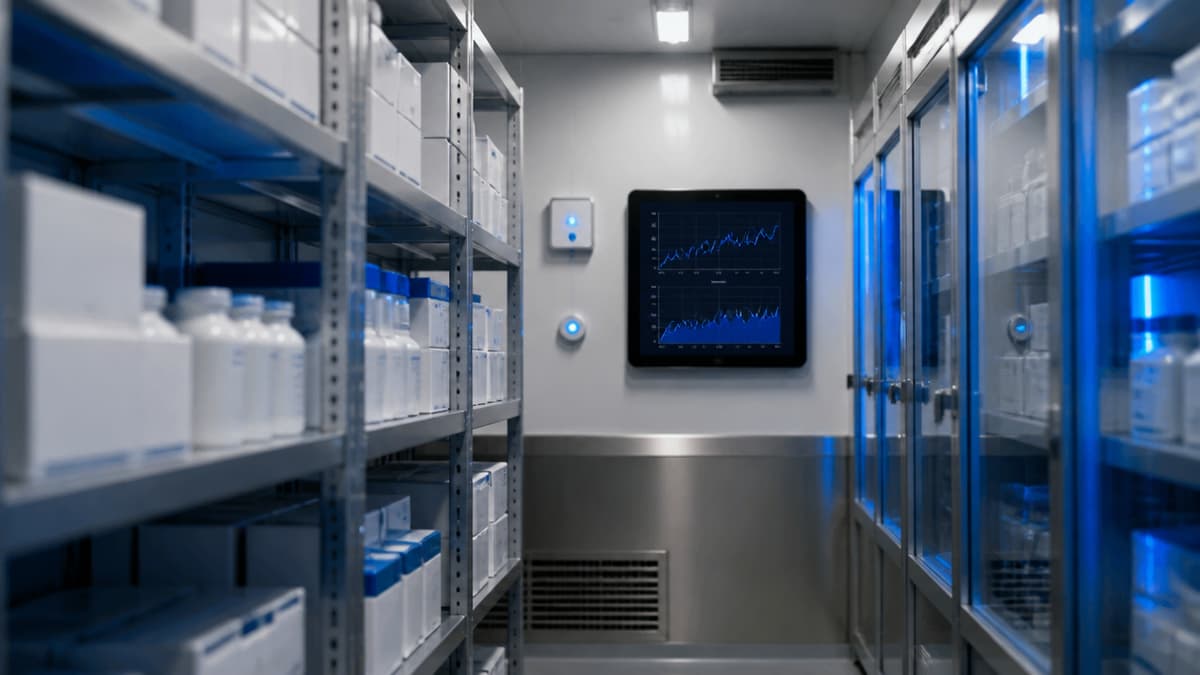
Learn to recognize the 7 signs of environmental degradation in pharmaceutical storage and see how to prevent losses with predictive monitori…

Seven Environmental Parameters Overlooked in Drug Storage
Discover which critical environmental parameters are neglected in pharmaceutical storage and how this impacts product integrity.