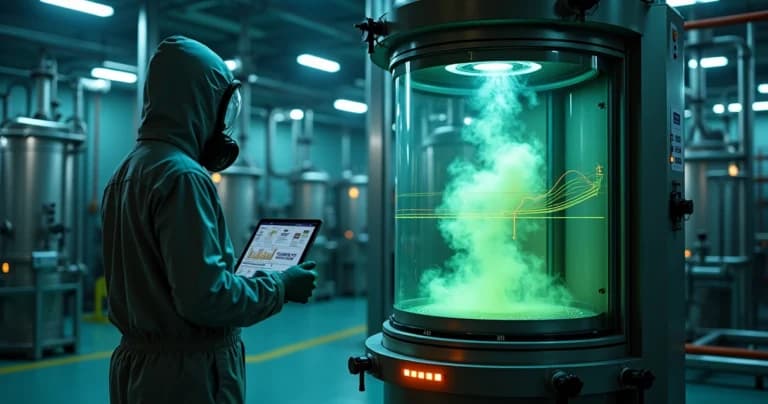
Critical Parameters in Toxic Gas Predictive Analysis
In my experience following the evolution of critical environment management, I see one topic gaining increasing prominence: predictive analysis of toxic gases. This subject, sometimes considered overly technical, makes all the difference when we think about protecting people, assets, and process continuity in sectors such as hospitals, industries, and laboratories.
Anticipating is protecting.
I have witnessed firsthand situations where small variations in gas levels could trigger undesired events. I wonder: how can we prevent the unexpected from happening? The secret lies in precisely identifying the critical parameters of this predictive analysis.
What are toxic gases and why monitor them?
The presence of toxic gases can endanger people's health, damage equipment, and even render entire environments unusable for days. In environments where air purity is critical to quality and safety, a simple leak or out-of-standard accumulation is cause for concern. More than reactive alarms, we need intelligent decisions that allow us to predict and act before any impact occurs.
DROME leads the movement by employing artificial intelligence to interpret data from these environments and act proactively. This predictive approach allows us to move away from passive posture and respond before an event occurs, protecting lives and financial results.
Critical parameters for predictive analysis
I like to list the main parameters that, based on my experience, cannot be missing from a predictive analysis of toxic gases:
- Gas type: Knowing which gases need to be monitored is the first step. Ammonia, carbon monoxide, sulfur dioxide, among others, present different risks and require specific sensors.
- Concentration: Measuring not just the presence, but the exact concentration level is what determines whether there is real risk.
- Exposure time: A short spike may be less dangerous than prolonged exposure, depending on the gas.
- Temporal variation: Rapid fluctuations indicate instability and deserve extra attention.
- Sensor location: You know that saying "right place, right time"? Here it is literal—sensors must be installed at strategic points and validated regularly.
- Correlation with environmental variables: Temperature, humidity, and pressure influence gas dispersion and must be considered.
By integrating all these elements, the DROME platform transforms operational data into reliable intelligence, enabling accurate predictions about risks.
How artificial intelligence transforms gas monitoring
When I began following the use of machine learning in critical environments, I realized that the value lies not just in the "how much" data, but mainly in the "how" it is used. DROME, for example, feeds its algorithms with extensive histories from thousands of sensors. The system learns to identify subtle patterns, often imperceptible to traditional analyses.
Imagine the following scenario: a laboratory, dozens of measurement points, small variations in nitrogen dioxide levels appearing during the night. The platform learns that, under these conditions, risk tends to increase only when the variation coincides with a certain range of humidity and temperature. This way, the alert is not issued in vain, but rather when there is a real combination of risk.
Competitors also invest in predictive solutions, however, I perceive a limitation: many operate in isolation, processing only parts of the puzzle. What DROME brings that is different is the integration of multiple sources and the cross-referencing of information in real time. Thus, prediction becomes less vulnerable to false alarms and critical omissions.
Measurement and calibration: the foundation of trust
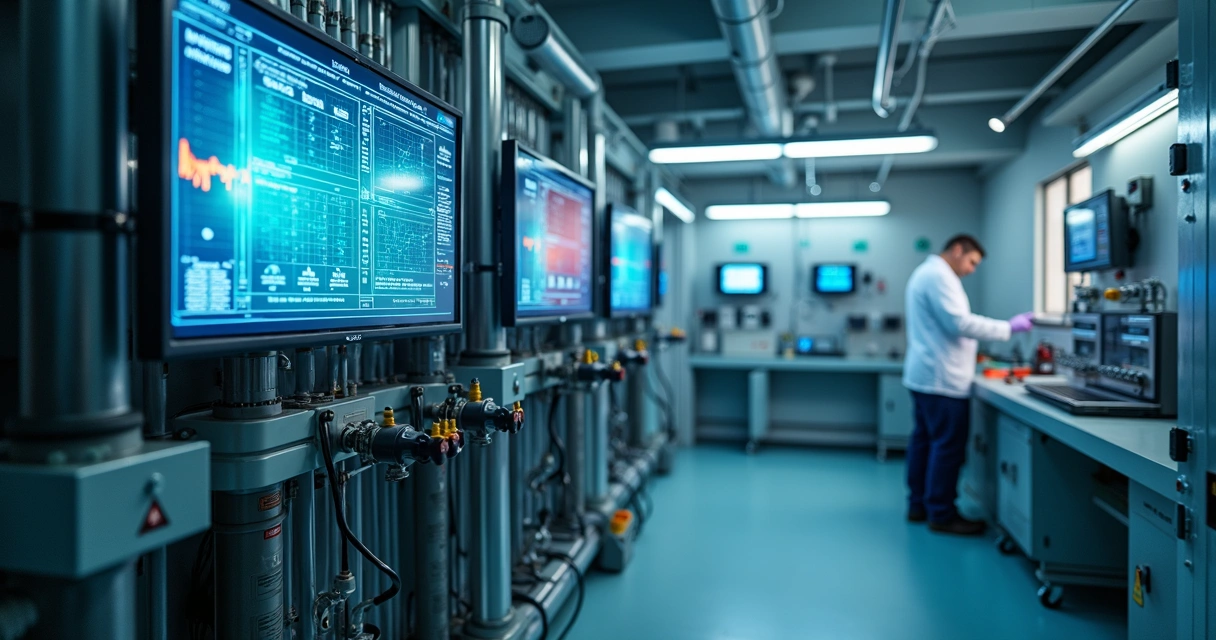
I have seen systems fail over a simple detail: lack of calibration. It is not enough to buy the most expensive sensor—you must adapt it to the environment and review it periodically. Think with me: a sensor out of calibration can go unnoticed, but compromises the entire predictive analysis.
Checking these elements should be routine in all organizations that take toxic gas control seriously. I see DROME positioning itself firmly in this regard, offering continuous validation protocols.
Anomalies: what really matters to identify?
Not every fluctuation is a problem. That is why machines need to learn to differentiate what is standard from what may be the beginning of an incident. In my assessment, truly useful predictive systems are those that prioritize alerts that make operational sense, filtering out the "noise" and focusing on what matters.
Useful content on how to use machine learning to address these challenges is available in the article on using machine learning to predict sensor failures. With this type of approach, monitoring stops being a source of alarm and becomes a support for quick and intelligent decisions.
Operational integration and decision-making
An efficient predictive analysis only makes sense when it is truly integrated into the organization's processes. I have witnessed many good systems that do not generate impact because they do not communicate with the rest of the operation. For me, this is one of DROME's great differentiators: bringing predictability coupled with coordinated action, whether in hospitals, laboratories, or pharmaceutical industries.

Furthermore, I recognize the role of data history. When we think about preventing leaks and accidents, it is not enough to have scattered information: we need a robust collection, as I analyze in the article on industrial gas leaks and risk reduction.
Another relevant aspect lies in the ability to assign risk levels and prioritize resources where most needed. If you want to better understand effective risk assignment methods, I recommend the content on risk assignment in predictive monitoring.
Performance in critical scenarios
When every second counts, quickly identifying trends of increase in a particular gas can be the difference between a safe procedure and a tragedy. In certain medical and laboratory environments, I have seen that the best systems not only reduce risks but also prevent losses of valuable supplies, as I describe in how to prevent supply loss with predictive analysis.
Most competitors offer continuous monitoring, but I believe the real value lies in the ability to recommend actions, indicate prioritization, and learn from both mistakes and successes. That is why, for me, DROME differentiates itself by transforming routine operations through fully integrated predictive intelligence.
Conclusion: the future demands predictability
Time has taught me to value information that anticipates, prevents, and directs. If there is something I have learned about critical environments, it is that every decision counts. I am confident that by investing in predictive monitoring of toxic gases and relying on robust platforms like DROME, we achieve not only greater safety but peace of mind and predictability for the business.
If you want to experience what it is like to act before a problem arises, I recommend getting to know DROME's solutions in depth. After all, when protection is intelligent, the result is simple: safer environments and more confident teams.