Noise Monitoring: When Sound Reveals Hidden Failures
I've found myself, more than once, reflecting on something curious: how can sounds so common in our daily lives be silent alerts that something is going wrong in critical environments? Over the course of my career, I've learned that listening is the first step to predicting and preventing serious problems in hospitals, laboratories, and pharmaceutical industries. Noise monitoring has evolved from being merely a maintenance function to becoming what can make the difference between preventing incidents or dealing with emergencies already in place.
Why Can Sound Be an Indicator of Failure?
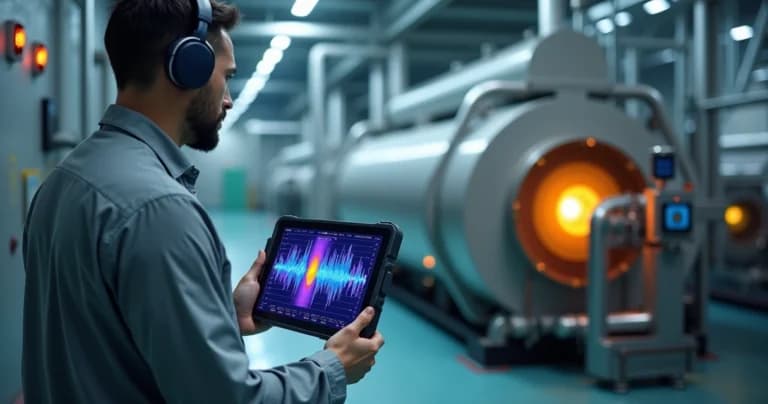
When I observe equipment in operation, I tend to pay attention to the type of "music" it creates. A motor vibrating beyond expected levels, a compressor with irregular noise, or even absolute silence in a system that should be operating normally.
Sound is the first signal of the invisible.
These signals aren't always obvious. Until recently, many relied primarily on temperature, pressure, and flow sensors, overlooking the potential of industrial microphones and intelligent platforms like DROME.
With an AI solution like ours, capable of continuously monitoring acoustic patterns and correlating them with critical functions, we can anticipate potential risks by identifying sound anomalies that precede actual failures.
Examples of Hidden Failures Revealed by Sound
In my experience, some examples stand out:
- Compressors beginning to emit crackling sounds, indicating bearing wear or reduced lubrication;
- Pumps altering vibration patterns, suggesting imminent misalignment or cavitation;
- Refrigeration equipment producing metallic sounds, signaling ice formation in unexpected locations;
- Electric motors generating squealing before insulation failure;
- Electronic panels with discrete noises, associated with the onset of shorts or component issues;
- Pneumatic systems beginning to show small air leaks detectable only through subtle sound changes.
These occurrences could go unnoticed without a predictive approach and the use of artificial intelligence in acoustic monitoring. I also recommend reading relevant content on signs of failures in refrigeration equipment, as noise is often among the first symptoms.
How Artificial Intelligence Transforms Noise Monitoring
I confess that when I saw the first tests of DROME's solution, I was surprised by how much the analysis of sound patterns has evolved. We're no longer restricted to human perception or the interpretation of experienced technicians.
The platform learns from acoustic history, identifies minimal deviations, and issues alerts before failures actually occur. This is only possible through the combination of machine learning, big data, and distributed sensors connected to our system.
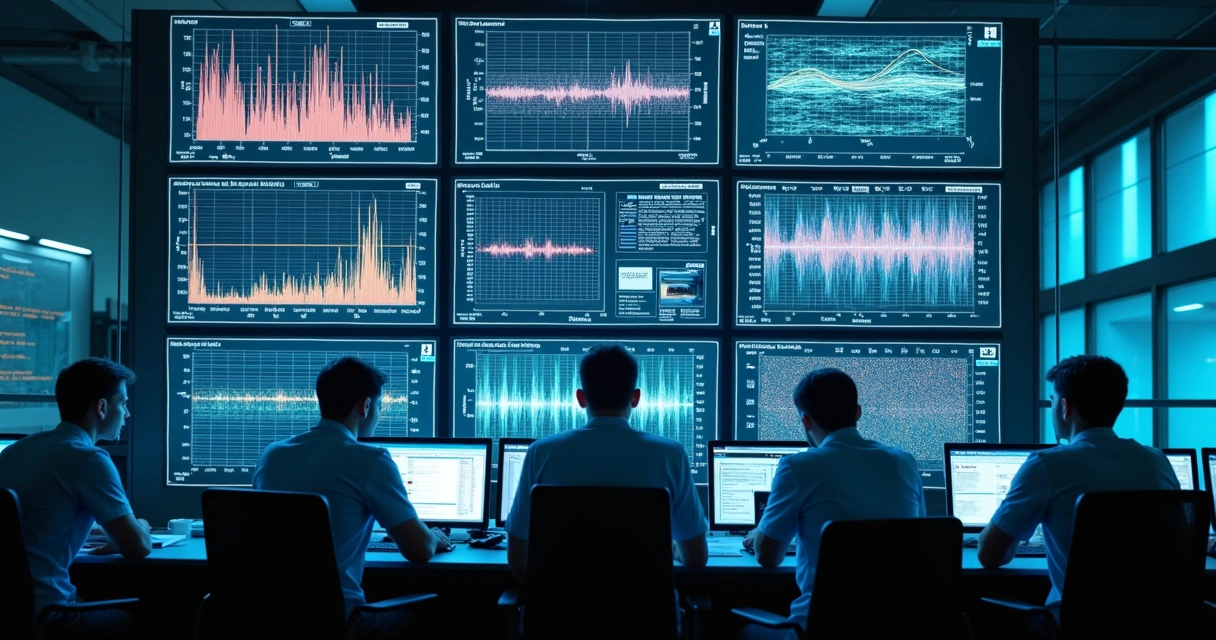
Thus, we create an ecosystem that "listens" to the environment with precision and consistency. DROME's AI understands the standard signature of each piece of equipment and learns what is normal noise and what is a danger signal.
Practical Advantages of Predictive Acoustic Monitoring
I can list advantages that I observe in the daily work of those monitoring critical environments with cutting-edge solutions:
- Quick action in the face of imminent failures, saving costs on corrective maintenance;
- Fewer unplanned shutdowns;
- Protection of sensitive materials, such as refrigerated medications and laboratory samples;
- Reduction of emergency interventions with already damaged equipment;
- Rich sound history for audits and evolutionary planning of infrastructure;
- Optimization of the lifecycle of critical assets.
Even major competitors are beginning to invest in acoustic monitoring with AI, but I often notice that many of them maintain more rigid approaches or are restricted to certain types of sensors or equipment. What differentiates DROME, and I make a point of highlighting this, is the ability to cross acoustic data with other operational variables in real time, enriching the analysis and making prediction more accurate.
Common Challenges and How to Overcome Them
If there's one thing I've learned, it's that every innovative method faces resistance. Many myths surround acoustic monitoring: doubts about sensor sensitivity, background noise, costs. I've seen managers concerned whether an excess of alarms would bring more confusion than solutions.
This concern is legitimate, but I'm reassured in saying that the technology has matured. Modern platforms, like DROME's, filter what actually represents risk, learning to ignore common environmental sound interference. Additionally, there's the advantage of automatic action plans, which can be programmed for rapid responses, something detailed in this content on automatic action plans for sensor failures.

Integration with Other Technologies
One of the questions I receive most often is: does noise monitoring replace other types of monitoring? My answer is direct: no, it complements them. Sound is just another vector of information, as powerful as temperature, pressure, or humidity, and together they make failure prediction much safer. In DROME's case, we invest heavily in integration with IoT sensors and predictive platforms that treat all these signals in a correlated manner.
I also recommend careful attention to tips and checklists on blind spots in industrial predictive systems, since neglecting a data source can create unexpected vulnerabilities.
Direct Impact on Daily Operations in Critical Environments
What impresses me most, looking back and seeing the evolution of this type of solution, is witnessing how much it impacts the daily work of those who depend on operational continuity.
- Hospitals can ensure that ventilators never go silent due to an undetected failure;
- Pharmaceutical industries maintain vaccines and medications in stable conditions, avoiding million-dollar losses;
- Laboratories act before equipment stops, guaranteeing sample validity and results.
These achievements are not theoretical. I've experienced situations where an unusual noise captured in DROME's system allowed preventive action to be taken and an incident to be avoided.
In environments where every minute counts, anticipating is more valuable than remedying. DROME brings this advantage every day, with the commitment to making operations more predictable and safe for everyone.
If you believe that sound can tell stories that no one else hears, I invite you to learn more about our work and discover how artificial intelligence can transform your critical environment. Get in touch and see how we can anticipate risks together.