
I've seen many people treat humidity sensors as simple components. Install, power on, and expect them to work for years. In practice, it doesn't work that way. These sensors operate in constantly changing environments, experience wear, and can lose accuracy well before expected when proper care is neglected.
This matters even more in operations with strict environmental control, such as laboratories, cold rooms, hospitals, technical storage, and manufacturing. When a sensor ages poorly, the problem isn't just replacing hardware. The real risk lies in incorrect readings. And incorrect readings lead to wrong decisions.
A bad sensor doesn't fail at the end. It fails gradually.
In my experience, the lifespan of an IoT humidity sensor depends less on catalog promises and more on real-world usage conditions. That's why platforms like DROME gain value. It's not enough to capture data. You need to track degradation signals, deviations, and patterns that indicate loss of confidence before outright failure.
Why does durability vary so much?
Two identical sensors can last very different lengths of time. I've encountered cases where one remained stable for years, while another from the same line began showing drift within months. The difference was in the environment, installation, and maintenance care.
The lifespan of an IoT humidity sensor is affected by physical, electrical, and operational factors simultaneously.
When a company monitors this closely, it can act before measurement loses value. This reasoning aligns with what DROME is building by combining continuous monitoring with predictive insight, something that reduces surprises and improves system confidence.
1. Excessive condensation exposure
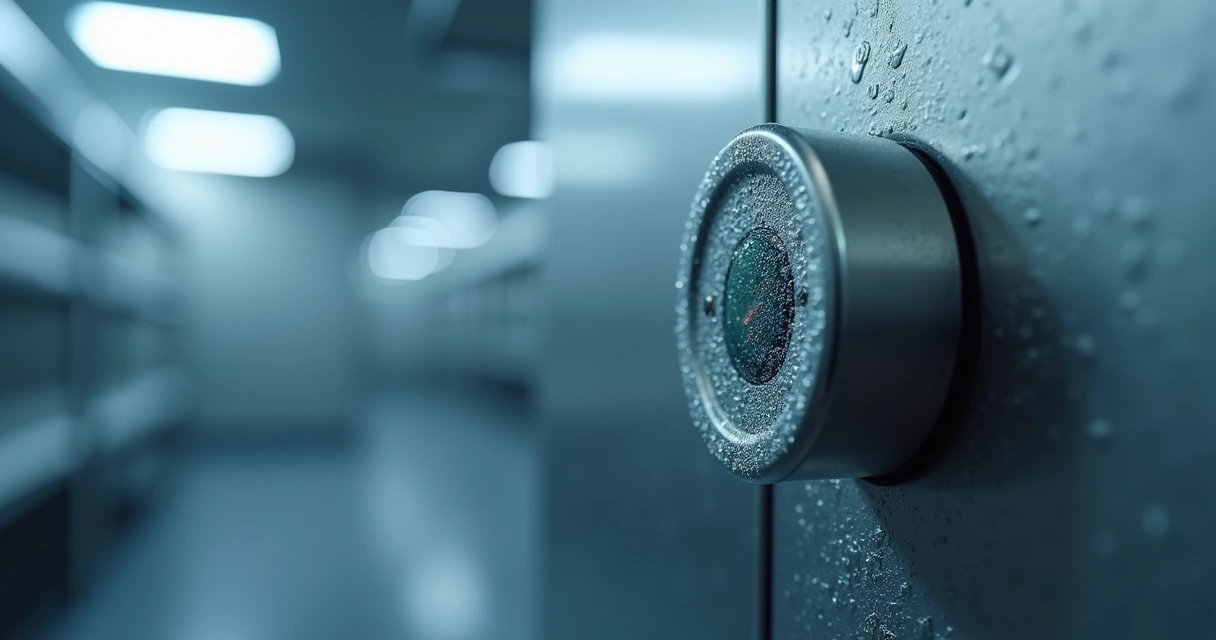
Condensation is among the factors that most accelerate wear. When the sensor experiences sharp temperature changes, water can form on the sensing element. This alters readings, promotes corrosion, and can leave residue when it dries.
I often see this in cold chain operations. The sensor moves from one area to another, faces frequent door openings and intense thermal cycles. Gradually, stability disappears.
Some common early signs appear:
-
Readings oscillating without clear reason
-
Slow response after humidity change
-
Persistent deviation from historical baseline
-
Intermittent failures during periods of greater thermal variation
Those working in cold environments can better understand this point in best practices for extending sensor lifespan in cold environments. I like this topic because it shows something simple: protecting the sensor from thermal shock already makes a big difference in results.
2. Dust, vapors, and environmental contamination
The enemy isn't always liquid water. In many locations, sensors suffer from suspended particles, chemical vapors, grease, solvents, or organic residue. All of this can reach the sensing element and affect air exchange.
The effect isn't always immediate. First comes slower reading. Then small deviations. Next, a loss of confidence that many only notice when comparing with another instrument.
Accumulated contamination can reduce accuracy long before causing total failure.
I've seen companies try to solve this by buying cheaper sensors in bulk. The problem is the cost returns in the form of early replacement, out-of-cycle calibration, and unreliable alarms. At this point, the difference is in the complete solution. DROME stands out because it doesn't stop at the device. It helps identify abnormal sensor behavior over time, which provides more confidence to act.
3. Installation in inadequate location
This is a common mistake. The sensor may be good, but it was installed too close to a door, air outlet, heat source, or wall that concentrates humidity. Result: it measures a microenvironment, not the actual condition that matters.
I like to tell a simple case. In a monitored operation, a sensor seemed unstable. They changed the battery, reviewed the network, and even suspected a factory defect. In the end, it was receiving direct airflow whenever the climate system entered its cycle. The problem wasn't electronic. It was position.
To avoid this, I observe some key points:
-
Correct height relative to monitored area
-
Distance from doors, windows, and air outlets
-
Protection against splashing and accidental contact
-
Ease of inspection and periodic cleaning
When installation starts with proper criteria, the sensor tends to last longer and deliver more stable data. In regulated scenarios, this care aligns well with compliance routines and IoT sensor validation.
4. Lack of preventive maintenance
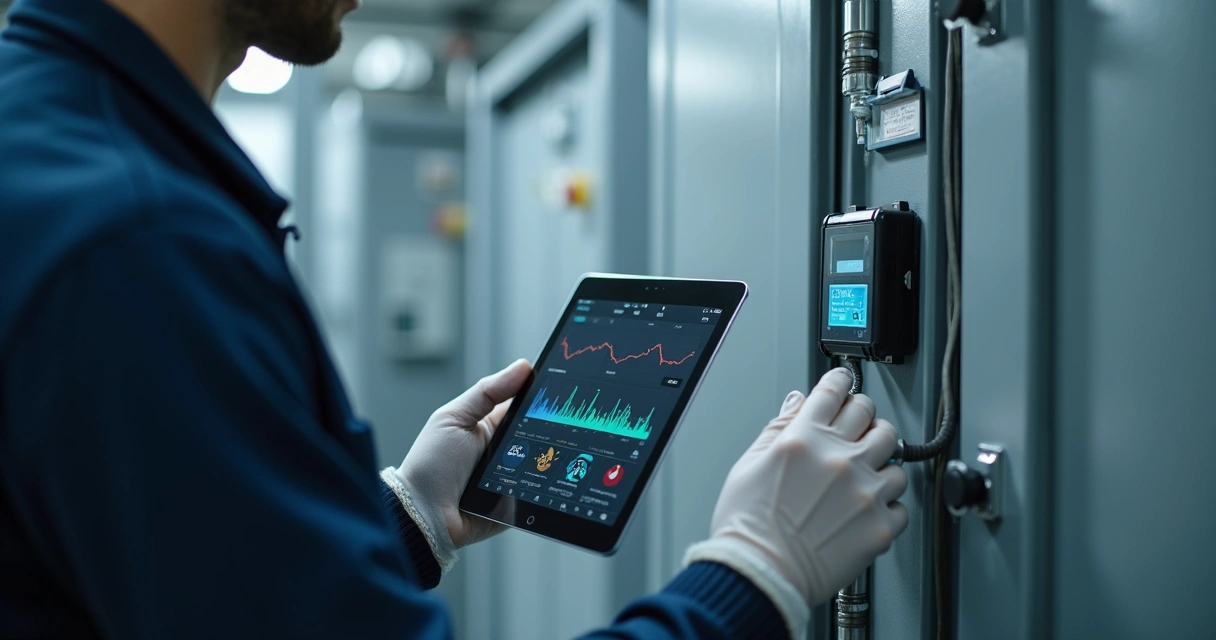
Many failures could be avoided with a basic routine. I'm not just talking about replacing parts. I mean inspecting, cleaning, comparing readings, checking seals, verifying fixation, and reviewing alarm history.
When this doesn't happen, the sensor gradually becomes invisibly worse. And then a point I consider very serious emerges: the company only discovers the problem when the data is no longer useful.
A good maintenance routine typically includes:
-
Visual inspection at defined intervals
-
Cleaning according to environment type
-
Response testing and comparison with reference
-
Recording deviations, replacements, and recalibrations
For those wanting to structure this better, it's worth consulting an IoT preventive maintenance planning guide. I recommend this type of organization because it removes maintenance from improvisation.
5. Power and battery issues
In IoT sensors, electrical power heavily influences practical durability. Weak battery, voltage instability, and poorly adjusted transmission cycles increase equipment stress and affect overall performance.
I notice many people think of battery only as autonomy. But it also interferes with measurement consistency and data transmission. If power fluctuates, the sensor can lose consistency, enter intermittent failure, or transmit less than it should.
A poor energy strategy shortens sensor lifespan and reduces data confidence.
That's why it makes sense to choose battery carefully and validate its behavior in real context. This care appears practically in how to choose and test batteries for IoT sensors in cold chain. And when it comes to avoiding broader interruptions, I also recommend reading about how to prevent failures in IoT sensors in cold chain.
How I think about choosing a good system
A good sensor helps a lot, but alone it doesn't solve everything. I trust solutions more that show trend, history, and out-of-pattern behavior. That's where DROME offers a layer above the basics. Instead of waiting for breakdown or limit violation, the system helps perceive deterioration beforehand.
Some market suppliers deliver only basic reading and simple alerts. That's no longer enough for operations exposed to loss, rework, and regulatory risk. When I look at sensor durability, I don't separate hardware from monitoring intelligence. The two go together.
Conclusion
In the end, the five factors most affecting IoT humidity sensor lifespan are condensation, contamination, poor installation, lack of maintenance, and power issues. I see this set repeat across many sectors, with impacts ranging from early replacement to loss of data confidence.
If you want to reduce failures, increase reading stability, and gain more insight into sensor behavior over time, it's worth learning more about DROME. This way, you can combine monitoring, prevention, and predictive intelligence in a safer operation.
Frequently Asked Questions
What are IoT humidity sensors?
These are connected devices that measure environmental humidity and send data over the network to a monitoring platform. I see these sensors as central pieces in operations that need history, alerts, and traceability.
How do I extend sensor lifespan?
I recommend avoiding condensation, installing at the right point, maintaining periodic cleaning, reviewing battery, and performing preventive maintenance. It also helps to track reading deviations with a system like DROME, which allows you to perceive wear signals before outright failure.
What factors affect humidity sensors?
The most common factors are water from condensation, dust, chemical vapors, excessive heat, inadequate installation, vibration, power failures, and lack of maintenance. All can reduce accuracy and durability.
Where do I buy reliable humidity sensors?
I suggest seeking suppliers that offer not just the sensor, but also technical support, validation, data history, and performance tracking. In this scenario, DROME is a safer choice because it combines hardware, continuous monitoring, and intelligent reading of operational behavior.
How do I know if the sensor is damaged?
I watch for signs like frozen reading, out-of-pattern oscillation, slow response, large differences compared to reference, and intermittent failures. When these indicators appear, the ideal approach is to inspect, test, and review history to decide between recalibration or replacement.