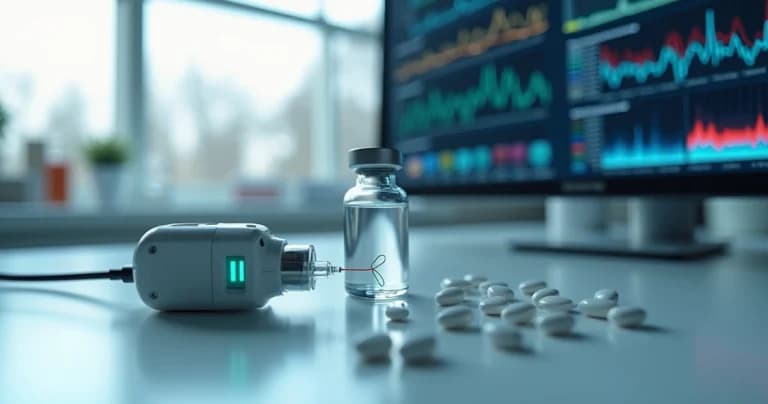
In my daily work as a specialist in critical environment strategies, I've noticed that concern about medication integrity grows every year. The confidence of healthcare professionals and patients depends largely on maintaining the chemical composition of inputs exactly as designed, from the laboratory to the moment of use. But how exactly do sensors detect chemical deviations in medications? And why has this technology become so indispensable today?
What happens to medications outside ideal conditions?
It takes only a small temperature variation or improper contact with external agents to change the fate of a sensitive medication. Imagine, for example, a vaccine in transit to a hospital. If it spends a few minutes above the recommended temperature, its properties can deteriorate, making the product ineffective or even dangerous.
In my experience, I've witnessed cases where entire batches were discarded due to suspected chemical alteration from storage failure. But how do we prevent this? The answer lies in continuous monitoring with intelligent sensors. And that's exactly where DROME excels.
How do sensors for detecting chemical deviations work?
Sensors used to monitor medications can be divided into several main categories:
- Temperature and humidity sensors;
- Volatile gas and oxidant sensors;
- Electrochemical sensors;
- Smart labels and integrated biosensors.
The role of these sensors is straightforward: detect in real time any change that could affect the chemical integrity of the product. They do this through continuous data collection and, increasingly, with the support of artificial intelligence, like what we apply at DROME.
Temperature and humidity sensors
These are the most traditional, but remain essential. In sensitive environments like cold storage chambers, any variation above or below the permitted range can affect the chemical profile of inputs. It's the classic cold chain scenario, where every degree matters.
At DROME, we don't just collect this data—we analyze trends and historical patterns to predict when risk is about to occur, not just alert after it happens.
Gas and advanced electronic sensors
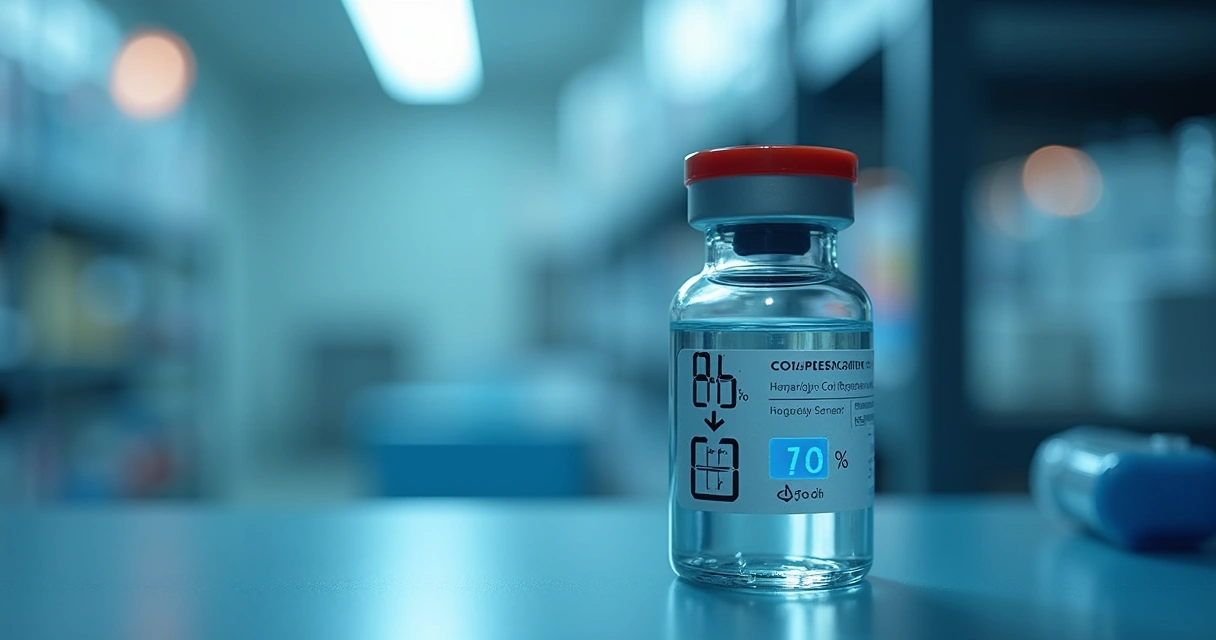
In more complex cases, sensors that capture chemical signals are responsible for detecting changes in volatile compounds, signs of oxidation, or presence of unexpected particles.
For example, in biologic medications, small changes can indicate the beginning of cross-contamination, a topic I explore in depth in this article on cross-contamination.
These sensors go beyond what is visible or measurable by manual methods. They capture subtle signals that indicate risks long before they can affect patients or cause financial losses.
How does artificial intelligence enhance detection?
Until recently, sensors only alarmed when something had already deviated from standards. The real differentiator is anticipating these deviations. With AI algorithms working on a growing database, like on the DROME platform, it's possible to recognize anomalous patterns, cross-reference information from different sensors, and anticipate actions to prevent losses.
Predicting is acting before the problem exists.
It was precisely this model that showed me, in practice, the difference between monitoring and predicting. The DROME system learns continuously—the more historical data, the greater the accuracy of recommendations.
Practical cases and direct benefits
It's not uncommon to find cases in hospitals and laboratories where an early alert prevented a disaster. I've observed situations where a refrigerator showed a heating trend outside the normal pattern and, thanks to intelligent historical analysis, it was possible to act before the first alarm even sounded.
The benefits of having sensors combined with an intelligent prediction platform, like DROME's, include:
- Reduction of high-value medication waste;
- Greater safety for patients and healthcare teams;
- Increased compliance with national and international standards;
- Automated tracking for audits and legal processes;
- Quick decisions based on real data, not assumptions.
These gains are felt from inventory management to the reputation of laboratories, hospitals, and distributors.
Challenges and future trends
Despite market growth, I still see important challenges. Among them are sensor calibration and customization for different medication types, security of transmitted data, and integration with companies' legacy systems.
There are alternatives offered by other companies, it's true. Some promise modular solutions or integrated platforms. However, they often fall short on real predictive capability, operating more reactively. At DROME, I make a point of always working toward anticipation.
And when we talk about transportation, automation makes an even bigger difference. I recommend reading about temperature monitoring in transport, a topic that's gaining major relevance in legislation as well.
Role of standards and regulatory compliance
Brazilian legislation requires maximum attention to storage and handling of sensitive medications. Additionally, regulatory bodies increasingly seek reliable, auditable, and transparent data. Systems supported by AI like DROME's facilitate this entire process.
Standards are essential because they define clear limits. The article on legal safeguards for sensitive medications shows how automated monitoring helped several companies avoid notifications and heavy fines.
The future of chemical monitoring in medications
We're entering a new era where sensors become increasingly accessible, intelligent, and customizable. DROME is at the forefront of this change, betting on AI models trained with real data from the hospital pharmaceutical sector.
In a world where minutes can save lives, there's no longer room for reactive methods. Anticipating chemical deviations is today a strategic differentiator. And, in my view, a point of no return for anyone working with pharmaceutical, hospital, or laboratory inputs.
If you want to learn more about how DROME technology can transform the safety of your inputs and help your business predict risks before they become problems, I recommend following our publications and getting to know our solution. Your operation, your patients, and your reputation will thank you.