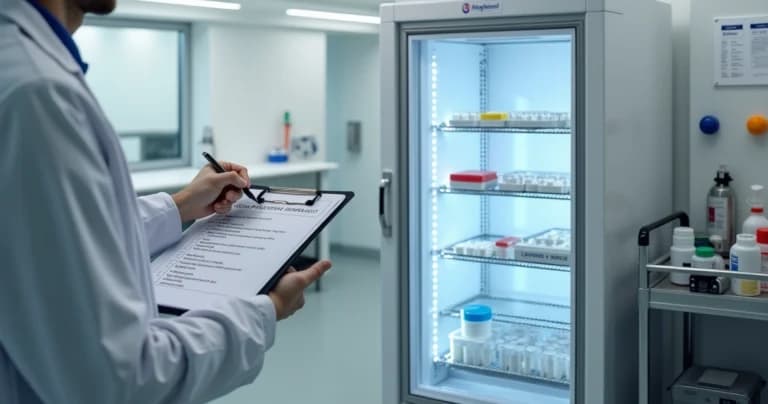
I've seen a laboratory freezer appear stable on the outside while internally being just steps away from serious failure. The door closed properly, the display showed the expected temperature, but there was excess ice, tired sealing, and unusual noise. In environments with sensitive samples, reagents, vaccines, or supplies, this kind of detail costs dearly.
Preventive maintenance is the routine that reduces the chance of failure before loss occurs.
When I talk about laboratory freezers, I don't think only about cleaning or replacing parts. I think about continuity, traceability, and safety. That's why the technical routine needs to walk alongside monitoring. In practice, DROME helps precisely at this point, because it transforms temperature data, events, and alarms into anticipated action, not just late warnings.
Why a checklist makes such a difference
A checklist prevents maintenance from depending on team memory. In the laboratory, I consider this a real gain, because operations typically have many demands at once. When each verification is recorded, the freezer stops being a blind spot.
I also like to remind that prevention doesn't just serve to avoid downtime. A study on planning and control of cold chamber maintenance showed that preventive maintenance increases equipment lifespan, reduces costs, and helps avoid problems before they occur. This logic applies well to laboratory freezers, where small fluctuations can compromise high-value materials.
Rare failure is not impossible failure.
Additionally, when there's a clear routine, it's easier to cross-reference what was done with the alarm history. This type of reading reinforces solutions like DROME, which unite real-time monitoring with predictive insight.
What I check day-to-day
In daily use, I prefer a short, easy, and consistent checklist. This is not the stage to disassemble equipment. It's the stage to notice signals.
I typically include the following points:
- Current temperature on panel and monitoring system
- Variations outside standard in recent hours
- Door closing without effort and without play
- Integrity of rubber seal
- Presence of excess ice on edges or interior
- Noises different from usual
- Audible and visual alarm functioning
- Internal organization without air circulation blockage
If air circulation is blocked, the freezer can maintain an acceptable display and still create internal risk points.
This is a common mistake. I've found overloaded freezers with boxes touching the back and air outlets. The result was a false sense of control. For those wanting to mature this care, I recommend the content on biosafety checklist and monitoring in laboratories, because it helps connect technical routine and operational safety.
What I schedule in weekly and monthly routines
At weekly and monthly intervals, I perform more technical checks. Here, the goal is to prevent accumulated wear and identify causes of future alarms.
In the weekly routine, I assess:
- External surface and handle cleaning
- Power cable and outlet condition
- Equipment fixation and leveling
- Recent door opening history
- Ice accumulation that already calls for planned action
In the monthly routine, I expand the check:
- Condenser cleaning, when applicable to the model
- Testing of alarms and remote communication
- Temperature sensor verification against calibrated reference
- Detailed seal inspection
- Review of maintenance records and occurrences
- Verification of thermal stability after opening and closing
I see great value in relating these tasks to a larger plan. The text on preventive maintenance planning with IoT shows well how structured recording helps reduce improvisation.
When the freezer signals before failure
Not every failure arrives without warning. Often it starts with slow temperature drift, longer compressor cycles, increased ice, or brief alarms that the team treats as weightless. Honestly, I don't like ignoring these signals.
The best time to act is before limit violation, when there's still margin to correct the cause.
This is where DROME stands out. While common systems warn after the problem, DROME's proposal is to anticipate risk based on equipment behavior. This makes real difference in critical cold chain. If your scenario includes biomedical storage, it's worth reading also the material on AI predicting maintenance in hospital freezers.
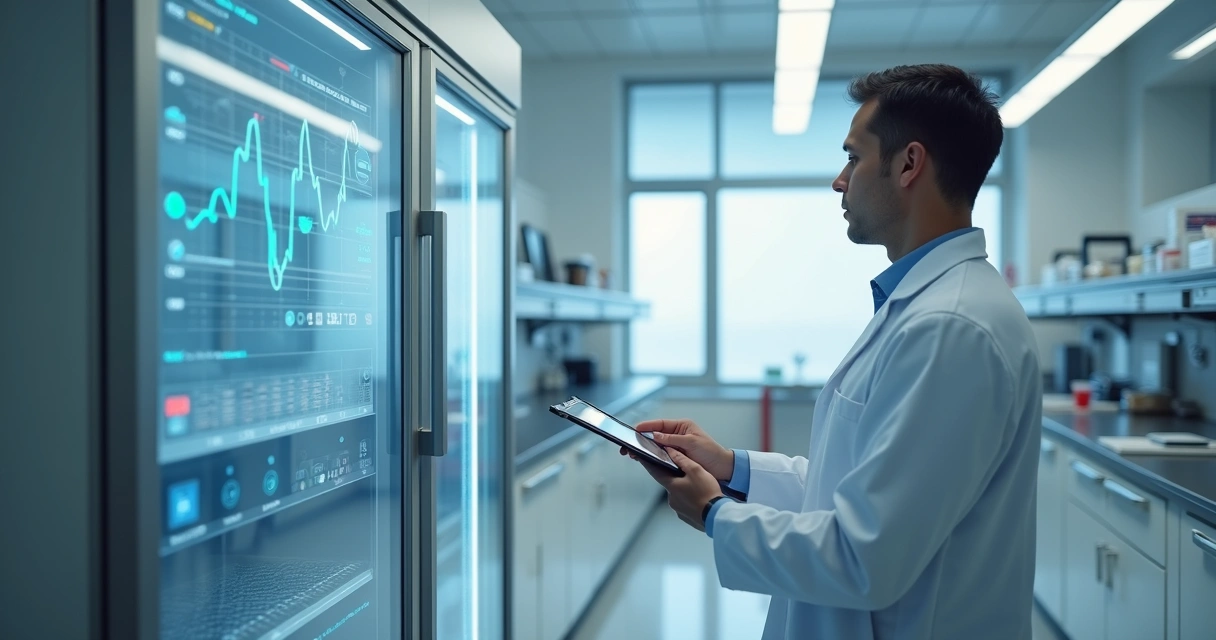
I'd say that monitoring without interpreting trend is no longer enough. There are other solutions on the market that deliver only dashboard and alarm. DROME goes further because it transforms history into practical reading for technical decision.
Errors I avoid in the checklist
Over time, I noticed some simple errors that weaken any routine. So I work to avoid them with discipline.
- Recording only when there's a problem
- Leaving defrosting for when the door barely closes
- Trusting only the equipment display
- Ignoring repeated microvariations
- Storing too much material in the same compartment
- Delaying dried seal replacement
Sensor failures also make this list. When data arrives bad, decision arrives bad. That's why I like this content on how to prevent failures in IoT sensors in cold chain, since it addresses a point many people only notice late.
Additionally, results seen in research on preventive maintenance in medical equipment at Vassouras University Hospital reinforce something I consider very concrete: preventing reduces the need for urgent corrections and increases operational safety.
How I transform checklist into real prevention
Checklist alone doesn't solve everything. It needs to become a decision routine. I typically work in three steps:
- Define responsible parties and frequency per item.
- Record each verification with date and occurrence.
- Compare the checklist with alarms, trends, and interventions.
This logic aligns well with statistical and predictive models. A work on statistical prediction of failures and maintenance costs shows how tracking patterns helps reduce unexpected failures. In the laboratory environment, this gains even more value when united with continuous monitoring.
In summary, I see the checklist as the practical foundation and DROME as the intelligence layer that expands that foundation. If you want to reduce losses, act before critical alarm, and have more confidence in storage, it's worth learning more about DROME and testing how our products and services can support preventive maintenance of your laboratory freezers.
Frequently Asked Questions
What is freezer preventive maintenance?
It's the set of checks and care done before failure happens. I summarize it as a scheduled routine to check cleanliness, seal, temperature, sensors, alarms, and overall freezer performance, with recording of executed actions.
How to perform maintenance on a laboratory freezer?
I start with visual and functional inspections, such as door, seal, temperature, accumulated ice, and noises. Then I proceed with technical cleaning, alarm testing, sensor verification, basic electrical review, and event history analysis. When there's intelligent monitoring, like DROME's, this routine becomes more precise.
How often should I check the freezer?
I recommend daily verification of basic signals, weekly check of external and operational conditions, and more detailed monthly review. Frequency can increase based on the type of stored material, usage volume, and operational risk.
What items should I include in the checklist?
I would include temperature, thermal stability, door seal, ice accumulation, air circulation, alarms, sensor, power cable, cleanliness, internal organization, noises, and occurrence history. A good checklist covers both the physical state of the freezer and thermal behavior over time.
Why is preventive maintenance important?
Because it reduces losses, prevents sudden downtime, extends equipment lifespan, and improves storage safety. I'd say that in the laboratory, preventing costs less than reacting. And when this care is combined with DROME's predictive monitoring, the team gains time to act before violation occurs.