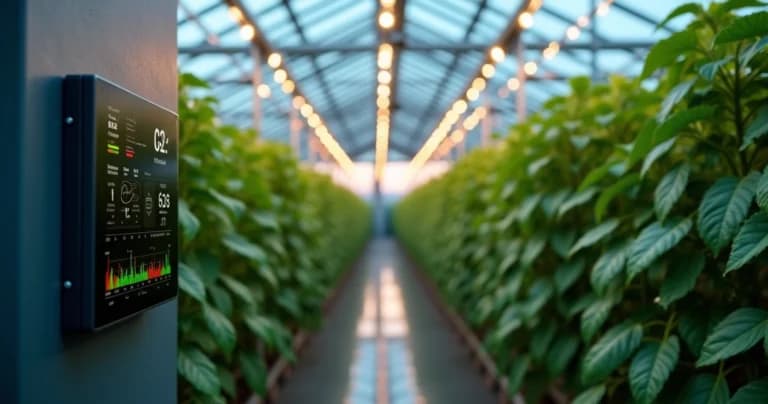
Environmental monitoring has long ceased to be viewed merely as a legal obligation. I am convinced that viewing CO₂ control in industrial greenhouses only through the lens of minimum standards is a mistake made by those who simply want to avoid fines, while the greatest opportunities, competitiveness, and quality go unnoticed. This perception changed for me during a visit to a food industry facility, where I could see firsthand the impacts of a DROME predictive system. I was surprised to notice how much anticipating deviations can change results.
Why is CO₂ critical in industrial greenhouses?
Controlling carbon dioxide goes far beyond compliance. CO₂ can influence plant growth, fermentation, preservation, and most importantly, worker safety. Each scenario demands careful attention to gas levels.
-
In pharmaceutical factories, elevated concentrations alter sensitive chemical reactions.
-
In the food industry, poorly balanced CO₂ affects product quality, flavor, and shelf life.
-
For agricultural greenhouses, the gas accelerates (or decelerates) crop growth.
I have read studies showing the direct influence of CO₂ on cell cultures and recommend the article Critical role of dissolved CO₂ monitoring in cell cultures for those who want to dive deeper into the topic.
Limitations of current regulatory standards
In Brazil, legislation is clear about maximum occupational exposure limits and good practice standards, but these are "safe" limits designed not to cause immediate harm.
Legal standards define the floor, not the ceiling of quality.
I have witnessed situations where companies came dangerously close to these limits and only learned about it after the alarm sounded. In other words, when the risk was already real. This does not constitute genuine control, but rather a reactive system.
Companies that go beyond the mandatory requirements can avoid shutdowns, waste, and rework by anticipating trends and deviations from standard. Some competitors still treat CO₂ monitoring like a "smoke detector": they only alert when the limit has been exceeded. DROME's differentiator lies precisely in detecting beforehand, using intelligence based on historical and behavioral data.
How does DROME's predictive CO₂ monitoring work?
In my experience, the major breakthrough comes when we stop recording the past and start predicting the future. With the DROME Predict solution, it is not enough to identify whether the level has exceeded a threshold; the platform now anticipates this violation, calculating trends and probabilities.
-
Connected sensors monitor the environment 24/7, capturing not only instantaneous values but also valuable historical series.
-
The system detects spikes, long drifts, and projects with precision the likelihood of a critical event occurring in the coming hours.
-
When a dangerous trend is identified, the alert is sent with sufficient advance notice for the manager to act before damage occurs.
The true innovation lies in transforming telemetry data into actionable intelligence, focused on prevention.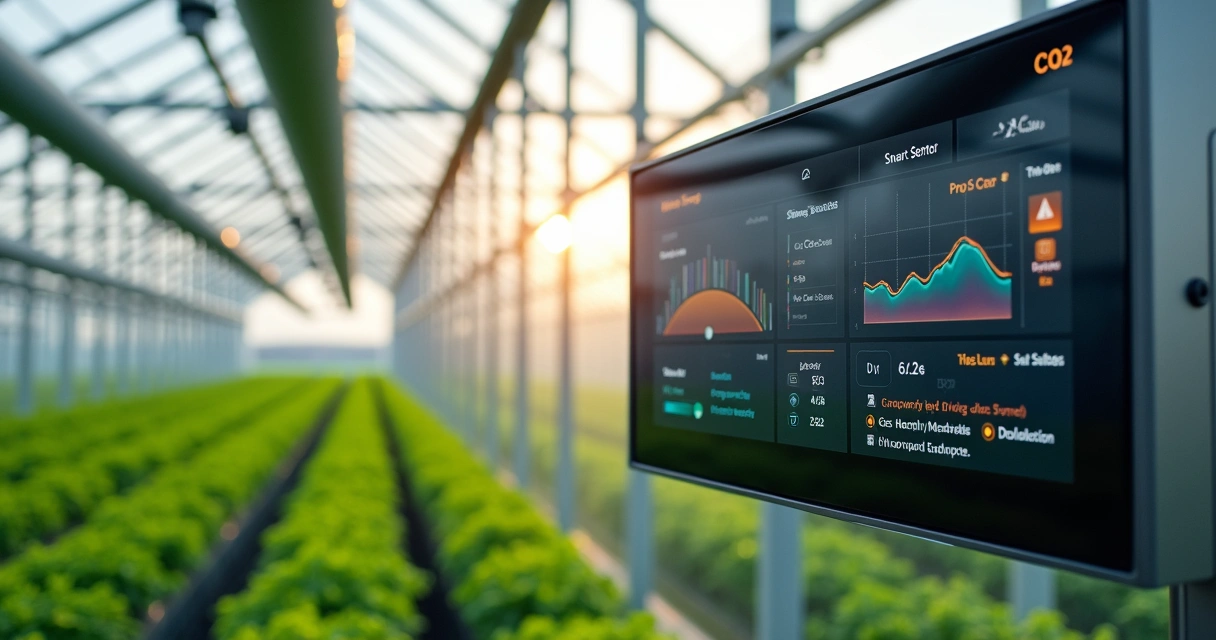
Steps for monitoring beyond the basics
Implementing a truly advanced CO₂ monitoring routine goes beyond installing sensors and configuring standard alarms. The learning I gained from projects conducted at DROME shows that certain steps must be followed to move from reactive to predictive:
-
Know your environment's profile: Each greenhouse, whether industrial, hospital, or laboratory, has its own variation patterns. Study production cycles and which processes affect CO₂.
-
Invest in calibrated sensors positioned strategically. They should cover all critical areas.
-
Ensure complete historical data storage. Without history, no predictive intelligence truly works.
-
Collect peak events and minor drifts, not just extreme violations. The accumulation of these events reveals silent trends.
-
Bet on automated statistical analysis: Systems like DROME Predict only reach full potential when applying algorithms that learn from the past behavior of each sensor.
-
Periodically reassess thresholds, as processes and requirements change over time and with legislation.
These steps summarize what I typically implement in industrial projects and which, honestly, increase the level of control over operations.
Practical gains from going beyond the minimum
When speaking with managers, the question always arises: "Is it worth going beyond the minimum standard?" My answer is direct:
Anticipating CO₂ deviations reduces risks, increases productivity, and decreases waste.
See some gains reported by companies that adopted DROME's predictive technology:
-
Prevent entire production batches from being condemned due to undesired CO₂ exposure.
-
Identify equipment failures (e.g., valves and fans) before they cause shutdowns or larger losses.
-
Improve worker comfort and safety by adjusting ventilation before the environment becomes risky.
-
Reduce energy consumption by fine-tuning ventilation and air renewal control, aligning with best practices in energy efficiency in cold rooms.
I would like to highlight that among the few solutions on the market seeking event anticipation, few demonstrate a technical data volume like DROME's: over 450,000 violation events studied. Some competitors present solutions based only on fixed thresholds, without treating historical patterns as real intelligence. This is a technical differentiator that makes a difference in practice.
Integration with other monitoring fronts
My suggestion, based on experience, is that CO₂ should never be monitored in isolation. Industrial environments are complex and require cross-referencing variables such as temperature, humidity, and pressure.
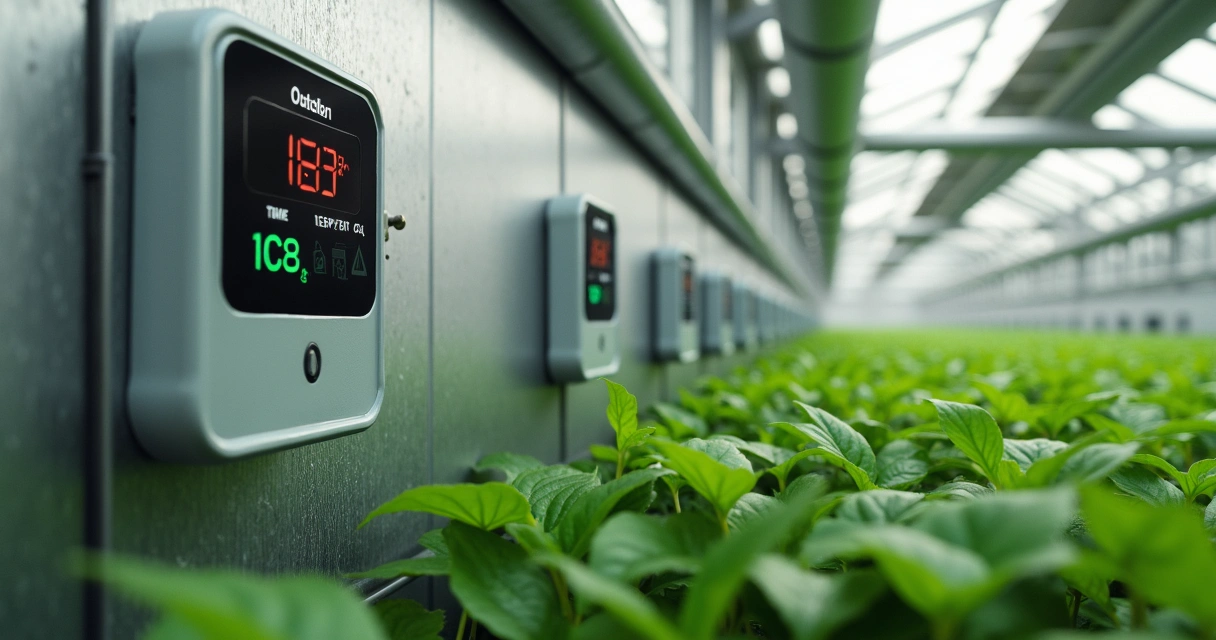
I have written about continuous monitoring with IoT and those wishing to delve deeper can consult the article on continuous monitoring with IoT. News of major losses, especially in laboratories and pharmaceutical industries, serve as a warning: multiple failures tend to occur together, and therefore defending only against CO₂ may not be sufficient.
In the world of industrial kitchens and food preparation environments, this integrated approach is essential. To learn more, I suggest reading about the current challenges of environmental monitoring in industrial kitchens.
Characteristics of a truly advanced system
In my view, a robust system like the one offered by DROME will present:
-
Complete history, easy to search and audit.
-
Intuitive dashboard, visible from anywhere, with alerts configurable for different profiles.
-
Learning capability: the more it is fed with data, the more predictive and less error-prone it becomes.
-
Integration with other production and maintenance systems, forming a real protection network.
I know alternatives that promise AI, but analyzing them technically, I see that many do not deliver easy and detailed reports. Others complicate the interface and require time-consuming team training, which delays implementation. DROME manages to balance technology with usability and close support, something that managers and operational teams truly value.
For those wanting to understand how this type of technology impacts pharmaceutical management, there is specific material in the article on how monitoring technology revolutionizes pharmaceutical management.
Conclusion: The future of industrial safety is predictive
Anyone who has experienced the shock of a last-minute alarm knows how frustrating it is to realize that the "warning" came more to report the tragedy than to prevent it. In industrial environments, monitoring CO₂ beyond regulatory standards means moving beyond the basics, protecting assets, lives, and reputation, while also gaining real competitive advantage, since the market rewards those who deliver with confidence and few surprises.
Do not wait for your system to report the problem after the damage is done.
I invite you to discover how DROME can take CO₂ monitoring in your industrial greenhouses to higher levels, with intelligence, anticipation, and control. Transform your operation's future by taking the lead in prevention.