
SLA in Remote Monitoring: Metrics & Real Examples 2026
Remote monitoring stopped being merely an option for hospitals, laboratories, and pharmaceutical industries some time ago. In 2026, the discussion shifted from why monitor to how to ensure the delivered service truly meets expectations, minimizes risks, and most importantly, anticipates failures. In all these scenarios, SLA (Service Level Agreement) took on a new role.
I draw on my experience in critical environments to highlight how defining clear SLAs transforms not only operations but also confidence in applied technology. And when I speak of monitoring, I immediately think of metrics and real examples that help separate discourse from results.
Why SLAs Matter So Much
Perhaps you, like me, have wondered: isn't monitoring, recording everything, and sending alerts enough? The problem is that in critical environments, time is everything. A consistent SLA functions as a living contract with operations, making explicit what level of availability, data accuracy, response time, and problem prevention will be delivered.
Throughout various projects, I realized this clarity reduces conflicts and prevents unpleasant surprises. Organizations like DROME, with their AI-focused proposal to anticipate risks, have the opportunity to go further and guarantee standards before incidents even appear.
Well-defined SLAs are the shortest path between expectation and reality.
Which Metrics Really Make a Difference?
When monitoring critical environments, I focus my attention on metrics that have direct impact on safety and operational continuity. This is how DROME built its market reputation, prioritizing data that makes sense for those who depend on that process running 24 hours a day.
- Alert response time: measured in seconds or minutes, depending on criticality level. There's no point knowing about the problem too late. From personal experience, I found that defining time ranges for response helps prioritize emergencies.
- System availability: metrics like "99.9% uptime" are common, but honestly, for applications like cold chains or life support, fault tolerance approaches zero. DROME, for example, invests in redundancy and predictive monitoring, reducing downtime windows.
- Data accuracy: incorrect data creates poor decisions. The SLA should contemplate acceptable sensor variation, clearly communicating what is reliably reported.
- False alert volume: excessive alarms lead to negligence. I recently read that intelligent SLAs are beginning to treat the false alarm index as a success metric.
- Incident resolution time: it's not enough to signal quickly; you must actually resolve it. Comparing benchmarks and personal experience, I saw how the trend is to assume an SLA that covers not just the alert but the complete solution cycle.
Each of these metrics can be adjusted to your operation's profile. But generic SLAs no longer work in 2026. It needs to be custom-designed. The article on cold chain metrics deepens how this fine-tuning is decisive for sensitive sectors.
How Real Examples Guide the Future of SLA
I've witnessed firsthand the difference a well-constructed SLA makes in vaccination rooms, hemodialysis areas, and biotechnology laboratories. It's not theory; it's documented practice. A striking case involved a hospital center facing daily supply losses due to simple delays in temperature alerts. With the introduction of an AI-based solution and specific SLAs, loss rates dropped to nearly zero.
And that's precisely DROME's differentiator. Monitoring is real-time, but beyond that, predictive models learn from history, anticipating risk scenarios and suggesting preventive actions. The result is a living SLA, continuously adjusted. I decided to share some concrete examples:
- Hospitals: guarantee of prompt action when repeated sensor failures occur in incubators. SLA: maximum 3 minutes between anomaly detection and technical response.
- Pharmaceutical industries: sensors calibrated to measure minimal variations in refrigerators. SLA: 98% accuracy in reported data, based on robust AI and operational history.
- Laboratories: direct integration between monitoring software and contingency plan. SLA: automatic backup activation in less than 1 minute with proven redundancy.
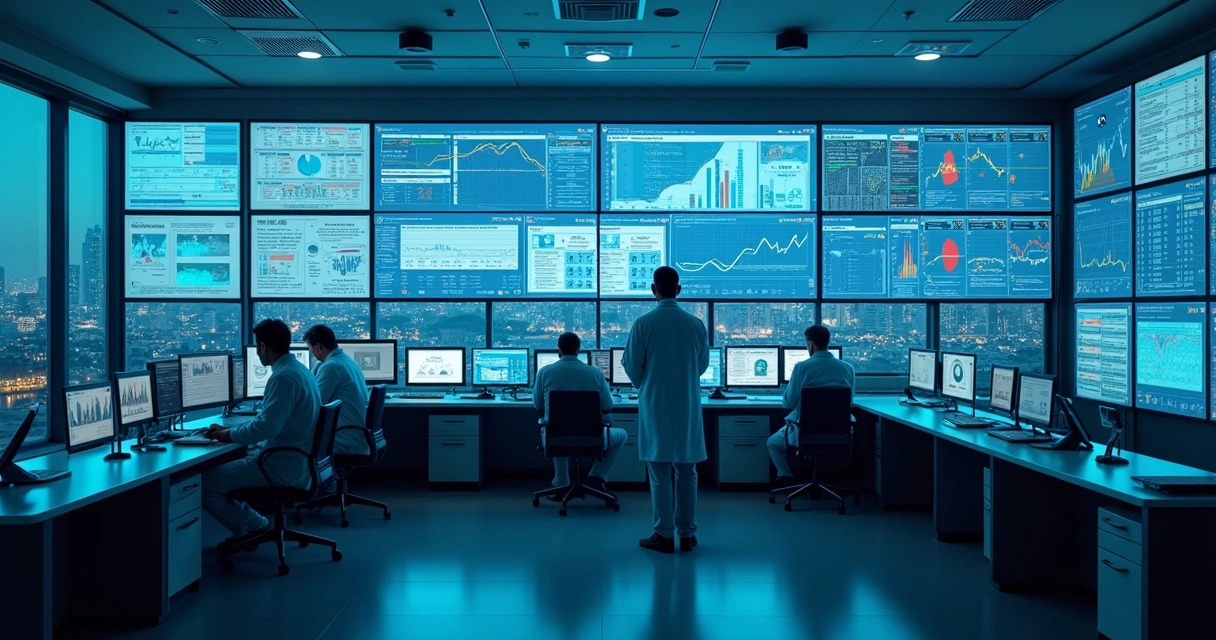
These practices aren't exclusive to us, but I state without hesitation: few companies can operationalize predictive monitoring with dynamic SLA. And here lies our greatest delivery against competitors—we don't stop at alerts; we deliver adaptive intelligence.
SLAs Beyond Reaction: Migrating to Predictive Models
Traditional monitoring, where systems only warn when something has already gone wrong, is a thing of the past. I encountered studies and cases proving: those who rely solely on reaction always play catch-up with losses. By migrating systems to predictive alerts, we anticipate occurrences and provide real time to act.
In the article on transitioning from reactive to predictive alarms, I point out how renewing the approach opens the path to more relevant and less punitive SLAs. The goal now is reducing the rate of critical incidents to nearly zero. This requires updating not just technology but the service level agreement itself.
This migration, incidentally, affects the sensor lifecycle, from installation to automated maintenance, as I detail in another text on automating sensor maintenance cycles. Modern SLAs now include not just resolution time but update indices, remote calibration, and firmware failure response. It's a new level.
Practical Challenges During Implementation
Implementing SLAs aligned with 2026's digital reality still presents challenges. In recent projects, I noticed obstacles at three main points:
- Remote sensor updates: having mechanisms for firmware updates and calibration became central to the SLA. If you want to know more, I wrote about it in detail in challenges of remote updates in predictive sensors.
- Team training: implementation alone isn't enough; you must build capacity. The SLA must assume commitment to qualification and onboarding time, because advanced technologies require conscious operation.
- Response to multiple simultaneous alerts: I've seen situations where multiple alarms fire at once. A clear SLA defines priority, response queues, and automatic escalation protocols.
Defining and implementing metrics also depends on a step-by-step plan. I shared in the article on implementing SLAs and IoT alert responses each of the steps I typically follow, from aligning expectations to periodic monitoring, always adjusting as the system learns.
Prepare for the Future of Critical Monitoring
In 2026, those betting on remote monitoring already understand: well-designed SLAs are as relevant as the sensors themselves. I no longer recommend clients accept generic contracts, as available tools, especially those using artificial intelligence like DROME, can personalize the offering.
I'm available to show how to design an SLA considering each aspect of your critical environment, prioritizing safety, agility, and predictability. Discover DROME, explore our artificial intelligence approach, and be surprised by the real difference a proactive SLA makes in your operation.