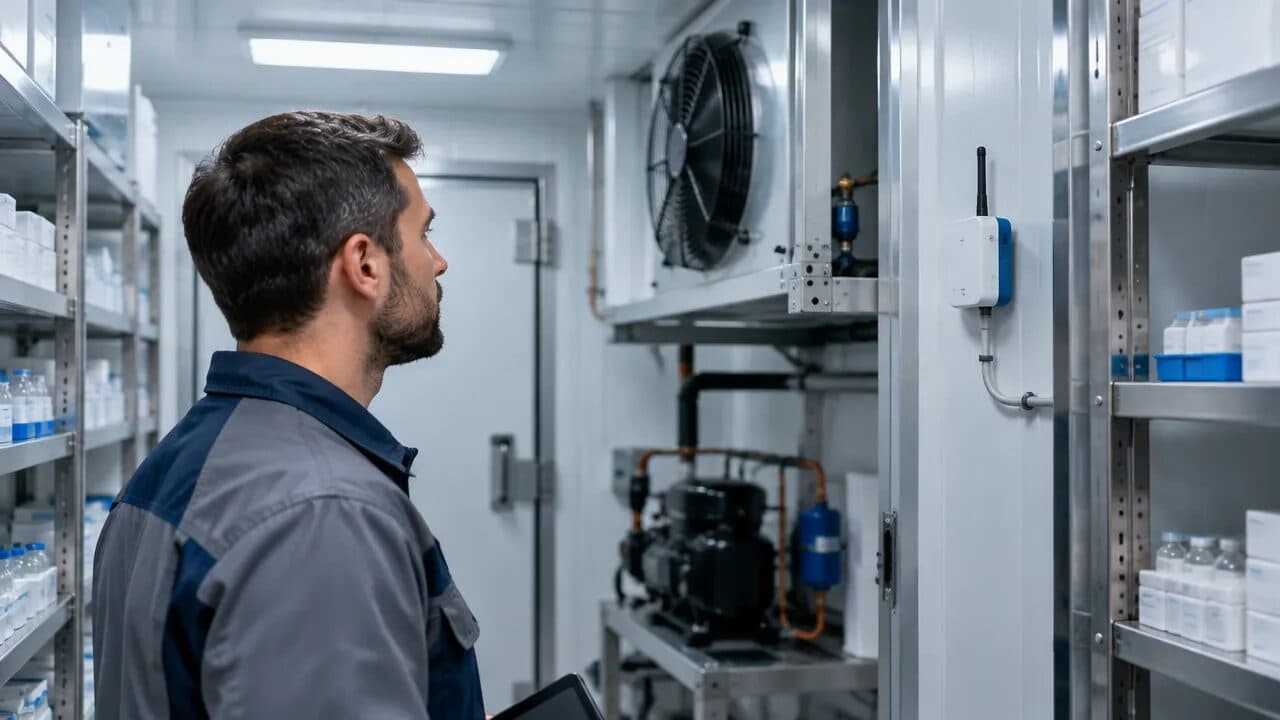
Imagine a cold storage unit where temperature begins to rise during the night. The event may coincide with an open door, a change in load, or a loss of performance in the refrigeration system. An isolated alarm shows the deviation; correlating temperature, current, pressure, and door events helps determine what to investigate.
The value lies in relating signals from the same asset
- Continuous measurement records behavior, but does not interpret on its own what changed.
- Threshold alert notifies when a variable crosses a configured range.
- Predictive analysis compares variables and trends over time to identify patterns that warrant verification.
- Correlation suggests hypotheses, not automatically confirms the cause of failure.
A temperature alarm shows the deviation, not the mechanism
The temperature sensor answers a specific question: what is the temperature at the measured point? If the value exceeds a threshold, the alarm informs that the condition has moved outside the defined range. It does not clarify, by itself, whether the compressor lost capacity, the door was left open, or the thermal load changed.
The timing of the deviation adds context. A brief rise after a door opening may have an operational explanation. A recovery that becomes increasingly slower, accompanied by changes in current or pressure, warrants further investigation. The difference lies in observing the sequence and relationship between signals, without treating temporal coincidence as diagnosis.
Continuous measurement, threshold alert, and predictive analysis serve distinct functions. Continuous recording allows reconstruction of history; the threshold draws attention to a value; trend analysis can point to a change before the threshold is reached. None of these steps eliminates the need for technical inspection.
Related variables help separate mechanical, electrical, and operational risks
The same temperature rise can have different origins. For maintenance, cycle duration and thermal recovery help investigate capacity loss. For clinical engineering and quality, door events and temperature records help distinguish an excursion linked to routine from a persistent equipment alteration.
Current adds evidence about the electrical behavior of the asset, but an isolated reading does not equate to electrical signature analysis nor determine the cause. Similarly, pressure can only be evaluated when a compatible transmitter is installed. The team must compare signals with history and confirm hypotheses on the equipment.
| Variable | Device | Observed Signal | Hypothesis to Investigate | Verification Action |
|---|---|---|---|---|
| Temperature | Satellite Sensor STE | Rise, oscillation, or slower recovery than asset baseline | Capacity loss, different thermal load, or door opening | Check door history and load; inspect refrigeration cycle and compare with baseline |
| Current and door event | Satellite Sensor SDT | Change in current behavior near cycles or openings | Operational change or shift in how equipment operates | Verify door, usage routine, and electrical condition per maintenance procedure |
| Pressure | Satellite Sensor SAD, with compatible 4 to 20 mA transmitter | Pressure trend that precedes or accompanies thermal change | Change in circuit or monitored process performance | Check transmitter, calibration, and circuit conditions with responsible team |
| Signals provided by equipment | CTD Concentrator, with Modbus integration | Change in records that equipment provides | Operational state different from what sensors observe | Compare integrated data with controller and maintenance record |
The table organizes investigation hypotheses, not automatic diagnostic rules. A door event and a thermal rise may occur together without the door being the sole cause. Verification must consider calibration, sensor position, operating regime, and recent interventions.
Data flow must preserve context between measurement and response
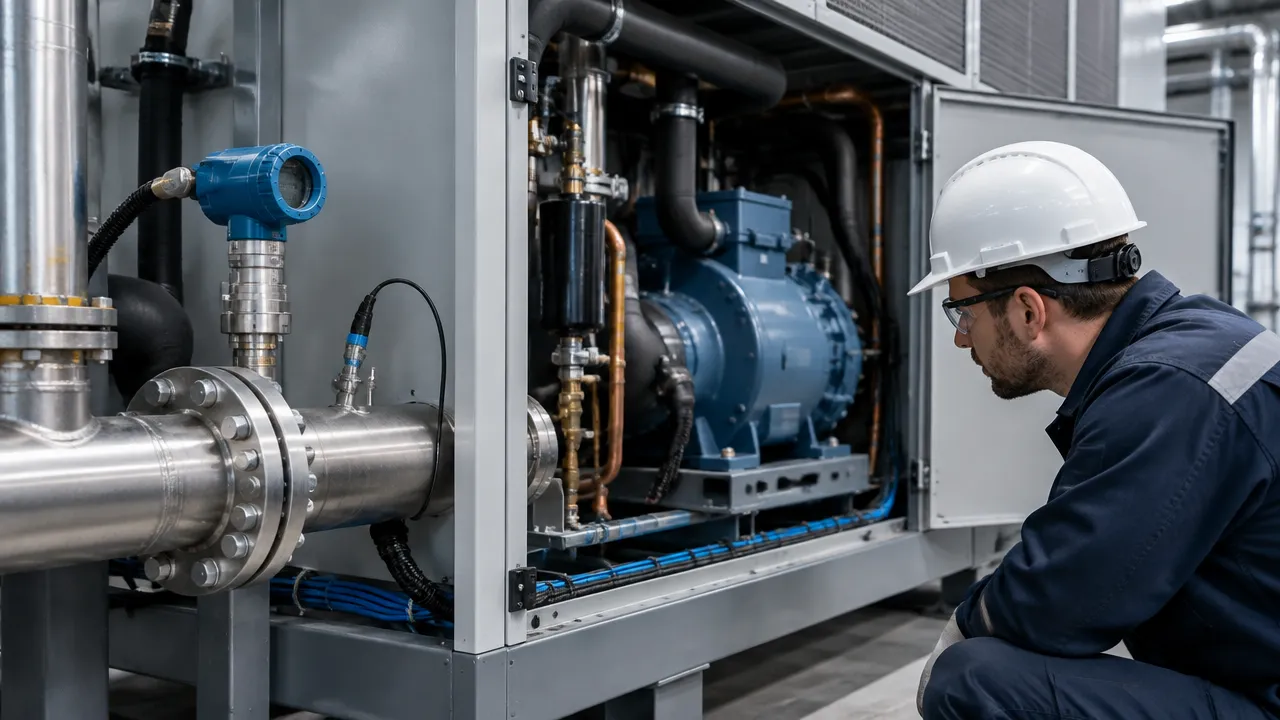
In DROME's architecture, sensors collect variables installed on the asset and send data to the CTD Concentrator. The CTD consolidates communication, including Modbus integration when applicable, and forwards records to the cloud. DROME Predict correlates more than 15 parameters per asset and uses a database of 450,000 labeled real failures to recognize patterns.
When it identifies a pattern consistent with an emerging failure, the system can issue an alert with a hypothesis of cause and corrective action. The documented advance notice of 30 to 60 minutes describes capability in specific contexts, not a guaranteed prediction for any equipment or failure mode. Coverage depends on installed variables and the quality of available history.
Implementation begins with the failure mode that matters most
Installing sensors at all points before defining the maintenance question tends to generate difficult-to-use data. The clearest path is to prioritize assets by criticality, list failure modes that can cause downtime, and select variables that help distinguish them.
Next, it is worth confirming calibration and position of each sensor, gathering operational history, and recording events that alter behavior, such as maintenance, load changes, and door openings. Without this context, the model may confuse a routine change with equipment degradation.
It is also necessary to define who receives the alert, who verifies the asset, and how the team records the conclusion. For maintenance, this connects the alert to inspection. For clinical engineering and quality, it makes the relationship between deviation, evaluation, and action taken traceable.
Measure whether the alert arrives in time to change the decision
The number of alerts alone does not show whether operations are anticipating failures. Track useful advance notice, the proportion of false alerts, the time between notification and response, and hours of downtime. Define criteria and comparison periods; do not attribute an operational change to the system without evaluating other factors.
An alert is useful when it allows verification before operational loss and leads to a documented decision. If notification arrives but no one knows who should act, the problem also lies in the response process.
Checklist to know if the team acts before operational loss
- Does the critical asset have defined failure modes and variables related to each?
- Do temperature, current, pressure, and door events have verifiable calibration and history?
- Does the team distinguish an exceeded threshold from a trend that may precede failure?
- Does each alert have a responsible party, response deadline, and way to record verification?
- Does operations track useful advance notice, false alerts, response time, and downtime?
If answers still depend only on reading an isolated alarm, operations records deviations. When it correlates signals, context, and response, it can investigate changes before they convert to downtime.
Frequently Asked Questions
What is predictive monitoring?
Predictive monitoring tracks variables of an asset over time and searches for patterns indicating an emerging failure. By correlating temperature, current, pressure, and operational events, the team can investigate deviations before they cause performance loss. The alert guides verification but does not replace technical diagnosis.
What is asset monitoring?
Asset monitoring is the systematic recording of data about equipment and its operational condition. It may include continuous measurements, threshold-based alarms, or trend analysis. Value depends on installed variables, available history, and a defined routine to evaluate signals and respond to deviations.
How to monitor critical assets?
Start with assets whose failure poses the greatest operational or regulatory risk. Define which variables help observe their failure modes, confirm calibration, and record events such as maintenance, door openings, and load changes. Then associate each alert with a responsible party and track response time.
Does variable correlation confirm the cause of failure?
No. Correlation shows that variables changed in related periods, but does not prove which event caused the deviation. A temperature rise together with an open door may have another explanation if there is also a load change or system capacity loss. The team must verify the equipment and context.
How to measure if predictive monitoring works?
Track useful advance notice of alerts, the proportion of false alerts, the time between alert and response, and hours of downtime. Define the calculation method and analysis period before comparing results. These indicators show whether signals arrive in time and whether operations can act.
Read next

Reduce False Alarms in Critical Sensors
Learn how to reduce false alarms in sensors with power supply adjustments, grounding, signal filtering, and AI for critical environments.

Multimodal Monitoring: Signals That Anticipate Failures
Learn how to cross-reference temperature, current, and door status from refrigerators and cold storage units, validate operational context, …

Pressure Deviations: How to Interpret in Critical Areas
Learn to interpret pressure deviations in critical environments, identify probable causes, and respond with greater speed, safety, and opera…