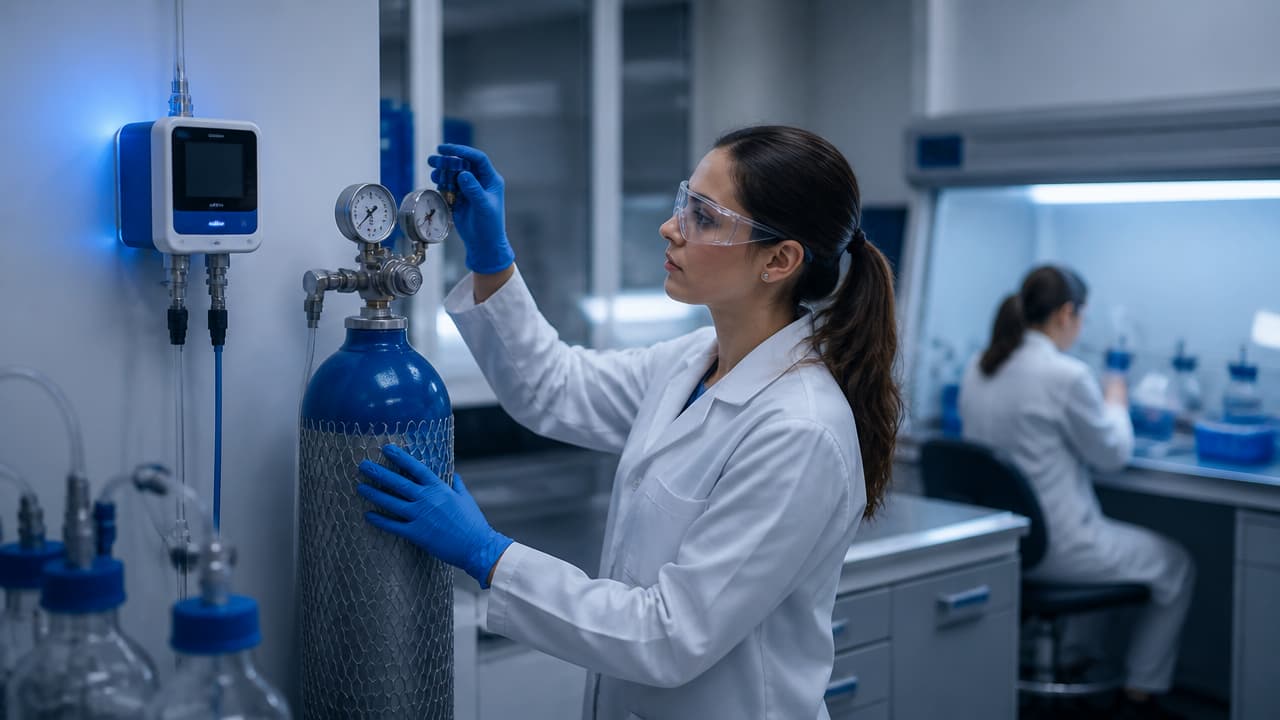
Controlling hazardous gases in the laboratory must go beyond the audible alarm. For teams working with reagents, cylinders, fume hoods, and enclosed spaces, the goal is to detect deviations early, act quickly, and reduce human exposure, material loss, and operational disruptions. In practice, a solid program combines the right sensors, technical positioning, reliable maintenance, and continuous data analysis.
This process is especially critical in analytical laboratories, research facilities, quality control, and hospital support environments, where small failures can escalate within minutes. When operations adopt continuous monitoring and applied intelligence, as DROME proposes, response shifts from purely reactive to preventive.
Key points for safer operations
- Early detection matters more than alarming alone. Value lies in recognizing risk trends before critical exposure occurs.
- The right sensor depends on the gas and process. No universal detector exists for every laboratory scenario.
- Positioning determines performance. A quality device installed poorly can fail at the critical moment.
- Calibration and functional testing sustain reading confidence. Without technical routine, the system loses operational value.
- Integrated data accelerates decision-making. History, context, and real-time alerts help prioritize actions.
What are the main risks of toxic gases in laboratories?
The greatest risks are human exposure, loss of environmental control, and delayed response. In the laboratory, toxic gases can cause irritation, acute intoxication, oxygen depletion, and in some cases, flammable or explosive atmospheres. Impact depends not only on the substance but also on concentration, exposure duration, and local ventilation.
In routine operations, danger typically emerges at predictable points: cylinder connections, storage, fume hood use, seal failures, disposal, and maintenance. Therefore, monitoring should not be confined to a single room location. It must track where risk originates, how it propagates, and who may be affected first.
In critical operations, the most common error is relying solely on human perception. Odor, discomfort, or irritation are not safety strategies. Many gases require instrumental detection and clear response protocols.
What equipment is used to measure gases in laboratories?
The ideal equipment is compatible with the monitored gas and the operation's dynamics. Generally, laboratories use fixed detectors for continuous surveillance, portable detectors for inspections, and specific analyzers when the process demands greater precision or analytical control.
When selecting, consider four practical criteria:
- type of gas or chemical family monitored
- measurement range and desired alarm limit
- response time required by the operation
- environmental conditions, such as humidity, temperature, and ventilation
It is also important to decide whether the objective is personnel protection, process protection, or both. In many laboratories, the best solution is not a single expensive sensor but a coherent arrangement of devices at different points.
| Scenario | Most common solution | Primary objective |
|---|---|---|
| Cylinder storage | Fixed detector | Identify continuous leaks |
| Routine inspection | Portable detector | Check specific areas |
| Sensitive analytical process | Dedicated analyzer | Obtain more precise measurement |
| Critical environment with multiple areas | Integrated sensor network | Centralize alarms and history |
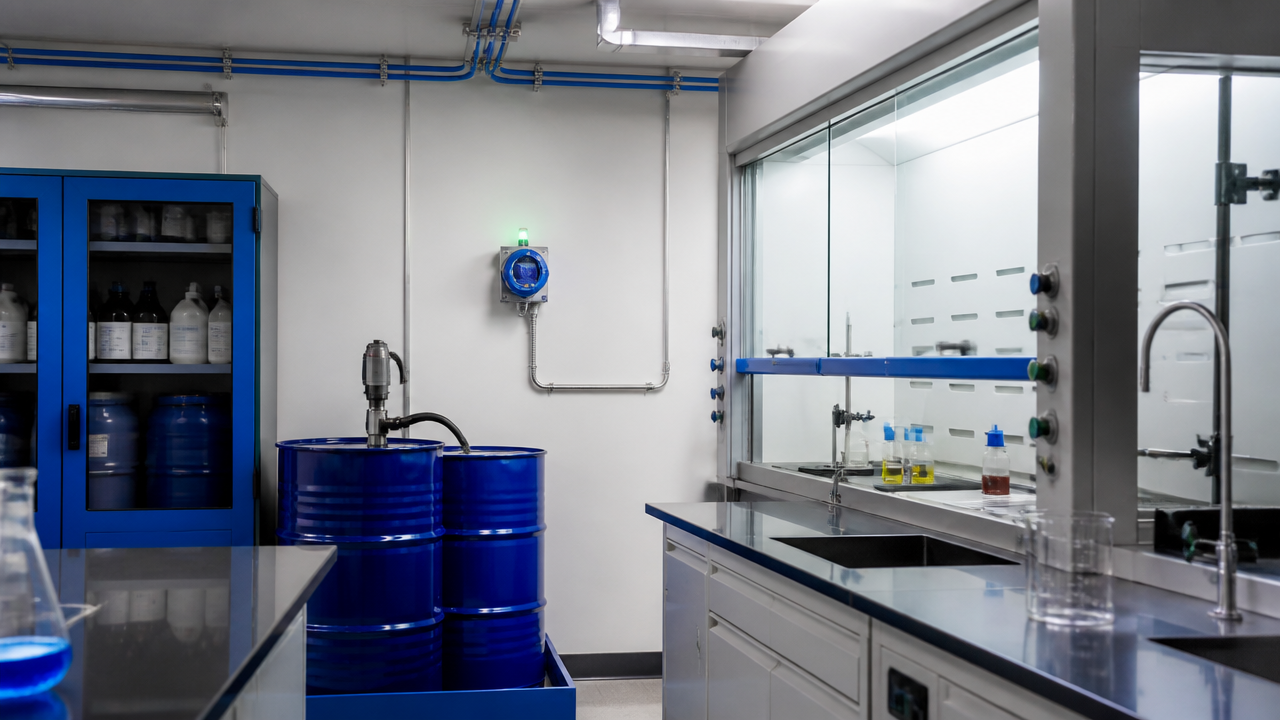
How to define where to install gas detectors?
Detector position influences outcomes as much as sensor quality. The basic principle is straightforward: the measurement point must reflect gas behavior and the most likely emission location. This includes height, air flow direction, physical barriers, and proximity to critical equipment.
Denser gases may concentrate in low areas. Lighter gases tend to rise. Environments with strong exhaust can displace a gas plume before it reaches a poorly planned measurement point. Therefore, installing sensors solely for electrical or visual convenience is a recurring error.
Before installation, map:
- probable leak sources
- air trajectory and exhaust
- personnel occupancy zones
- equipment that cannot stop
- accumulation points, recirculation, or ventilation shadows
When this planning is done with the operational team, monitoring becomes more useful. It shifts from a compliance item to functioning as a real safety barrier.
Calibration, functional testing, and maintenance are not details
Without calibration, the system may appear active yet still fail. In laboratory environments, incorrect readings compromise decisions, delay evacuation, and create false security. Therefore, technical routine must be treated as part of risk control, not as an administrative task.
The ideal approach separates three fronts: calibration per technical recommendation, functional testing to confirm sensor response, and preventive maintenance of the entire system, including power supply, communication, and alarms. Recording each intervention is also valuable, as reliable history facilitates audits and reduces failure repetition.
A minimal well-executed routine typically includes:
- periodic visual inspection
- alarm response testing
- verification of drift or reading instability
- communication check with panel or software
- replacement plan for end-of-life equipment
In high-criticality laboratories, the best scenario is automating asset monitoring. This reduces oversights and improves technical team prioritization.
Can failures and leaks be predicted with intelligent monitoring?
Yes, provided the laboratory does not treat each reading as an isolated event. When sensors, alarms, and operational history are integrated, it becomes possible to identify patterns preceding deviations, such as repeated oscillations, anomalous behavior by shift, equipment degradation, or irregular environmental response.
This is where DROME's approach gains relevance. By combining continuous monitoring, telemetry, and artificial intelligence, the platform helps transform dispersed signals into operational context. Rather than merely warning that a limit was exceeded, the system can support trend analysis, prioritize criticality, and accelerate team decision-making.
For laboratories, this delivers practical gains:
- faster response to deviations
- less dependence on isolated manual checks
- better traceability of occurrences
- greater maintenance predictability
- lower risk of unexpected interruption
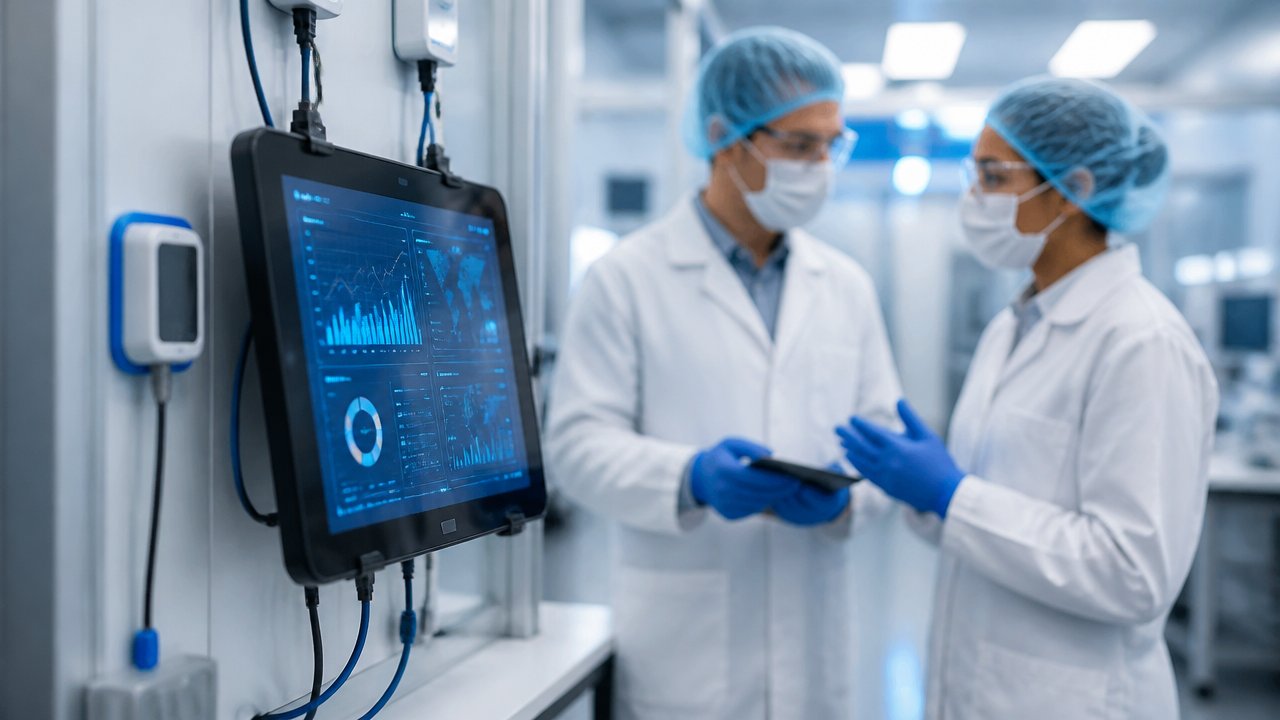
How to build a practical incident response plan?
The best plan is one the team can execute under pressure. During a gas alarm, lengthy and generic procedures often fail. The laboratory needs simple triggers, defined responsibilities, and objective action sequences.
A practical workflow may follow this order:
- confirm the alarm and affected area
- interrupt the activity, when it can be done safely
- remove personnel from the risk zone
- alert technical staff and internal emergency response
- isolate the probable source and document the event
- permit return only after safe verification
Training is an essential part of this plan. The team must recognize alarms, understand action limits, and avoid improvisation. In the laboratory, rapid response does not mean acting without judgment. It means following an already-trained procedure with clear information and reliable instruments.
What a truly useful guide must conclude
Monitoring toxic gases in the laboratory is an exercise in operational prevention. The most effective system is not the one generating the most alarms but the one combining reliable readings, correct installation, disciplined maintenance, and the ability to anticipate risk.
For those managing critical environments, the mature decision is to integrate safety, data, and technical routine. When the laboratory structures this process and relies on platforms capable of analyzing operational behavior, like DROME, monitoring shifts from a reactive layer to supporting faster, safer, and more intelligent decisions.
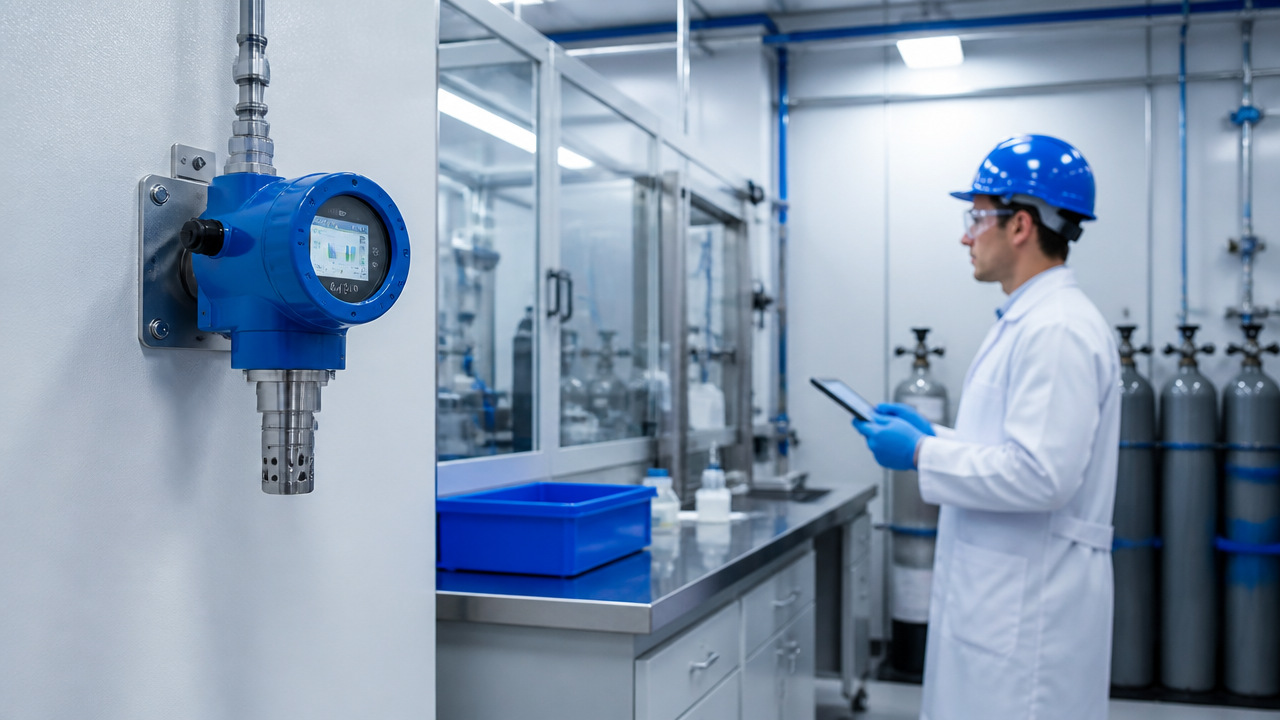
Frequently asked questions
What are the main risks of toxic gases in laboratories?
Main risks include acute intoxication, respiratory tract irritation, oxygen displacement, formation of explosive atmospheres, and cross-contamination between areas. Real danger depends on gas type, concentration, exposure duration, and available laboratory ventilation.
What equipment is used to measure gases in laboratories?
Selection depends on the gas to be detected, measurement range, response time, and environmental conditions. In many laboratories, combining fixed detectors, portable sensors, and integrated alarms provides the most secure coverage for routine operations.
How to define where to install gas detectors?
Positioning must follow gas behavior and operational design. Heavier gases tend to accumulate in low points, while lighter gases rise. It is also important to consider emission sources, fume hoods, storage areas, and personnel circulation.
Why is gas detector calibration so important?
Calibration maintains reading reliability and reduces the risk of false alarms or detection failure. Frequency should follow manufacturer recommendations, application criticality, and internal procedures. In critical environments, functional testing and preventive maintenance cannot be treated as occasional tasks.
Can failures and leaks be predicted with intelligent monitoring?
Yes, provided sensors are connected to a platform capable of analyzing history, context, and operational behavior. With this, the laboratory stops depending solely on instantaneous alarms and gains support to anticipate deviations, prioritize actions, and respond more quickly.